
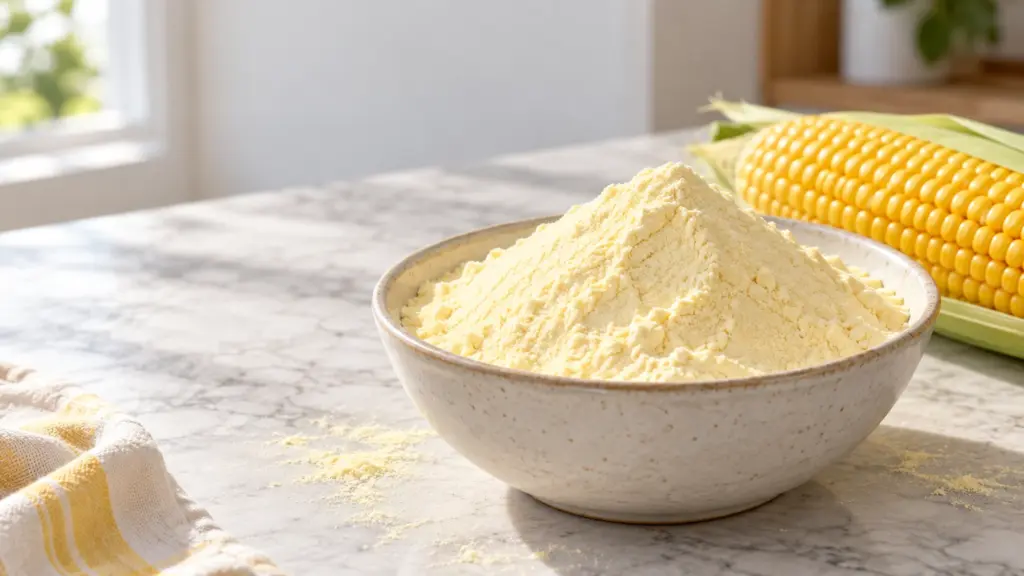
A recipe asks for corn flour, but the bag in the pantry looks nothing like the powder in the instructions. Before making a substitution, check where the recipe comes from and what the ingredient is supposed to do. This is one of those small naming differences that can change the whole dish.
In U.S. cooking, corn flour generally means finely ground dried corn. In many British recipes, cornflour means cornstarch. Cornmeal and masa harina are different again, so read the ingredient list and match the recipe’s purpose before swapping.
I would spend an extra minute checking the bag rather than try to rescue a batter after the wrong powder goes in. Color is a clue, but the label gets the final say.
What Corn Flour Means on the Package
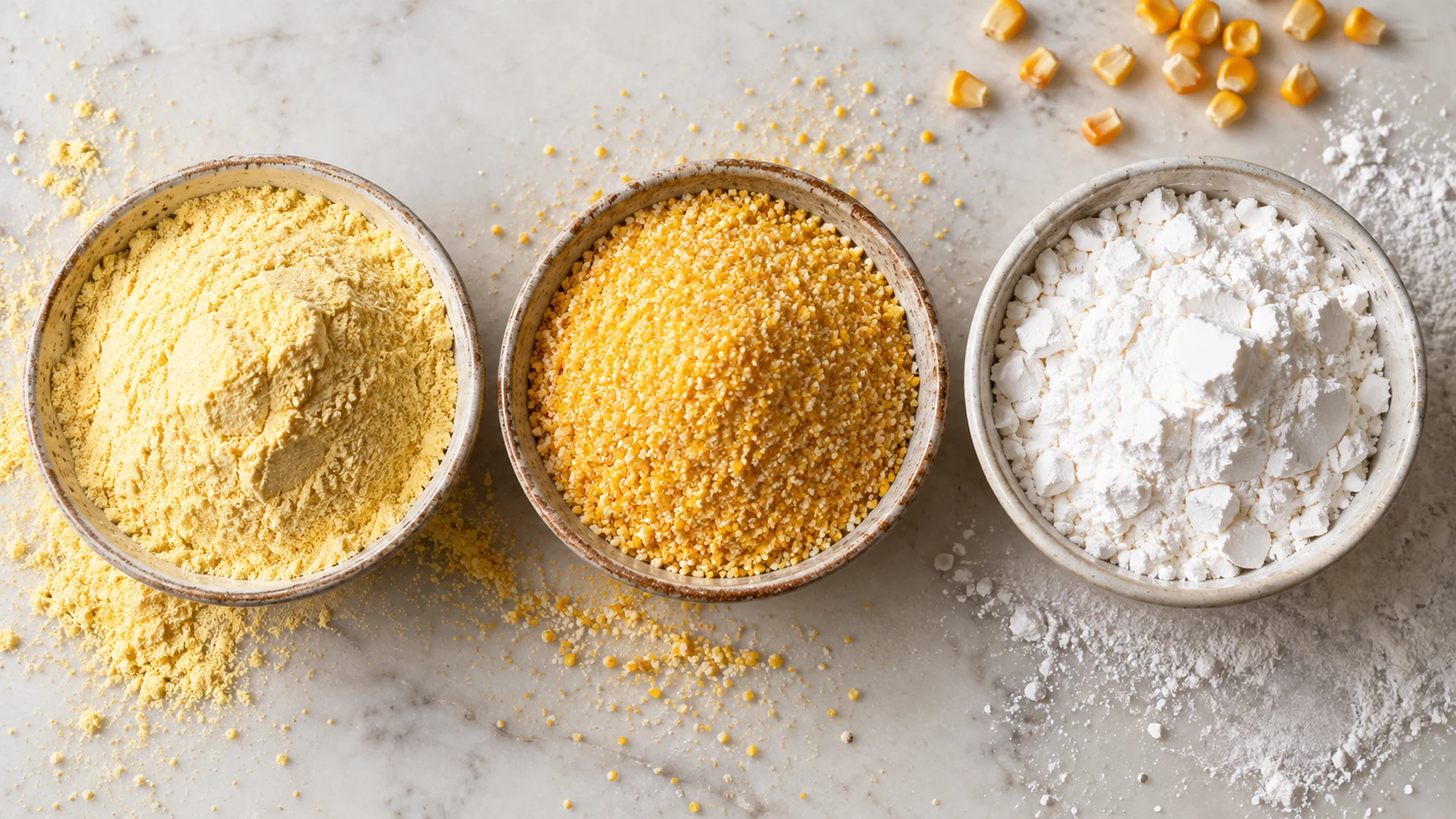
Whole-grain corn flour retains the grain’s components rather than isolating its starch. Bob’s Red Mill’s product list identifies its corn flour ingredient as whole-grain corn. Other products may be processed differently, which is why “corn” on the front is not the complete description.
| Product | What distinguishes it | Common role |
|---|---|---|
| Corn flour, U.S. meaning | Finely milled dried corn | Corn flavor in baking and coatings |
| Cornmeal | A coarser grind of dried corn | Noticeable texture in breads and porridge |
| Cornstarch | Separated corn starch | Thickening sauces and custards |
| Masa harina | Dried, ground nixtamalized corn dough | Tortillas and tamales |
The fine texture makes corn flour less gritty than a coarse meal, but it does not make it identical to wheat flour. A recipe designed around wheat’s structure may need more than a one-for-one flour change. My preference is to start with a recipe written for the specific corn product, especially for a cake or loaf.
Match the product name, ingredient list, and intended use—not just the word corn.
Why Cornstarch and Masa Behave Differently
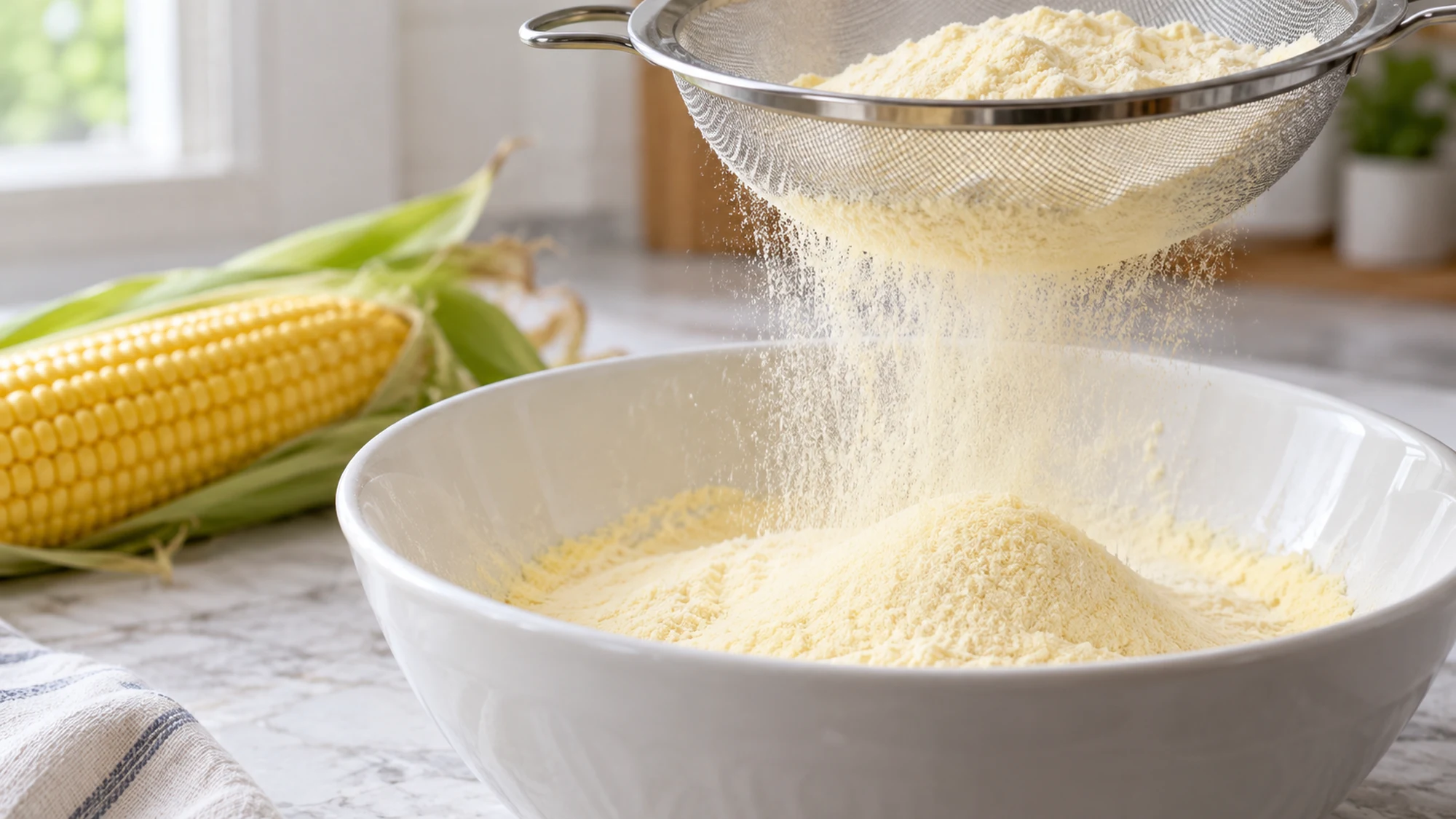
Bob’s Red Mill explains that cornstarch comes from the kernel’s starchy endosperm and works as a thickener. Its neutral flavor and thickening ability are different from the flavor and texture of milled corn flour. For a sauce that calls for a starch slurry, ordinary corn flour is not an equivalent replacement.
- For a glossy sauce: use the starch specified by the recipe and follow its mixing and heating directions. Adding a dry spoonful directly to hot liquid invites lumps.
- For corn tortillas or tamales: check for masa harina. Its corn has undergone a separate preparation process; fine milling alone does not create masa.
- For a corn-flavored bake: check whether the recipe asks for flour or meal. The difference can affect the crumb even when both ingredients look yellow.
The manufacturer’s masa harina description identifies it as flour made from nixtamalized corn, processed with limewater. Here lime means an alkaline processing ingredient, not lime juice. Our chipilín tamales illustrate a dish built around masa, rather than plain corn flour.
Fine corn flour does not become masa harina by adding water, and it does not become cornstarch by sifting.
Choose a Swap by the Job It Must Do
Before substituting, ask whether the ingredient supplies flavor, texture, structure, or thickening. A breading has different demands from a custard. A reliable substitution keeps the important function intact, not merely the same number of spoonfuls.
- Read the whole method first. A small amount mixed with cold water and heated in a sauce strongly suggests a starch-thickening role.
- Check the recipe’s region. A British recipe using “cornflour” may require the white starch sold as cornstarch in the United States.
- Use the listed weight when available. Different grinds and powders do not pack into a measuring cup identically; a volume conversion can introduce another variable.
- Change one thing at a time. Avoid changing the flour, liquid, and eggs together if you want to understand why the finished texture changed.
A good substitute solves the same cooking problem. Similar names are not enough.
Keep the Flour Dry and Check Gluten Claims
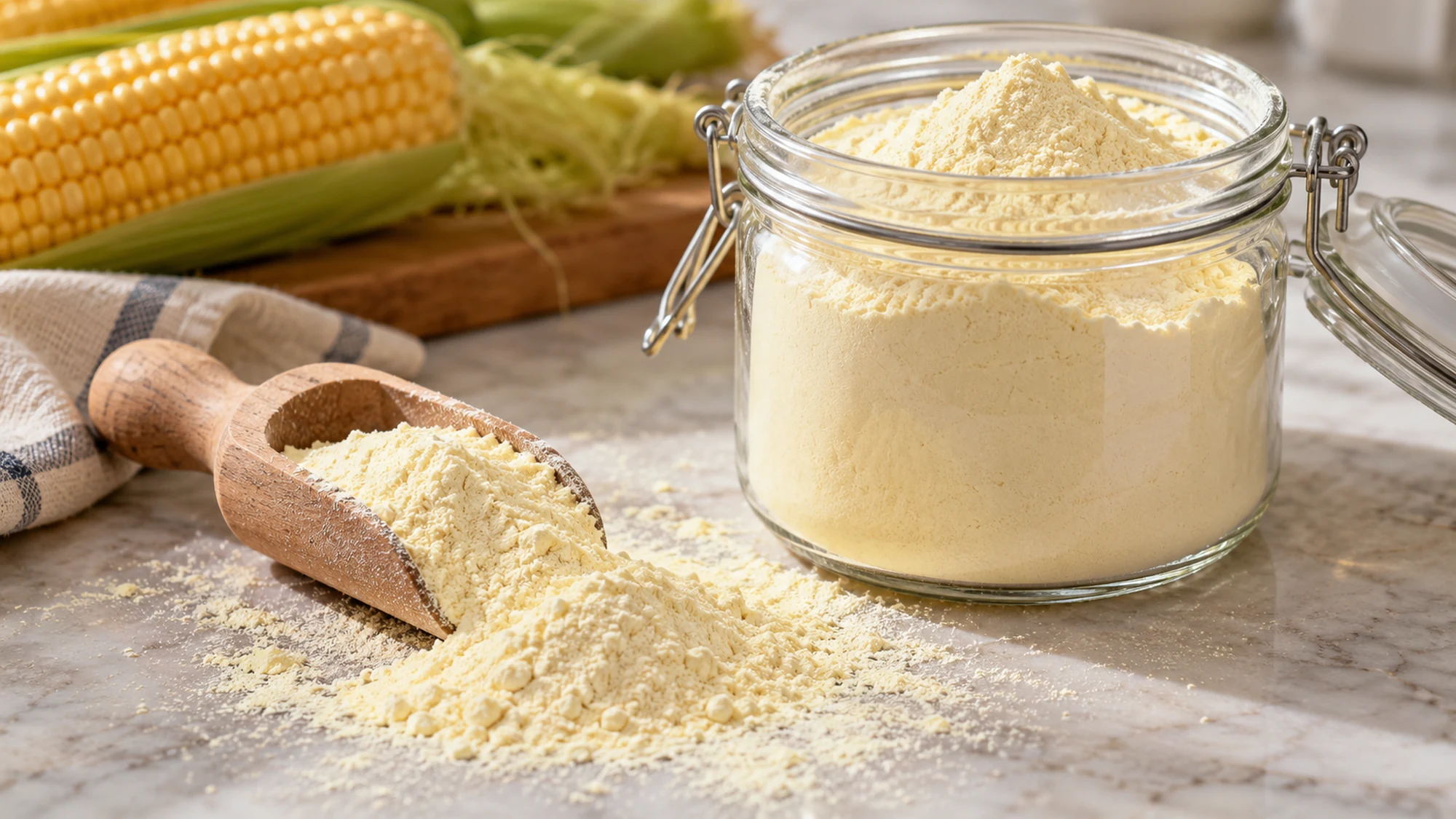
Close the package securely or use a clean, dry, airtight container. Keep its original label or note the product and opening date so a white powder in the pantry does not turn into a guessing game. Follow the manufacturer’s storage directions, and use a dry scoop to keep moisture out.
Corn itself is gluten-free, but a corn-based product is not automatically suitable for someone avoiding gluten medically. The FDA’s gluten-free labeling guidance explains the standard for foods carrying that claim. Check the complete product and recipe, including other flours and shared preparation equipment.
Bottom Line
Corn flour can bring fine texture and corn flavor to the right recipe. The important first step is identifying the product: milled corn, cornmeal, cornstarch, and masa harina do different jobs. Let the label and method guide the swap.
Chef Kunal Kapur’s Hindi-language explanation below shows the distinction between maize flour and cornstarch; the visual comparison is useful even when package names differ.
Sources
- Bob’s Red Mill: Flour ingredients
- Bob’s Red Mill: Starches
- Bob’s Red Mill: Masa harina
- FDA: Gluten and food labeling
- Chef Kunal Kapur: Corn flour and cornstarch

Hi, I’m Emily Pocker! I share recipes and food guides here at Recipes360 to help you find everyday meal inspiration and feel more confident in the kitchen. My goal is to make cooking approachable, enjoyable, and full of flavor.