
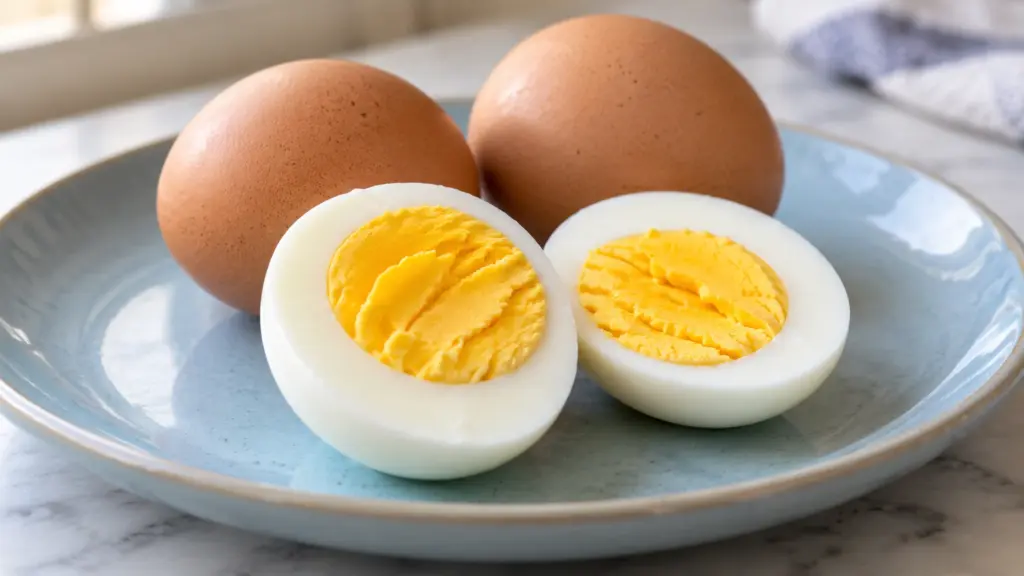
An egg can look small beside a slice of toast, which makes the protein question surprisingly easy to overthink. How much protein in an egg should you count? A large whole chicken egg provides about 6 grams. For a closer reference, USDA’s table lists 6.28 grams for one large raw whole egg; the size and the food entry you use still matter.
Count about 6 grams of protein per large whole egg. The white supplies part of that amount, but the yolk contributes protein too.
How Much Protein in an Egg? Start With the Portion
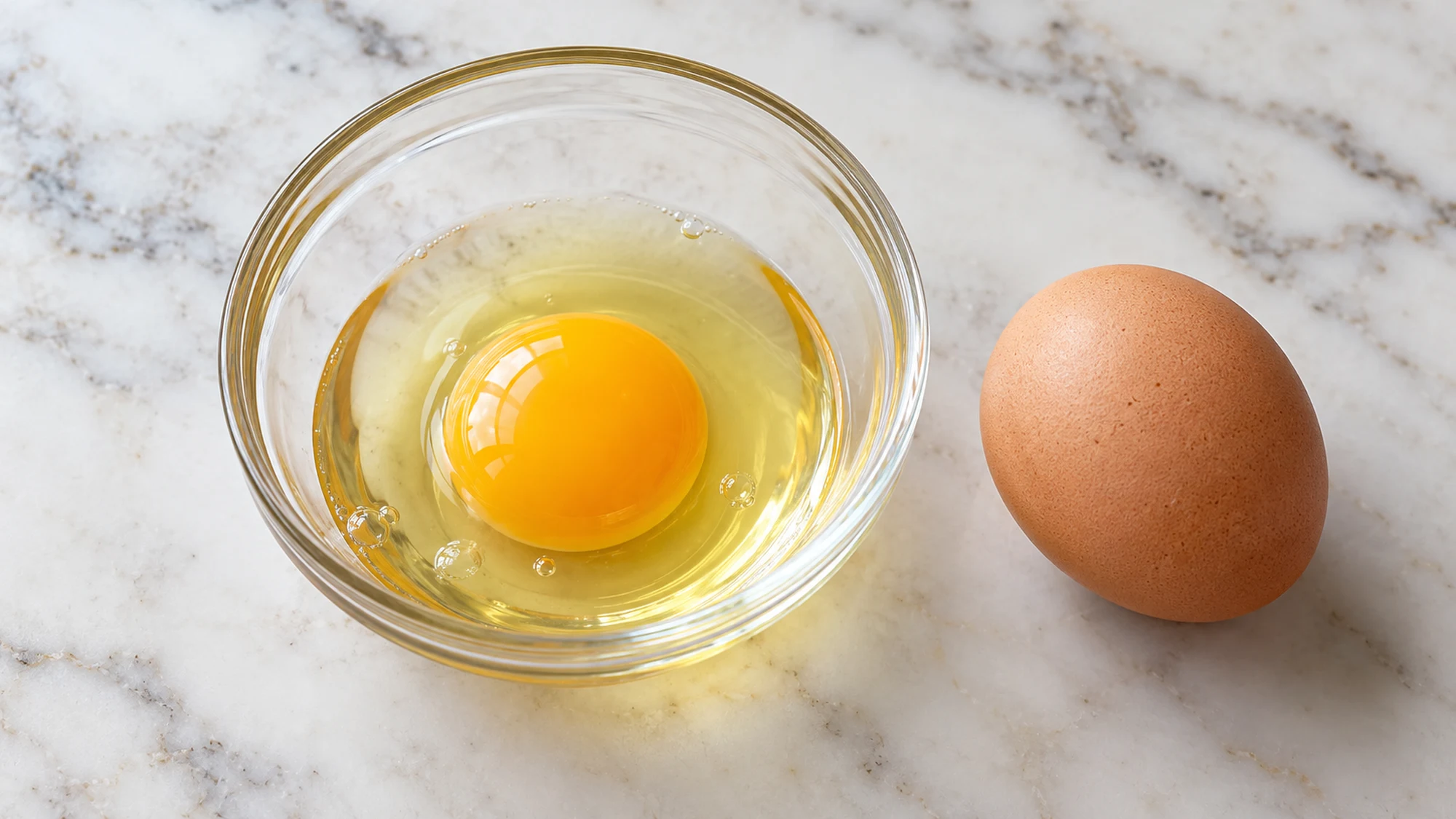
The USDA protein reference table makes the comparison clearer when you keep the portion consistent. A large raw egg is listed at 6.28 grams, a large fried egg at 6.26 grams, and a large poached egg at 6.25 grams. Those tiny differences are not a useful reason to choose one cooking method over another.
I would round these values for everyday meal planning rather than treat hundredths of a gram as a kitchen target. When following a nutrition plan closely, choose a database entry that matches the size and preparation, or use the package label for the product in your refrigerator.
| Egg reference | Portion | Protein |
|---|---|---|
| Whole, raw | 1 large | 6.28 g |
| Whole, fried | 1 large | 6.26 g |
| Whole, poached | 1 large | 6.25 g |
| White, raw | White of 1 large egg | 3.60 g |
These USDA reference figures describe the listed foods, not a recommendation to eat raw eggs. They also do not include a breakfast’s toast, cheese, beans, or other accompaniments.
Match the serving before comparing numbers: one white is not nutritionally identical to one whole egg.
Whole Eggs and Whites Do Different Jobs
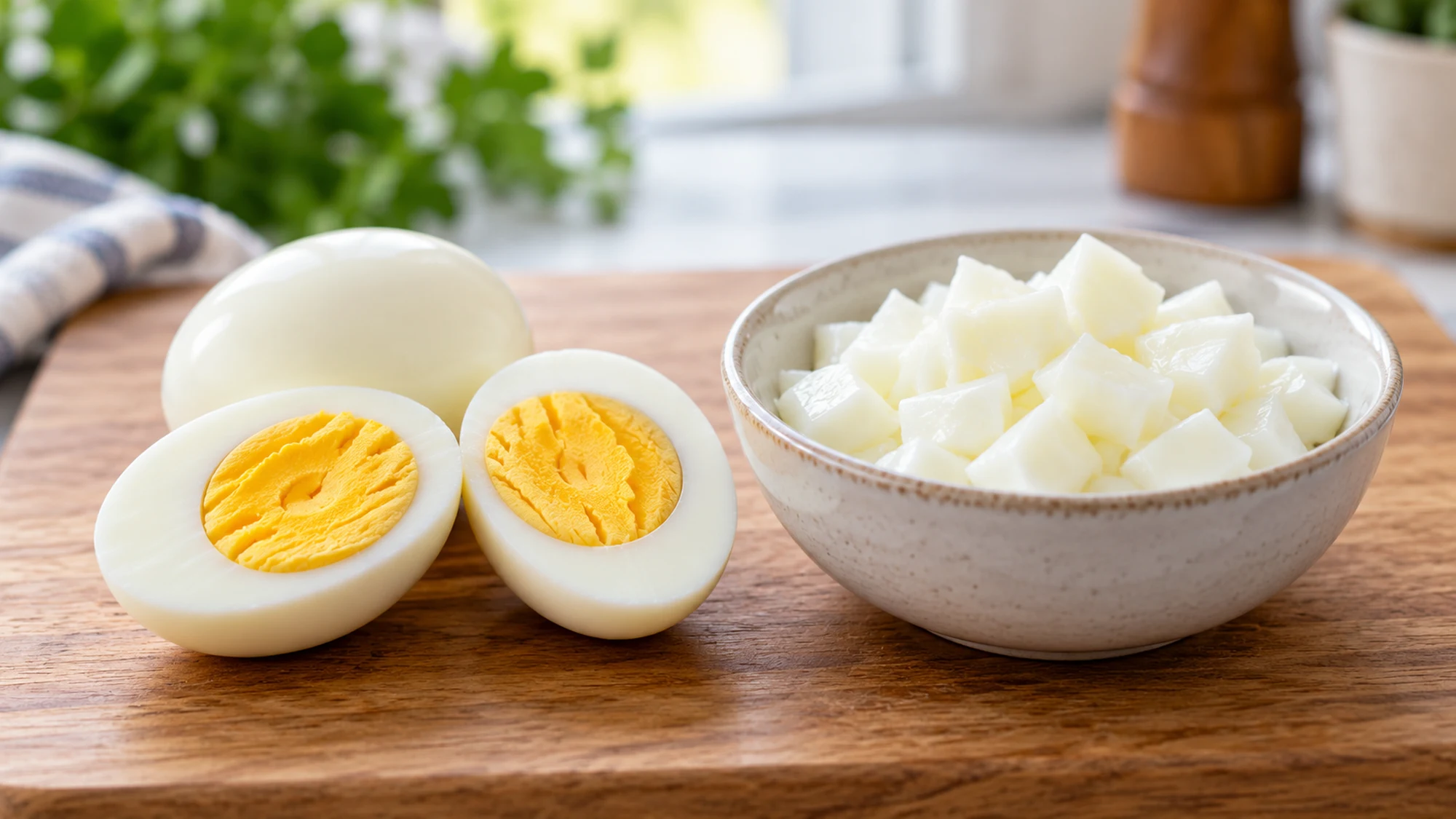
Egg whites are often discussed as though they contain all the protein. They do not. The USDA comparison shows why replacing one whole egg with one white lowers the protein amount, even though the white remains a useful ingredient.
- Whole eggs: keep the white and yolk together for richness, color, and a fuller egg flavor.
- Whites: offer a milder option that can be added to a scramble, but the finished texture will be different.
- Carton products: read the actual serving size and ingredient list; a measured pour is more reliable than assuming a splash equals an egg.
- Allergy: egg whites are still egg, not an egg-free substitute.
For a scramble, I prefer keeping some whole egg if the aim is a rounded flavor rather than a white-only dish. That is a cooking preference, not a rule everyone needs to follow. Your own dietary advice may call for a different choice.
Choose whole eggs, whites, or a combination for the meal you want—not because the yolk has been mistaken for a protein-free extra.
Cooking Changes the Meal More Than the Headline Number
A boiled egg and an egg cooked in butter are different foods on the plate, even when their egg protein is similar. Cheese, milk, beans, and bread can add protein; oil and butter mainly change the fat and energy content. Count those ingredients separately rather than assigning the whole dish the value of a plain egg.
- For a simple estimate: two large whole eggs contribute about 12–13 grams of protein before additions.
- For a shared dish: total the recipe’s ingredients, then divide by its actual portions.
- For packaged meals: use the label’s serving information, especially if a portion contains more than one egg.
A slice of our bread-and-egg breakfast casserole, for example, also contains sausage, milk, and cheddar. It needs the recipe estimate, not the protein number for a single egg. The same principle applies to a café omelet whose filling is doing half the work.
Build Breakfast Around More Than Protein
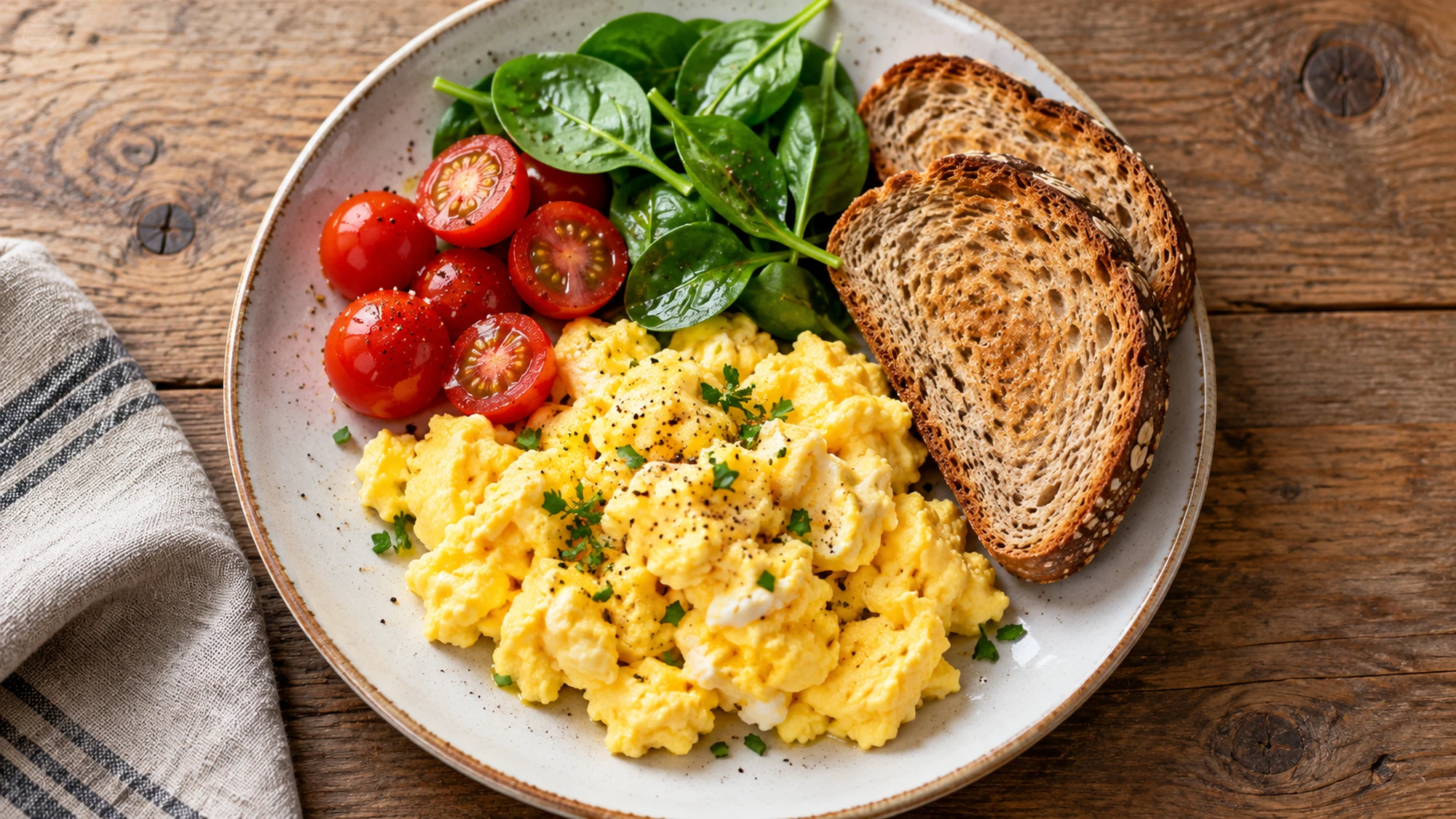
Protein helps the body maintain and repair tissues, but eggs are one option among many. MedlinePlus explains protein’s role and food sources, including beans, soy foods, dairy, fish, and other choices. A useful breakfast does not have to be built from eggs, and its value cannot be summed up by one nutrient.
- Add contrast: pair eggs with vegetables or fruit and a grain you enjoy.
- Keep them cold: refrigerate eggs at 40°F (4°C) or below.
- Cook safely: the FDA advises firm whites and yolks, not runny scrambled eggs.
- Plan leftovers: use refrigerated hard-cooked eggs within one week.
Those storage and cooking steps follow the FDA’s egg-safety guidance. For an uncooked preparation, use pasteurized eggs or an appropriate pasteurized egg product. Raw eggs are not a necessary shortcut to more protein.
Bottom Line
A large whole egg gives you roughly 6 grams of protein, while one large white supplies about 3.6 grams. Use the right portion, include the rest of the meal, and choose a preparation you enjoy eating safely.
Mayo Clinic’s short educational overview below looks inside the egg and places it in a broader dietary context.
Sources
- USDA National Agricultural Library: Protein reference table
- MedlinePlus: Protein in diet
- FDA: Egg safety

Hi, I’m Emily Pocker! I share recipes and food guides here at Recipes360 to help you find everyday meal inspiration and feel more confident in the kitchen. My goal is to make cooking approachable, enjoyable, and full of flavor.