
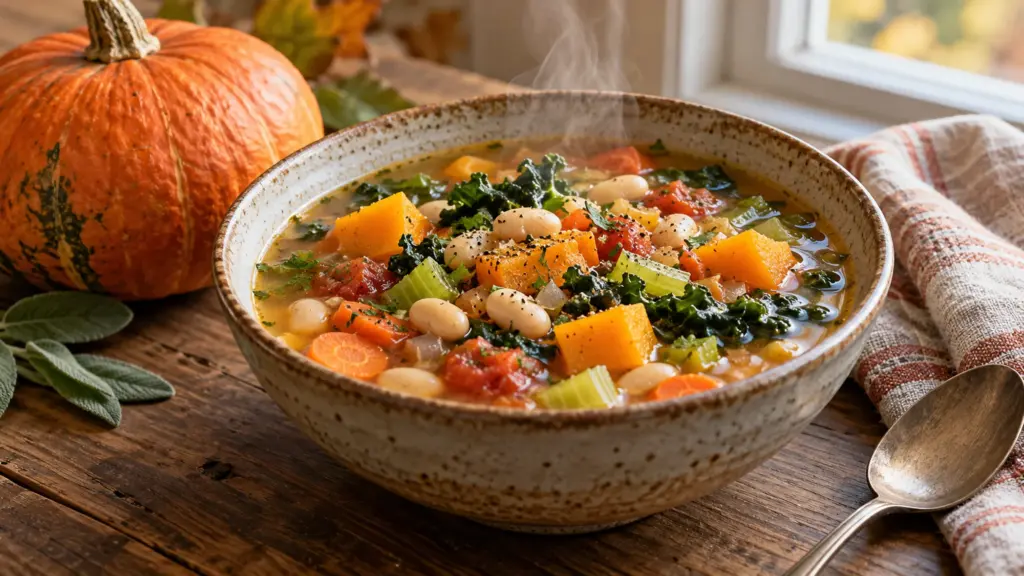
The first evening that makes you reach for a sweater is a good excuse to bring out the soup pot. Soup season usually means the cooler months of fall and winter, but it has no official start date: your weather, appetite and local produce are better guides than the calendar.
Soup season is a flexible time for warming bowls, seasonal vegetables and practical make-ahead meals. Choose a soup you want to eat, plan its portions, and make room to cool and refrigerate leftovers promptly.
Make soup season fit your kitchen
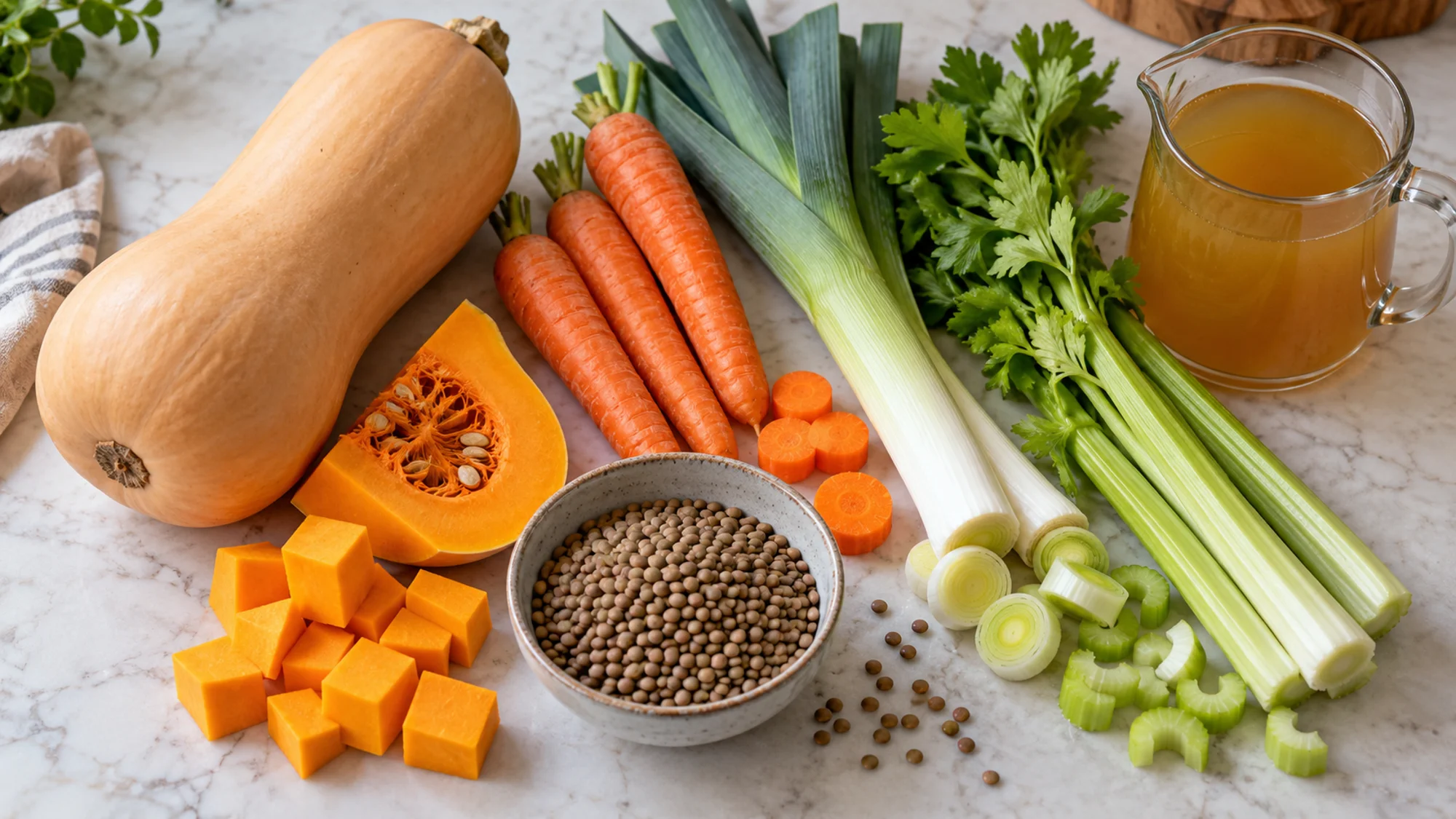
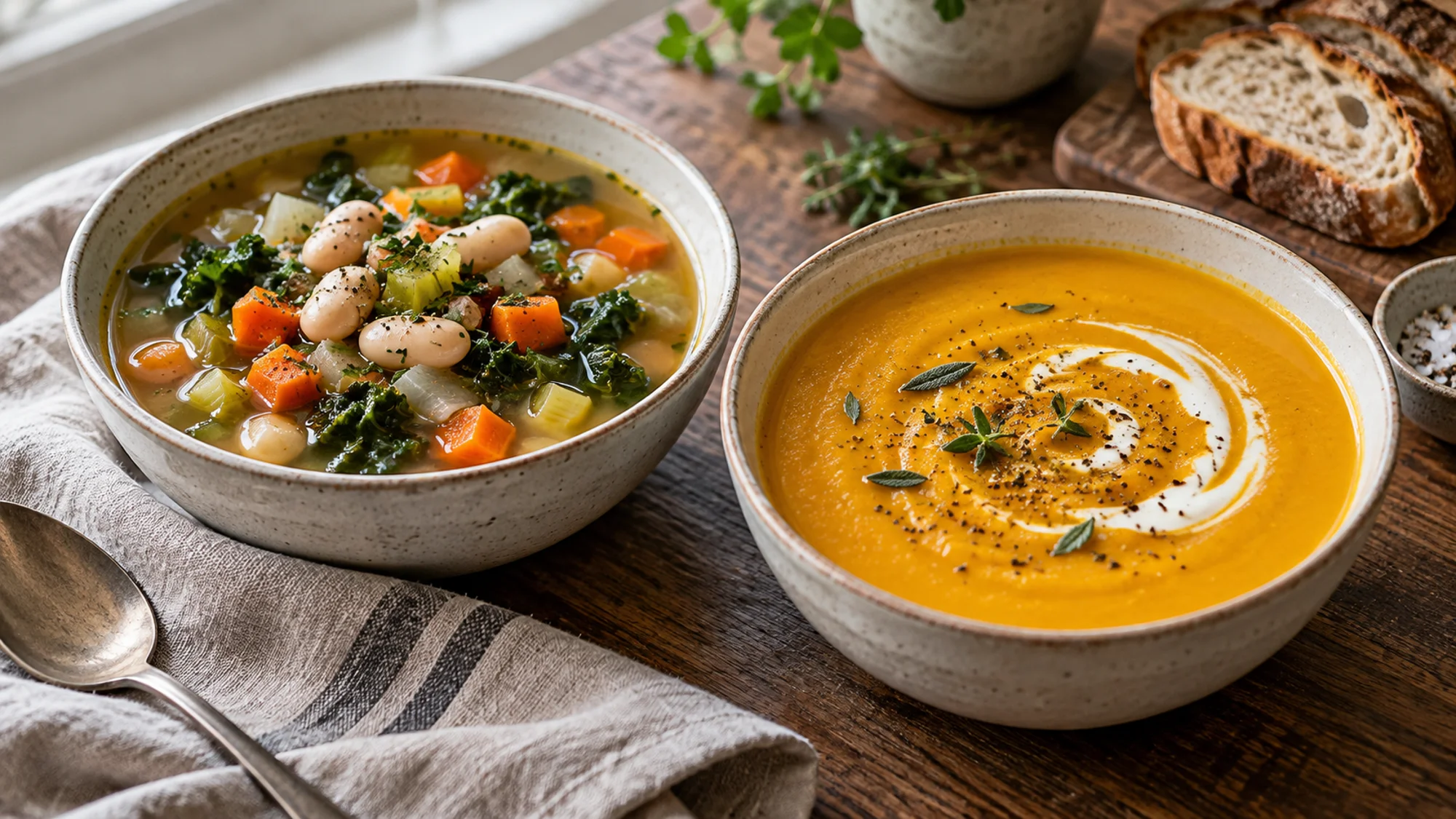
I would start with the kind of dinner you need, rather than the largest pot you own. A clear, vegetable-filled broth suits a lighter meal; beans, lentils, meat or a substantial side can make the table feel more complete. A smooth squash soup offers a different texture without requiring every bowl to be creamy.
Fall favorites such as squash and roots are useful options, not a shopping obligation. Frozen vegetables and canned beans can also make a sensible starting point. Pick ingredients you will use again, especially when cooking for one or two; an ambitious produce drawer is not the same thing as a meal plan.
| If you want… | Consider… | Plan around… |
|---|---|---|
| A light, brothy bowl | Vegetable soup | A sandwich or another substantial side |
| More substance in the bowl | Bean or lentil soup | The texture and cooking needs of the legumes |
| A smooth texture | Blended squash or carrot soup | Safe handling of hot liquid when blending |
| A lunch to take along | A soup you already enjoy reheated | Reliable refrigeration and reheating |
Build flavor without making every bowl salty
Start by considering what the broth already contributes. Packaged stock, bouillon, cured meat and cheese can all bring salt to the same pot. Our guide to chicken bouillon explains why the product’s dilution directions matter; a cube and a spoonful of paste are not automatically equivalent.
The FDA recommends comparing sodium per stated serving, including the amount you actually eat. Its general label guide calls 5% Daily Value or less low and 20% or more high. If your bowl holds two labeled servings, account for both.
- Taste before adding discretionary salt, particularly when the soup will reduce.
- Keep crunchy toppings separate until serving so they retain their texture.
- Choose herbs, pepper or a little acidity for the flavor they contribute; they do not remove sodium already in the pot.
Cool a batch safely before saving it
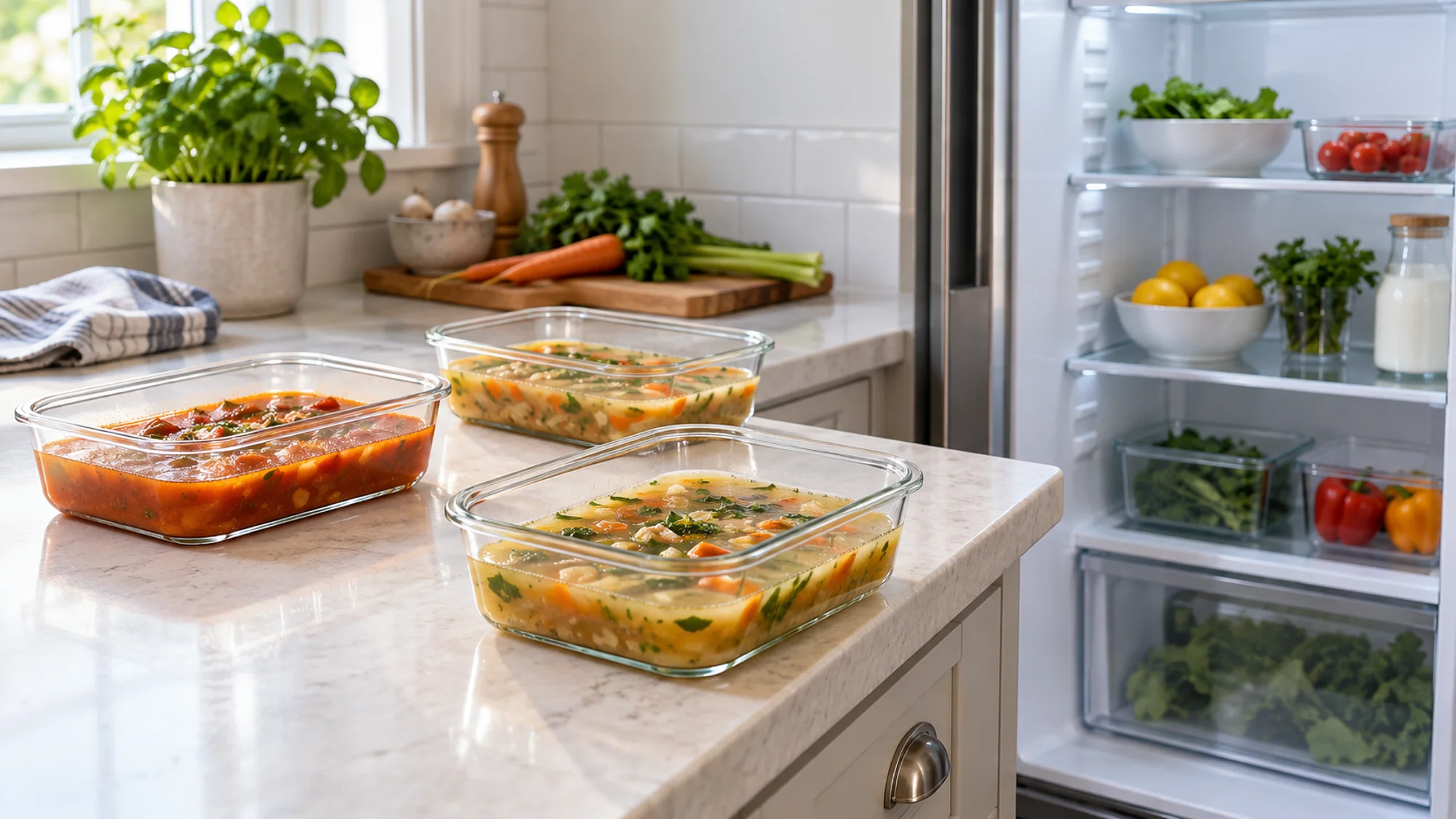
A big batch needs a cooling plan before dinner begins. Nebraska Extension’s soup guidance recommends dividing soup into shallow containers, with soup no more than two inches deep, and refrigerating promptly. An ice-water bath can help cool it; leaving a deep stockpot on the counter until bedtime cannot substitute for prompt chilling.
According to FoodSafety.gov’s leftover guidance, refrigerate within two hours, or one hour when food is exposed to temperatures above 90°F. Keep the refrigerator at 40°F or below. Hot food can go directly into the refrigerator after dividing large amounts; you do not need to wait for it to become room temperature.
Make refrigerator space and set out shallow containers before serving. The easier the cooling step is, the less tempting it becomes to postpone it.
Plan the next bowl before the first one
Use refrigerated soup within three to four days, or freeze it for later, following Nebraska Extension’s storage advice. Label the container with its contents and preparation date. I prefer portions that match one meal: they make it easier to take out what is needed without repeatedly warming the whole batch.
For reheating, FoodSafety.gov specifies at least 165°F. Stir for even heating and check with a food thermometer rather than judging only by steam. Soups should be brought to a boil when reheated, as USDA’s reheating guidance explains.
- Freeze planned extra portions early rather than forgetting them at the back of the fridge.
- Keep a short list of what is frozen so lunch does not become a mystery-container lottery.
- Discard soup left out beyond the safe time limit; reheating is not a way to rescue mishandled food.
Bottom Line
Let soup season follow your appetite and the weather. Build a bowl with the texture and substance you want, check salty ingredients, and plan prompt cooling, dated portions and thorough reheating before making a large batch.
America’s Test Kitchen discusses bouillon in the video below, a useful companion when choosing the flavorful base for a soup. It focuses on a particular product rather than prescribing one brand for every pot.
Sources
- Nebraska Extension: Serving Soup Safely
- FoodSafety.gov: Leftover storage and reheating
- FDA: Sodium in Your Diet
- USDA: Safe reheating methods

Hi, I’m Emily Pocker! I share recipes and food guides here at Recipes360 to help you find everyday meal inspiration and feel more confident in the kitchen. My goal is to make cooking approachable, enjoyable, and full of flavor.