
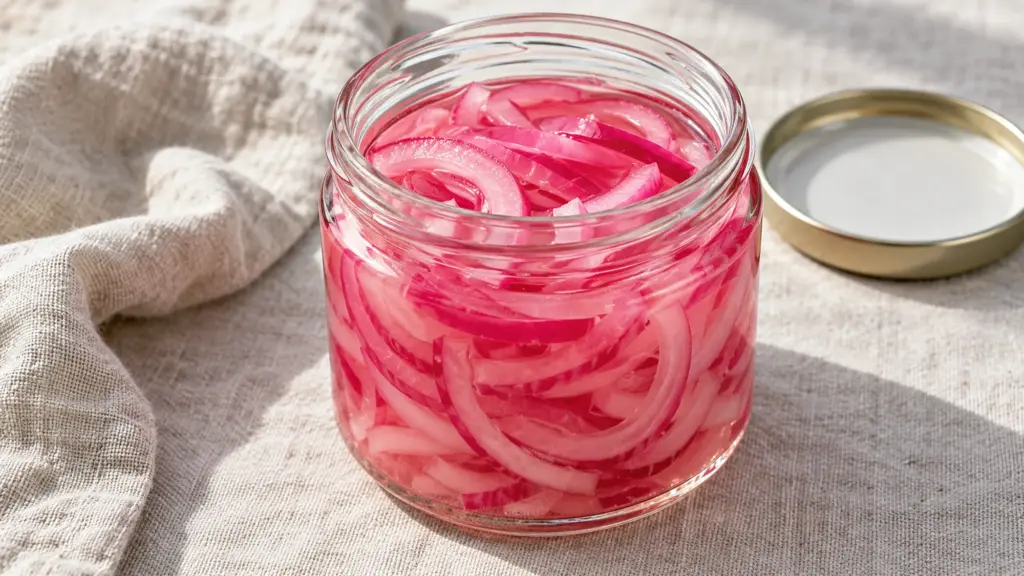
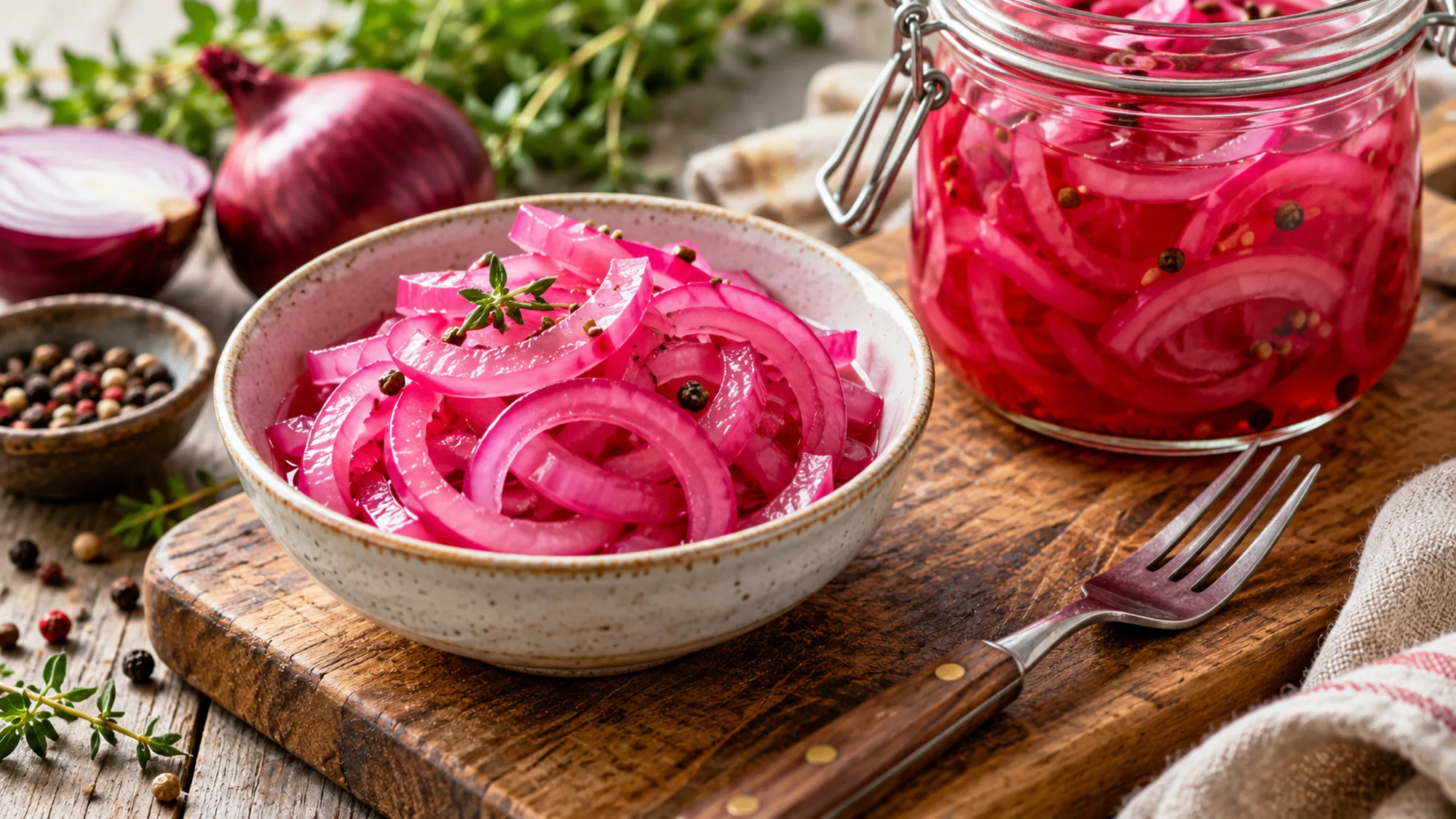
A rich sandwich sometimes needs something sharp, not another creamy sauce. Pickled red onions bring that bright, sweet-sour bite in a small forkful, with pink ribbons that look especially good against beans, eggs and leafy greens. This is a small refrigerator batch, not a canning project.
These pickled red onions use thinly sliced onion and a warm vinegar brine, followed by refrigeration. Keep the finished jar cold: pouring hot liquid into a jar does not make this recipe shelf-stable, even if the lid seems to seal.
I prefer thin half-moons because they tuck into sandwiches without pulling the whole filling out when you bite. A knife is perfectly adequate; a mandoline is optional and needs its hand guard. The flavor softens as the onions sit, but they should still have a pleasant bite rather than the texture of cooked onion.
Serving Suggestions for Pickled Red Onions
Lift out what you need with a clean fork and let the excess brine drip back into the jar. A little liquid is welcome in a bowl of beans, but too much can soak a sandwich bun. Start with a small topping and add more after tasting the whole bite.
- Add a few strands to tacos, tostadas or a plate of cochinita pibil to contrast with the richer filling.
- Scatter over a grain bowl with beans and roasted vegetables. Keep the first drizzle of dressing light because the onions already bring acidity.
- Tuck into a sandwich with avocado or hummus, keeping the onions away from the bread until the final assembly.
- Serve beside eggs or a cheese-filled tortilla rather than heating the whole jar. Their cool crunch is part of the appeal.
I would treat the onions like a finishing ingredient, not a sauce. A modest forkful can brighten a plate while leaving the other flavors room to show up.
Simple Variations and Storage Choices
Distilled white vinegar gives a clean, direct tang; apple cider vinegar brings a fruitier edge. Use vinegar labeled 5% acidity, such as this manufacturer’s example, and do not use cleaning vinegar. Keep the water-to-vinegar ratio in the card rather than diluting the brine to make it taste milder.
| Choice | What changes | Practical note |
|---|---|---|
| White vinegar | Clean, sharp flavor | Use food-grade vinegar with 5% acidity. |
| Apple cider vinegar | Fruitier background | Choose the same labeled acidity. |
| Peppercorns or chili flakes | Gentle spice or heat | Add a small optional pinch. |
| Thin half-moons | Easy sandwich topping | Slice evenly for consistent texture. |
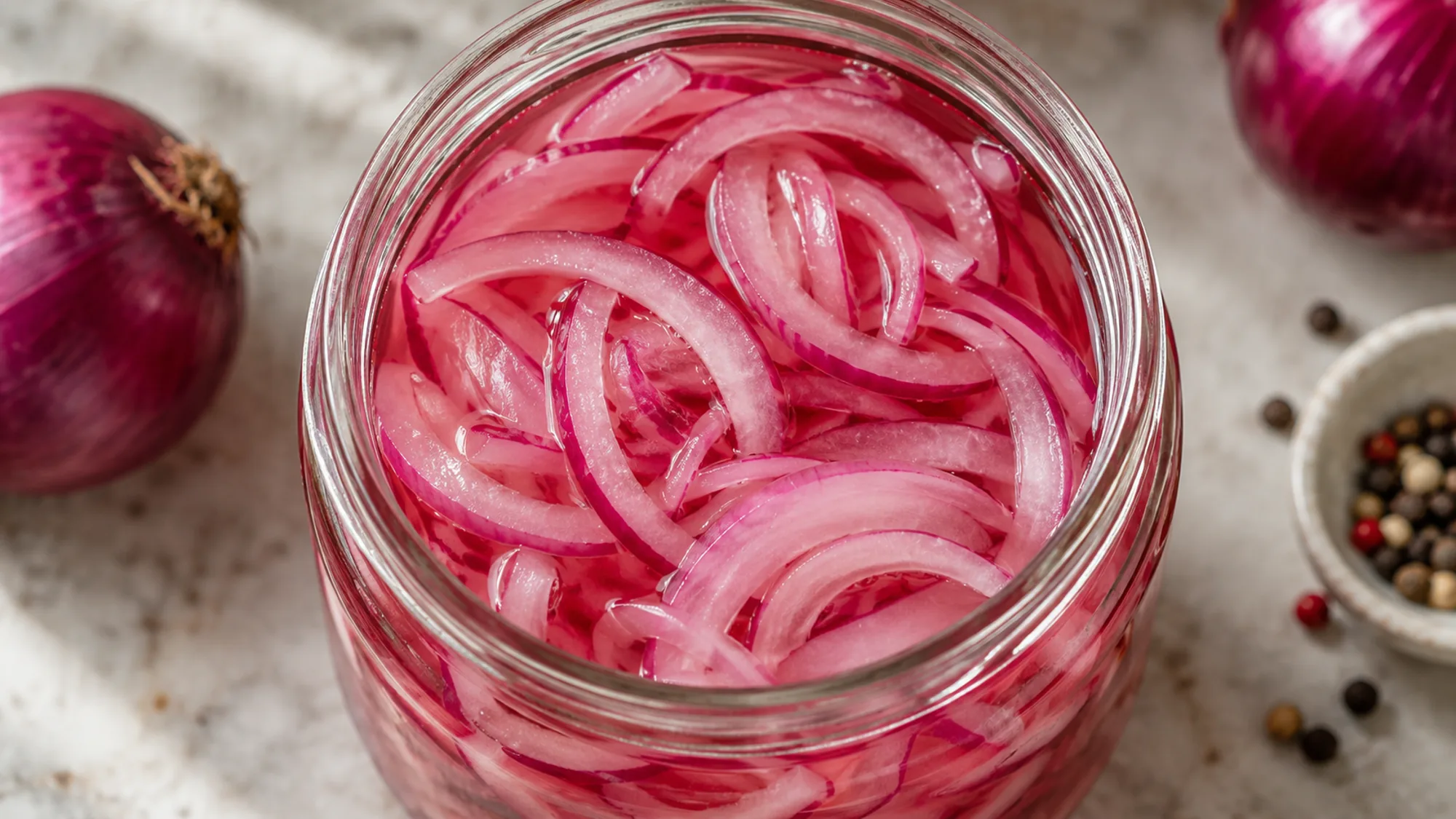
A clean pint jar is convenient for this small batch, provided the onions fit below the liquid. If the jar is too crowded, use a second small clean container rather than leaving onion pieces exposed. Do not pack additional raw onions into an older batch or reuse its brine for another jar.
Label the jar with the preparation date and keep it refrigerated at 40°F or below. For this small home batch, plan to use it within two weeks; discard it if mold, an off odor or other spoilage appears, without tasting to check.
Health Benefits Without the Pickle Hype
Onions contribute a little fiber, but a condiment-sized serving is not a large vegetable portion. Salt and sugar are part of this brine, and the amounts you actually eat depend on how well the onions drain. The card’s estimate allocates all the brine across the servings, so it is not a laboratory measurement of drained onions.
- Quick vinegar pickling is not the same process as controlled fermentation. Do not assume this jar provides a proven probiotic benefit.
- Choose the serving size that suits the meal, particularly if you monitor sodium. Draining removes some brine, but it does not create a reliable sodium-free portion.
- The recipe contains no dairy or wheat ingredients, although packaged ingredients and preparation surfaces still matter for individual allergies.
For the distinction between refrigerator storage and shelf-stable preservation, Oregon State University Extension’s refrigerator-pickle guidance is a helpful starting point. A shelf-stable version requires a tested canning recipe and its exact processing method; this one is intended only for the refrigerator.
The best reason to make these onions is their lively flavor and useful crunch. They can make a simple meal more interesting without needing a detox, weight-loss or digestive-health claim attached.
Bottom Line
Keep the slices thin, the brine properly proportioned and the jar cold. These pickled red onions are a practical finishing touch for everyday meals, with enough tang to wake up a sandwich and a clear refrigerator-only storage plan.
Pickled Red Onions Recipe

Ingredients
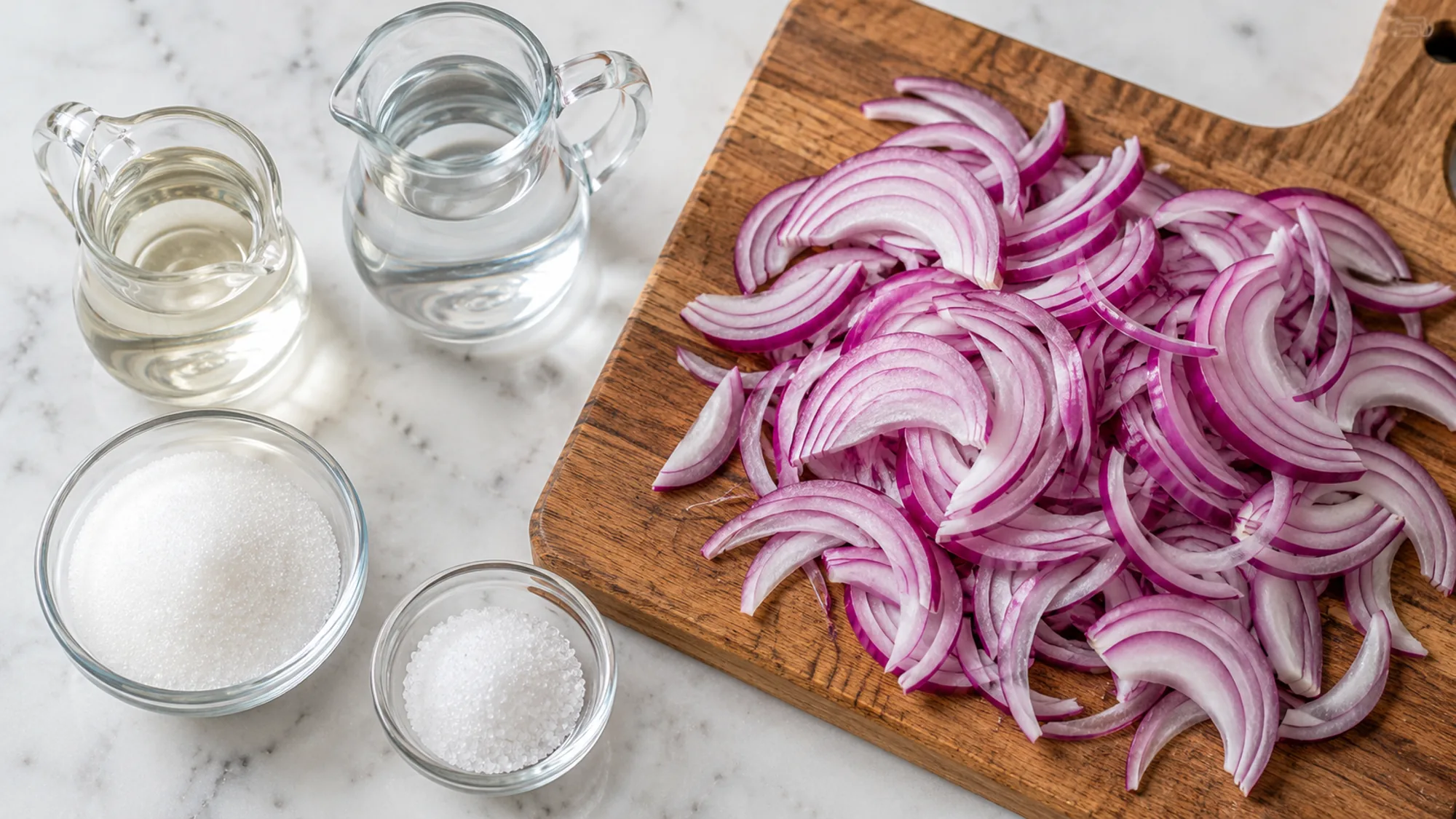
- 1 red onion about 200 g peeled, thinly sliced into half-moons
- 1/2 cup distilled white vinegar 120 ml, food-grade, labeled 5% acidity
- 1/2 cup water 120 ml
- 1 tablespoon granulated sugar about 12.5 g
- 1 teaspoon fine salt about 6 g
Equipment
- Clean heat-safe pint jar with lid
- Small saucepan
- Knife and cutting board
- Measuring cups and spoons
- Clean fork
Instructions
- Wash hands and use clean utensils. Peel and thinly slice the onion into even half-moons, about 1/8 inch thick. Pack into a clean heat-safe pint jar, leaving room for the liquid. Use an additional small clean jar if necessary.
- Combine vinegar, water, sugar and salt in a small saucepan. Bring just to a simmer, stirring until the salt and sugar dissolve, about 3 minutes. Remove from the heat; do not boil the brine down.
- Pour the warm brine carefully over the onions in the heat-safe jar. Press the slices down with a clean fork so the liquid covers them. Leave about 1/2 inch headspace. Do not substitute a larger amount of water.
- Cover and refrigerate promptly. Chill for at least 1 hour before serving; the flavor develops further overnight. Lift portions out with a clean fork and drain as desired. Keep at 40°F/4°C or below and use within 2 weeks. This is not a shelf-stable canning recipe.
Nutrition
Video
Notes
Tried this recipe?
Let us know how it turned out!Hi, I’m Emily Pocker! I share recipes and food guides here at Recipes360 to help you find everyday meal inspiration and feel more confident in the kitchen. My goal is to make cooking approachable, enjoyable, and full of flavor.