
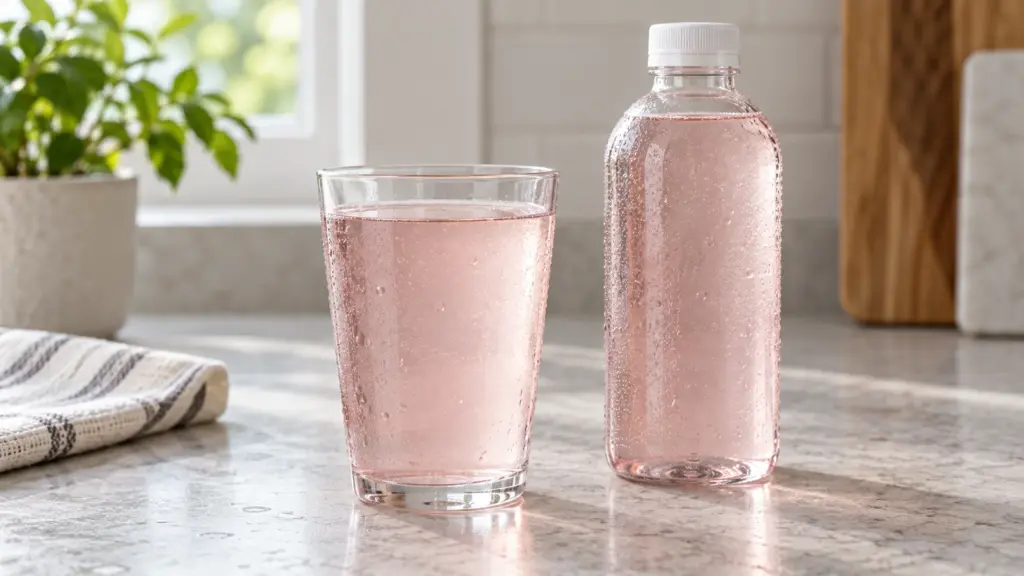
A cold, light drink can sound more appealing than a thick shake, especially when you want something easy to sip. Protein water offers that different texture: water with added protein, often flavoring and sometimes electrolytes. It is not plain water with a healthier-sounding name, and the bottle deserves the same label check as any other packaged drink.
Protein water can be a convenient way to add protein without a creamy shake. Choose it for a real gap in your meals, not because a clear drink guarantees better hydration, faster recovery or weight loss. The protein source and full label matter more than the color.
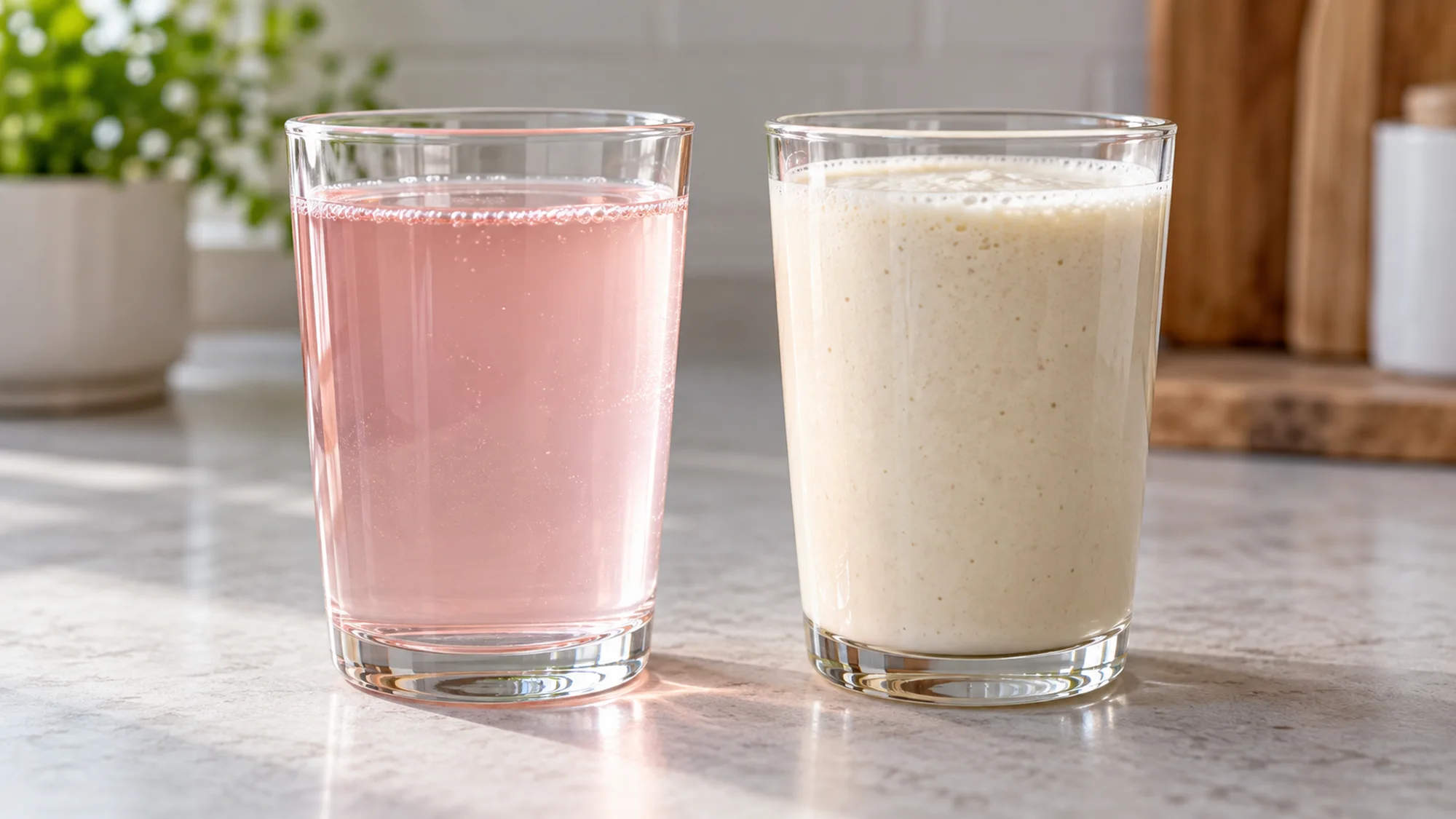
What Is in Protein Water?
Many ready-to-drink versions use whey protein isolate, a milk-derived ingredient, in a relatively clear liquid. Others may use different proteins, so the category name does not tell you everything. Flavor, sweetness and the amount of protein can vary even within one brand.
The two products below both use whey isolate, but that does not make them identical drinks. If the ingredient terminology is the confusing part, our guide to whey isolate and whey protein explains that separate processing question. Here, the useful decision is whether a bottled, water-like drink fits what you need.
- Ready to drink: the listed serving describes the finished bottle, provided you drink that serving.
- Powder mixed with water: check the measured powder serving and mixing instructions; adding more water changes dilution, not the protein in the scoop.
- Clear versus creamy: this is a texture preference, not a reliable ranking of nutritional quality.
Two Protein Water Labels, Compared
These manufacturer examples show why I would compare actual bottles rather than shop by the biggest front-label claim. The Protein2o Wild Cherry page and Isopure Protein Water page list the following amounts. They are different bottle sizes, not equal-volume servings; these are label comparisons, not a taste test.
| Product | Bottle | Protein | Calories / sugar |
|---|---|---|---|
| Protein2o Wild Cherry | 16.9 fl oz (500 mL) | 15 g | 70 / 0 g |
| Isopure Protein Water | 20 fl oz | 15 g | 60 / 0 g |
Protein2o lists erythritol and stevia in its ingredients, alongside its electrolyte blend. Isopure describes its drink as having no artificial flavors, colors or sweeteners. Those statements do not establish that one will taste better to you or suit every diet. Formulas change, and an older retailer photo may show a different version.
Compare the serving you will actually drink. Zero sugar does not mean zero calories, and a larger bottle does not necessarily supply more protein.
Clear Does Not Mean Dairy-Free
Whey comes from milk, even when the finished drink looks more like flavored water than a shake. The FDA’s food-allergen guidance explains that milk must be identified when it is the source of a major-allergen ingredient, including whey. Read the complete ingredient information, not only a front-label slogan.
- Milk allergy: a whey-based drink is not a milk-free alternative. Follow your allergy plan.
- Lactose concerns: look for explicit information about the exact product; clear appearance does not establish lactose content.
- Other preferences: inspect sweeteners, flavorings and any added caffeine rather than transferring claims between flavors.
I would buy one suitable bottle before a large multipack. A drink that is too sweet, too tart or simply unpleasant to sip is not a useful convenience, however tidy its nutrition numbers look.
When the Convenience Makes Sense
Protein helps build, maintain and repair muscle, but a particular bottled format does not guarantee a training result. The NIH Office of Dietary Supplements review places protein intake within overall diet and exercise, and notes that ordinary foods can meet protein needs, with supplements used when needed.
- Start with the gap: consider what meals already provide before adding another daily product.
- Keep meals varied: protein water is not automatically a complete meal or a replacement for foods supplying fiber and other nutrients.
- Compare value: calculate cost per bottle you will actually finish, not just price per multipack.
- Handle it as directed: follow the package’s storage and after-opening instructions; do not assume all clear drinks have identical requirements.
For my money, the strongest reason to choose it is preference plus convenience: you need an additional protein option and prefer a lighter drink. If a clinician has prescribed protein or fluid limits, check the product against that plan rather than adding it automatically.
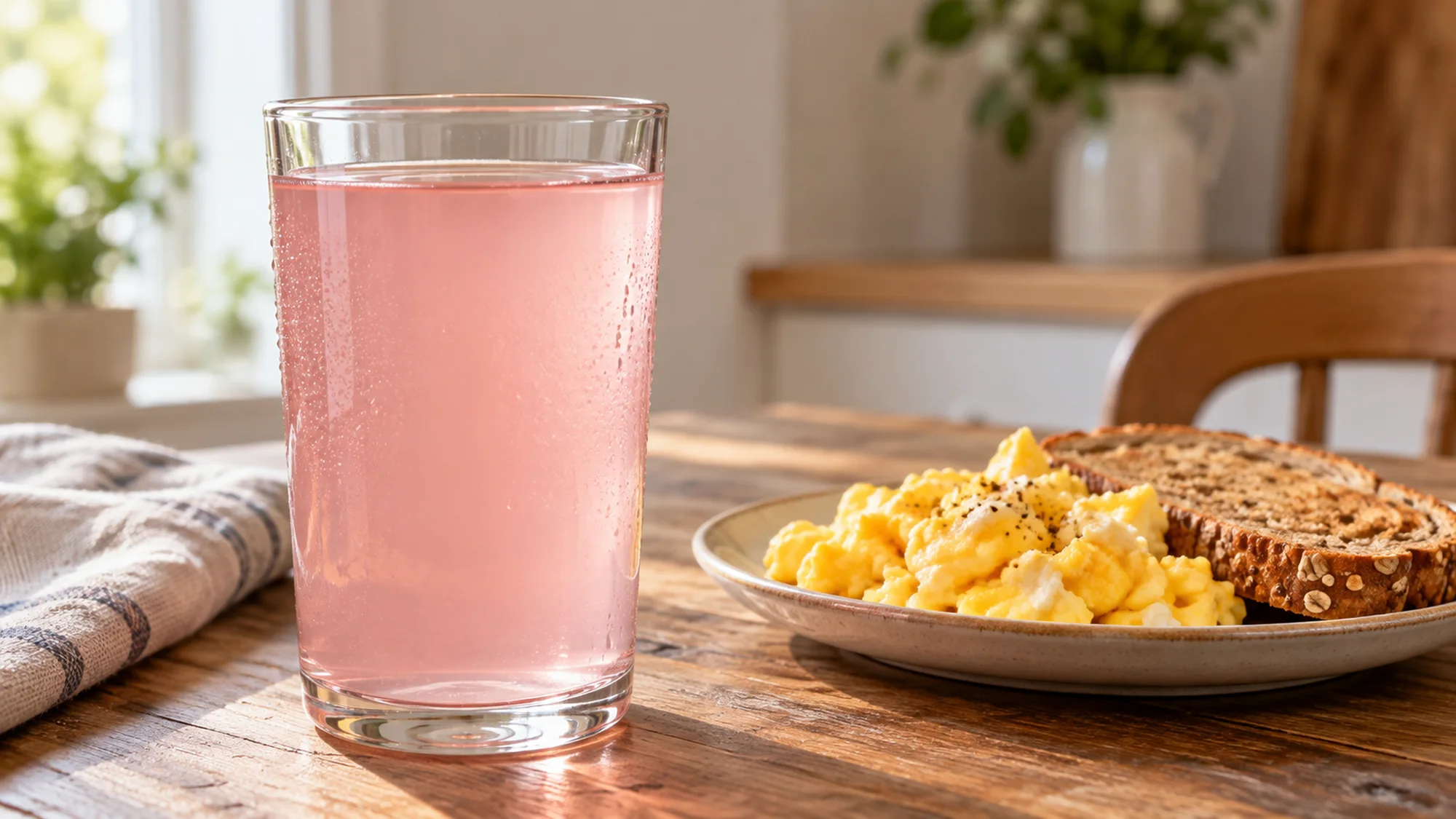
Bottom Line
Protein water is an optional protein-containing beverage, not an upgrade everyone needs. Compare the full serving, milk-allergen information, ingredients and cost. Choose the texture you enjoy while keeping ordinary meals—and your actual needs—at the center of the decision.
Myprotein’s explanation below covers whey isolate, the protein ingredient used in the two drinks compared here. It is a manufacturer’s ingredient explainer, not a review or endorsement of these bottles.
Sources
- Protein2o: Wild Cherry ingredients and Nutrition Facts
- Isopure: Protein Water product information
- FDA: Reading food-allergen labels
- NIH ODS: Protein and exercise nutrition

Hi, I’m Emily Pocker! I share recipes and food guides here at Recipes360 to help you find everyday meal inspiration and feel more confident in the kitchen. My goal is to make cooking approachable, enjoyable, and full of flavor.