
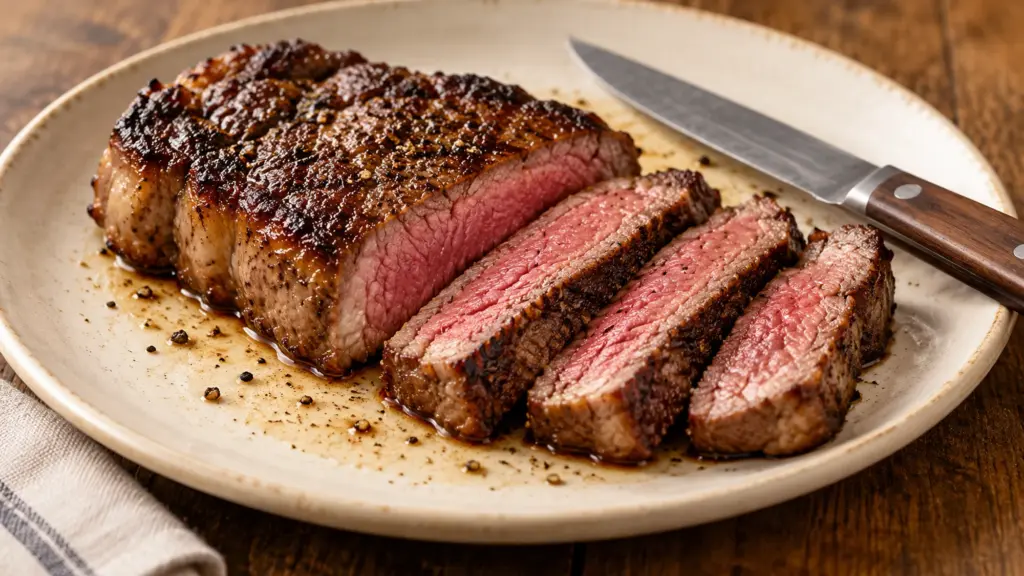
Sirloin steak is a beef steak whose exact cut depends on where you shop. In the United States, top sirloin is a versatile steak from the sirloin primal; British sirloin commonly refers to striploin. Read the full cut name before choosing a cooking method.
For a straightforward steak dinner, look for an evenly cut top sirloin, cook it with a food thermometer, and slice across the grain. USDA guidance for whole beef steaks is at least 145°F (63°C), followed by a three-minute rest; follow any additional package instructions.
What Does Sirloin Steak Mean?
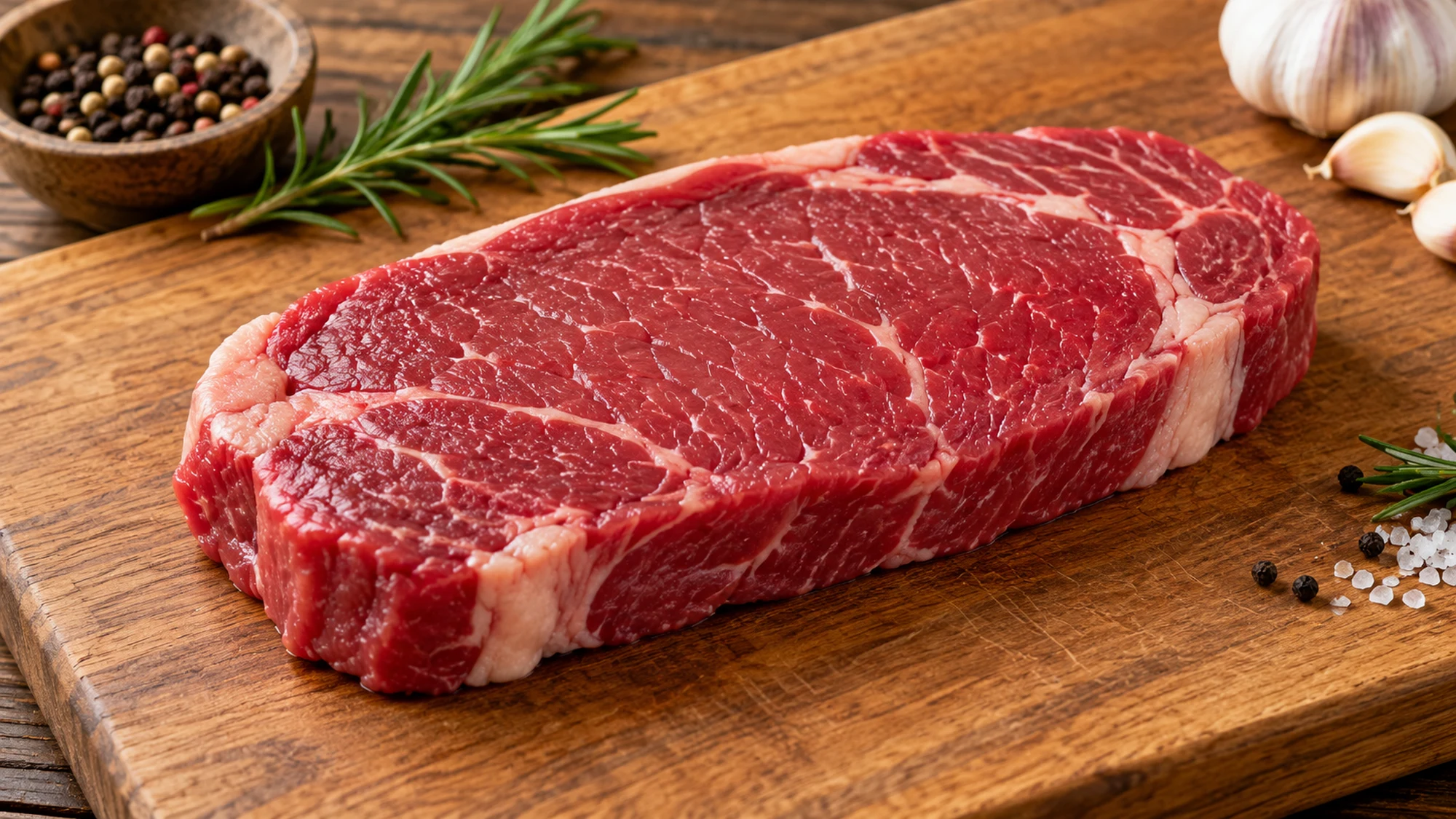
American top sirloin comes from the upper part of the sirloin primal. That primal also contains bottom sirloin cuts, including tri-tip and bavette, so the word sirloin alone does not identify one uniform piece of meat. The Beef Checkoff cut guide lists top sirloin separately and recommends grilling, skillet cooking and broiling among its uses.
Across the Atlantic, AHDB identifies striploin with a sirloin cutting specification. A British sirloin steak and an American top sirloin therefore need not be the same cut. I would ask the butcher to name the muscle or show the cut rather than translate a recipe by its title alone.
These distinctions matter when comparing recipes: thickness, muscle structure and trimming affect how a steak cooks. A small steak labeled petite sirloin also deserves its own instructions rather than an assumption that every sirloin label means top sirloin.
Choose the Steak for Your Dinner
For pan cooking, choose pieces with reasonably even thickness so the thinner end does not finish long before the center. A visible strip of exterior fat and fine fat within the meat are different features; neither tells you the eventual internal temperature.
| What the label says | What to clarify | Useful decision |
|---|---|---|
| U.S. top sirloin | Center-cut, cap-on or cap-off? | Choose an even steak for a skillet or grill. |
| British sirloin | Is this striploin? | Match the recipe to the actual cut. |
| Bottom sirloin or petite sirloin | Which named cut is it? | Ask about slicing and suitable preparation. |
| Needle-, blade- or mechanically tenderized | What cooking directions are supplied? | Keep and follow the validated instructions. |
Check whether the steak is plain, marinated or injected, especially if you need to avoid an ingredient. Keep the packaging until dinner is cooked. I would prioritize a clearly identified cut and consistent thickness over a marketing description that does not explain either.
Cook to Temperature, Then Rest
Pat the surface dry, season as desired, and use a pan or grill suited to the steak’s thickness. Turn it as needed for browning; a thick steak may need gentler heat after the outside develops a crust. Our guide to cooking steak offers a practical dinner starting point.
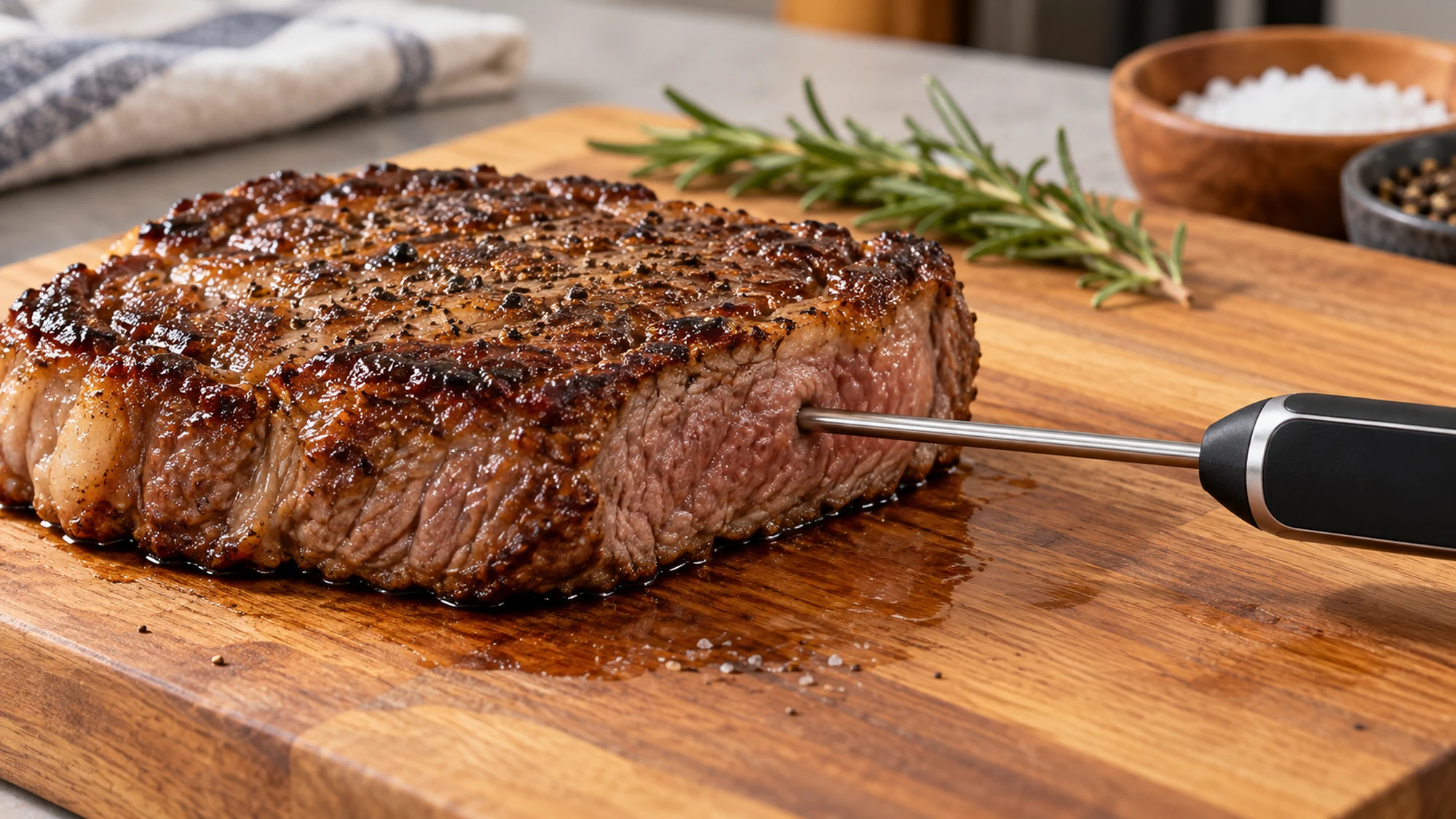
For safety, use the federal minimum temperature for whole beef steaks: 145°F (63°C) before removal from the heat, then at least three minutes of rest. Check the center with a food thermometer. On a thinner steak, inserting the probe from the side helps place its sensing area in the middle. Pinkness, clear juices and a browned exterior do not replace a temperature reading.
If the label says mechanically, needle or blade tenderized, follow its specific cooking method, temperature and holding instructions. USDA requires validated cooking directions on these products because the necessary treatment must address the product throughout. Do not discard that information in favor of a generic minutes-per-side chart.
Slice, Serve and Store
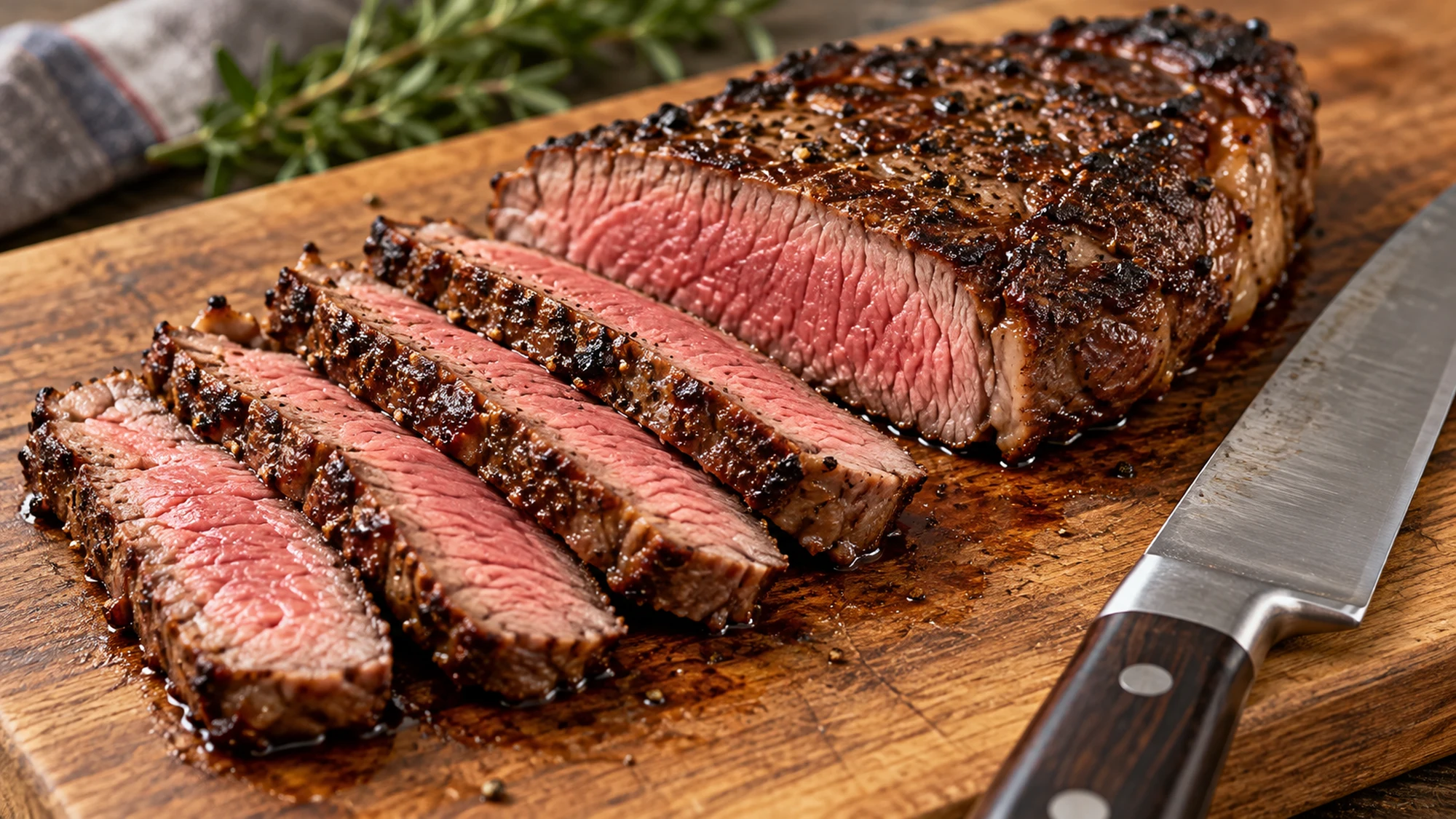
After the required rest, look for the direction of the muscle fibers and cut across them. Thin slices are a useful choice for sandwiches, salads or rice bowls; leave larger slices for a plated steak dinner. A sharp knife makes this easier without pressing the meat flat.
Keep raw steak refrigerated at 40°F (4°C) or below and use it within three to five days, or freeze it. Cooked beef leftovers keep for three to four refrigerated days under FoodSafety.gov’s cold-storage guidance. These are storage limits, not a reason to ignore an earlier package instruction or questionable handling.
Keep raw meat and its juices separate from ready-to-eat food, and use a clean board and plate for the cooked steak. Refrigerate leftovers promptly. When reheating them, the federal leftovers guideline is 165°F (74°C); adding them at the very end of a dish may warm them unevenly.
Bottom Line
Sirloin is easier to buy and cook when you confirm the precise cut first. Choose even thickness, retain tenderized-meat instructions, measure the center rather than guessing from color, and give whole beef steaks their required three-minute rest after reaching 145°F (63°C).
Sources
- Beef Checkoff: Top Sirloin Steak and the sirloin primal
- AHDB: Striploin and sirloin cutting specification
- FoodSafety.gov: Safe Minimum Internal Temperatures
- USDA FSIS: Validated instructions for mechanically tenderized beef
- FoodSafety.gov: Cold Food Storage Chart

Hi, I’m Emily Pocker! I share recipes and food guides here at Recipes360 to help you find everyday meal inspiration and feel more confident in the kitchen. My goal is to make cooking approachable, enjoyable, and full of flavor.