
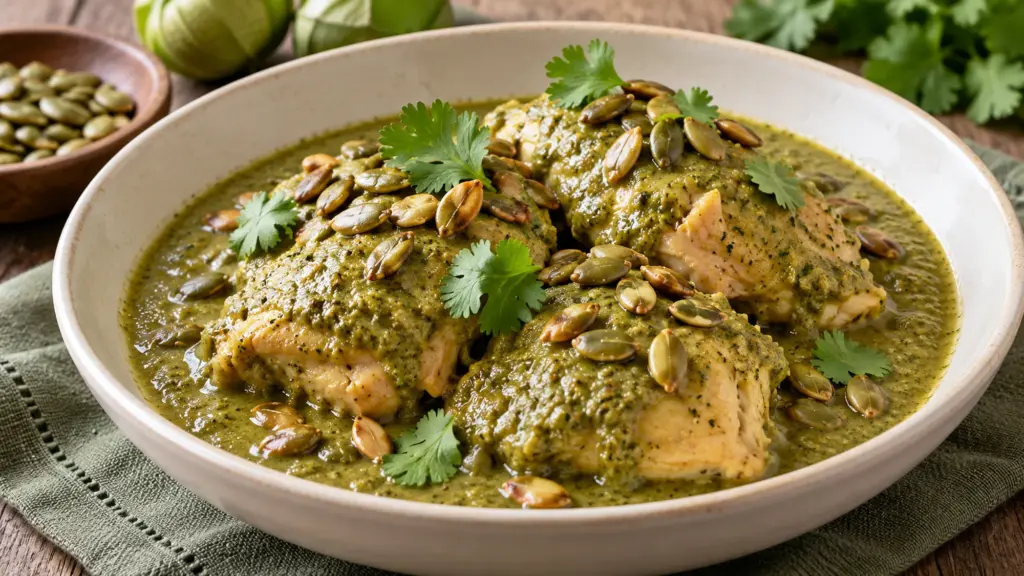
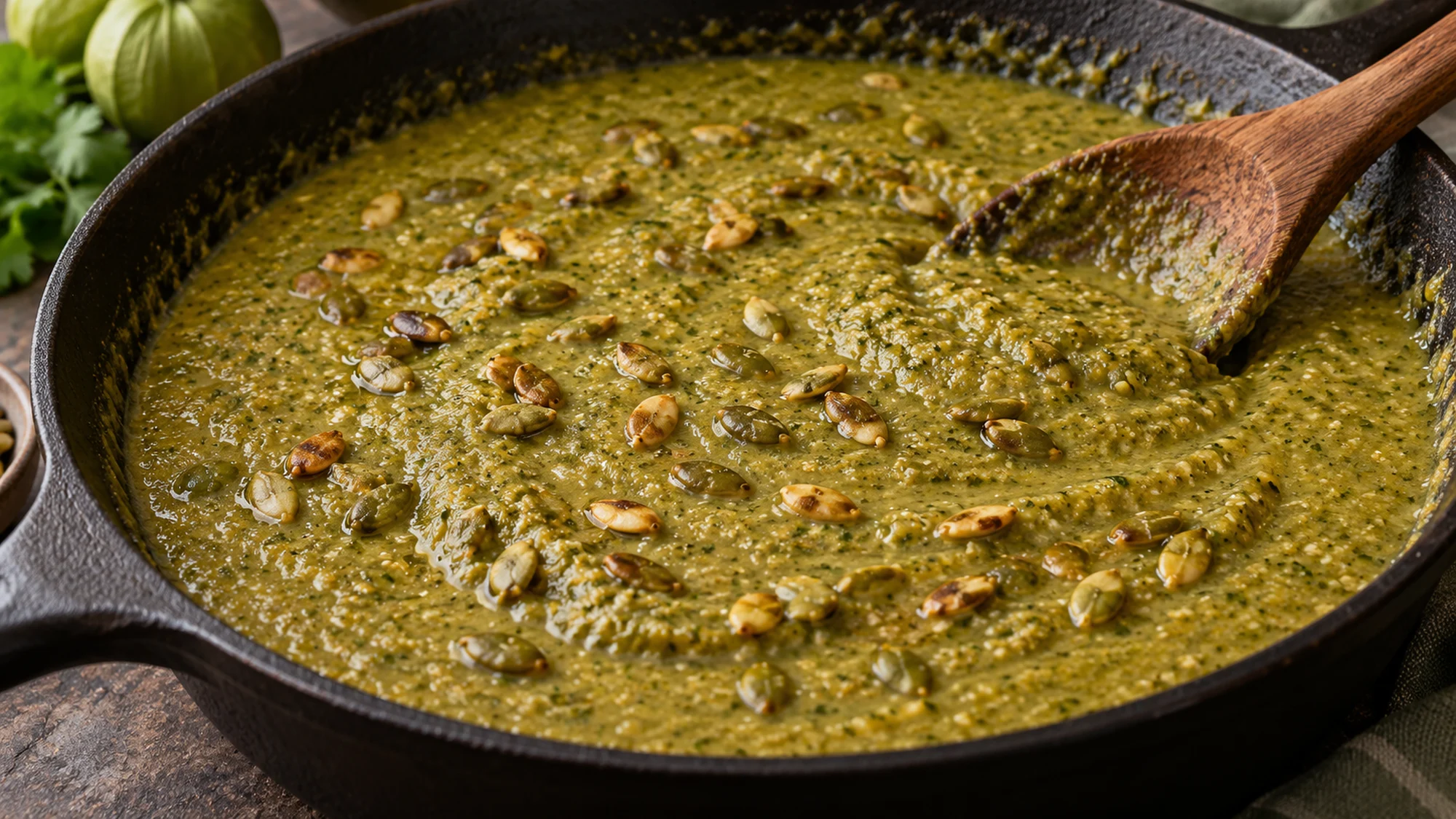
Pipián verde brings toasted pumpkin seeds, tangy tomatillos and green herbs together in a sauce that feels generous without needing cream. Here it coats browned chicken thighs, with enough sauce left for the rice or tortillas you choose to serve alongside. The finish should be spoonable and gently textured, not stiff like a paste.

Toast the pepitas for their aroma, not until they turn dark: their flavor carries the sauce.
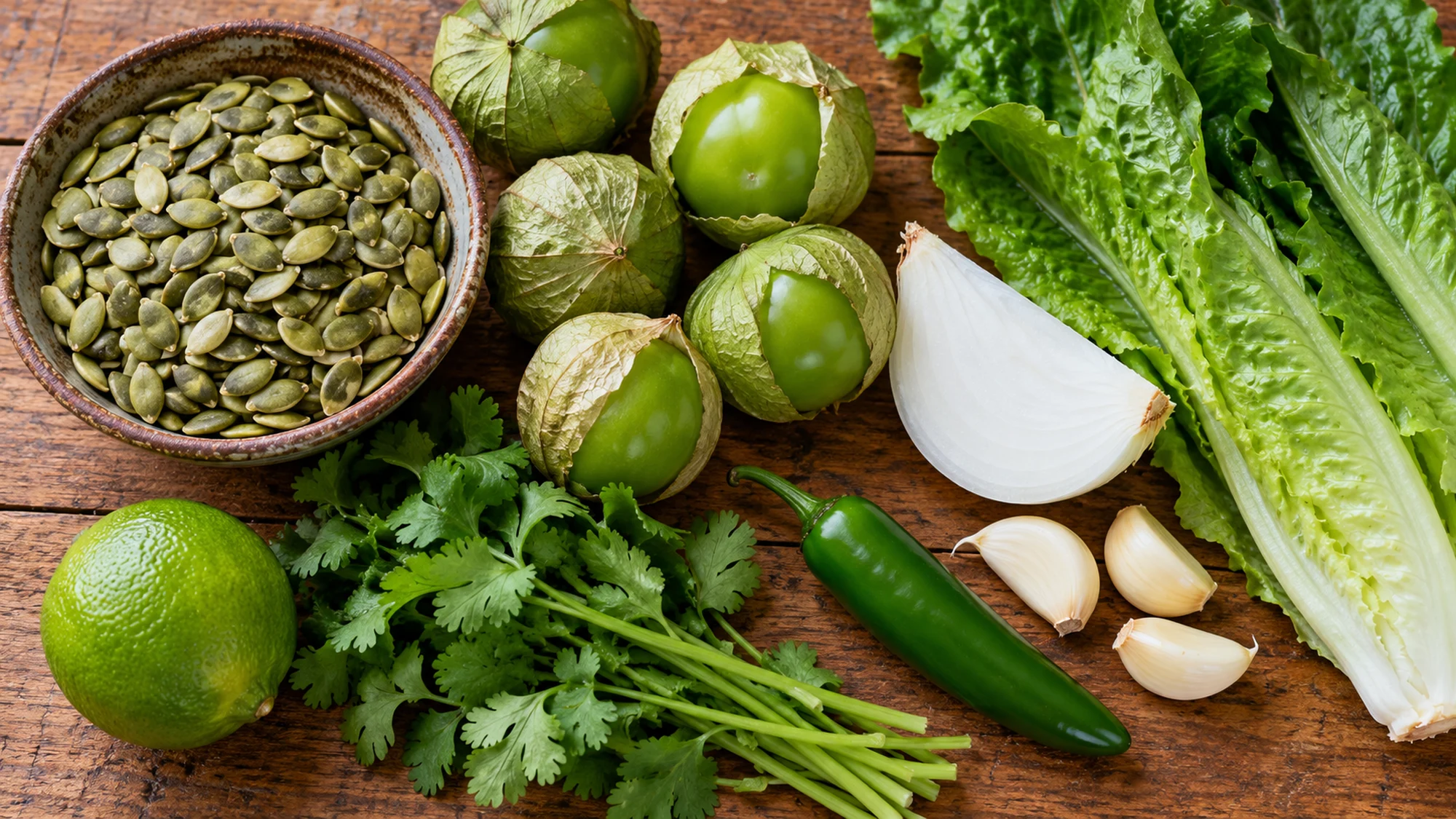
Use hulled green pumpkin seeds, often sold as pepitas, rather than seeds with hard white shells. Rinse the sticky coating from the tomatillos after removing their husks. Cilantro and a little romaine soften the sauce’s sharp edges without overwhelming the nutty flavor. This is one home-kitchen version of a dish with regional and family variations, not a claim to a single definitive formula.
The chicken browns first and finishes gently in broth while you prepare the sauce. That gives you time to toast and blend without racing between pans. I prefer bone-in thighs here because they suit the slow finish. Their skin will soften beneath the sauce, so expect flavorful browned chicken rather than a crisp-skinned roast.
Serving Suggestions for Pipián Verde
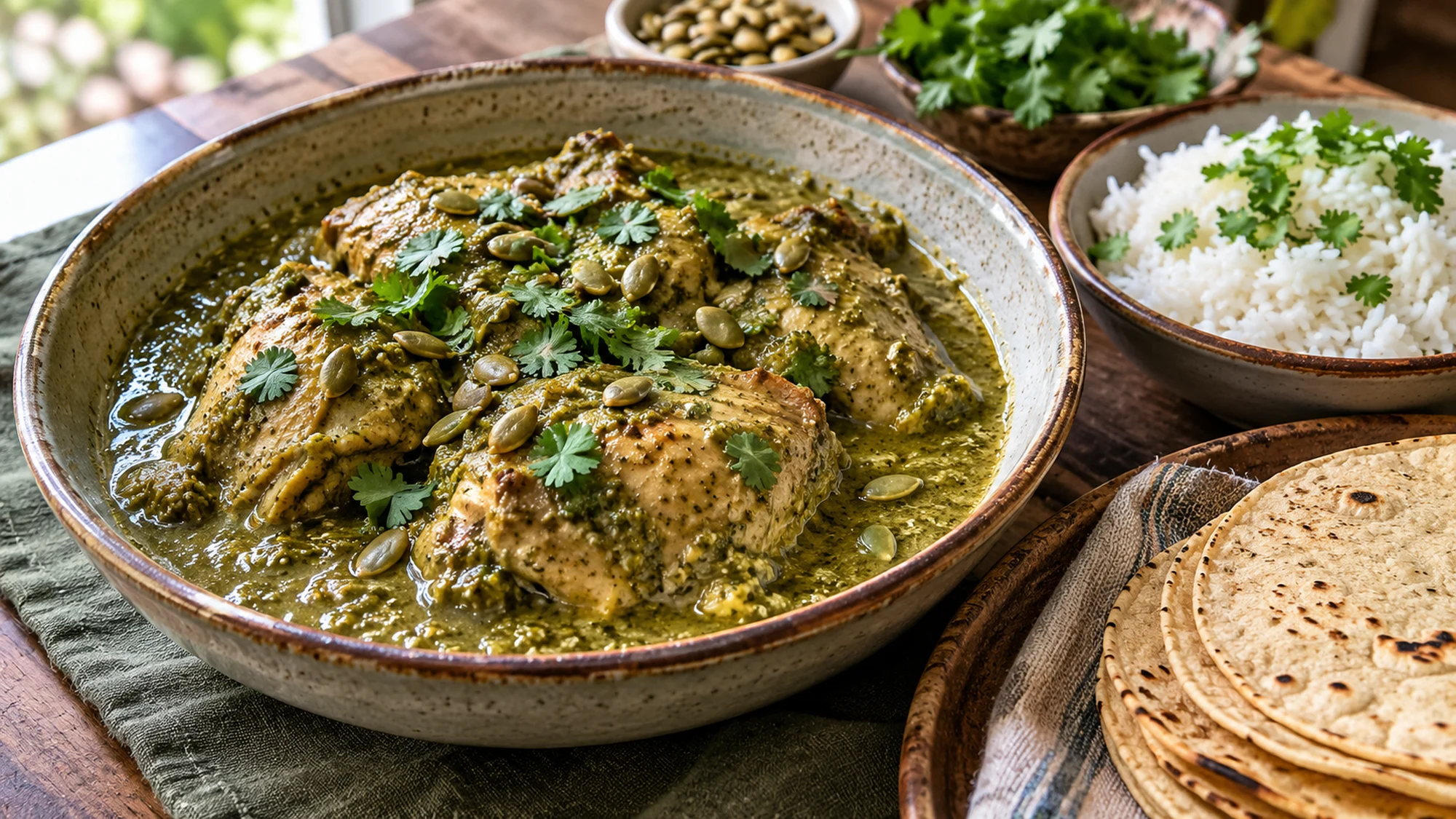
Spoon the sauce around and over each thigh, then add a few reserved pepitas. Plain rice is a comfortable companion because it catches every bit of sauce. Warm corn tortillas offer a different way to finish the plate. Both are optional extras rather than ingredients hidden in the nutrition estimate.
A simple cucumber salad or steamed vegetables adds contrast. If you want another make-ahead dish on the table, chickpea cucumber salad keeps the side cool and crisp. I would keep its dressing light when pairing it with this sauce; the tomatillos already provide plenty of brightness.
| Sauce cue | Useful adjustment |
|---|---|
| Thick enough to mound | Stir in warm broth, a tablespoon at a time. |
| Slightly grainy | Blend longer before the final simmer. |
| Too sharp | Taste with the chicken and adjust salt before adding lime. |
| Flat after reheating | Add a little fresh cilantro or a small squeeze of lime. |
Variations That Respect the Sauce
For milder heat, remove the jalapeño seeds and pale inner ribs, then start with half the pepper. You can add more after tasting, but you cannot easily take it out. A serrano gives a different, often stronger heat. Keep either choice modest enough that the toasted seeds and herbs remain noticeable.
Boneless chicken thighs can work, but they cook faster and need a thermometer rather than the same braising time. For a vegetable version, use vegetable broth and spoon the finished sauce over roasted squash or cauliflower. That changes the meal and nutrition substantially; it is not simply the chicken recipe with the meat removed.
The embedded lesson by Rick Bayless demonstrates a related green mole served with vegetables. It is useful for seeing sauce technique, while the quantities and chicken method below belong to this recipe. Different cooks use different herbs and thickeners; follow the written ingredient list here rather than combining both recipes halfway through.
Health Benefits and Kitchen Safety
Chicken supplies protein, and pepitas add protein, fat and some fiber. The pumpkin seed nutrition label also illustrates why a seed-thickened sauce is substantial even without cream. A moderate portion with vegetables can make a satisfying plate, but green color alone does not make any dish low in calories.
Nutrition is an estimate for one thigh and one quarter of the sauce. It assumes about 600 grams of edible raw chicken from 900 grams of bone-in thighs, with skin eaten, and includes all the oil. Bone size, discarded pan fat and the amount of sauce served will change the result. Rice and tortillas are not included.
Keep raw chicken separate from the herbs and ready-to-eat ingredients. The food-safety minimum for poultry is 165°F in the thickest part, away from the bone. Use a thermometer, not the color of the juices. Cool leftovers in shallow containers, refrigerate within two hours and use within three to four days; reheat thoroughly to 165°F.
Bottom Line
The best reason to make pipián verde is the sauce: nutty, lively and generous enough to turn a straightforward chicken dinner into something memorable. Keep the seed toasting gentle, give the blender time and loosen the sauce as needed. A little attention to texture matters more than chasing an intensely bright green color.
Pipián Verde Recipe


Ingredients
- 4 bone-in skin-on chicken thighs about 900 g total; trim excess loose fat
- 1 tablespoon neutral cooking oil 14 g
- 1/2 teaspoon fine salt divided; adjust to broth and taste
- 1/4 teaspoon ground black pepper
- 2 cups low-sodium chicken broth 480 mL; plus a little more only if needed
- 80 g raw hulled pumpkin seeds about 2/3 cup; reserve 1 tablespoon after toasting
- 300 g tomatillos husked and rinsed, about 6 medium
- 80 g white onion about 1/2 small onion, roughly chopped
- 3 garlic cloves peeled, about 9 g
- 1 jalapeño about 20 g; stem removed, seeds and ribs removed for milder heat
- 1 cup loosely packed cilantro 15 g, leaves and tender stems
- 2 romaine lettuce leaves 30 g, roughly torn
- 1 tablespoon lime juice 15 mL; add only after tasting
Equipment
- 1 Large lidded skillet
- 1 Small dry skillet
- 1 Saucepan
- 1 Blender suitable for warm liquids
- 1 Tongs
- 1 Food thermometer
Instructions
- Pat chicken dry with paper towels; do not rinse it. Season with half the salt and the pepper. Heat oil in a large skillet over medium-high heat. Brown chicken skin-side down for 6–8 minutes, then turn and brown for 2 minutes. Lower heat if the pan smokes.
- Add 1 cup of the broth around the chicken, bring to a gentle simmer, cover and cook over medium-low heat for 25–35 minutes. Check the thickest part away from bone: it must reach at least 165°F (74°C). Thighs may become more tender around 175–180°F. Add a splash of broth if the pan gets dry.
- While the chicken cooks, toast pepitas in a dry skillet over medium-low heat for 3–5 minutes, stirring often, until fragrant and beginning to puff. Do not let them darken. Transfer to a plate and reserve 1 tablespoon for garnish.
- Put tomatillos, onion, garlic and jalapeño in a saucepan with water just to cover. Simmer 8–10 minutes, until tomatillos soften but do not disintegrate. Drain. Let cool until safe for your blender; never seal steaming-hot liquid in a blender.
- Blend the remaining toasted seeds with the remaining 1 cup broth, softened vegetables, cilantro, romaine and remaining salt until as smooth as your blender allows. Work in batches and follow the blender manufacturer’s warm-liquid instructions.
- Transfer the fully cooked chicken to a clean plate. Pour the green sauce into the skillet with the cooking juices. Simmer gently, stirring frequently, for 8–10 minutes until spoonable; add broth a tablespoon at a time if thick. Return chicken and warm through for about 3 minutes, keeping it at least 165°F. Taste before adding the lime juice; use only as much as needed.
- Divide chicken and sauce among four plates. Scatter the reserved pepitas on top. Serve optional rice or tortillas separately.
Nutrition
Video
Notes
Tried this recipe?
Let us know how it turned out!Hi, I’m Emily Pocker! I share recipes and food guides here at Recipes360 to help you find everyday meal inspiration and feel more confident in the kitchen. My goal is to make cooking approachable, enjoyable, and full of flavor.