
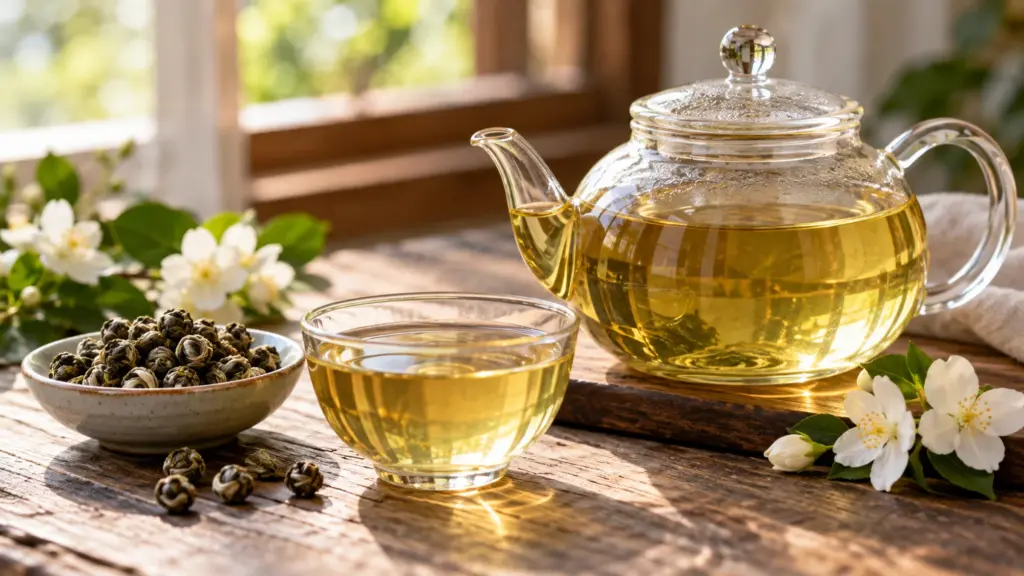
A cup of jasmine tea can smell floral before the first sip reaches your mouth. Usually, that fragrance comes from tea leaves scented with jasmine flowers, rather than a cup made only from blossoms. The base tea still matters: it shapes the flavor, brewing instructions and caffeine in your drink.
Jasmine tea is tea scented or flavored with jasmine. Green tea is a familiar base, but the name alone does not identify every blend. Read the ingredients, follow that product’s brewing directions and expect caffeine unless the label confirms otherwise.
What jasmine tea actually contains
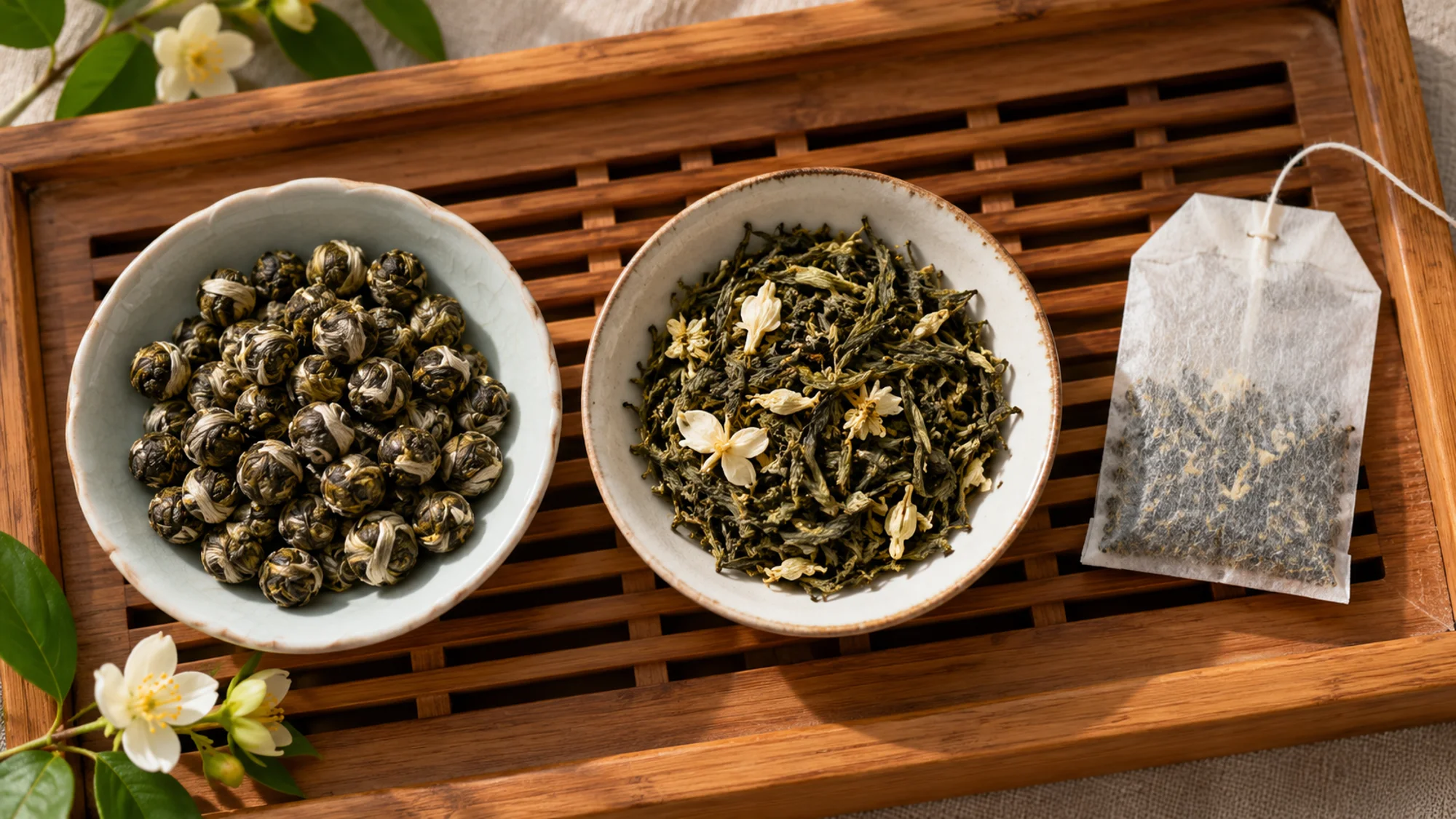
Twinings describes its jasmine green tea as green tea scented with jasmine flowers. That is a useful example of the distinction: “jasmine” describes the floral character, while “green tea” identifies the tea underneath. A gentle aroma does not make it an herbal, caffeine-free drink.
Harney & Sons lists several jasmine styles, including its pouchong-based Jasmine and other white, green and black tea options. Check the specific product rather than assuming all jasmine teas use identical leaves or taste alike. I would choose by the base and fragrance description before worrying about whether the leaves look especially decorative.
| What the package says | What it helps you identify | What still needs checking |
|---|---|---|
| Jasmine green tea | Green tea with jasmine character | Ingredients and brewing directions |
| Jasmine pearls | A rolled leaf format | Base tea, amount and steeping guidance |
| Jasmine tea bag or sachet | A convenient brewing format | Leaf blend and cup-size directions |
| Jasmine-scented black or white tea | A different base tea | Caffeine information and preparation |
Brew for the leaves, not just the fragrance
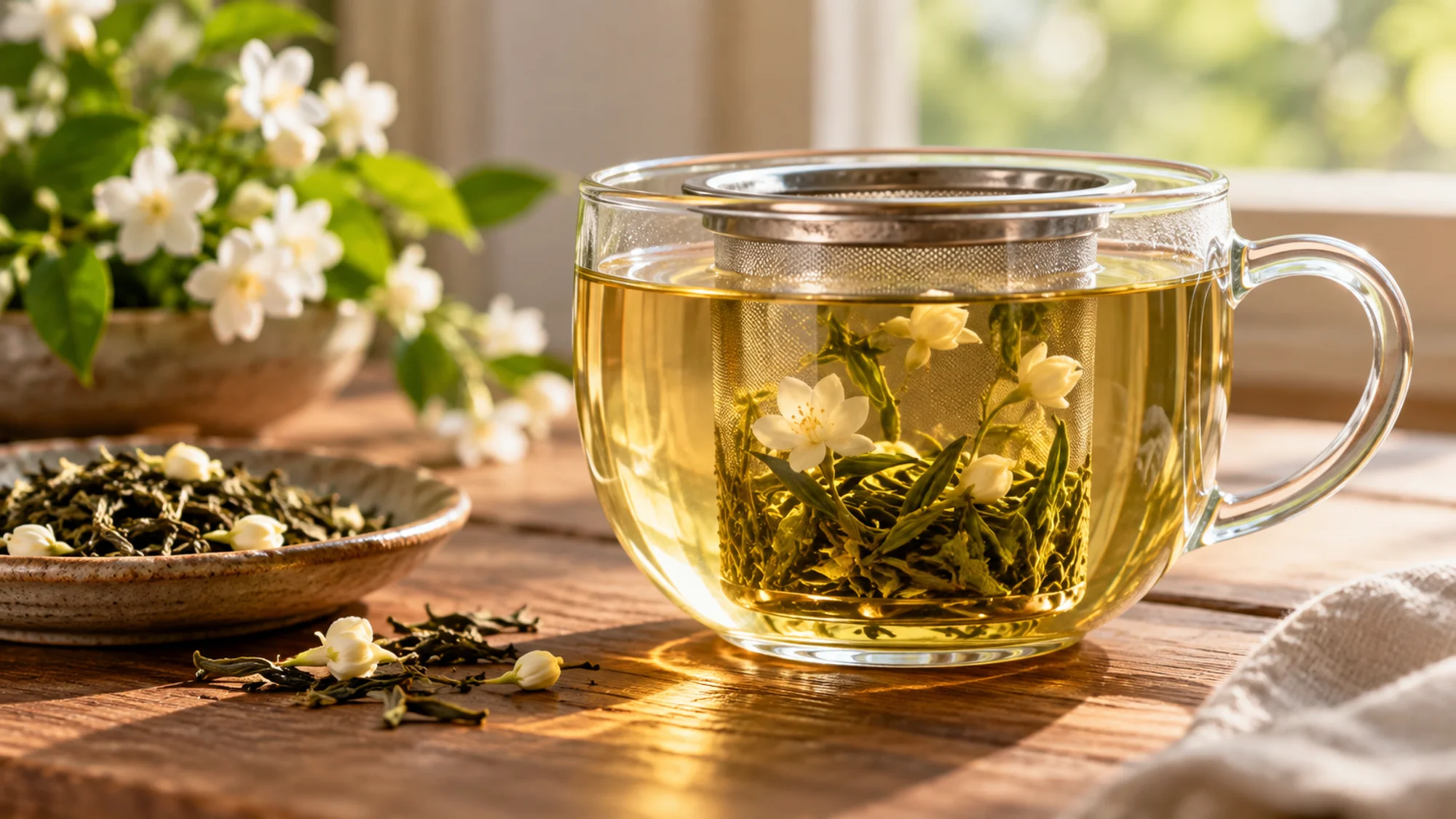
Use the package directions as your starting point. For example, Harney’s Jasmine product specifies 175°F water and a three-minute steep. Those numbers belong to that tea; they are not universal instructions for every pearl, bag or blend labeled jasmine.
Pay attention to the amount of water as well as the steeping time. A small cup and a large travel mug do not give the same strength with the same leaves. If the cup tastes too strong or astringent, change one factor next time so you can tell whether water temperature, time or the amount of tea made the difference.
- Give loose leaves room in the infuser rather than packing them tightly.
- Set a timer and remove the leaves or bag when the intended steep is finished.
- Taste the plain tea before deciding whether you want sugar, lemon or milk.
- Follow product guidance for repeat infusions; do not assume every tea can be reused in the same way.
The label gives you a repeatable starting point. Small, deliberate adjustments make it easier to find the cup you enjoy.
Keep caffeine and health claims in perspective
A jasmine aroma is not a caffeine measurement. Harney labels its Jasmine as caffeinated, and the FDA explains that caffeine amounts and individual sensitivity vary. Count other drinks and relevant medicines in your daily total. A strongly floral cup can still be unsuitable close to bedtime if caffeine affects your sleep.
For most adults, the FDA cites 400 milligrams daily as an amount not generally associated with negative effects, not a goal to reach or a limit that suits everyone. Pregnancy, breastfeeding, medical conditions and medicines may call for individual advice. I would choose jasmine tea for its flavor, rather than drink extra cups to pursue an unproven health promise.
- Check the exact product if avoiding caffeine is important.
- Do not use the term “green tea” as a guarantee of a particular benefit.
- Treat added sugar as an addition to the drink, even when the tea itself tastes delicate.
- Choose an appropriate caffeine-free drink when that better fits your circumstances.
Buy and store it for the cup you will drink
Fragrance is part of the appeal, so protect the dry tea from competing smells. Harney’s storage guide emphasizes keeping tea away from light, heat, humidity, oxygen and odors. A well-closed container in a suitable cupboard is more useful than a pretty jar sitting in direct sun beside the stove.
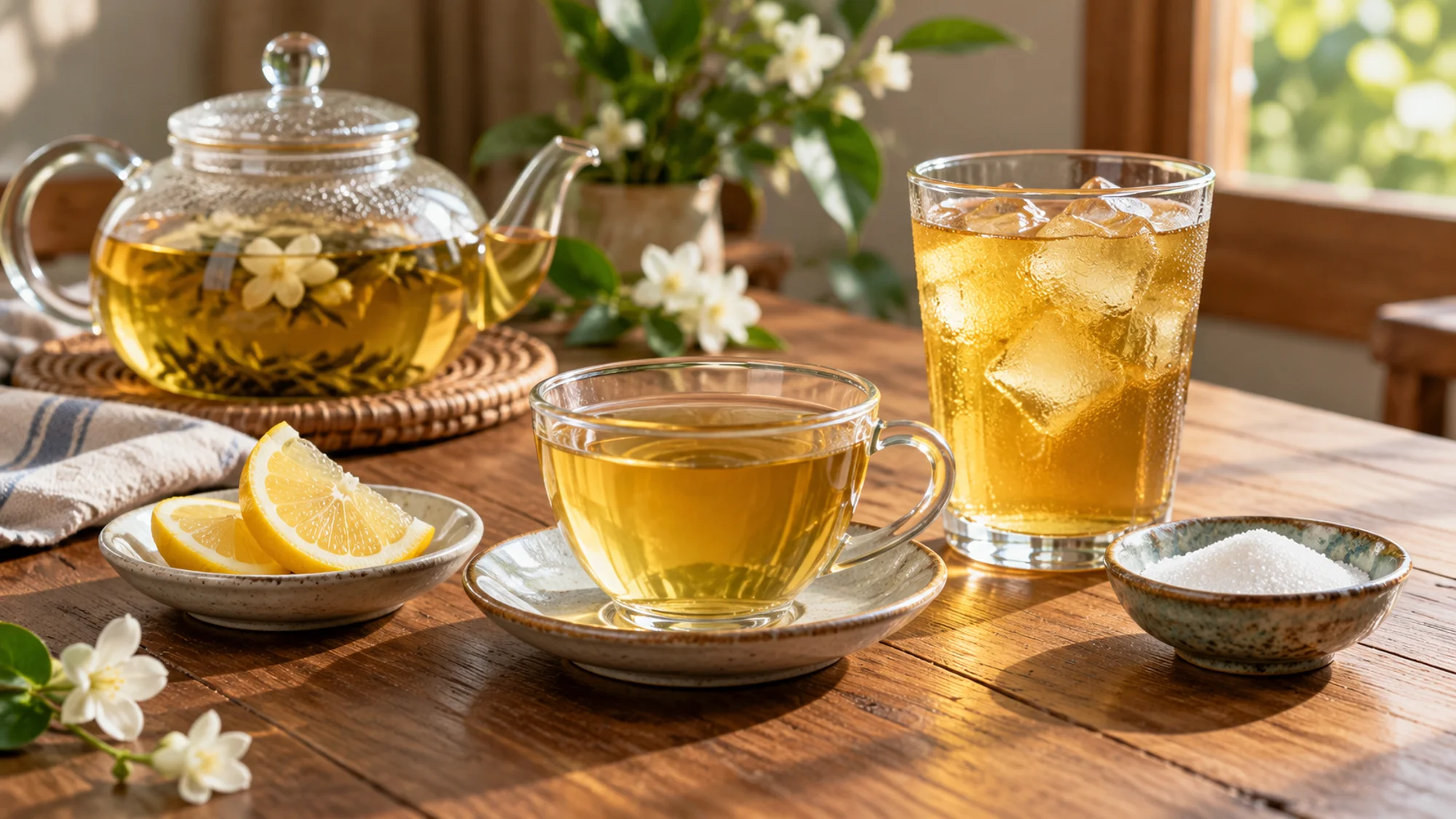
Start with an amount you will use, especially when trying an unfamiliar style. A small pack lets you decide whether you prefer a subtle floral note or a more pronounced perfume. For serving, try the tea plain first; sweetener or citrus can be offered separately so each person controls the balance.
Bottom Line
Choose jasmine tea by its actual leaves and ingredients. Brew according to the product, adjust gently for taste, protect the dry tea’s aroma and account for caffeine. A fragrant cup can be an enjoyable drink without needing a health claim attached.
Harney & Sons demonstrates brewing jasmine tea in the video below. It is a tea producer’s practical guide; follow your own package when its directions differ.
Sources
- Twinings: Jasmine Green Tea ingredients
- Harney & Sons: Jasmine Tea and brewing directions
- Harney & Sons: Tea storage guidance
- FDA: Caffeine and individual sensitivity

Hi, I’m Emily Pocker! I share recipes and food guides here at Recipes360 to help you find everyday meal inspiration and feel more confident in the kitchen. My goal is to make cooking approachable, enjoyable, and full of flavor.