
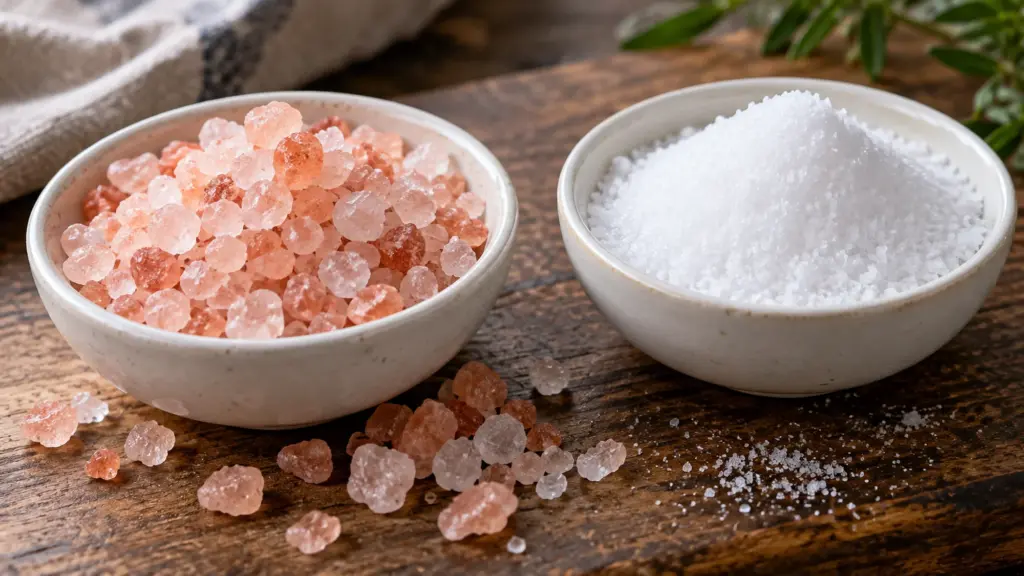
Pink salt usually means Himalayan pink food salt, a mined salt colored by small amounts of minerals. It seasons food much like other sodium chloride salts. Its color and crunchy crystals may be appealing, but they do not make it a detox product, a weight-loss aid or a meaningful replacement for nutrient-rich foods.
Use pink salt for seasoning, texture and appearance—not special therapeutic benefits. It still supplies sodium and is usually not iodized. Read the label carefully: Himalayan food salt and pink curing salt are different products and must never be treated as interchangeable.
What gives pink salt its color?
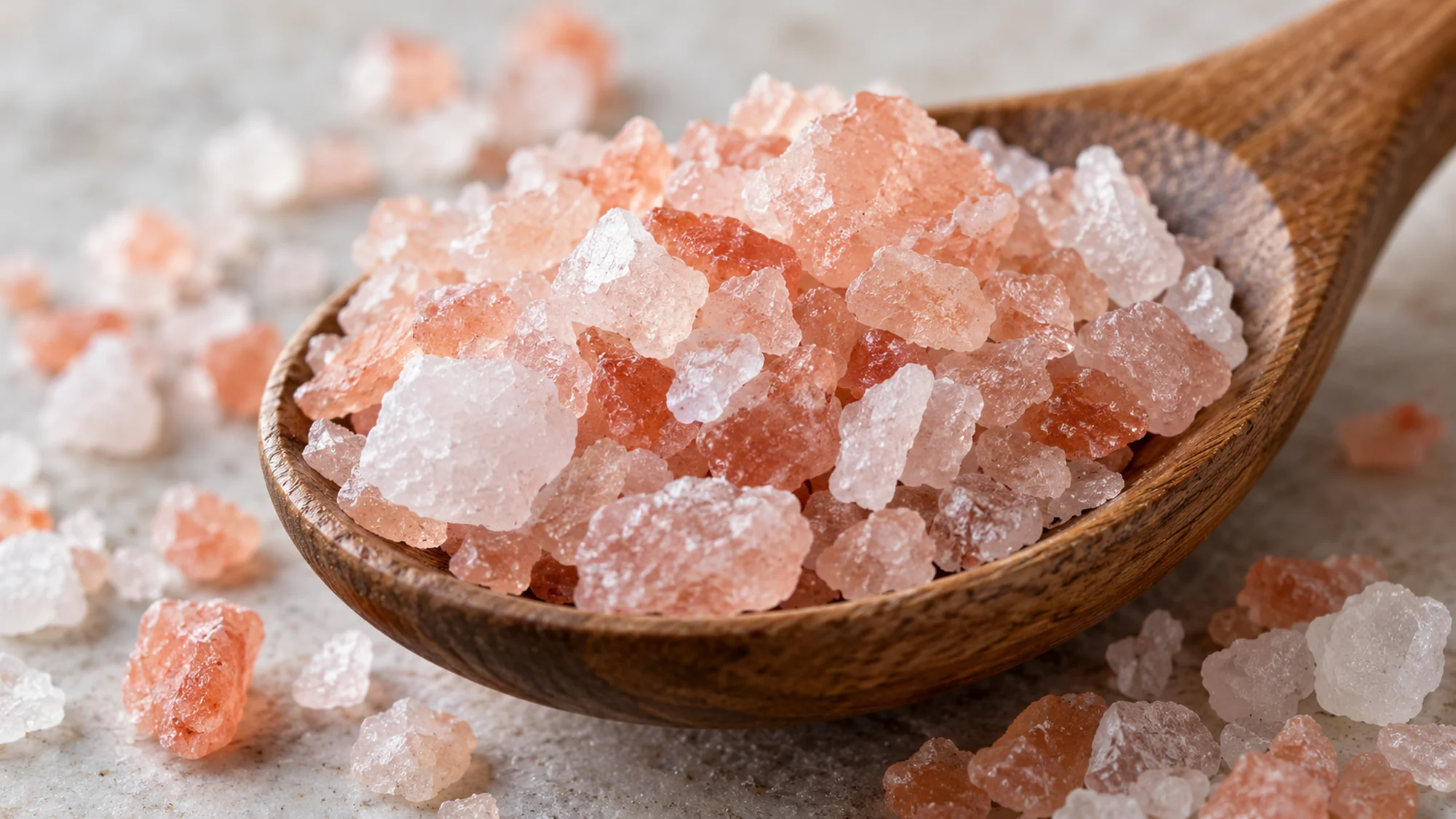
Harvard’s Nutrition Source describes Himalayan pink salt as mined in Pakistan, with its color coming from small amounts of iron oxide. Like other culinary salts, it is mainly sodium chloride. Trace minerals explain appearance without making a pinch into a useful mineral supplement.
The grain size matters more to a bite than the shade does. Coarse crystals can give a noticeable salty crunch when used at the table, while finely ground salt spreads more evenly through food. Choose according to the texture you want and the directions for the dish.
A darker pink package photo is not a nutrition test. The source, grind and product formulation can differ, so use the ingredient list and Nutrition Facts panel rather than a claim about purity or the number of minerals present. “Natural” does not tell you how much sodium you are adding.
Compare the product, not just the teaspoon
| Salt type | What to know | What to check |
|---|---|---|
| Himalayan pink food salt | Mostly sodium chloride with trace minerals | Sodium per labeled serving; whether iodized |
| Iodized table salt | Fine culinary salt with added iodine | Serving size and iodine labeling |
| Coarse culinary salt | Larger crystals fit differently in a spoon | Weight or the recipe’s specified salt type |
| Pink curing salt | A curing blend containing nitrite and/or nitrate | Exact product and researched curing directions; never use as table salt |
Coarse crystals leave more empty space in a spoon than fine crystals. The American Heart Association explains why some salts can have less sodium per teaspoon without being fundamentally healthier by weight. Compare the serving sizes before comparing the numbers.
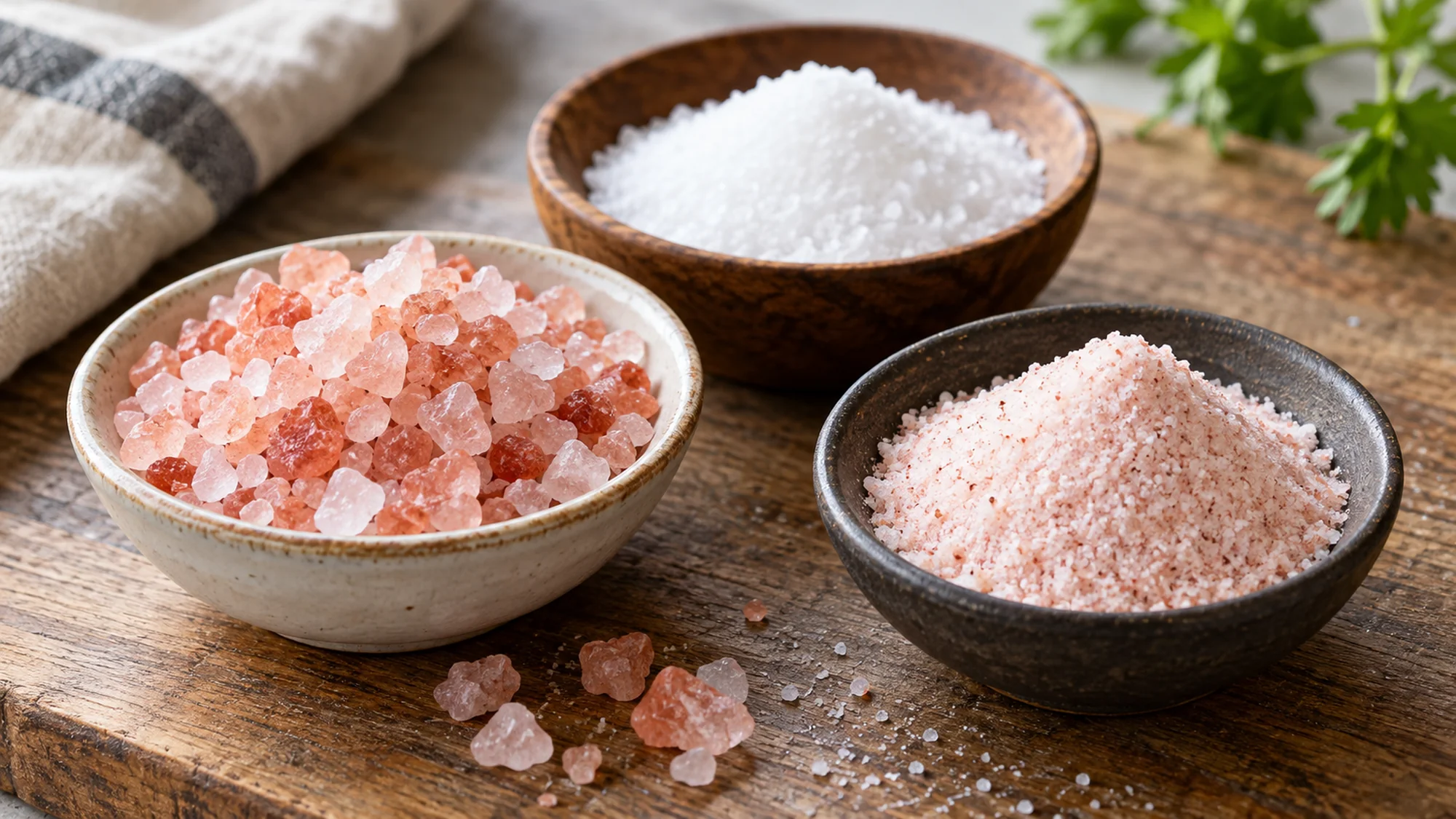
For precision, follow a recipe’s salt specification or weight when one is supplied. Replacing a spoonful of a coarse salt with the same spoonful of fine salt can change the seasoning. Taste-based adjustment works for an ordinary cooked dish, but preservation recipes require their own tested directions.
Sodium and iodine still matter
Pink salt does not escape the health effects of excess sodium. Mayo Clinic’s cardiologist explains that pink, rock, sea and table salts are sodium chloride. A color change in the salt jar does not by itself reduce a high-sodium eating pattern.
Iodine is a separate issue. The NIH Office of Dietary Supplements says specialty salts, including Himalayan salt, usually contain little or no iodine unless labeled iodized. Do not assume replacing iodized salt with pink salt preserves the same iodine contribution.
If you have a sodium restriction or a thyroid-related nutrition question, follow your clinician’s advice about the overall diet. Adding extra pink salt or drinking salt water is not a sensible way to seek trace minerals. Read sodium labels on packaged foods too; changing only the salt used at the table can miss other sources.
Keep food salt and curing salt separate
Oregon State University Extension warns that curing salt may also be dyed pink and sold under the name pink salt. Its nitrate or nitrite ingredients make it chemically different from ordinary food salt. It belongs only in the correct quantities and uses specified by researched curing instructions.
Do not sprinkle curing salt over a meal, substitute it in an ordinary recipe or identify an unlabeled salt by color alone. Keep the original container and directions. If a package says Prague Powder, curing salt or another cure name, stop and identify that specific product before using it.
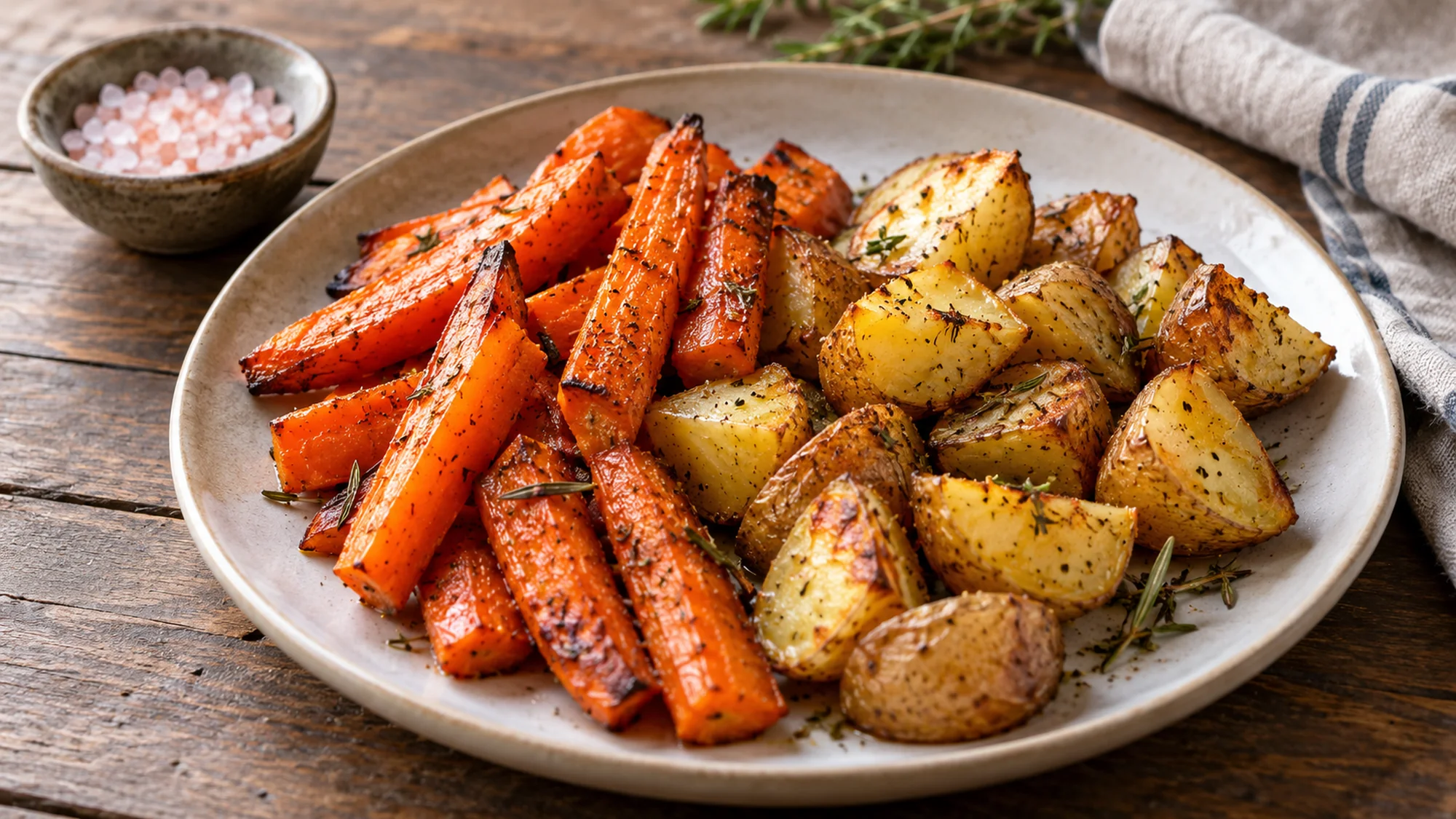
For everyday Himalayan salt, choose a product intended for food, keep it dry and close the container between uses. Oregon State recommends plain canning or pickling salt for preservation projects because its uniformity gives more consistent quality. A decorative finishing salt does not need to become your all-purpose preservation ingredient.
Bottom Line
Pink Himalayan salt is a seasoning choice, with a different appearance and sometimes a different crystal size from table salt. It remains a sodium source, usually contributes little iodine and has no special therapeutic role. Read the package, use the amount that fits the food and keep pink curing salts strictly separate.
Mayo Clinic’s video addresses the claim that Himalayan salt is a healthier alternative.
Sources
- Harvard Nutrition Source: Salt and Sodium
- American Heart Association: Sodium Sources
- NIH ODS: Salt and Iodine
- Oregon State Extension: Himalayan and Curing Salts
- Mayo Clinic: Himalayan Salt

Hi, I’m Emily Pocker! I share recipes and food guides here at Recipes360 to help you find everyday meal inspiration and feel more confident in the kitchen. My goal is to make cooking approachable, enjoyable, and full of flavor.