
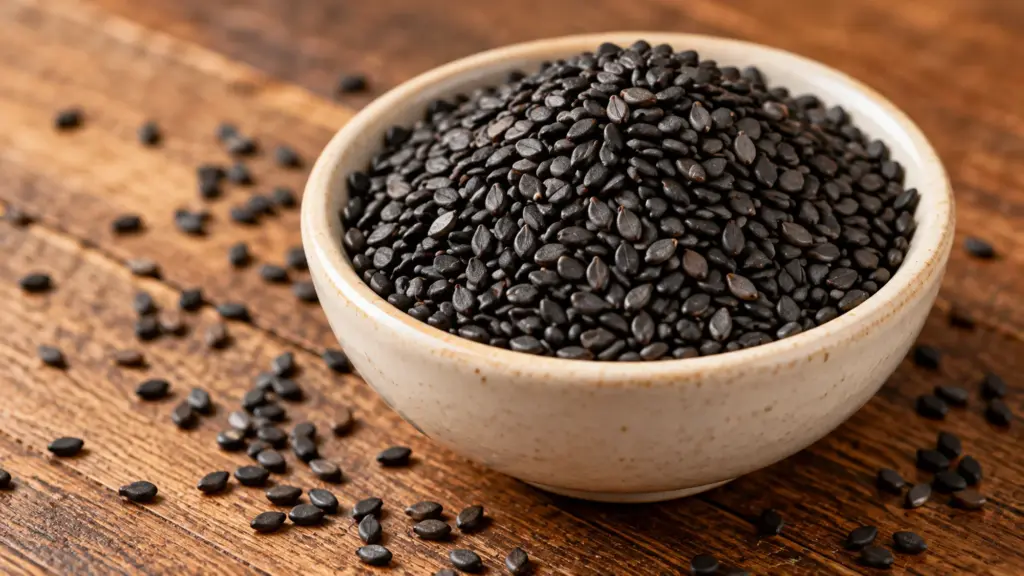
A jar of black sesame seeds can look like a finishing touch and little more. Crush a few, though, and that quiet sprinkle becomes a nutty ingredient worth using in dressings, baking, and desserts—not just on top of dinner.
Black sesame seeds bring crunch, dark color, and a rich sesame flavor. Use them whole for texture or grind them for a more pronounced flavor, and remember that black and white sesame are both sesame allergens.
I’d choose the form around the meal: whole seeds when I want a little contrast, a ground paste when sesame should run through every bite. You do not need a large amount or a complicated new recipe to discover which you prefer.
What are black sesame seeds?
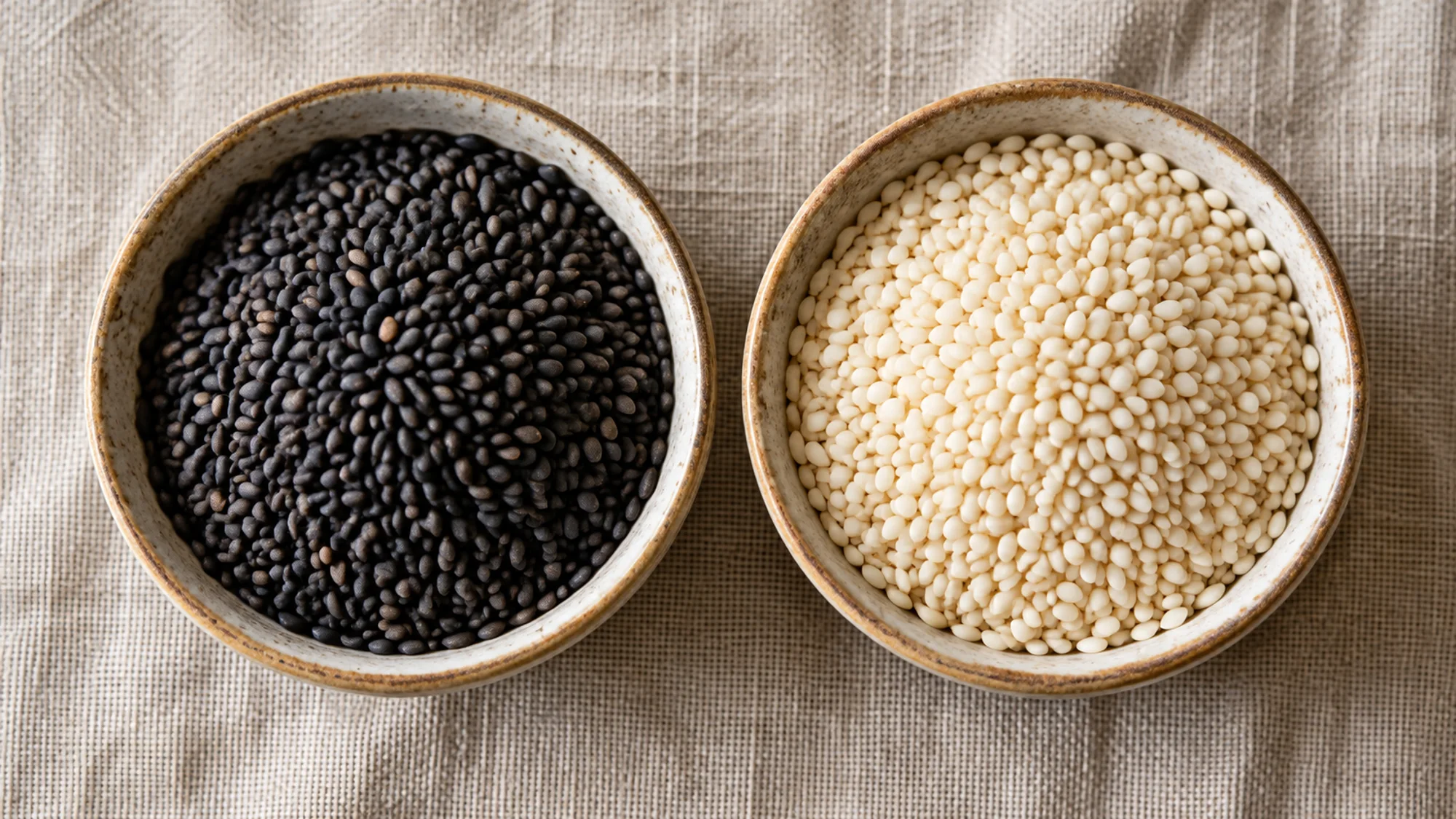
They are sesame seeds with a naturally dark seed coat, not white seeds toasted until black. Sesame is Sesamum indicum, an oilseed crop; the University of Wisconsin–Minnesota crop guide describes its varied seed colors and culinary uses. Color alone does not tell you whether a package is raw, roasted, hulled, or ready to eat.
| Form | What it adds | Best starting use |
|---|---|---|
| Whole black seeds | Visible contrast and small crunchy bites | Rice, noodles, salads |
| Ground black sesame | More evenly distributed sesame flavor | Dressings or baking |
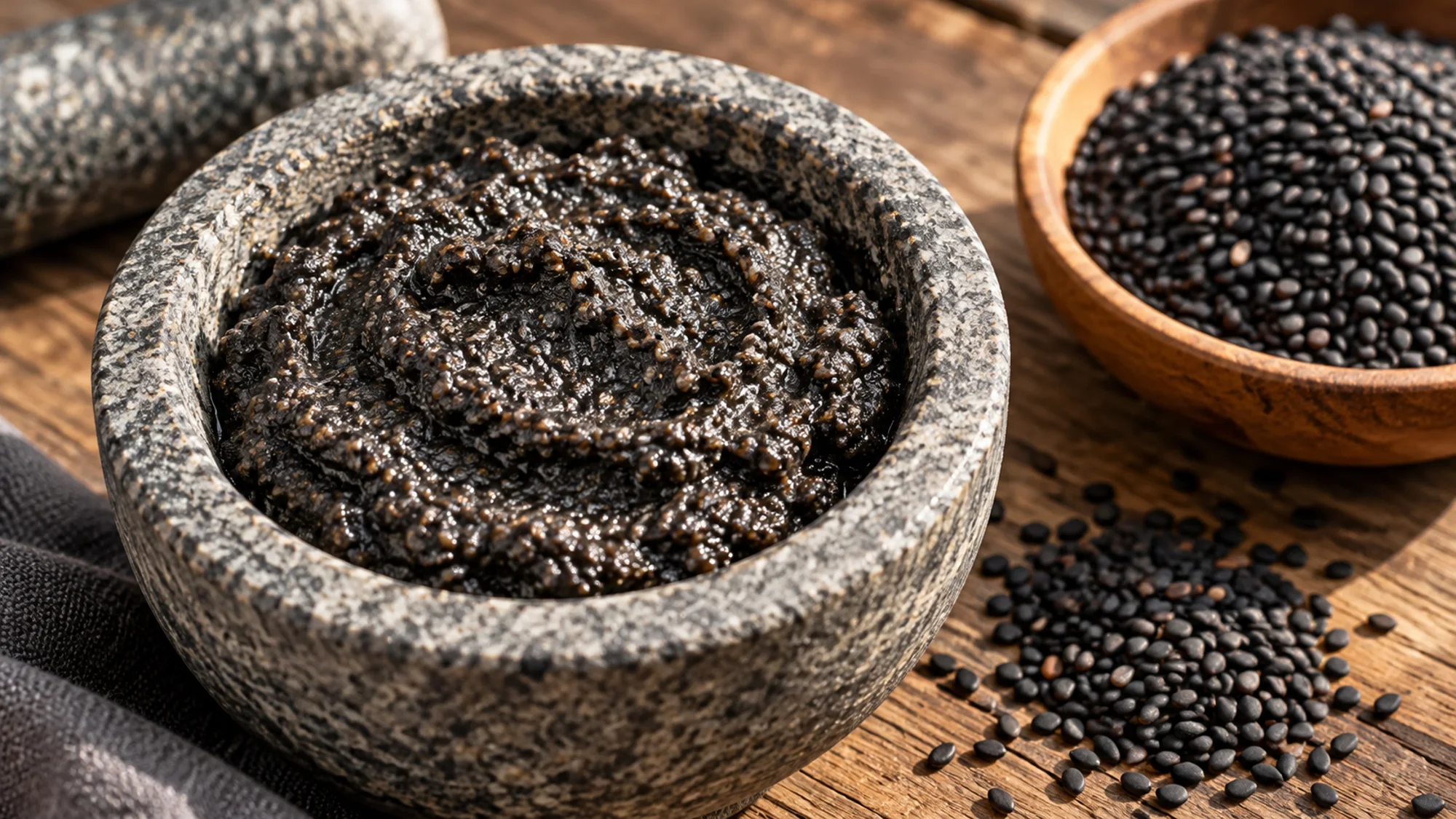
| Black sesame paste | Concentrated flavor and a dark color | Sauces and desserts |
| White sesame seeds | A paler appearance | A garnish when black seeds are unavailable |
Read the ingredient list on pastes. A pure sesame paste and a sweetened sesame filling are not interchangeable: sugar, oil, and other additions change the result. I find that distinction more useful at the store than a front-label promise of “premium” seeds.
How to use black sesame seeds without burning them
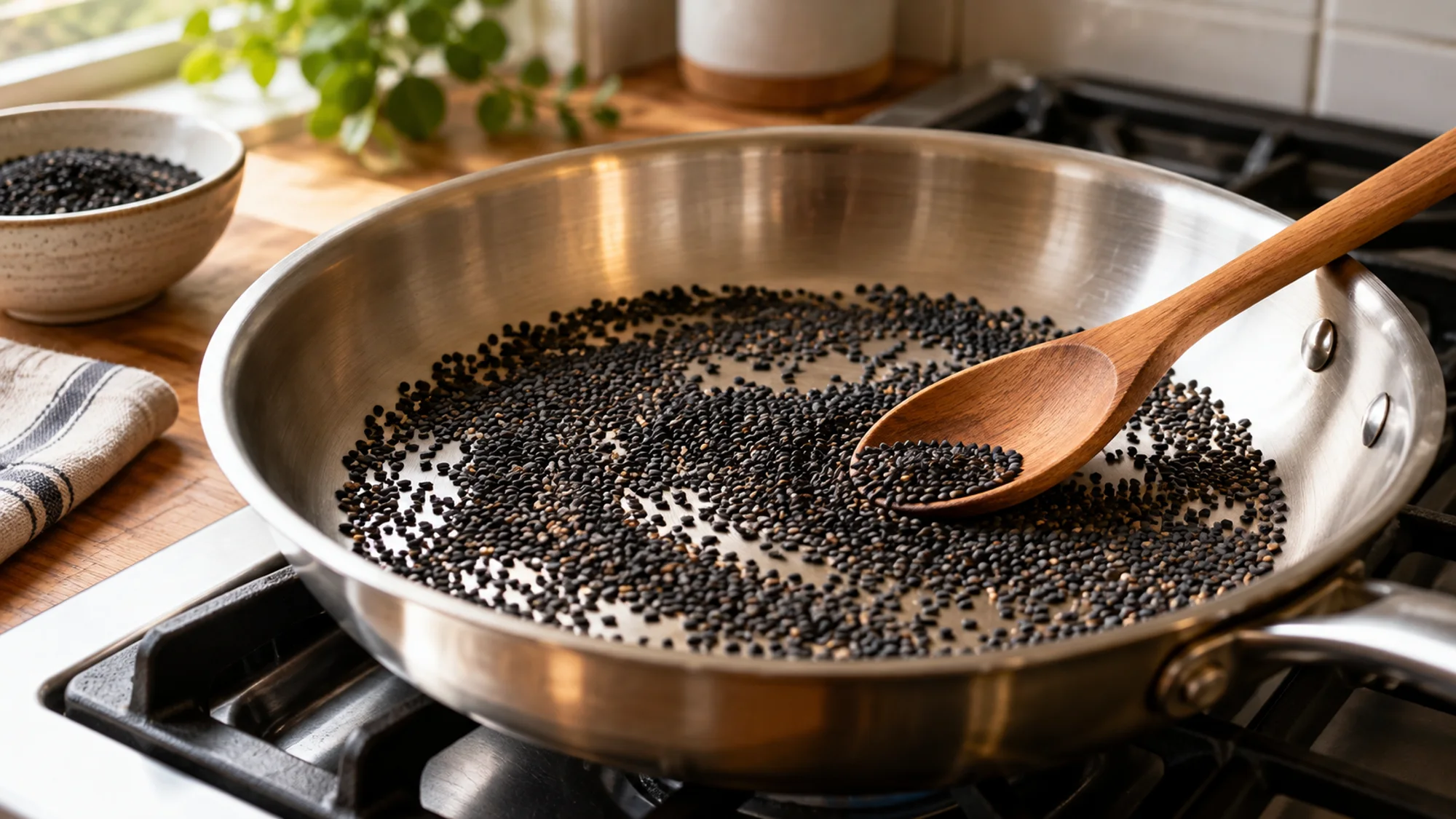
If your package is already toasted, start by tasting a few rather than automatically roasting it again. For raw culinary seeds, gentle dry toasting can deepen their aroma; dark seeds make a color change difficult to see, so smell and attention matter more than chasing a brown shade.
- Use a small, dry skillet and a shallow layer so the seeds heat evenly. Keep them moving over moderate heat.
- Stop when they smell pleasantly toasted. Smoke or a sharp, acrid smell means you have gone too far.
- Transfer them out of the hot pan promptly; residual heat keeps cooking them after the burner is off.
- Cool before grinding. For a small garnish, a mortar gives a pleasantly coarse texture without requiring a full batch of paste.
Treat this as a flavor technique, not a validated home treatment for contaminated seeds. Follow the package’s preparation instructions and any recall advice. A toasted aroma cannot tell you whether a recalled product is safe.
Pairings, substitutions, and the nutrition question
Sesame works with sweet and savory food, but its roasted flavor can dominate delicate ingredients. Start with a light sprinkle, taste the whole bite, and add more only when it improves the dish. That is my favorite way to keep the food tasting like dinner rather than a jar of seeds. A light sesame finish also fits the savory direction of these chicken blanket dumplings; check the full recipe for its other allergens.
- For a savory finish, scatter whole seeds over steamed vegetables, rice, or noodles just before serving.
- For a dressing, use finely ground seeds or an unsweetened paste, then adjust the liquid gradually to reach the texture you want.
- For something sweet, pair a little ground sesame with yogurt or a dessert where its dark color is welcome.
- White sesame can replace a garnish, but expect a different appearance. Sesame oil replaces neither the seeds’ crunch nor the body of a paste.
Sesame supplies fat and protein, but a small garnish is not a substantial serving. Nutrition varies with the product and whether the hull remains; use the package’s serving information rather than assuming black seeds are automatically healthier. Their color is not evidence that they prevent illness, reverse gray hair, or provide a special treatment.
Storage and allergy checks before serving
Keep the seeds airtight and away from heat and moisture. Ask Extension’s sesame storage guidance recommends refrigerated or frozen airtight storage because the oil can become rancid. Buy an amount you will use, follow the pack instructions, and avoid dipping a damp spoon into the container.
- Label the container with the opening date so the oldest package gets used first.
- Discard seeds that smell rancid, show mold, or have been contaminated; roasting does not restore spoiled food.
- Keep pure paste and sweetened products according to their own storage labels, which may differ from whole seeds.
The FDA identifies sesame as a major food allergen and advises checking labels every time, even on familiar foods. Black sesame, white sesame, and tahini are not safe substitutes for someone with sesame allergy; prevent cross-contact with utensils and serving dishes, too.
Bottom Line
Choose black sesame seeds for their flavor and useful crunch, not a miracle-health promise. Check whether they are already toasted, store them carefully, and use ground sesame when you want its flavor throughout the food.
For a visual look at turning seeds into paste, Audrey’s demonstration below shows the texture change. It is a cooking example rather than nutrition or allergy advice.
Sources
- University of Wisconsin–Minnesota: Sesame crop guide
- Ask Extension: Storing sesame seeds
- FDA: Sesame allergen labeling

Hi, I’m Emily Pocker! I share recipes and food guides here at Recipes360 to help you find everyday meal inspiration and feel more confident in the kitchen. My goal is to make cooking approachable, enjoyable, and full of flavor.