
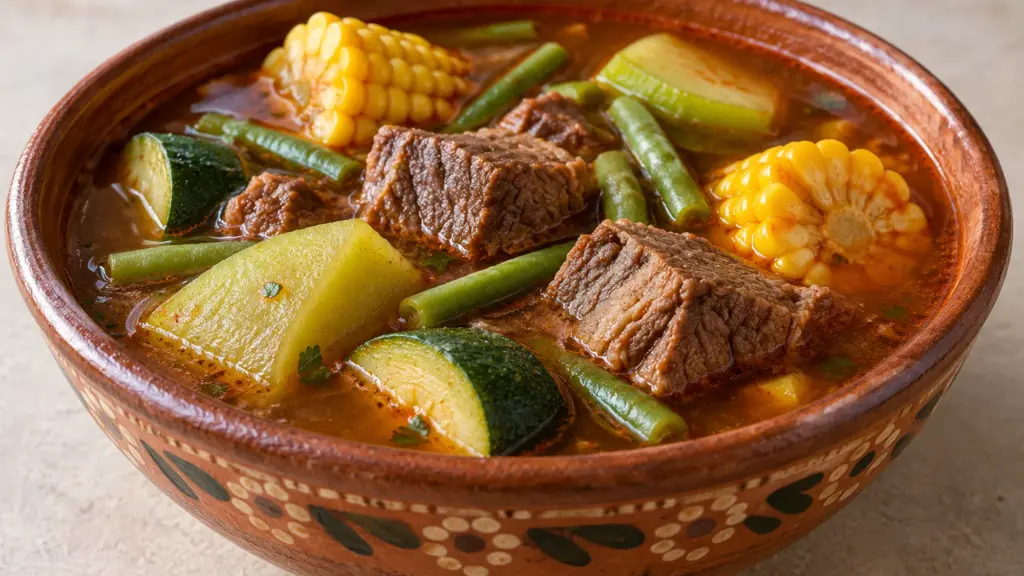
A pot of beef soup can smell wonderful long before the meat is ready. Mole de olla rewards that extra patience: dried chiles give the broth its red color and rounded flavor, while corn, chayote and green vegetables turn the bowl into dinner. The useful trick is to simmer the beef first and add the vegetables in stages, rather than asking every ingredient to survive the same long cooking time.
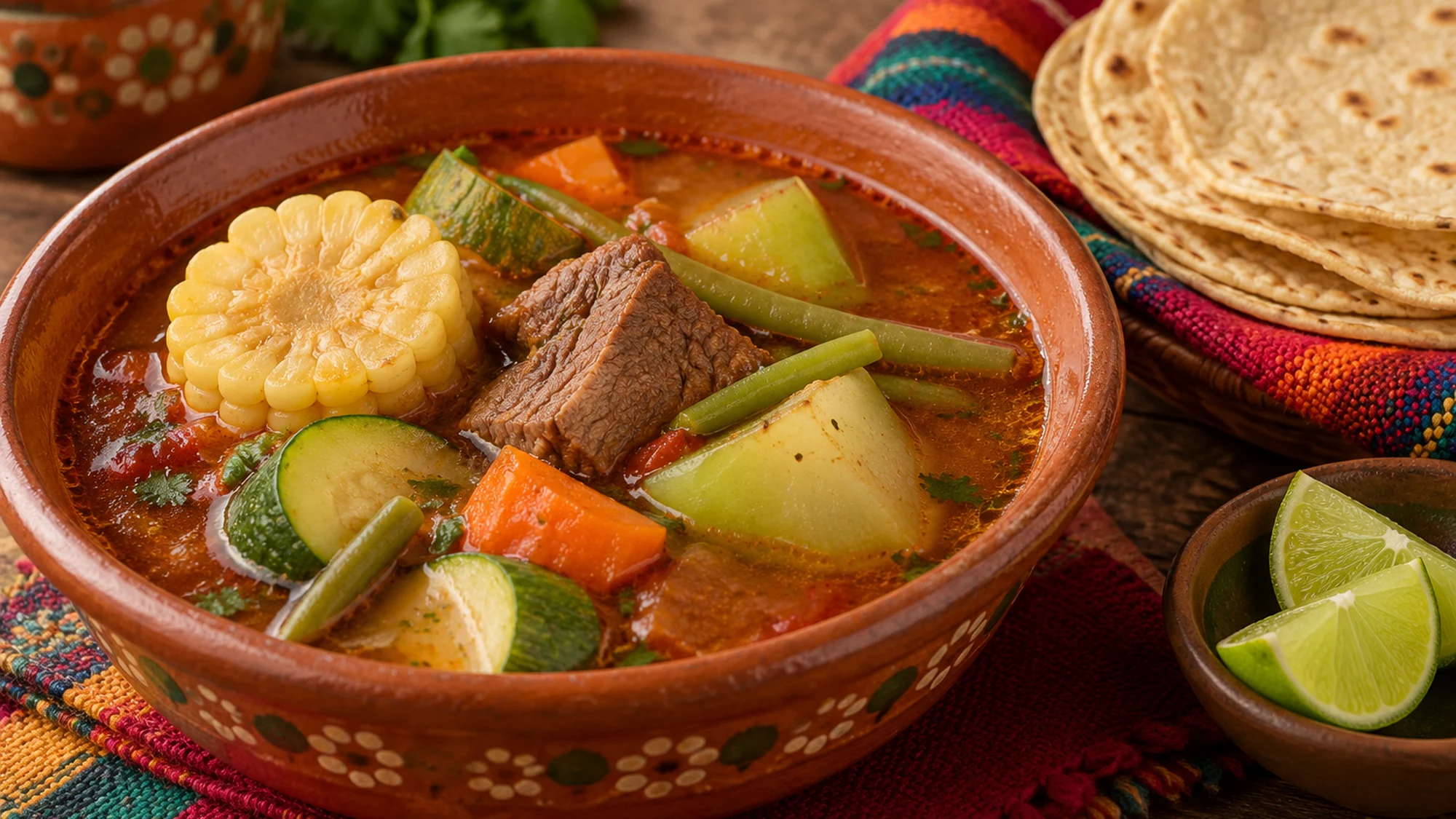
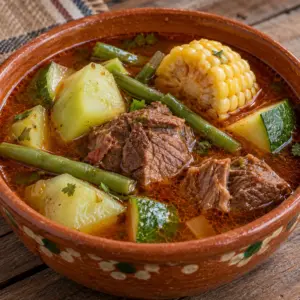
This mole de olla is a brothy beef-and-vegetable dish, not a thick chocolate mole. Ancho and guajillo chiles flavor the stock; gentle simmering makes the chuck tender, and a final squeeze of lime brightens each serving.
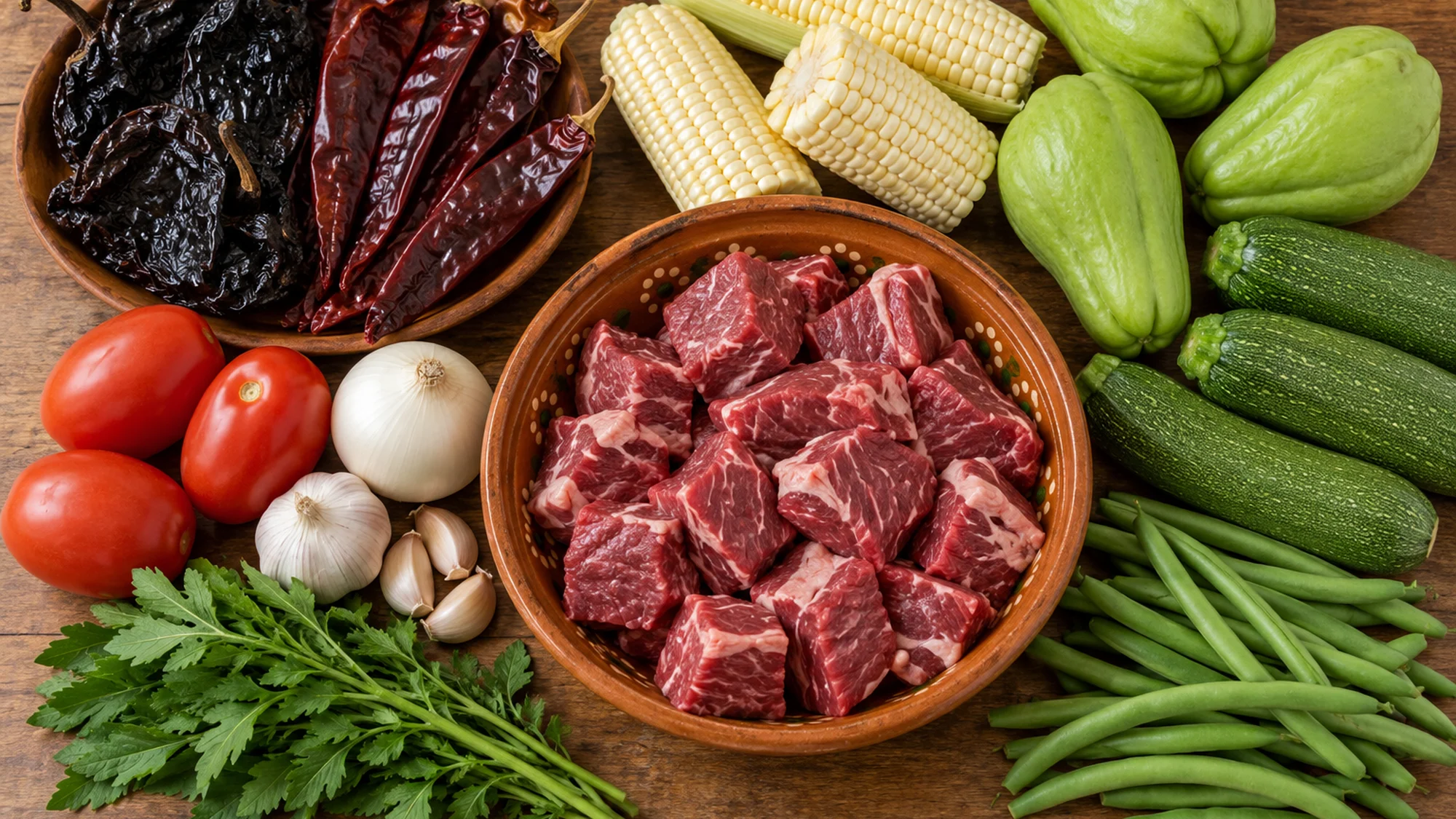
This approachable version uses boneless chuck and familiar vegetables. It leaves out the sour xoconostle cactus fruit and small masa dumplings found in some regional versions, so it should not be mistaken for the only traditional formula. I would choose flexible, fragrant dried chiles rather than brittle ones that smell dusty.
Serving Suggestions for Mole de Olla
Use deep bowls and divide the beef and vegetables before ladling in the broth. That small order-of-operations decision prevents the first person from getting all the corn while the last gets mostly soup. Keep lime wedges separate so each person can adjust the acidity, especially if the broth has already reduced considerably.
- Serve warm corn tortillas alongside for dipping or folding around a piece of beef; the soup is already substantial without another starch.
- Set out finely chopped white onion and cilantro as optional toppings. Add them at the table rather than simmering away their fresh character.
- For a larger meal, a small portion of chunky guacamole offers a cool contrast, but I would keep the toppings simple enough to notice the chile broth.
Let the bowls cool briefly before eating. A fork and a small side plate for the corn cobs make this brothy meal easier to enjoy.
A balanced serving has broth, tender beef and several vegetables. Lime and fresh toppings belong at the table, where their brightness stays distinct.
Variations and Ingredient Choices
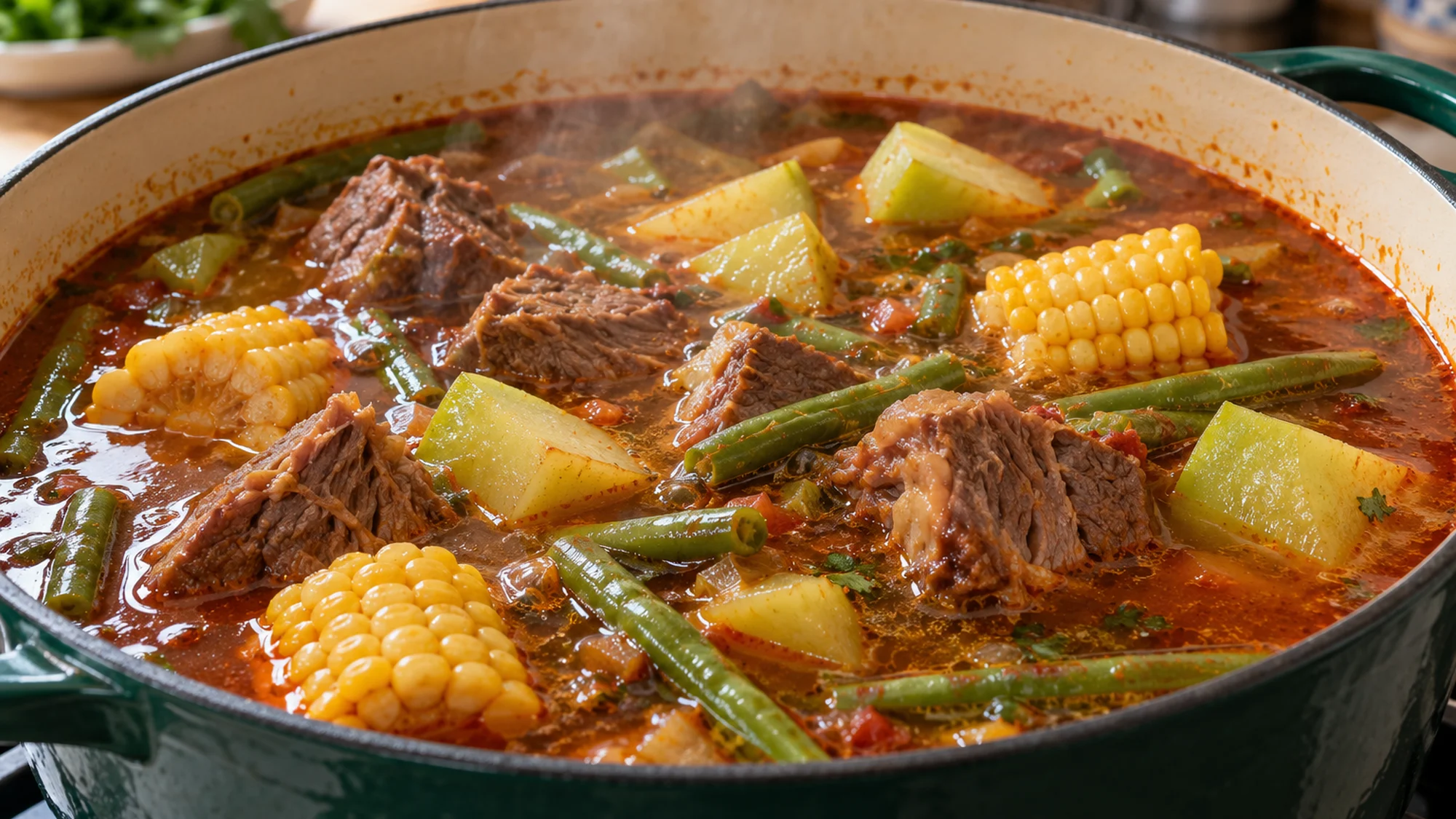
Chuck is convenient because it becomes tender with moist heat, but a bone-in shank makes a different, equally useful pot. It can take longer and produces a different edible yield, so do not substitute it pound for pound and expect identical portions. Keep the broth gently bubbling rather than boiling hard, and judge tenderness with a fork.
| Ingredient choice | What changes | Practical adjustment |
|---|---|---|
| Zucchini instead of chayote | Softer texture and quicker cooking | Add it late; keep the total vegetable quantity similar. |
| Beef shank instead of chuck | Bone-in portions and more variable cooking time | Allow extra time and remove bones before dividing servings. |
| Pasilla alongside the other dried chiles | A deeper, more earthy chile flavor | Replace one ancho rather than simply adding more chiles. |
| No fresh epazote | Different herbal finish | Omit it; offer cilantro at the table instead. |
- Toast dried chiles only until fragrant. Blackened patches can turn the whole broth bitter, and extra lime will not undo that.
- Blend the softened chiles thoroughly, then strain if their skins feel coarse. A smooth broth should not require picking out leathery fragments.
- Keep leftovers brothy by adding a little water when reheating. Taste again afterward instead of automatically adding more salt.
Change one ingredient thoughtfully, and keep its cooking time in mind. Tender beef and vegetables with some shape matter more than following a rigid shopping list.
Health Benefits and Everyday Balance
The beef contributes protein, while the varied vegetables add fiber and make the meal more than meat and broth. These are ordinary nutritional contributions, not a promise that one bowl prevents illness. Trim large pieces of visible fat before cooking and skim excess fat from the surface if you prefer a lighter broth.
Salt is easier to control when the base is water rather than a strongly salted stock. The recipe’s nutrition estimate depends on the actual beef cut, trimming and how evenly the solids are divided. Tortillas and optional toppings are separate additions. I would adjust the bowl to appetite rather than treating a calculated serving as a rule.
- Cool leftovers in shallow containers and refrigerate promptly, following FDA safe-handling guidance.
- Use refrigerated leftovers within three to four days. USDA reheating guidance calls for 165°F throughout; bring reheated soup to a boil.
Think of this as a hearty mixed meal: useful protein, several vegetables and a broth whose salt level you can control. Portion size and the rest of the day’s food still matter.
Bottom Line
Mole de olla needs a patient simmer, lightly toasted chiles and vegetables added at the right moment. Keep it brothy, taste before salting again, and finish with lime at the table. The reward is a warming bowl with distinct textures rather than an overcooked pot of everything.
Mole de Olla Recipe

Ingredients
- 2 lb boneless beef chuck trimmed of large fat deposits, cut into 1½-inch pieces
- 10 cups water plus more as needed
- 1 medium white onion half for the broth, half chopped for the chile sauce
- 4 cloves garlic peeled, divided
- 1 teaspoon fine salt plus more to taste
- 2 dried ancho chiles stems and seeds removed
- 3 dried guajillo chiles stems and seeds removed
- 2 medium Roma tomatoes roughly chopped
- 1 tablespoon neutral oil
- 2 ears corn each cut into 3 rounds
- 1 medium chayote peeled if tough, seeded and cut into chunks
- 2 medium carrots cut into thick pieces
- 6 oz green beans trimmed and halved
- 2 medium zucchini cut into thick half-moons
- 1 sprig fresh epazote optional; omit if unavailable
- 1 lime cut into wedges for serving
Equipment
- 1 Large heavy pot, at least 6 quarts
- 1 Blender suitable for warm liquids
- 1 Fine-mesh strainer
Instructions
- Put the beef, 10 cups water, half the onion, 2 garlic cloves and salt in the large pot. Bring to a boil, skim surface foam, then lower the heat to a gentle simmer. Partially cover and cook about 1¾–2 hours, until the beef is nearly fork-tender. Add hot water if needed to keep the meat covered.
- While the beef simmers, warm a dry skillet over medium-low heat. Press the ancho and guajillo pieces into the pan for a few seconds per side, just until fragrant; do not blacken them. Cover with hot water in a bowl and soak for 15 minutes, then drain.
- Blend the softened chiles, chopped tomatoes, remaining onion and 2 garlic cloves with 1 cup broth taken from the pot. Let hot broth cool enough for your blender and vent according to its instructions. Strain if coarse. Heat the oil in a saucepan, carefully add the puree and stir over medium heat for 5 minutes.
- Remove the large onion half from the beef pot. Stir in the chile base, corn, chayote and carrots. Simmer 15 minutes. Add green beans, zucchini and optional epazote; simmer 10–15 minutes more, until the vegetables are tender but hold their shape and the beef pulls apart easily. Remove epazote.
- Adjust the broth with hot water if too concentrated. Taste before adding more salt. Divide beef and vegetables between six bowls and ladle broth over them. Serve lime wedges separately. Cool remaining soup promptly in shallow containers and refrigerate within 2 hours.
Nutrition
Video
Notes
Tried this recipe?
Let us know how it turned out!Hi, I’m Emily Pocker! I share recipes and food guides here at Recipes360 to help you find everyday meal inspiration and feel more confident in the kitchen. My goal is to make cooking approachable, enjoyable, and full of flavor.