
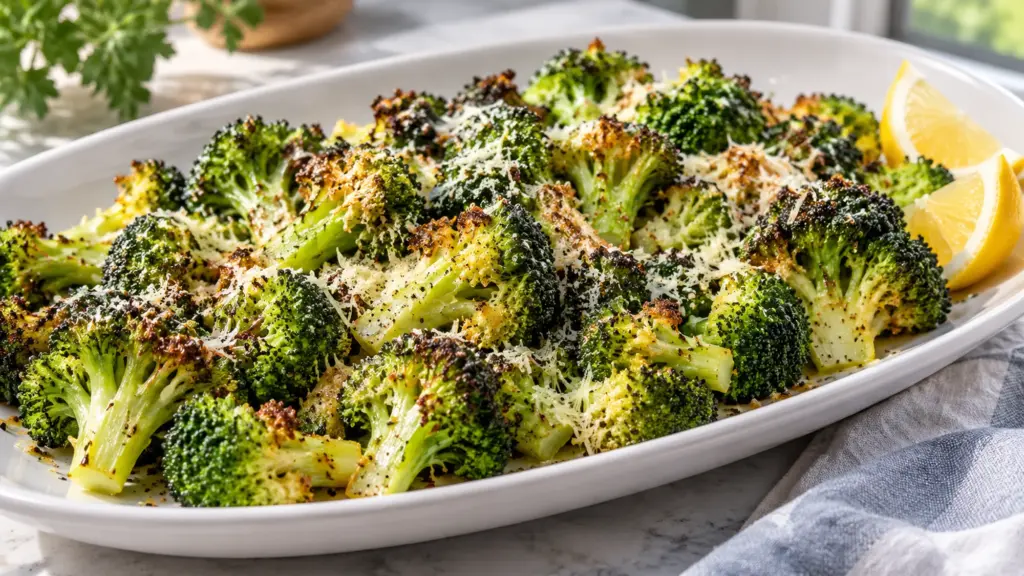
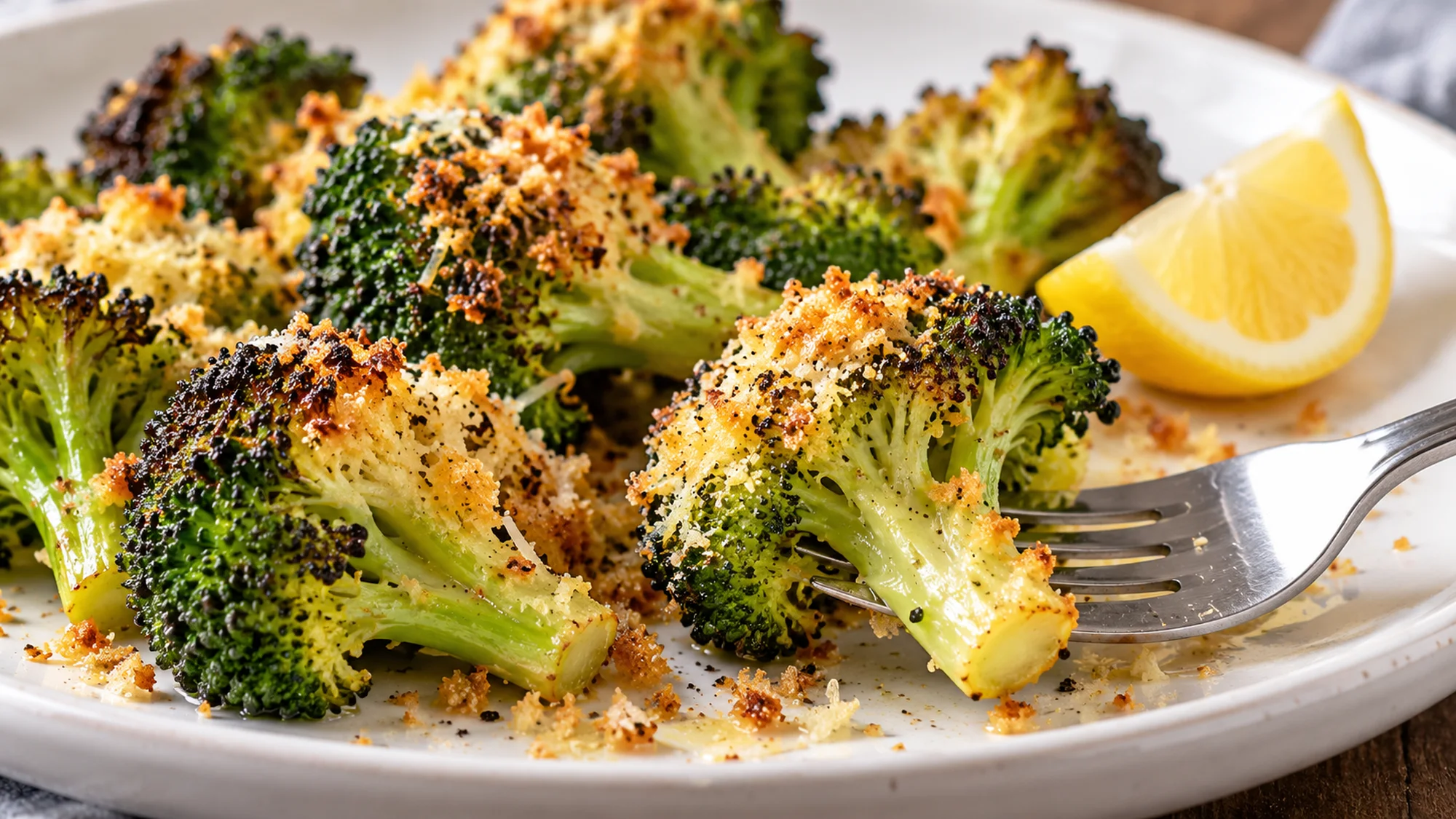
Parmesan roasted frozen broccoli is the side dish for nights when the freezer is better stocked than the produce drawer. The florets go straight onto a hot oven’s sheet pan, then get a light shower of cheese near the end. You get browned tips, tender stems, and very little chopping.
Do not thaw the broccoli first. Start with plain frozen florets, spread them out, and wait to add Parmesan until most surface moisture has cooked away. The cheese should turn golden, not spend twenty minutes burning.
What to expect from frozen broccoli
Frozen broccoli can roast beautifully, but it will not have exactly the same firm bite as fresh broccoli. Its centers tend to be softer. Aim for well-browned edges and a fully hot middle rather than promising a crisp crunch through every part of the floret.
Choose florets without a sauce or seasoning packet. Large clumps trap moisture, so separate any loose pieces before seasoning. If several florets are frozen together, let them loosen during the first roasting stage, then separate them carefully with a spatula when you turn the tray.
Space is the easiest improvement: crowded broccoli steams, while an uncrowded layer lets moisture escape.
A short ingredient list
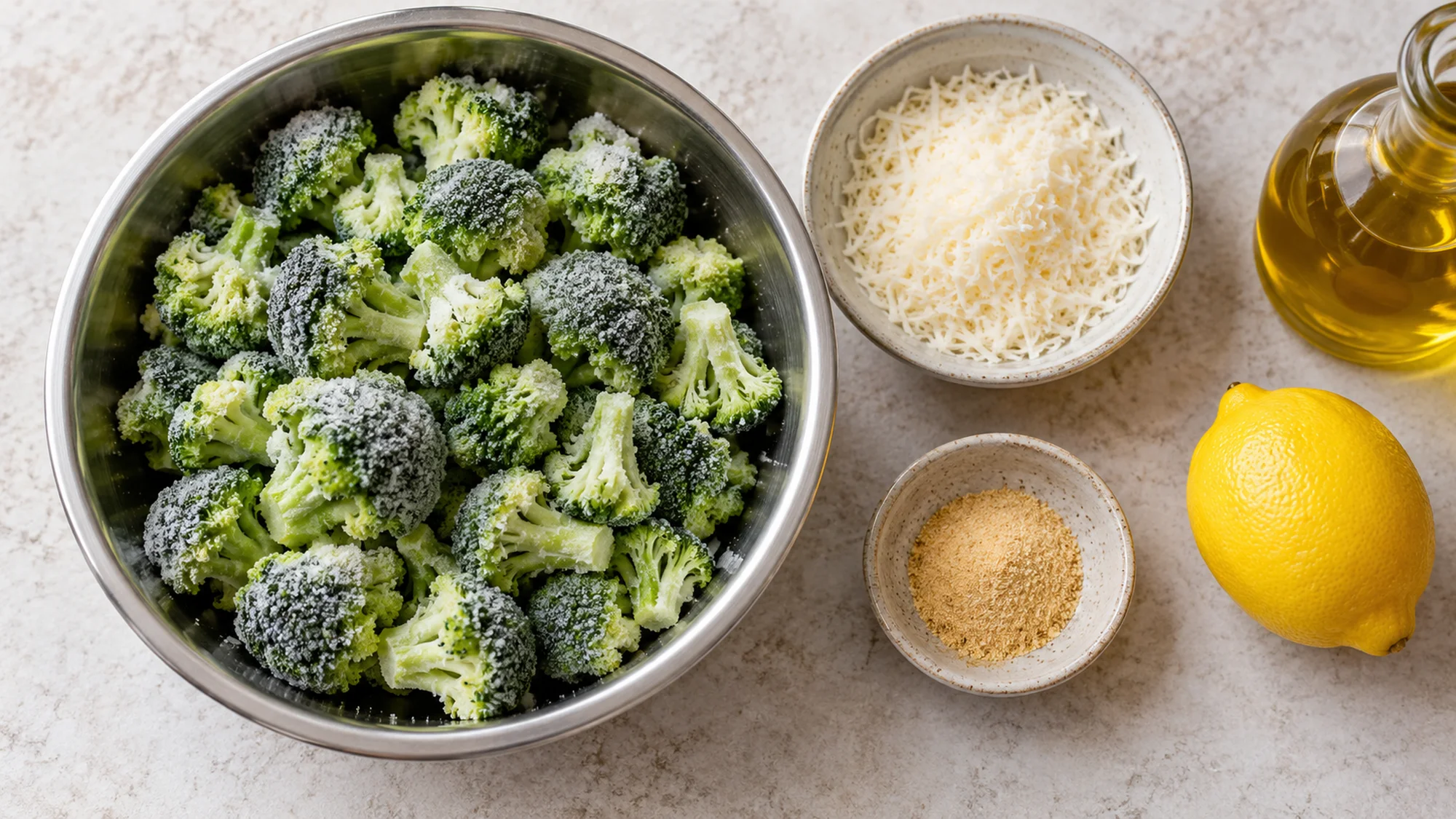
Use one 16-ounce bag of frozen broccoli florets, two tablespoons of olive oil, half a teaspoon of garlic powder, a quarter teaspoon each of fine salt and black pepper, 30 grams of finely grated Parmesan, and two teaspoons of lemon juice. This makes four modest side servings.
- Measure Parmesan by weight when possible; a fluffy grating and a packed spoonful occupy very different volumes.
- Use garlic powder rather than minced garlic for this full roasting time; tiny fresh pieces can scorch.
- Keep the salt modest because Parmesan adds its own salty flavor.
- Finish with lemon after roasting so it tastes bright instead of evaporating on the tray.
How to roast without a soggy tray
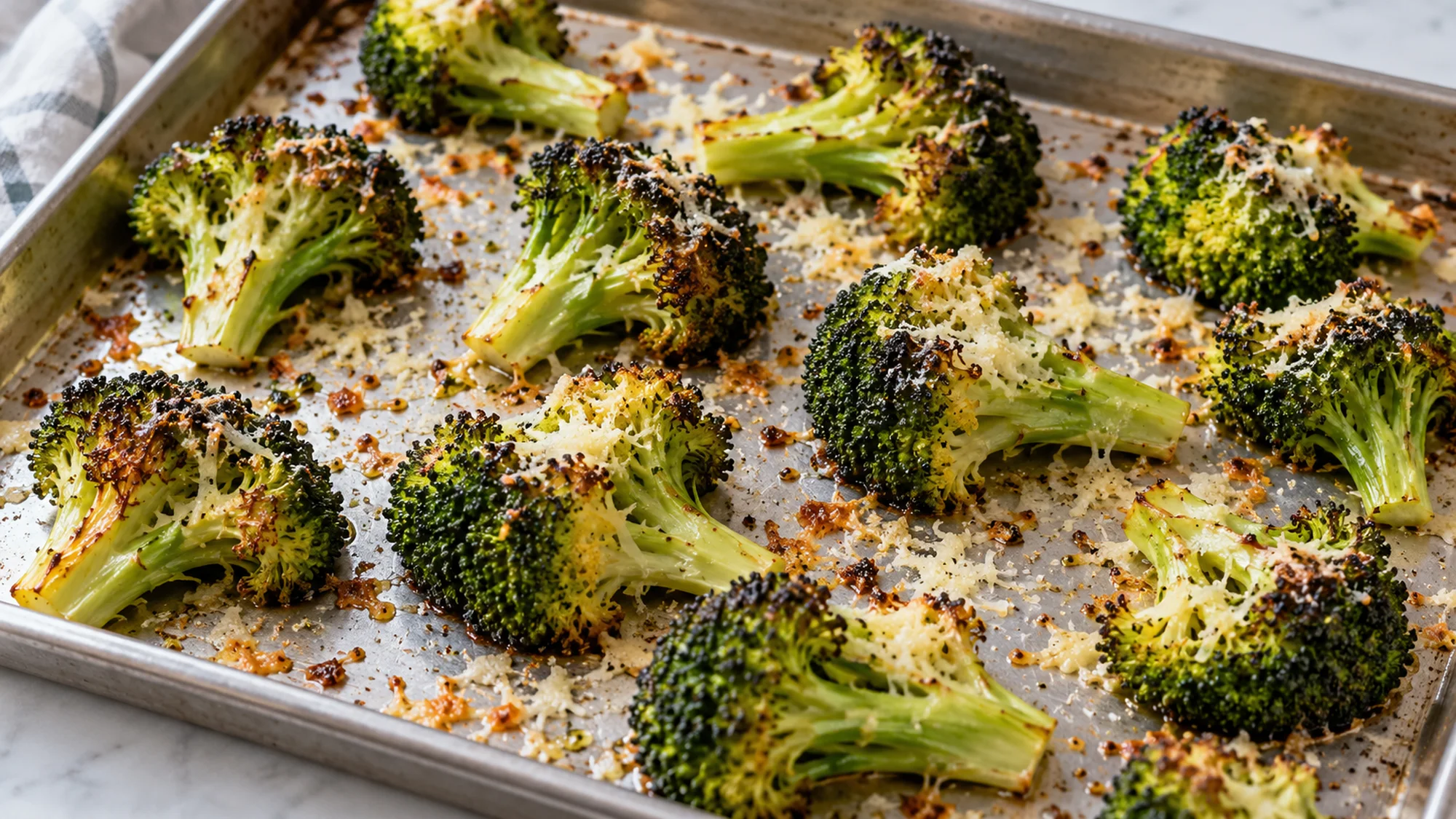
Heat the oven to 425°F. Toss the frozen florets with oil, garlic powder, salt, and pepper, then spread across a large rimmed metal baking sheet. Roast for fifteen minutes, turn the pieces, and continue for about ten minutes, until the broccoli is hot throughout and its edges begin to brown.
Sprinkle Parmesan over the florets and roast for three to five minutes more. Watch closely once the cheese is added. It should melt into a light golden coating. Follow any specific cooking requirements on your broccoli package, and allow extra time for particularly large florets.
If water collects around the broccoli, move the pieces apart and keep roasting before adding cheese. Extra Parmesan cannot fix a wet pan.
Serving suggestions
Bring this broccoli to the table beside whole chicken, baked salmon, or a bowl of beans. Lemon at the end is especially useful with richer main dishes. Serve promptly: the browned edges soften as the broccoli sits.
It also makes an easy vegetable alongside miso mushroom pasta. Keep the broccoli separate until serving so its cheese coating does not disappear into the sauce. For a larger vegetable portion, divide the tray between two people instead of four.
Variations
| Variation | Adjustment |
|---|---|
| A little heat | Add a pinch of red pepper flakes with the garlic powder. |
| Less salty | Leave out the added salt, then taste after the Parmesan melts. |
| Vegetarian cheese | Choose Parmesan-style hard cheese labeled suitable for vegetarians; traditional Parmesan may contain animal rennet. |
For a dairy-free version, omit the cheese and finish with lemon and toasted breadcrumbs. That changes both the flavor and nutrition, so the card’s Parmesan-based estimates no longer apply.
Health benefits
Plain broccoli contributes fiber and some protein. A Birds Eye frozen broccoli label lists three grams of fiber per 85-gram serving. Cheese adds calcium and protein, but also sodium and saturated fat; a measured topping keeps those additions visible rather than treating them as unlimited.
The card estimates one quarter of the recipe using representative broccoli and Parmesan labels plus the measured oil. Brands differ. An illustrative batch budget is $3.25, or about 81 cents per side serving; use your own package prices for a more accurate cost.
Storage and reheating
Refrigerate within two hours and use leftovers within three to four days, following University of Illinois Extension guidance. Reheat to 165°F. A hot oven restores some browned texture; the microwave is quicker but makes a softer result. Do not expect reheated broccoli to match the fresh tray.
Bottom Line
Start frozen, leave room on the pan, and add the cheese late. Those three choices make parmesan roasted frozen broccoli a practical freezer side without extra thawing dishes or an elaborate sauce.
Parmesan roasted frozen broccoli recipe
Parmesan Roasted Frozen Broccoli Recipe

Ingredients
- 454 g plain frozen broccoli florets 16 oz; do not thaw
- 2 tablespoons olive oil
- 1/2 teaspoon garlic powder
- 1/4 teaspoon fine salt
- 1/4 teaspoon black pepper
- 30 g Parmesan cheese finely grated; about 1/3 cup depending on grating
- 2 teaspoons lemon juice
Equipment
- 1 Large rimmed baking sheet
- 1 Mixing bowl
- 1 Spatula
- 1 Kitchen scale
Instructions
- Heat the oven to 425°F (220°C). Toss frozen broccoli with olive oil, garlic powder, salt and pepper. Do not thaw. Spread in one layer with gaps on a large rimmed metal baking sheet.
- Roast for 15 minutes. Turn the florets and carefully separate any frozen clumps with a spatula. Roast for about 10 minutes more, until hot throughout with browning edges. Follow any specific cooking requirements on your package and allow extra time for large florets.
- Scatter the finely grated Parmesan over the broccoli. Roast 3–5 minutes more, watching closely, until the cheese melts and lightly browns.
- Drizzle with lemon juice and serve promptly. Refrigerate within 2 hours, or 1 hour above 90°F. Use within 3–4 days and reheat to 165°F.
Nutrition
Video
Notes
Tried this recipe?
Let us know how it turned out!Hi, I’m Emily Pocker! I share recipes and food guides here at Recipes360 to help you find everyday meal inspiration and feel more confident in the kitchen. My goal is to make cooking approachable, enjoyable, and full of flavor.