
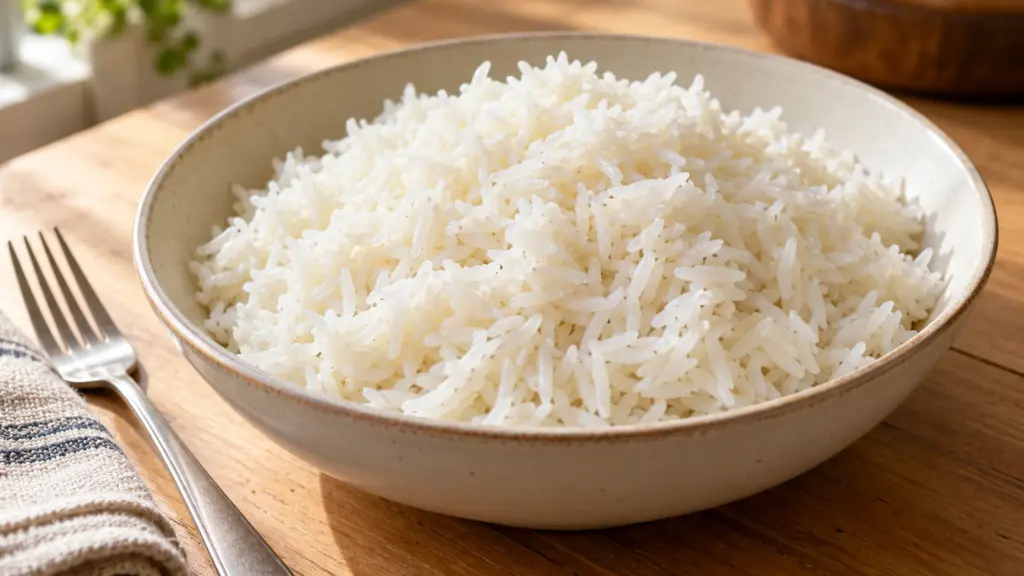
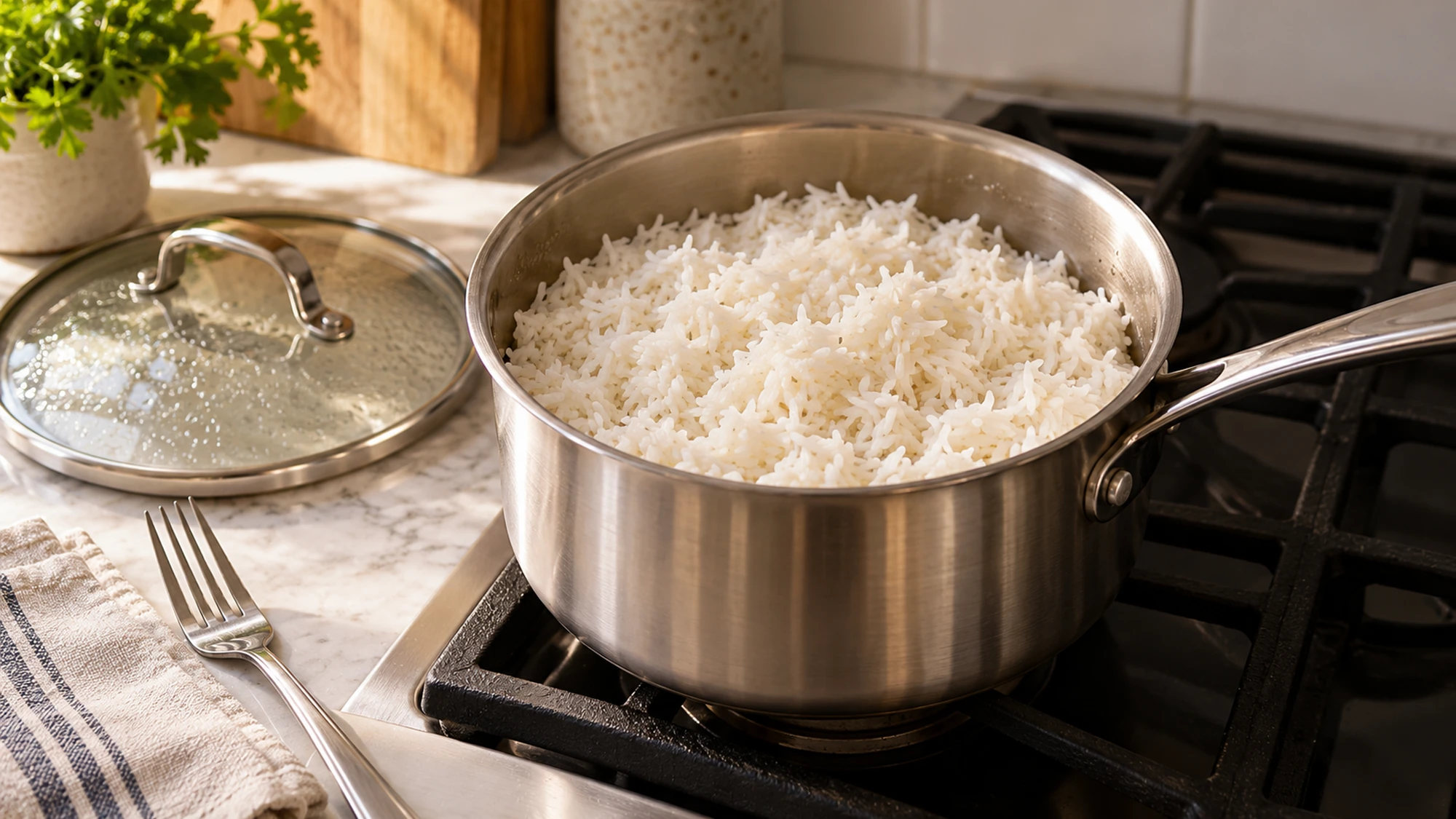
A pot of rice can go from dinner’s quiet helper to a sticky distraction when the lid keeps coming off. Learning how to cook rice starts with choosing one type and giving it a suitable amount of water. This recipe is for regular long-grain white rice, cooked by absorption in a covered saucepan; it is not a universal formula for every grain in the cupboard.
Measure the dry rice and water, bring them to a gentle simmer and keep the lid on while the rice absorbs the liquid. Rest it off the heat before fluffing. The package still matters: instant, parboiled, jasmine and short-grain rice can need different water amounts or timing, even when they look similar in a bowl.
Serving Suggestions for Fluffy White Rice
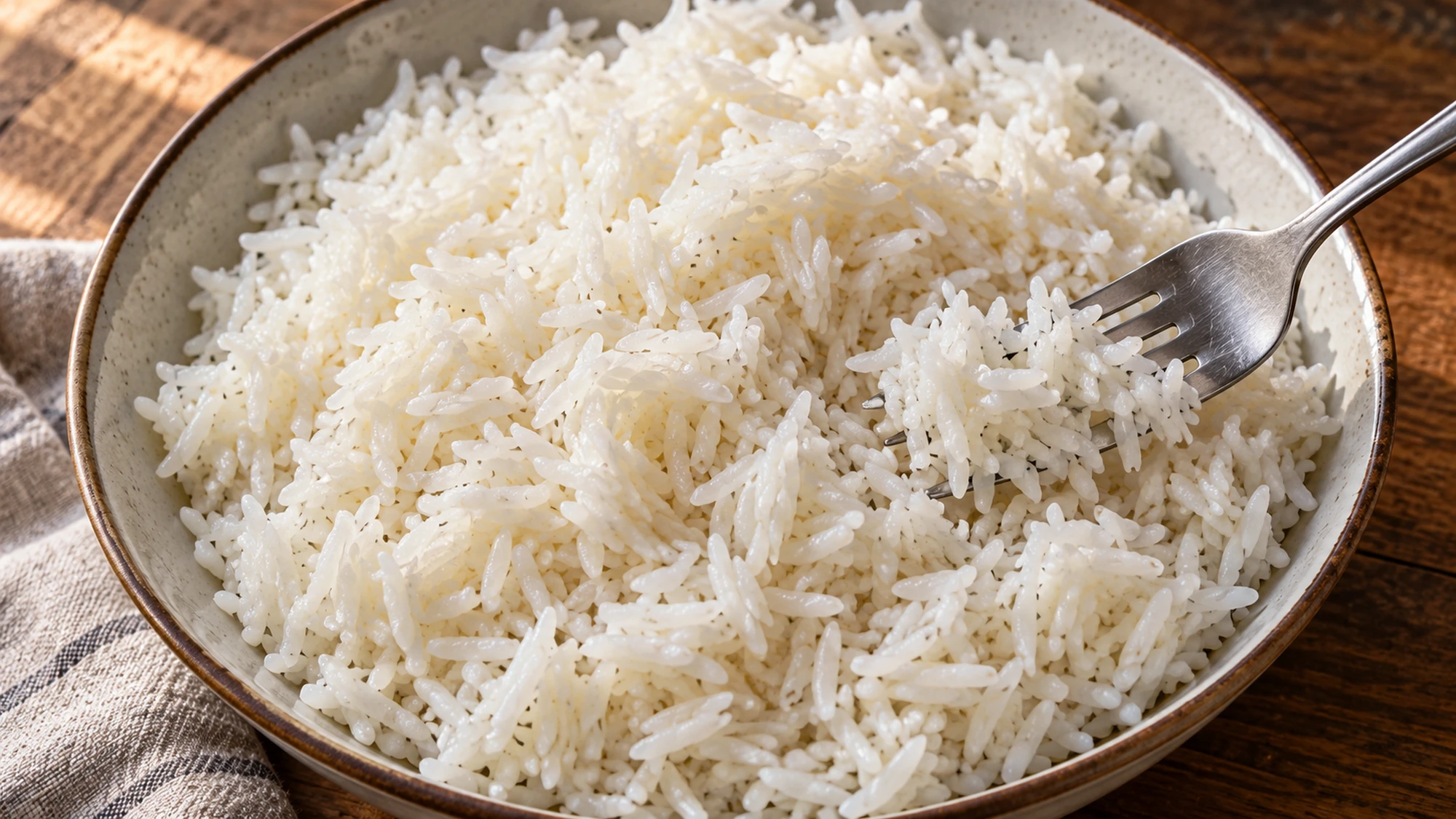
Serve the rice while its grains are tender and separate, with a saucy dish that supplies the rest of the meal. A shallow serving bowl is easier to spoon from than a compact mound pressed into a deep pot. Loosen it gently rather than repeatedly stirring until the grains start to break.
I’d choose a plain batch alongside citrus-and-achiote cochinita pibil, where the pork already brings plenty of flavor. Rice can catch the cooking juices without competing with them. Add vegetables or beans according to the meal, and remember that the rice card’s estimate does not include those additions.
- Keep sauce separate until serving if you want distinct grains.
- Use a fork or rice paddle gently; vigorous mixing changes the texture.
- Label the refrigerated portion so its short storage window stays clear.
For tomorrow’s lunch, portion only what you need and cool the extra rice promptly in shallow containers. This recipe follows the NHS rice guidance: refrigerate within one hour, eat within 24 hours and reheat only once until thoroughly steaming. Rice left out overnight should be discarded rather than rescued by reheating.
How to Cook Rice With Different Seasonings
Broth can replace water for more flavor, but check its salt before adding the measured seasoning. A little lemon zest or a bay leaf gives a gentler change. I prefer leaving strong aromatics out when the main dish is already highly seasoned; plain rice is useful precisely because it does not demand attention.
The two-to-one water ratio here suits the regular long-grain white rice specified. The manufacturer’s long-grain cooking instructions provide one clear example of that approach. Other brands and varieties differ, so compare the package before cooking rather than adding more liquid halfway through simply because another recipe used it.
Texture problems need different responses. If the grains are firm and the pot is dry, a small splash of hot water and a few covered minutes may help; if the rice is already soft and wet, more cooking can make it mushier. A scorched smell calls for transferring the unburned top portion without scraping the bottom.
| Situation | Likely issue | Useful response |
|---|---|---|
| Firm grains; dry pot | Not enough hydration | Add a small splash of hot water and cover briefly |
| Tender grains; excess liquid | Too much water for this rice | Drain carefully; adjust the next batch |
| Sticky broken grains | Too much stirring or overcooking | Handle gently and shorten the next cook |
| Brown bottom; firm center | Heat too strong or lid leaking | Lower the heat and check the lid fit |
Health Benefits and Portion Balance
White rice contributes carbohydrate and a small amount of protein. It is a refined grain rather than a high-fiber whole grain, and the amount served matters alongside the rest of the plate. Choose brown rice on another occasion if you want its different texture and whole-grain character; it needs its own cooking instructions.
The salt is measured, but you can leave it out if the accompanying sauce is salty. Added butter, oil, coconut milk or broth changes the nutrition from the plain version in the card. I would make those choices for a clear flavor reason instead of adding richness automatically to every pot.
Rice safety depends on handling after cooking as well as on the cooking itself. Bacterial spores can survive heat, and some toxins formed during poor storage are not removed by reheating. Keep that distinction in mind when planning leftovers: a hot pan later cannot correct hours spent on the counter.
Bottom Line
Choose regular long-grain white rice, respect the package’s water guidance and give the covered pot a quiet rest before fluffing. Small adjustments to heat and hydration are more useful than treating every variety alike. I’d keep the first batch plain so you can judge its texture, then add seasonings that suit the food beside it.
How to Cook Rice Recipe

Ingredients
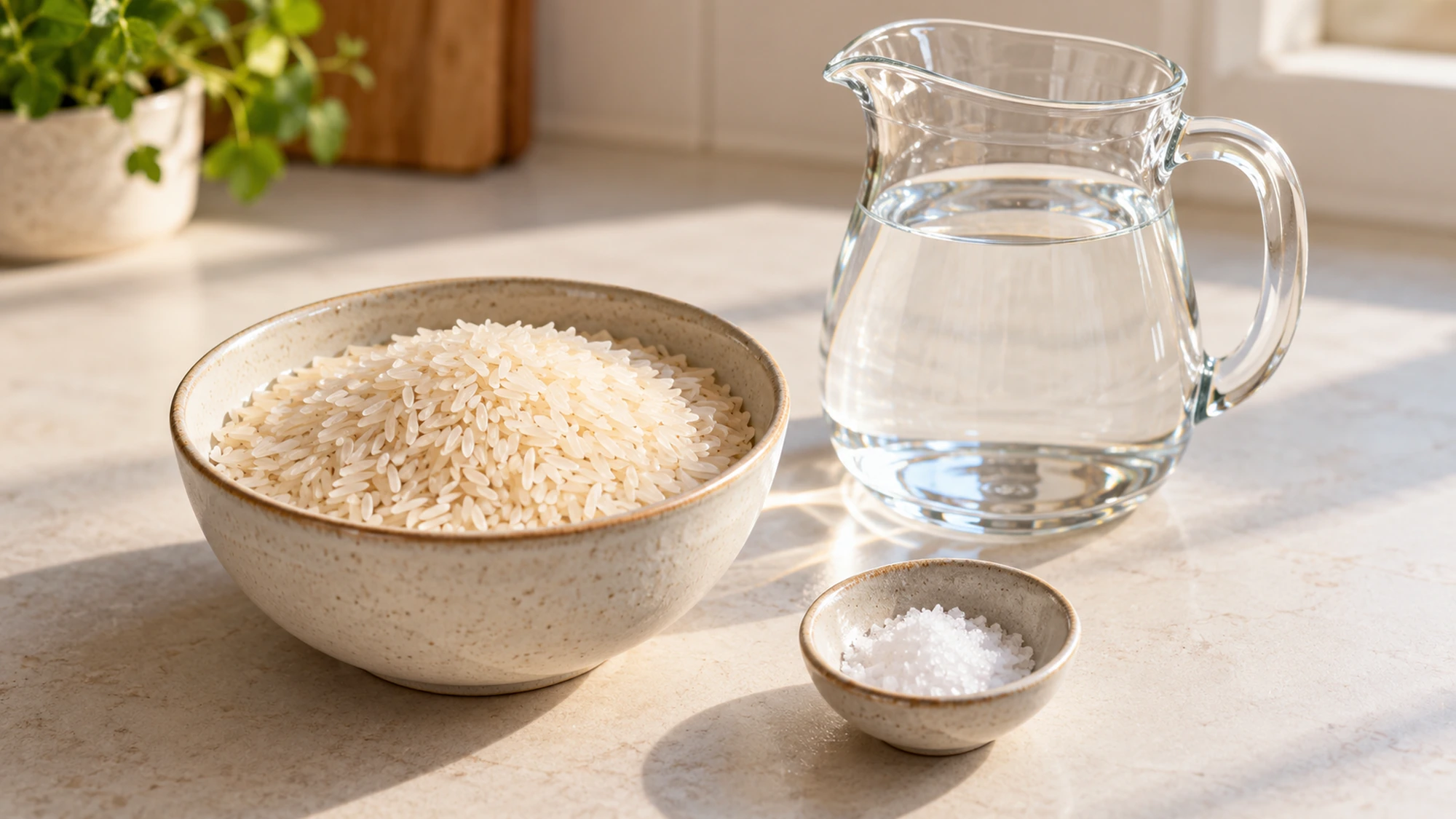
- 1 cup regular long-grain white rice about 185 g; not instant or parboiled; check package water guidance
- 2 cups water 480 ml; adjust to the chosen rice’s package if it specifies differently
- 1/4 tsp fine salt optional
Equipment
- 2-quart saucepan with tight-fitting lid
- Measuring cup
- Fork or rice paddle
Instructions
- Check the rice package. This method uses regular long-grain white rice whose instructions call for 2 cups water per cup of dry rice. Rinse only if directed or desired for your chosen product, then drain well.
- Bring the measured water and optional salt to a boil in the saucepan. Stir in the rice once, cover and reduce the heat to low so the liquid simmers gently.
- Cook covered for about 20 minutes, until the water is absorbed and the grains are tender. Avoid lifting the lid repeatedly. If the rice is still firm and dry, add 1–2 tablespoons hot water, cover and cook a few minutes longer.
- Remove from the heat and leave covered for 10 minutes. Uncover and gently fluff with a fork or rice paddle. Serve promptly.
- For saved portions, divide into shallow containers and refrigerate within one hour. Following this recipe’s conservative rice-storage plan, use within 24 hours and reheat only once until steaming hot throughout; discard rice left out overnight.
Nutrition
Video
Notes
Tried this recipe?
Let us know how it turned out!Hi, I’m Emily Pocker! I share recipes and food guides here at Recipes360 to help you find everyday meal inspiration and feel more confident in the kitchen. My goal is to make cooking approachable, enjoyable, and full of flavor.