
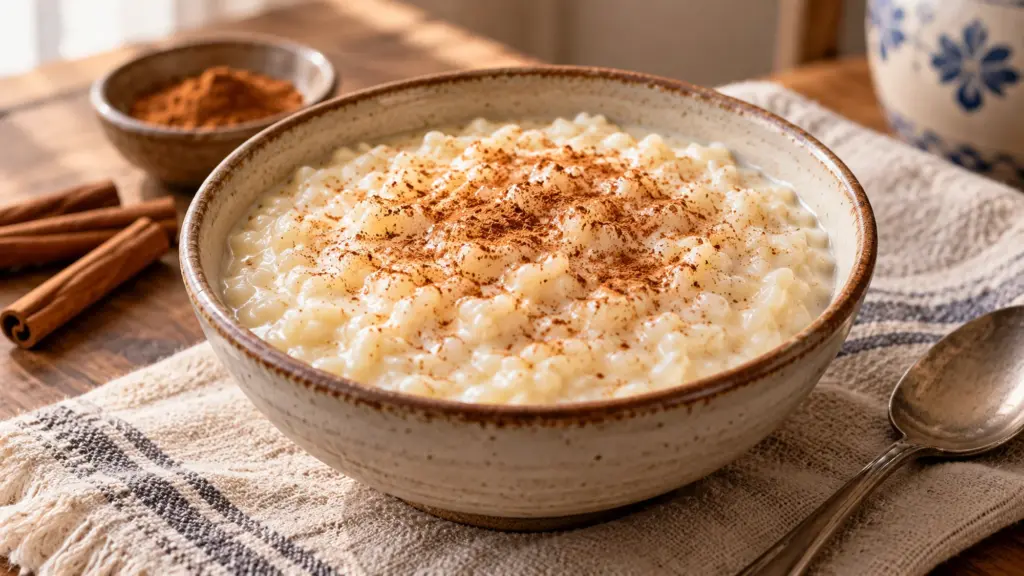
A spoon should find tender rice grains in arroz con leche, not a hidden patch of hard rice beneath a creamy-looking surface. This version begins by softening short-grain rice in water, then simmers it gently with milk, cinnamon and orange peel. Sugar comes later, and the pudding stays loose enough to spoon comfortably into small bowls.

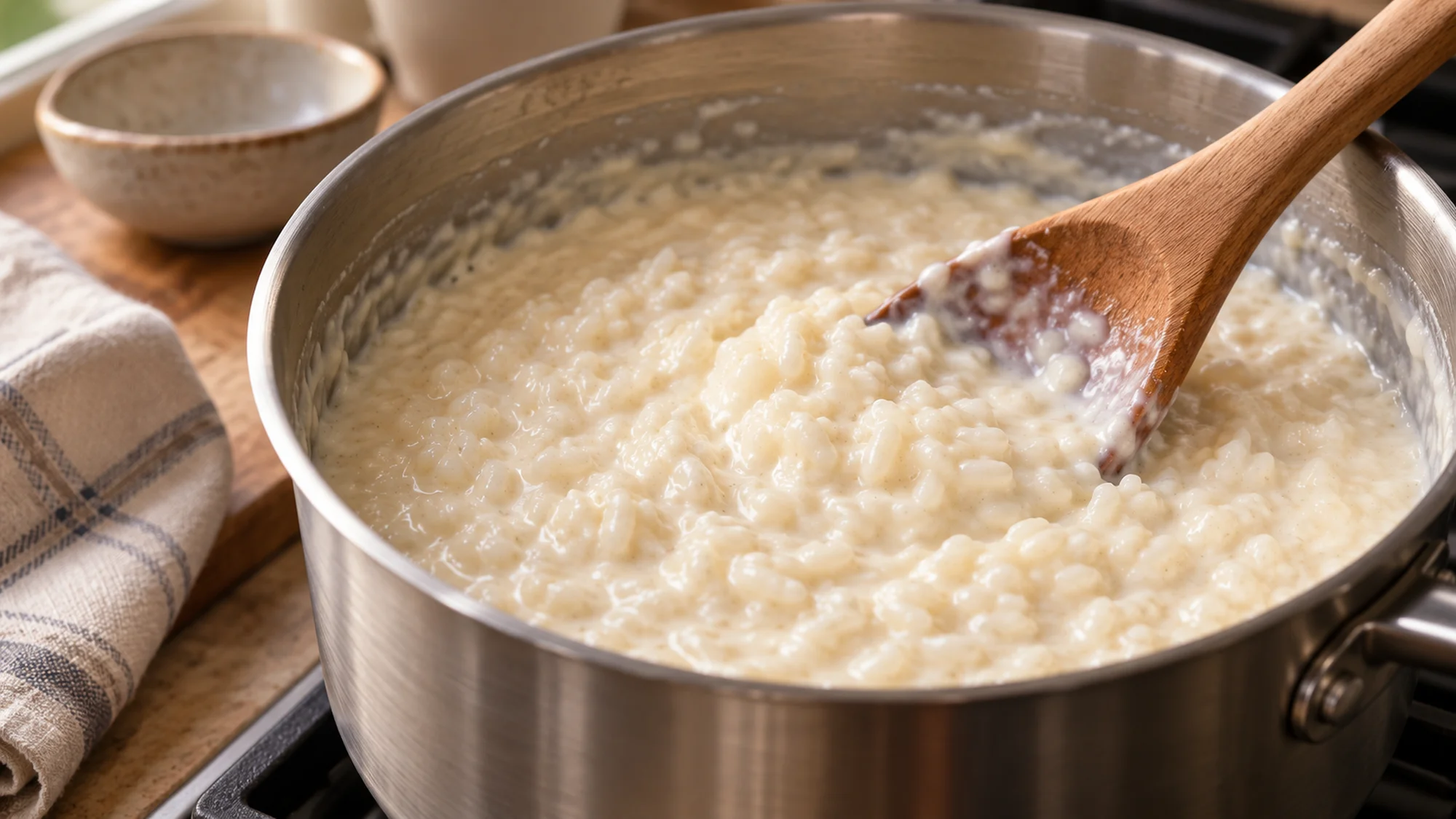
Use gentle heat and stir along the bottom as the milk reduces. Check a rice grain for tenderness before calling the pudding finished, then stop while it is slightly looser than you want to serve. Rice continues absorbing liquid as it stands, so a splash of milk is more useful than cooking the pot into a stiff mass.
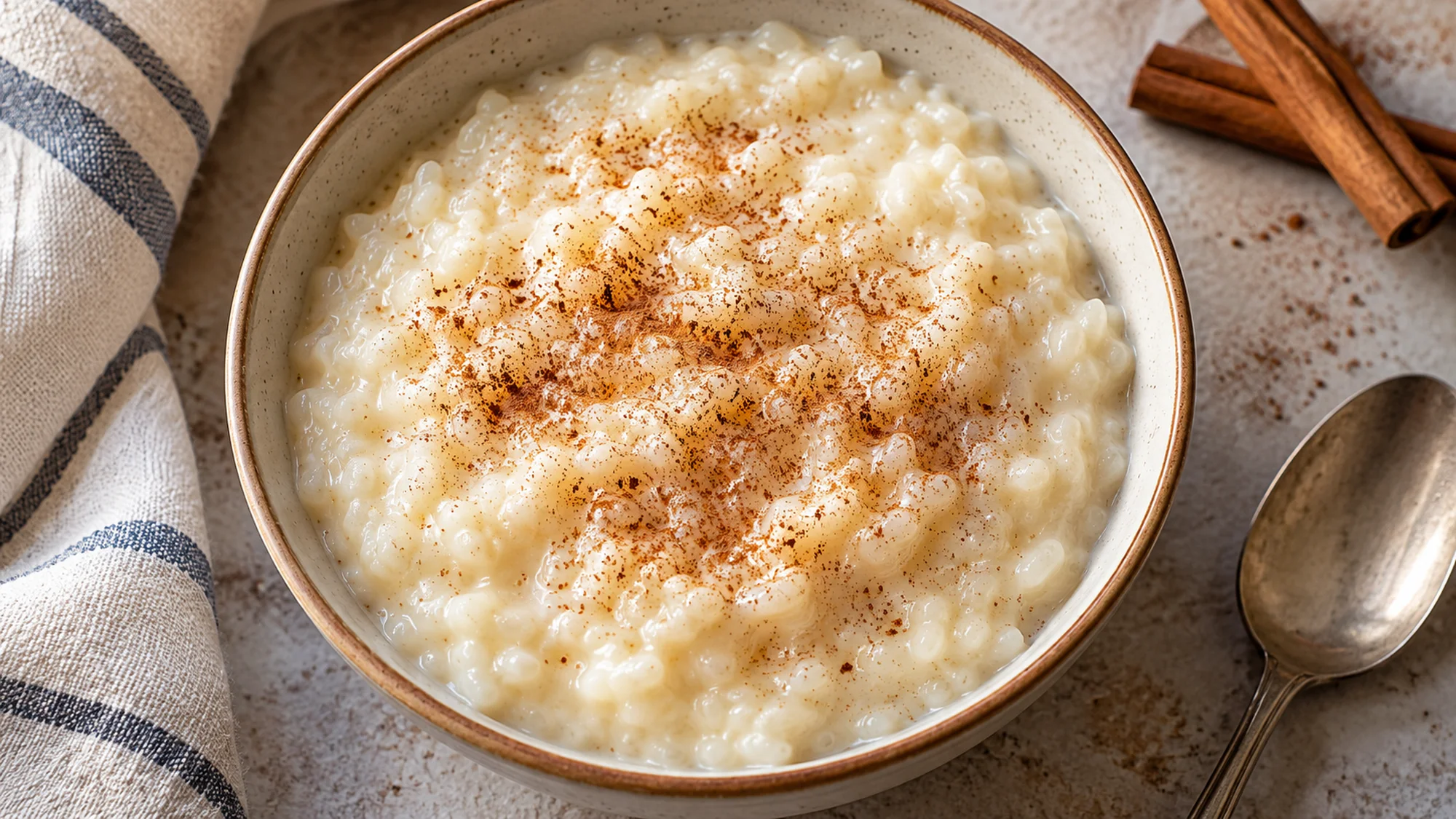
Serving Suggestions for arroz con leche
Serve arroz con leche warm or chilled in small bowls, with a light dusting of cinnamon if you enjoy it. Remove the cinnamon stick and orange peel before portioning. A broad spoon makes it easier to include both rice and creamy liquid rather than giving the first bowl mostly milk and the last bowl mostly rice.
I’d let the orange remain a background note instead of adding a strong extract. A few thin peel strips supply aroma without requiring juice in the milk mixture. For a different warm grain-based serving, atole de pinole uses toasted corn and is meant for sipping rather than spooning.
- For warm bowls: stir the pot just before dividing the rice and milk.
- For chilled bowls: leave enough container space to stir in a little milk later.
- For topping: begin with a light cinnamon dusting so it does not overpower the orange aroma.
Divide leftovers into shallow containers and refrigerate promptly, within two hours at the latest. Do not leave the whole pot to cool slowly on the stove. Use refrigerated portions within three to four days, and reheat only what you need to 165°F (74°C), adding a little milk to loosen the texture.
Variations for arroz con leche
Short-grain rice releases starch as it cooks and suits the spoonable texture here. Long-grain rice can also make a good pudding, but its shape and liquid absorption differ, so judge tenderness and consistency rather than expecting an identical result. Brown rice would need a substantially different cooking schedule.
I prefer keeping the first pot free of raisins and condensed milk so the rice, cinnamon and orange are easy to recognize. That is a choice for this version, not a claim that other households should make the same choice. Sweetened condensed milk changes both the liquid balance and sweetness and should not replace plain milk without adjustment.
The table offers a few controlled changes. If the pudding becomes thick after chilling, stir in milk gradually rather than trying to force a cold, compact portion into a smooth texture with vigorous beating. A thin skin on the surface can be stirred back in or avoided by covering the cooled portion appropriately.
| Choice | What changes | Useful approach |
|---|---|---|
| Short-grain rice | More released starch | Stir gently near the end |
| Long-grain rice | More separate grains | Check tenderness and liquid |
| Less sugar | Less sweetness | Taste the cooked pudding |
| Chilled serving | Thicker texture | Loosen with a little milk |
Health Benefits and Portion Balance
Milk supplies protein and calcium, while rice supplies carbohydrate and sugar adds sweetness. This remains a sweet dessert, even when it uses ordinary milk rather than condensed milk. The card estimates one-sixth of the pot and includes all the measured sugar; extra toppings are separate.
Different milks change the fat, protein and flavor of the pudding. Dairy and fortified-alternative guidance helps put that choice in context, but plant drinks are not nutritionally identical. Check labels if changing the base, and expect a different cooking result as well as different numbers.
This recipe contains milk. Follow safe cooling and leftover storage and safe reheating guidance. Rice and dairy should not sit warm for hours, and reheating is not a reason to keep a pot that was stored unsafely.
Bottom Line
Check the grains, keep the heat gentle and leave a little room for thickening after cooking. I’d serve the cinnamon lightly and let the orange peel do its quiet work in the background. The useful result is tender rice held in a creamy liquid, with enough movement that the spoon can glide rather than carve.
Arroz con Leche Recipe


Ingredients
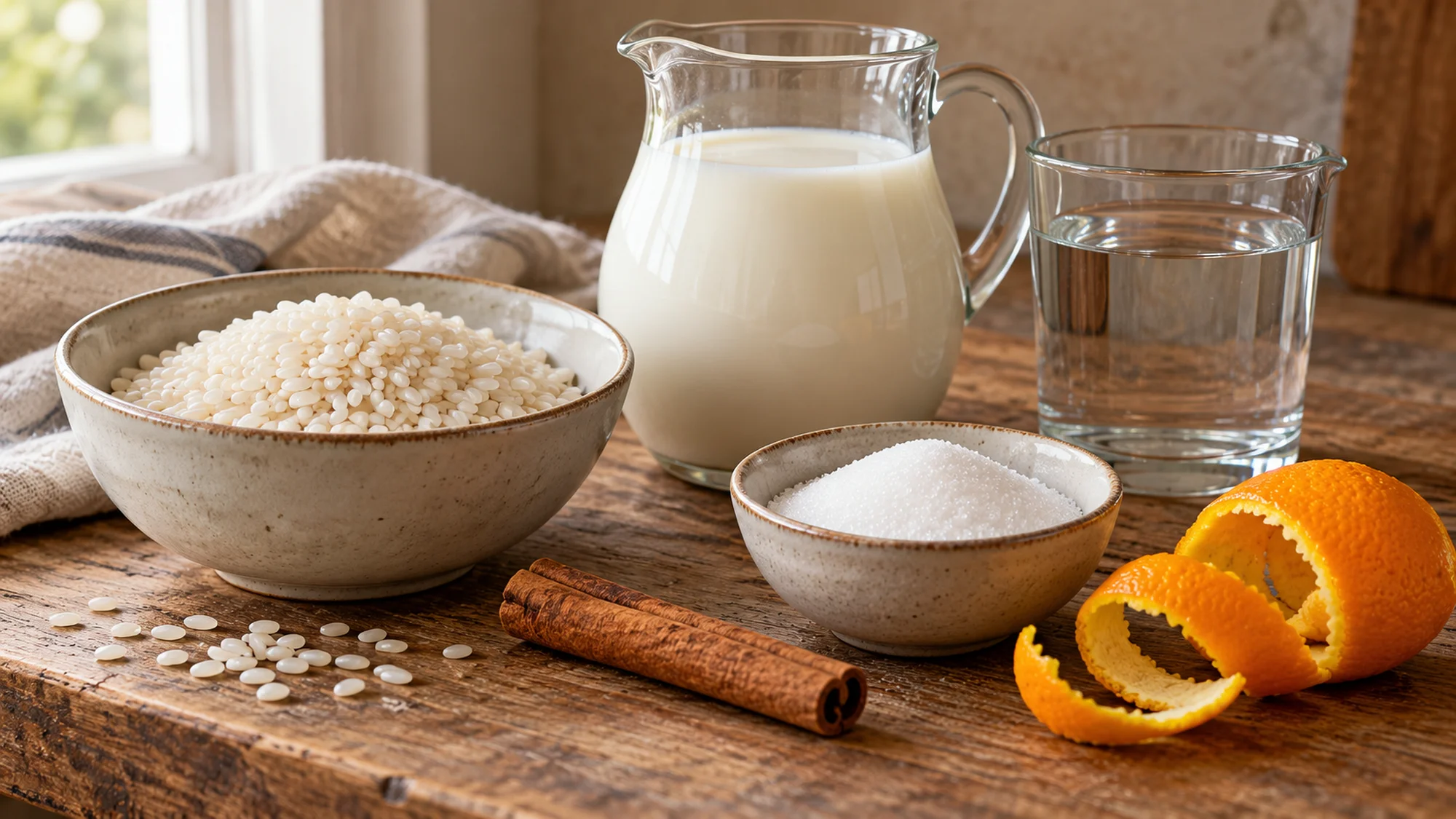
- 120 g short-grain white rice
- 400 ml water
- 1 liter whole milk plus a little to loosen if needed
- 60 g sugar
- 1 cinnamon stick
- 2 thin orange peel strips minimal white pith
- 1/8 tsp fine salt
- 1/4 tsp ground cinnamon optional, for serving
Equipment
- Heavy 3-quart saucepan
- Wooden spoon
- Vegetable peeler
- Food thermometer for reheating
Instructions
- Briefly rinse the rice and drain. Put it in a heavy saucepan with the water, cinnamon stick and orange peel. Bring to a gentle simmer and cook uncovered about 12–15 minutes, until the rice has softened and much of the water is absorbed.
- Add the milk and salt. Return to a gentle simmer and cook for about 20 minutes, stirring regularly across the bottom so the milk does not scorch.
- Stir in the sugar and cook 5–10 minutes more until the rice is fully tender and the liquid lightly coats the grains. Keep it looser than the final serving texture; add a little milk if it is becoming stiff before the rice is tender.
- Remove the cinnamon stick and peel. Stand for 10 minutes, stir and divide among six bowls. Add optional ground cinnamon. For chilled servings, transfer promptly to shallow containers and refrigerate rather than cooling the entire pot on the counter.
Nutrition
Video
Notes
Tried this recipe?
Let us know how it turned out!Hi, I’m Emily Pocker! I share recipes and food guides here at Recipes360 to help you find everyday meal inspiration and feel more confident in the kitchen. My goal is to make cooking approachable, enjoyable, and full of flavor.