
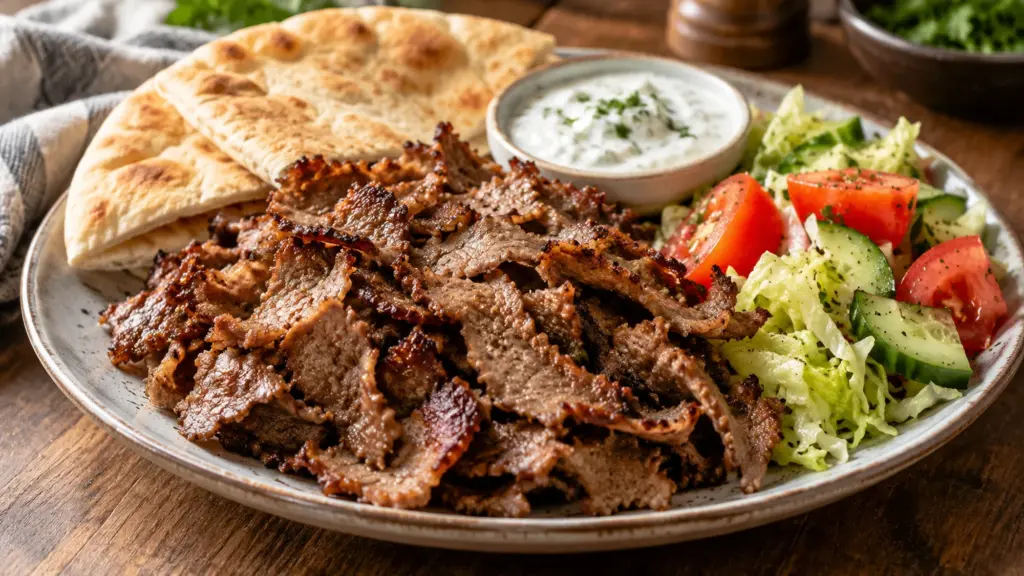
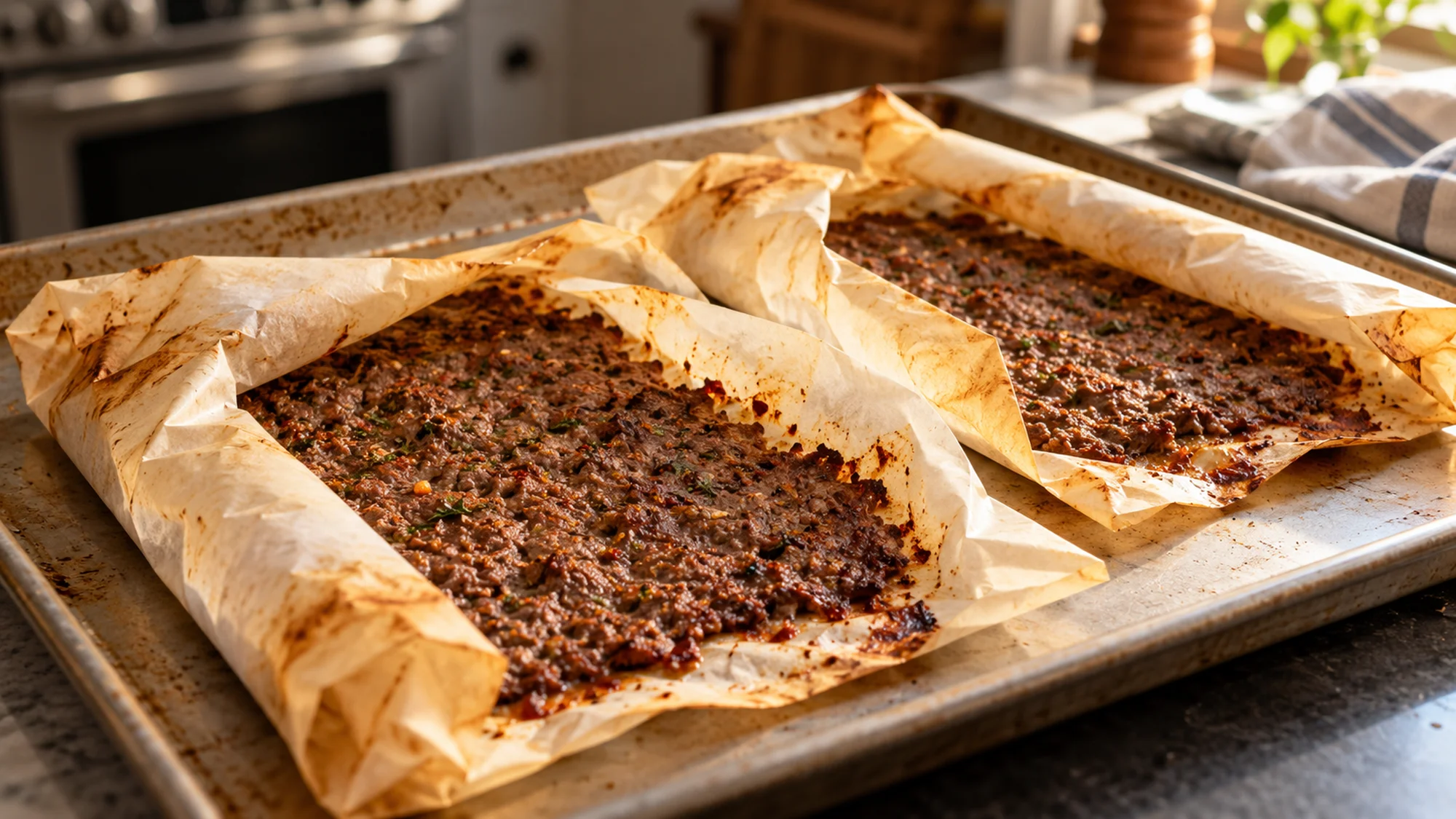
Parchment doner kebab uses a thin sheet of seasoned ground beef instead of a rotating spit. The meat bakes in a paper roll, then becomes browned ribbons for a sandwich or dinner plate. It is an oven shortcut inspired by döner, not an identical replacement for the layered meat carved at a kebab shop.
Thin, even meat layers and a thermometer matter more than a tightly wound roll. Bake ground beef to 160°F, remove every piece of parchment, then briefly crisp the strips in a skillet.
The trick is controlling moisture. Squeezed grated onion seasons the beef without flooding the tray, and a little yogurt helps the mixture spread. I would keep the first batch simple rather than loading it with extra wet ingredients. A ruler is surprisingly useful when judging whether the layer is genuinely thin.
Serving Suggestions for Parchment Doner Kebab
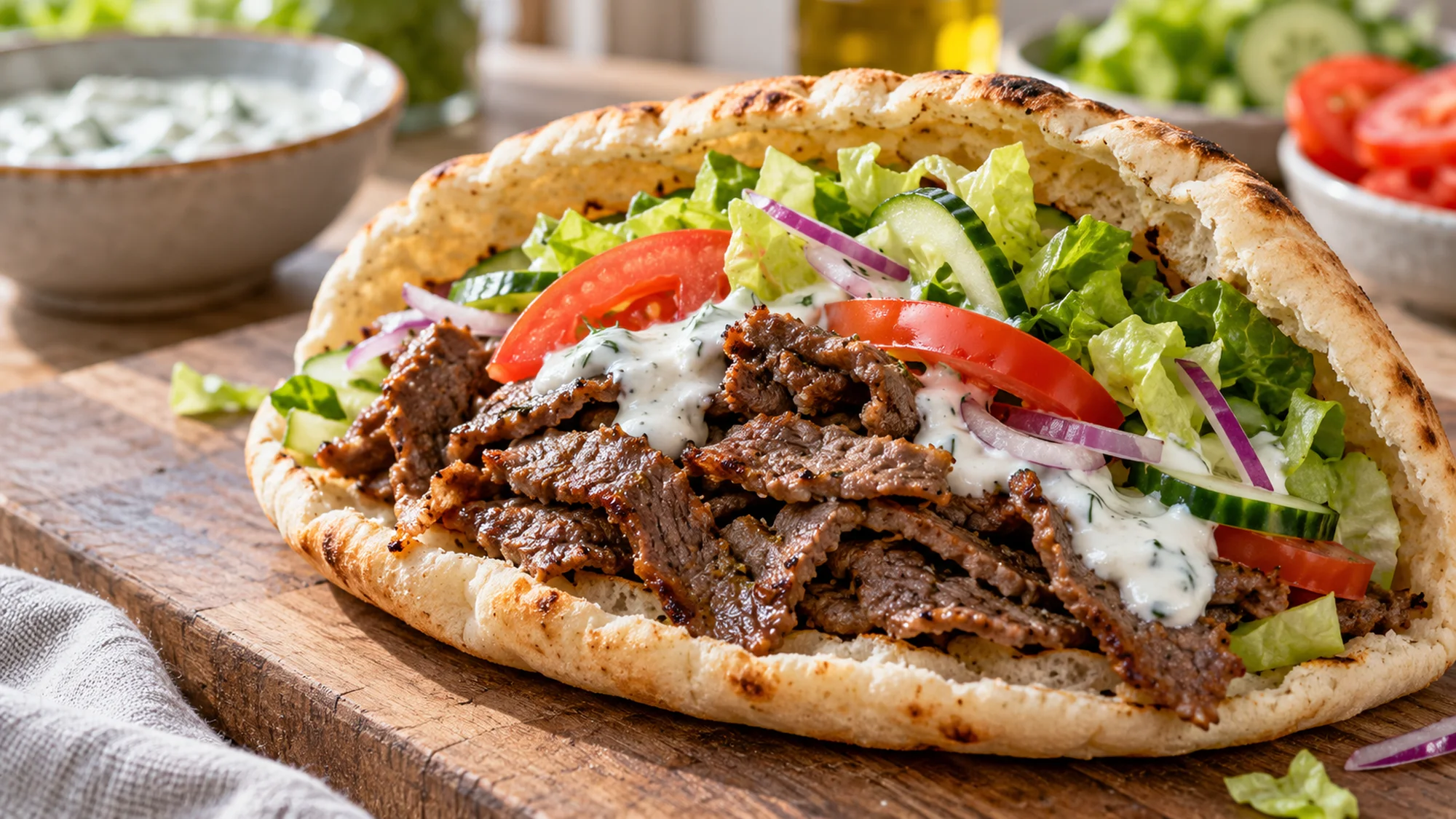
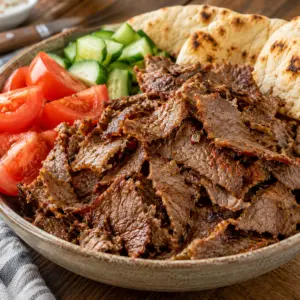
Pile the warm ribbons into pita with cucumber, tomatoes and thinly sliced onion. Add a spoonful of plain yogurt sauce at the table rather than mixing it into the cooked meat. This keeps the crisp edges from softening immediately and lets everyone choose how much sauce they want.
For a plate rather than a sandwich, serve the beef with rice and a generous chopped salad. The recipe makes four meat portions; bread, rice, sauce and vegetables are additional serving choices and are not included in its nutrition estimate. A little lemon over the vegetables brings brightness without making the whole dish sour. A spoonful of dense bean salad is another make-ahead option when you prefer a plate to a sandwich.
Warm the bread while the meat rests, not while raw beef is still being handled on the same counter. Use a clean board and utensils for cooked strips. I prefer a modest amount of filling in each pita so it stays easy to hold instead of collapsing under a restaurant-sized mound.
Build the sandwich only when you are ready to eat. Keep the crisp meat, cool vegetables and yogurt sauce separate until the last moment.
Variations and Substitutions
Ground beef with 15 percent fat is a practical starting point. Very lean beef may taste drier after the final crisping stage, while fattier beef releases more liquid. Either way, drain carefully and judge doneness with a thermometer rather than by whether the outside looks brown.
| Adjustment | How to handle it |
|---|---|
| Ground lamb | Expect a stronger flavor and potentially more rendered fat |
| Ground turkey | Cook to 165°F; texture and timing will differ |
| Dairy-free yogurt | Use an unsweetened thick alternative; flavor will change |
Paprika, cumin and oregano provide a warm savory base without requiring a premixed seasoning packet. Add a pinch of chile flakes if you enjoy heat. Do not increase the yogurt substantially: too much moisture makes the thin layer difficult to handle and encourages steaming rather than browning.
Use actual oven-safe parchment, never wax paper. Follow the temperature limit on the package and keep the paper away from heating elements. Reynolds specifies that parchment must not go under a broiler. This recipe finishes in a skillet only after the paper has been removed completely.
Choose the meat and seasoning you enjoy, but keep the thin layer, paper temperature limit and safe internal temperature unchanged. Those are the parts that make the method dependable.
Health Benefits and Nutrition
Beef contributes protein and iron, but it also supplies saturated fat. The portion size and accompaniments matter more than calling a homemade kebab automatically healthy. A plate with plenty of vegetables can add fiber and variety; a large bread-and-sauce portion changes the meal’s overall nutrition considerably.
The card’s estimate counts the raw beef, yogurt, onion, garlic, spices and measured salt, divided into four servings. It includes fat that may drain onto the tray, so actual intake may be lower. It excludes pita, additional sauce and salad. These are calculations from ingredient data, not measurements of the finished meat.
USDA recommends 160°F for ground beef. Check the thickest part of each roll with an instant-read thermometer. Refrigerate leftovers within two hours in shallow containers, use within three to four days and reheat to 165°F. Keep raw meat preparation separate from salad preparation.
A crisp exterior does not prove ground meat is safe. Check the center temperature, then use the brief skillet finish for texture rather than as a substitute for thorough cooking.
Bottom Line
Parchment doner kebab is a useful home-oven method when you want thin seasoned beef without special equipment. Spread the mixture evenly, leave room around the rolls and open the hot paper carefully because steam can escape. Once the meat is cooked safely, a short skillet finish gives the edges their appeal. Serve promptly and save the extra sauce for the table.
Parchment Doner Kebab Recipe

Ingredients
- 600 g 85% lean ground beef
- 60 g grated onion weight after squeezing out excess liquid
- 40 g plain whole-milk Greek yogurt
- 2 cloves garlic 6 g, finely grated
- 2 teaspoons paprika 4.6 g
- 1 teaspoon ground cumin 2.1 g
- 1 teaspoon dried oregano 1 g
- 1/2 teaspoon ground black pepper 1 g
- 3/4 teaspoon fine salt 4.5 g
Equipment
- 1 Rimmed baking sheet
- 4 Oven-safe parchment sheets
- 1 Instant-read thermometer
- 1 Large skillet
Instructions
- Heat the oven to 400°F (200°C). Mix beef, squeezed onion, yogurt, garlic, paprika, cumin, oregano, pepper and salt thoroughly in a bowl until cohesive. Wash hands and clean surfaces after handling raw meat.
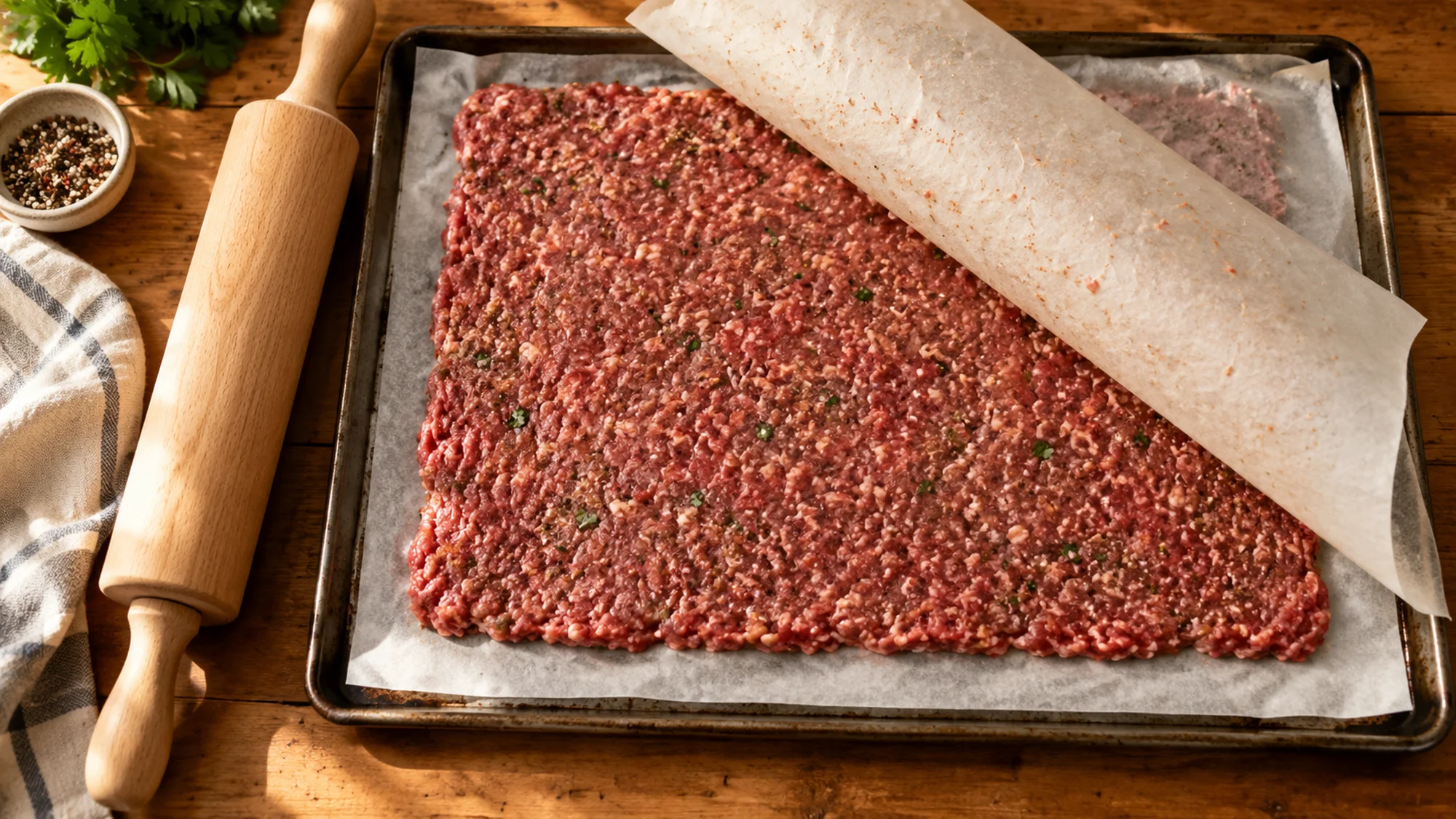
- Divide the mixture in half. Put one half between two oven-safe parchment sheets and flatten into a roughly 10-by-14-inch rectangle about ⅛ inch thick. Peel off the top paper. Repeat with the second half. Use paper rated for at least 400°F; do not use wax paper.
- Starting from a short edge, use the lower paper to roll each thin meat sheet with parchment separating the layers. Arrange seam-side down on a rimmed baking sheet with space between the rolls. Keep paper away from oven walls and elements. Bake about 20–25 minutes, until the thickest center of each roll reaches 160°F on an instant-read thermometer; extend cooking if needed.
- Rest for 5 minutes. Carefully unroll, keeping hands away from escaping steam. Remove and discard all parchment and drain excess liquid. Cut or tear the meat into thin ribbons.
- Heat a large skillet over medium-high heat. Add cooked ribbons in a single layer, working in batches, and crisp for 2–4 minutes, turning once. The meat’s residual fat is usually sufficient. Serve four portions promptly with optional pita, vegetables and yogurt sauce. Accompaniments are not included in nutrition.
Nutrition
Video
Notes
Tried this recipe?
Let us know how it turned out!Hi, I’m Emily Pocker! I share recipes and food guides here at Recipes360 to help you find everyday meal inspiration and feel more confident in the kitchen. My goal is to make cooking approachable, enjoyable, and full of flavor.