
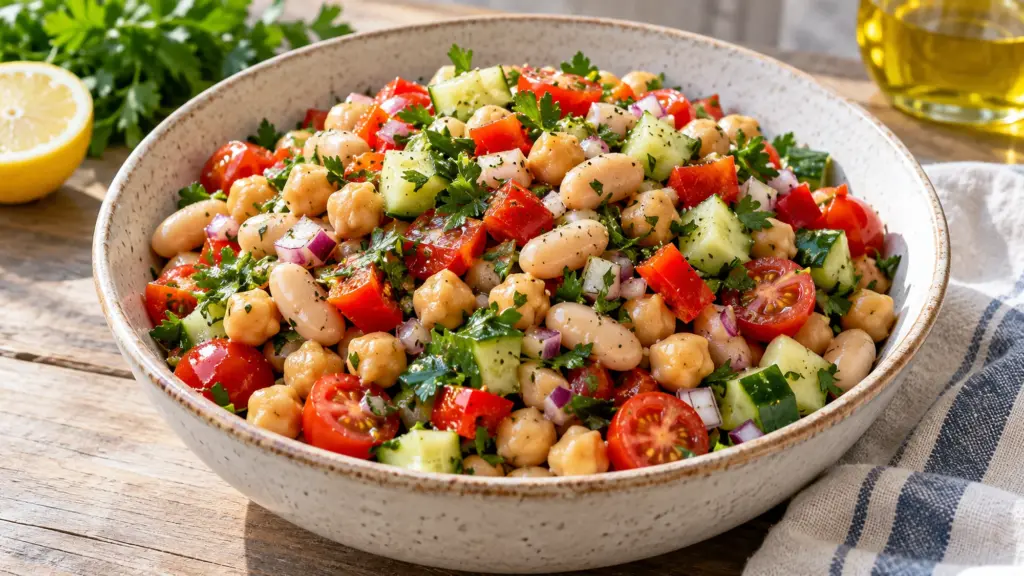
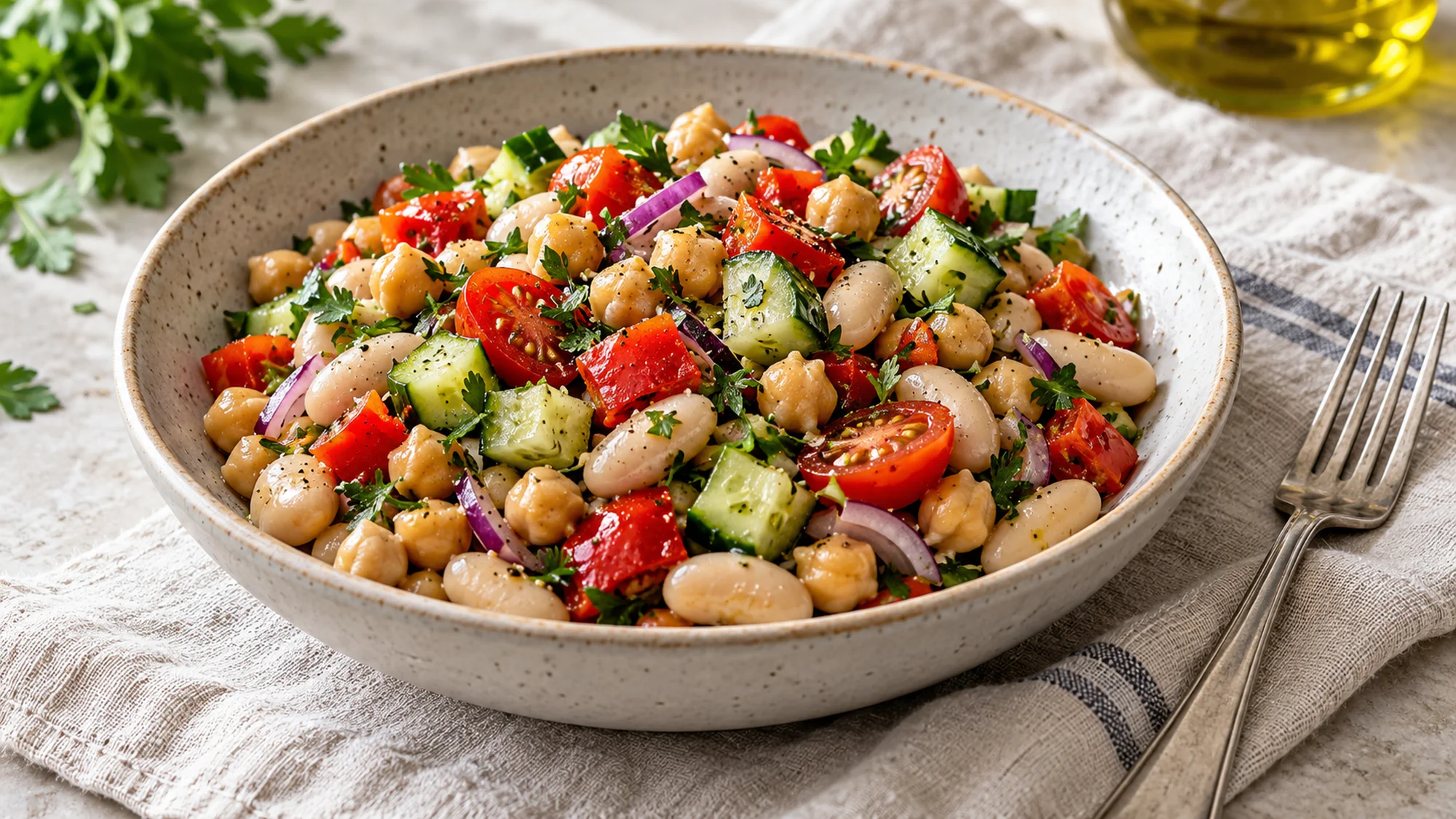
Some salads need a second lunch an hour later. This dense bean salad starts with chickpeas and cannellini beans, then adds enough cucumber, pepper, tomato, and parsley to keep every forkful varied. A lemon-Dijon dressing coats the beans without turning the bowl into a puddle. Already-cooked beans keep the preparation simple.
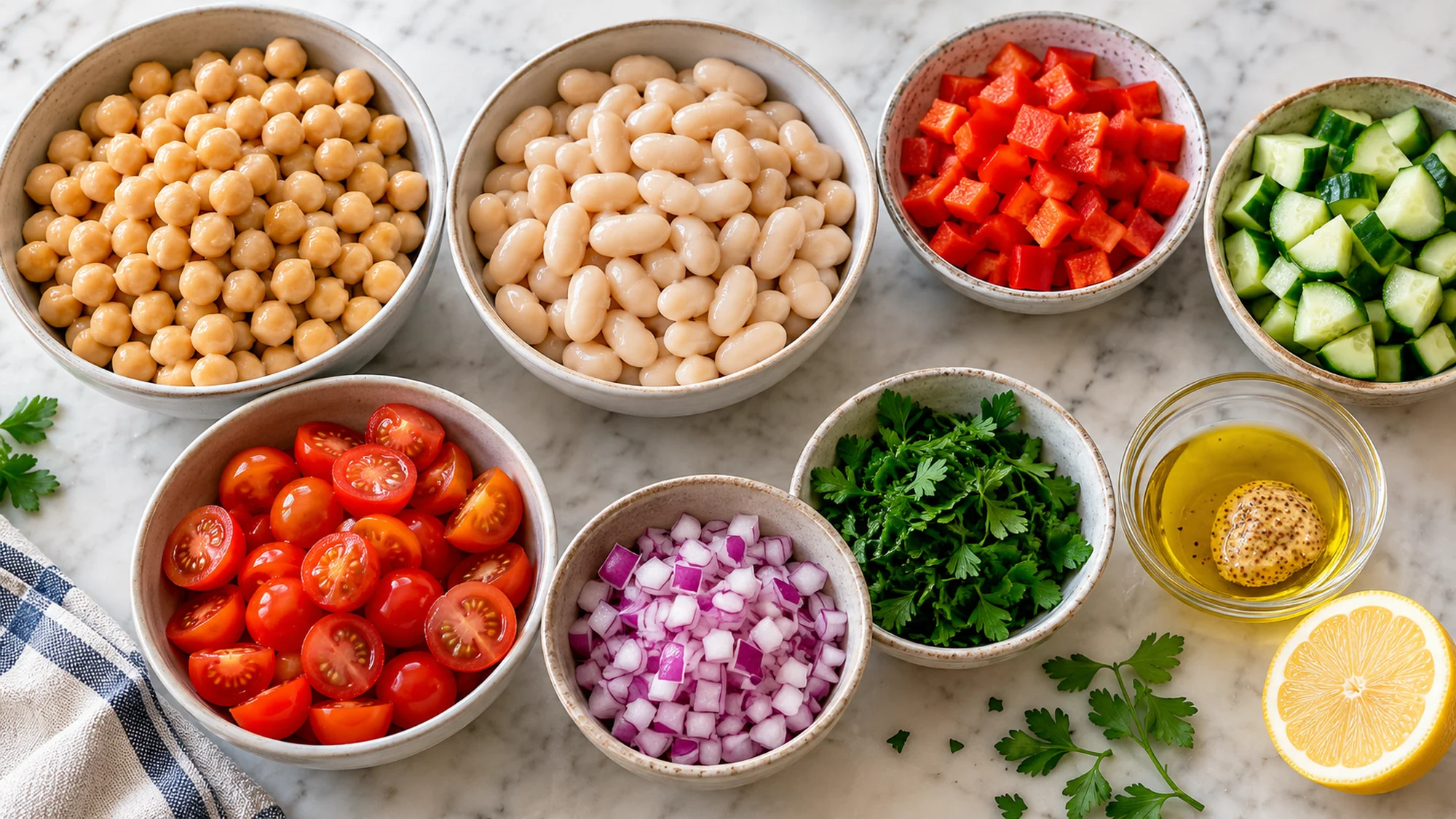
Drain the cooked beans well and dress them first. Fold in the crisp vegetables gently, then taste after a brief refrigerated rest so the lemon and mustard are evenly distributed.
Serving Suggestions for Dense Bean Salad
Serve a bowl for lunch, with bread or another accompaniment if you want a larger meal. I’d use a wide bowl rather than a narrow jar at the table: it makes it easier to pick up a balanced forkful of beans, herbs, and vegetables. A wrap is another useful option, provided you drain any dressing that has settled at the bottom.
- Spoon the salad into pita or a wrap just before eating so the bread does not sit in moisture for hours.
- For a side dish, use a smaller portion alongside grilled fish, chicken, or a cooked grain. The card’s estimate is for one quarter of the bowl.
- Recipes360’s carrot ribbon salad offers a different crisp vegetable side when you are building a shared lunch spread.
- Add delicate leafy greens only at serving if you want them. Their shorter texture window changes the original make-ahead idea.
| Component | For immediate serving | For later |
|---|---|---|
| Beans and dressing | Toss and rest briefly | Keep covered and cold |
| Cucumber and tomato | Fold into the bowl | Keep separate for firmer texture |
| Bread or wrap | Fill just before eating | Pack separately |
Use the bean mixture as the substantial part of the bowl, then choose bread, a wrap, or another side according to appetite. Keep wet salad away from bread until the last moment.
Variations and Dressing Adjustments
The two beans contribute different textures: chickpeas stay relatively firm, while cannellini beans are softer and creamier. Stir with a broad spoon so the white beans remain mostly intact. I prefer a few broken beans to an overworked mixture, but turning the whole bowl into an accidental spread is another matter.
- Great Northern beans can replace cannellini after cooking and draining. The flavor is mild, but the exact texture and nutrition will differ.
- Choose a seedless cucumber or remove a watery seed center before dicing. That reduces the liquid you carry into the bowl.
- Use a small amount of thinly sliced scallion instead of red onion for a gentler onion note.
- A little crumbled feta can be added at serving, but it brings milk, salt, and extra fat that are not counted in the base estimate.
- Red wine vinegar gives a different acidity from lemon. Start with less rather than assume every acid is interchangeable spoon for spoon.
If the dressing tastes sharp, toss it thoroughly with the full quantity of beans before adjusting it. The taste of a spoonful of dressing alone is not the same as the finished salad. Add any further oil or acid in small amounts and keep track if you want to recalculate the serving estimate.
Keep the beans intact, reduce excess vegetable water, and adjust the dressed salad rather than the empty dressing bowl. Small changes are easier to judge than a complete flavor overhaul.
Health Benefits and Ingredient Choices
Beans contribute plant protein and fiber, with carbohydrate as an important part of the portion. UF/IFAS Extension’s bean guidance describes both protein and fiber contributions; neither requires calling the salad a cure or a shortcut to a particular health outcome. Olive oil adds flavor and fat, so its measured amount belongs in the estimate too.
- Use fully cooked beans, whether canned or cooked from dry. Soaked but uncooked beans do not belong in a no-cook salad.
- Rinse canned beans and let them drain thoroughly. Check the package for sodium rather than assuming every can has the same amount.
- FDA produce guidance recommends washing fresh produce under running water before preparing it; use clean utensils and a clean board.
- Dijon mustard can contain additional ingredients or allergens depending on the brand. Check its label and any optional additions.
Keep the salad at 40°F (4°C) or below and use within three days. FoodSafety.gov recommends refrigerating perishable food within two hours, or one hour above 90°F (32°C). A lemon dressing changes flavor; it does not make a mixed bean-and-vegetable salad safe to leave on a warm table all afternoon.
This bowl offers beans, vegetables, and a measured dressing in a practical portion. Treat it as perishable food and let the ingredient labels guide any dietary adjustments.
Bottom Line
Dense bean salad is useful when you want a substantial cold bowl with crisp vegetables and a bright dressing. Drain the beans, fold gently, and keep the wetter vegetables separate when planning ahead. Stir, taste, and serve cold.
Dense Bean Salad Recipe

Ingredients
- 240 g cooked chickpeas drained and rinsed if canned
- 240 g cooked cannellini beans drained and rinsed if canned
- 150 g red bell pepper diced
- 150 g cucumber diced; remove watery seeds if needed
- 150 g cherry tomatoes halved
- 50 g red onion finely diced
- 20 g fresh parsley chopped
- 2 tablespoons olive oil 28 g
- 3 tablespoons lemon juice 45 ml
- 2 teaspoons Dijon mustard 10 g
- 1/4 teaspoon fine salt 1.5 g
- 1/4 teaspoon black pepper
Equipment
- Large mixing bowl
- Small jar or whisk
- Colander
- Knife and cutting board
- Broad mixing spoon
Instructions
- Use fully cooked beans. Drain well in a colander. Wash the vegetables under running water, then prepare the pepper, cucumber, tomatoes, onion and parsley as listed.
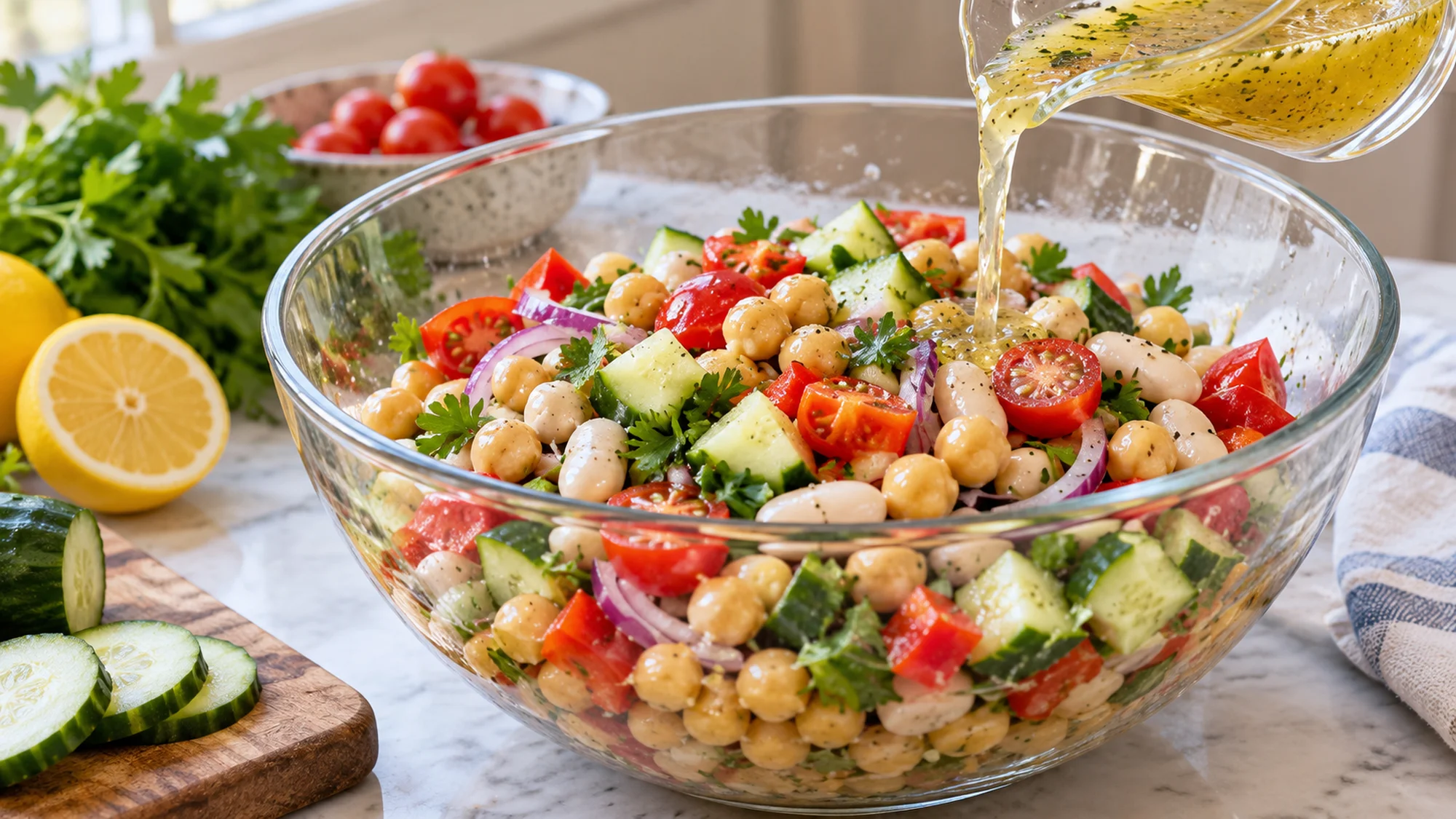
- Shake or whisk the oil, lemon juice, Dijon, salt and pepper until combined.
- Put the chickpeas and cannellini beans in a large bowl. Pour over the dressing and fold gently with a broad spoon to coat without crushing the white beans.
- Fold in the pepper, cucumber, tomatoes, onion and parsley. Cover and refrigerate for 20 minutes, then stir gently and taste. Divide into 4 servings.
- For firmer vegetables when making ahead, refrigerate the dressed beans separately from the cucumber and tomatoes and combine just before eating. Keep at 40°F (4°C) or below.
Nutrition
Video
Notes
Tried this recipe?
Let us know how it turned out!Hi, I’m Emily Pocker! I share recipes and food guides here at Recipes360 to help you find everyday meal inspiration and feel more confident in the kitchen. My goal is to make cooking approachable, enjoyable, and full of flavor.