
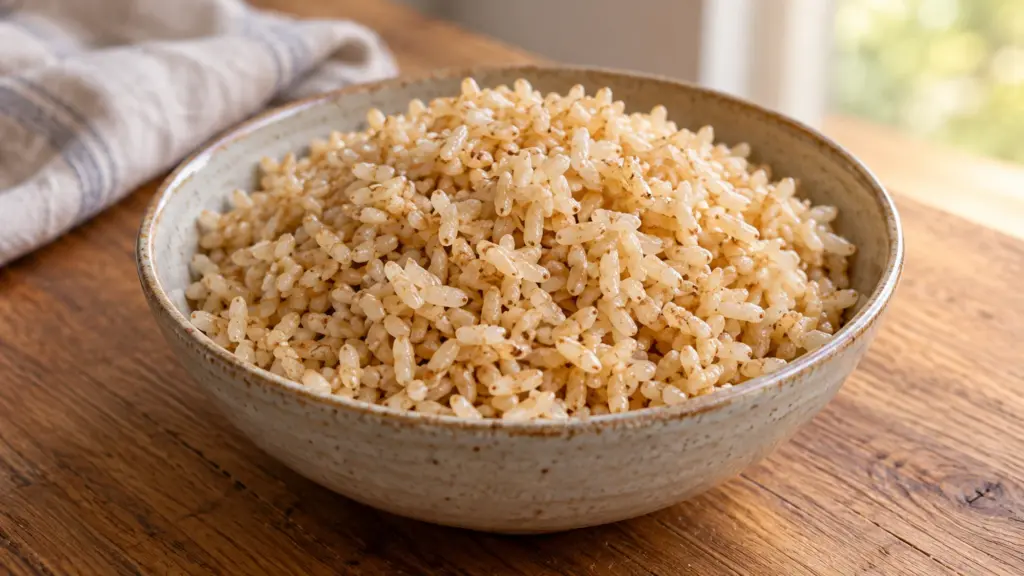
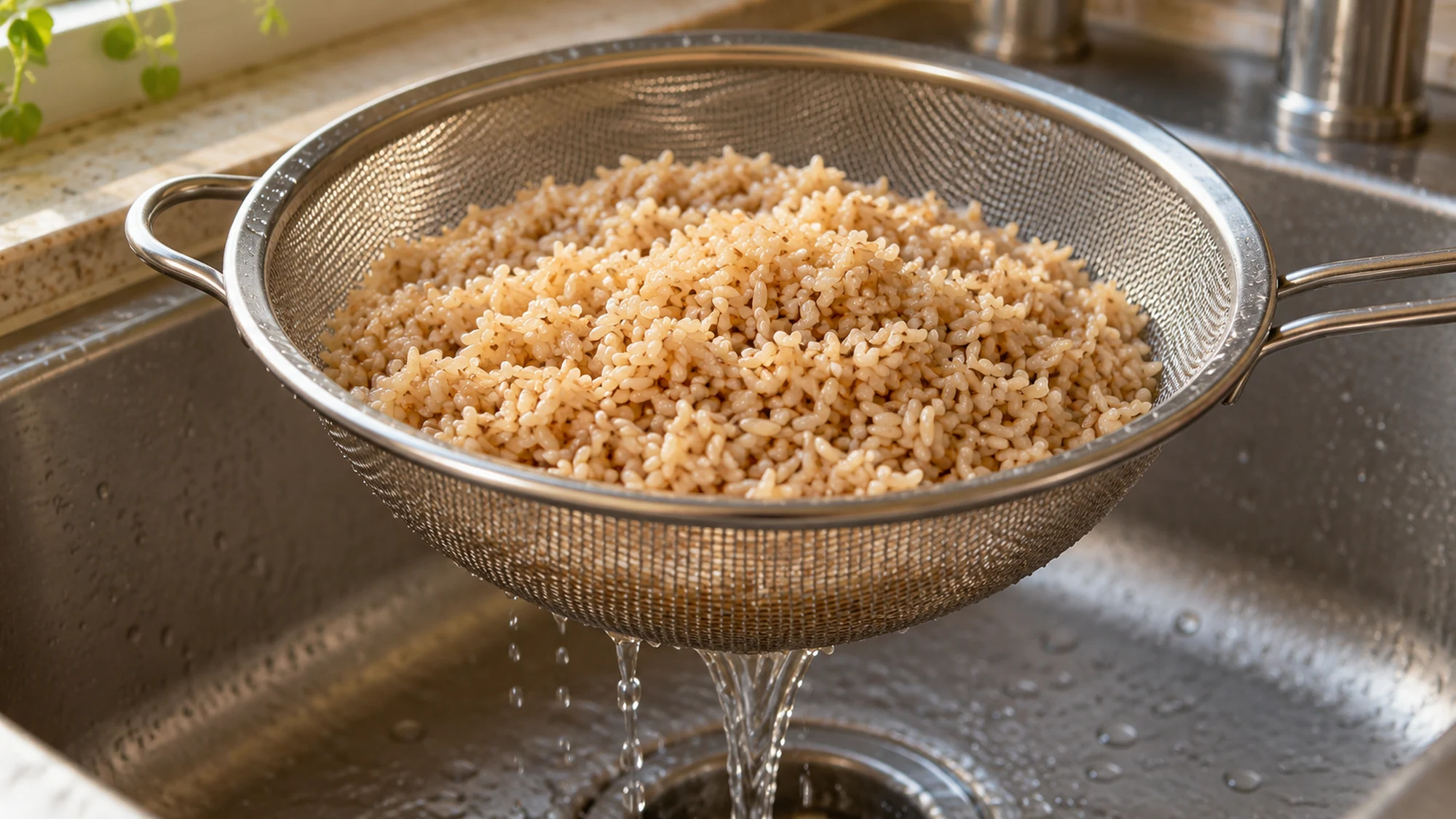
The outside of a brown rice grain can look ready while its center still has a chalky bite. If that sounds familiar, this guide to how to cook brown rice gives you a straightforward alternative to carefully judging an absorption ratio: boil regular long-grain brown rice in plenty of water, drain it, then let it rest covered.
Keep the rice moving at a steady, uncovered boil and start tasting near the end rather than waiting for the water to disappear. When the grains are tender with a slight chew, drain them thoroughly and return them to the emptied pot. Ten minutes off the heat lets the surface moisture settle before you fluff and serve.
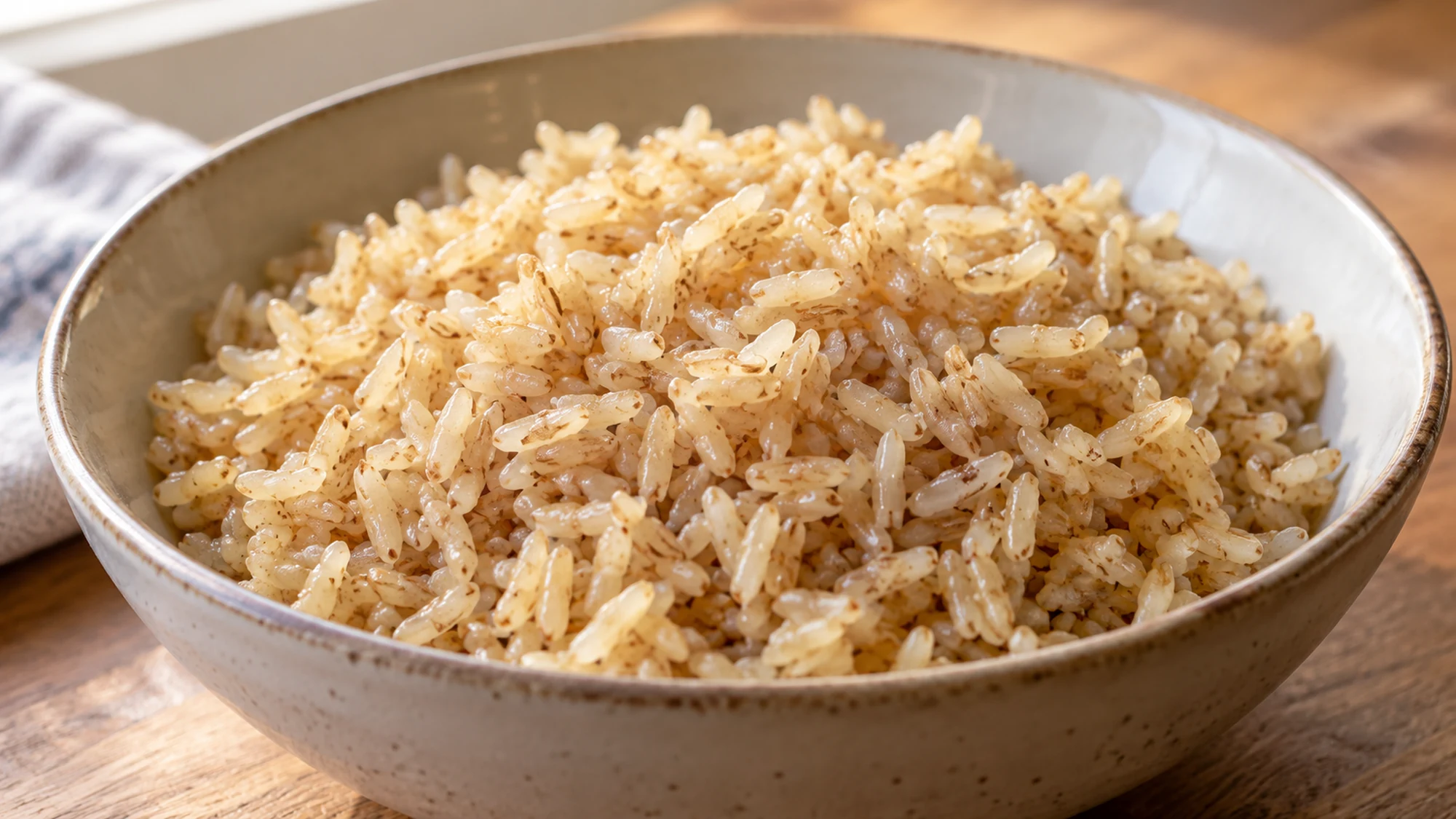
Serving Brown Rice While the Grains Stay Separate
Fluff with a fork using a light lifting motion instead of pressing the grains together. Some gentle clumping is normal; the goal is a separate, tender rice texture rather than a rigid promise that every grain will stand alone. Serve promptly while the rice is hot, alongside vegetables and a protein you enjoy.
I’d leave the batch plain when it needs to work with several meals. It can take its flavor from a stew or sauce without competing for attention. Black bean burgers can also be served without buns over a small portion of rice, with crisp vegetables and their toppings added at the table.
- Before serving: taste a grain from the pot rather than judging color alone.
- After draining: empty residual water from the saucepan before returning the rice.
- For bowls: add sauce gradually so the grains remain recognizable.
Use a wide bowl when adding sauce so you can distribute it without repeatedly stirring and crushing the rice. If you want a fried-rice-style meal later, cooling safely is more important than making a very large batch today. Cook only what you can serve, chill promptly or freeze in manageable portions.
How to Cook Brown Rice When the Grain Type Changes
This card is for regular long-grain brown rice, not instant or quick-cooking rice. Brown basmati, short-grain rice and wild rice do not follow one interchangeable schedule. Check what the bag actually contains before choosing a method; a narrow aromatic grain and a plump sticky grain are meant to behave differently.
The plenty-of-water approach gives you room to test tenderness without worrying that every teaspoon must be absorbed. If the water drops too far during boiling, add boiling water so the rice stays submerged. I prefer that visible adjustment to guessing whether a firm center needs more time, more water or both in a nearly dry pot.
The table is a decision aid, not a collection of universal cooking times. Grain age, brand and your preferred bite can change the finish. If the rice is still distinctly hard at the first taste, continue boiling and check again shortly; covering hard rice off the heat is not a substitute for finishing the cooking.
| Rice type | Expected character | Use this method? |
|---|---|---|
| Regular long-grain brown | Tender with a slight chew | Yes; taste before draining |
| Brown basmati | More slender, aromatic grains | Use its own shorter cooking guidance |
| Short-grain brown | More cohesive texture | Use a method intended for that grain |
| Instant or quick-cooking | Already partly processed | Follow its package directions |
Health Benefits and Portion Balance
Brown rice retains the bran and germ that are removed in making white rice, so it fits the whole-grain category. MedlinePlus explains that whole grains contribute dietary fiber within a varied eating pattern. Rice also contributes carbohydrate; the complete meal still depends on what you serve with it.
The estimate uses one-sixth of the dry rice batch, approximately a half-cup cooked portion. Final yield varies, and draining can carry away some nutrients that a simple ingredient estimate does not measure. A larger rice bowl is a larger portion, while butter, broth and sauces add their own nutrients and sodium.
Follow the Food Standards Agency’s rice-specific advice: cool leftovers quickly, ideally within one hour, refrigerate and use within 24 hours. Divide into shallow portions instead of leaving the pot to cool. Reheat only once until steaming hot throughout; poor cooling cannot be made safe merely by heating the rice again.
Bottom Line
For this batch, let abundant boiling water handle the cooking and use a tasting check to find the finish. Drain well, empty the pot and give the rice its short covered rest. I’d keep grain type and safe cooling on the same priority list as texture, because a dependable pot of rice needs all three to make the next meal easier.
How to Cook Brown Rice Recipe

Ingredients
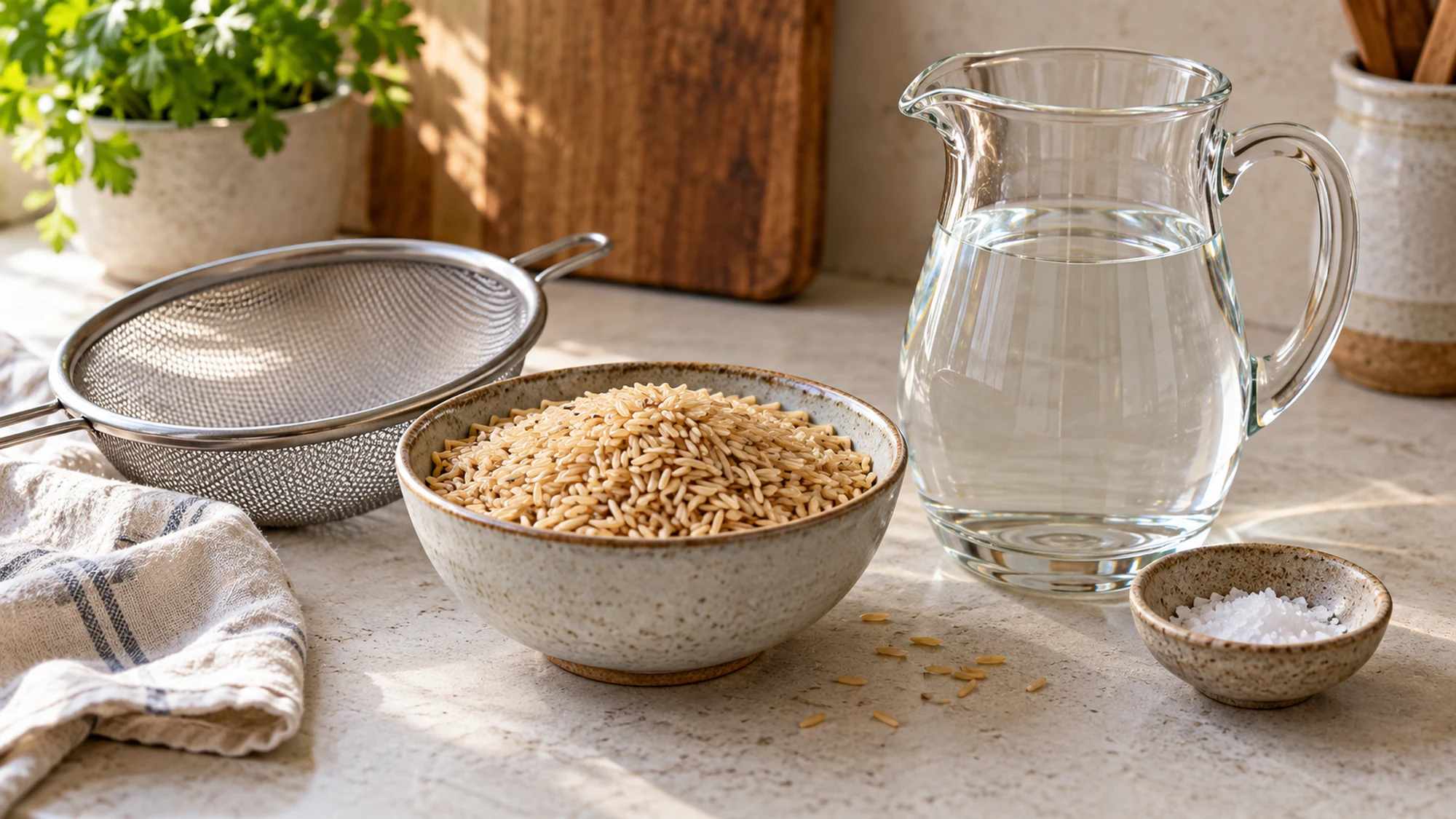
- 190 g regular long-grain brown rice about 1 US cup; not instant or quick-cooking
- 1.5 L water about 6 1/4 US cups, plus more boiling water if needed
- 1/4 tsp fine salt optional; adjust after cooking
Equipment
- 3-quart or larger saucepan with lid
- Fine-mesh strainer
- Fork
- Measuring jug
Instructions
- Bring the water to a full boil in a saucepan large enough to prevent foaming over. Rinse the rice briefly in a fine-mesh strainer under cold running water.
- Add the rice to the boiling water. Maintain a steady uncovered boil, adjusting the heat to prevent overflow. Keep the rice submerged, adding more boiling water if needed.
- Start tasting after 25 minutes. Continue cooking, usually about 30–35 minutes total, until the grains are tender with a little chew and no hard, chalky center. Brand and grain age can change the timing.
- Drain thoroughly through the fine-mesh strainer. Tip every remaining drop of water out of the pot, return the rice to it and cover. Rest off the heat for 10 minutes, then fluff gently with a fork and season with the optional salt.
- Serve hot. For leftovers, divide into shallow portions and chill quickly, ideally within 1 hour. Keep refrigerated and use within 24 hours, or freeze promptly after quick cooling. Reheat only once until steaming hot throughout and eat immediately.
Nutrition
Video
Notes
Tried this recipe?
Let us know how it turned out!Hi, I’m Emily Pocker! I share recipes and food guides here at Recipes360 to help you find everyday meal inspiration and feel more confident in the kitchen. My goal is to make cooking approachable, enjoyable, and full of flavor.