
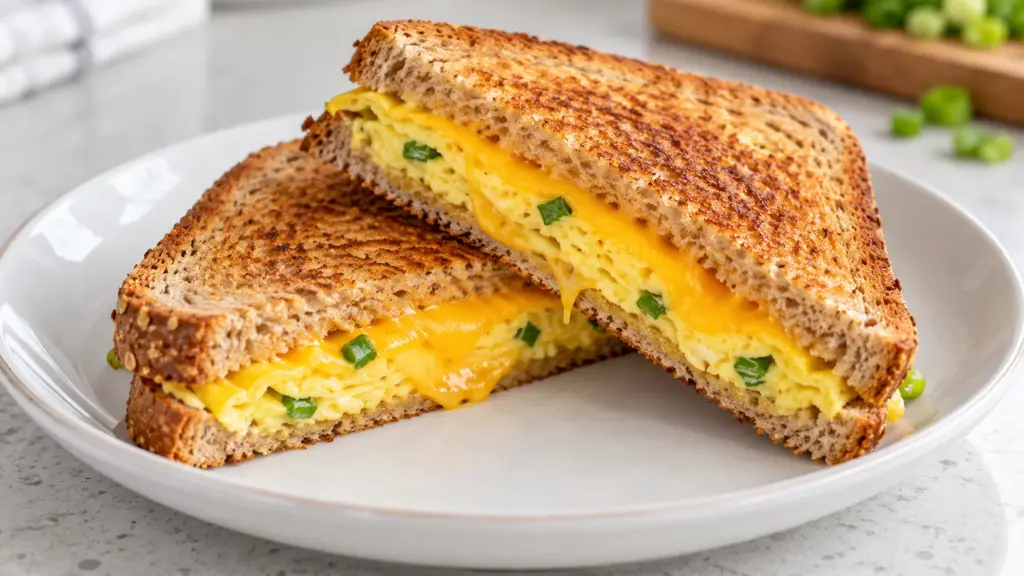
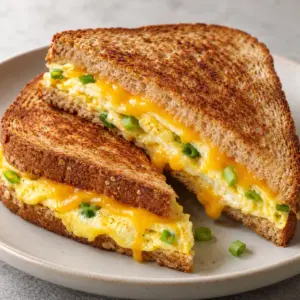
A one-pan egg sandwich is a useful answer to the morning when you want something warm but do not want three pans waiting in the sink. Eggs wrap around the bread, cheddar melts into the middle, and the outside turns lightly golden. The result is closer to an omelet tucked into toast than a loose fried egg sliding out of a bun.

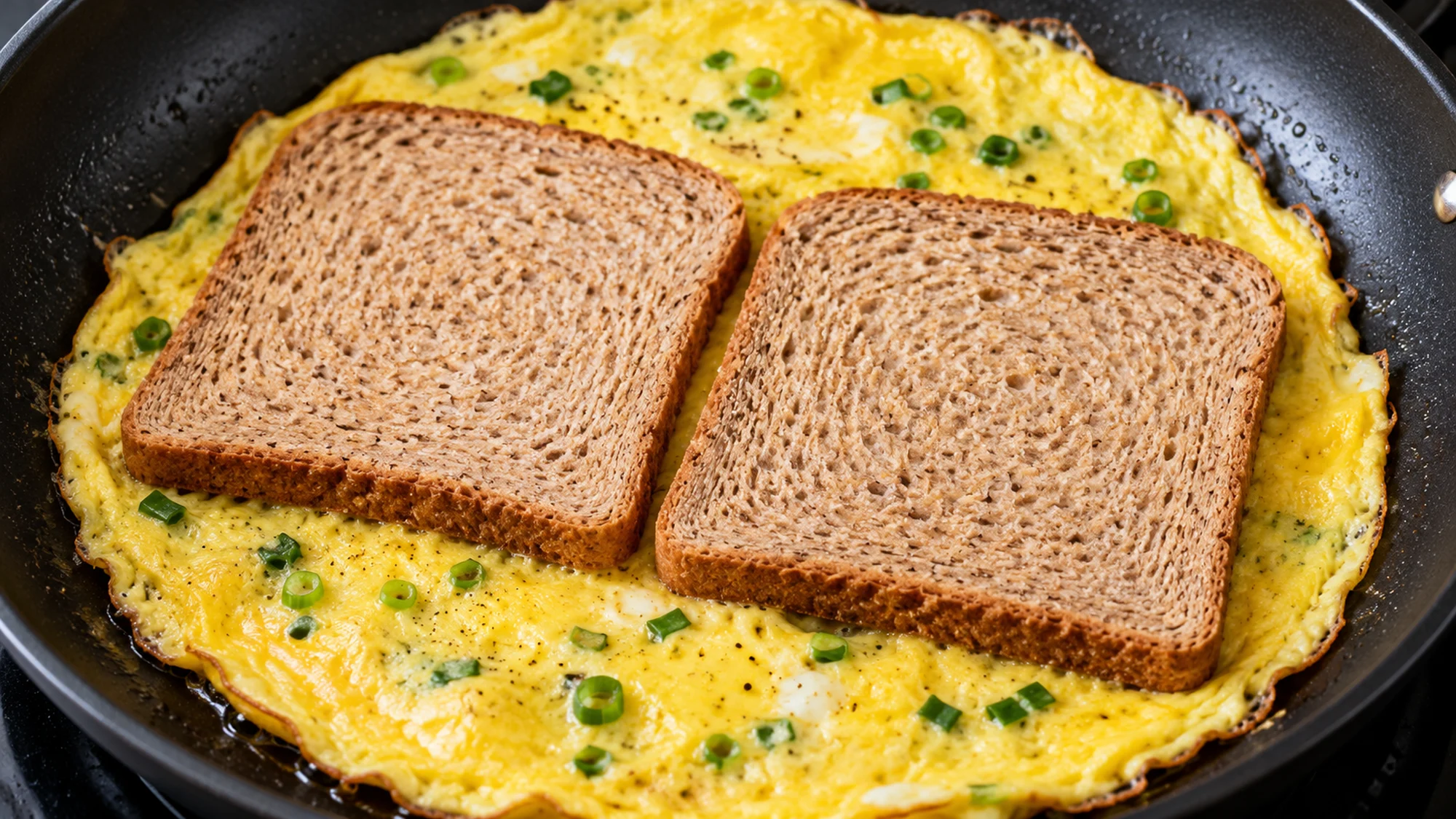
Let the egg layer set before the big flip, then toast gently. That is the difference between a tidy sandwich and a breakfast rescue mission.
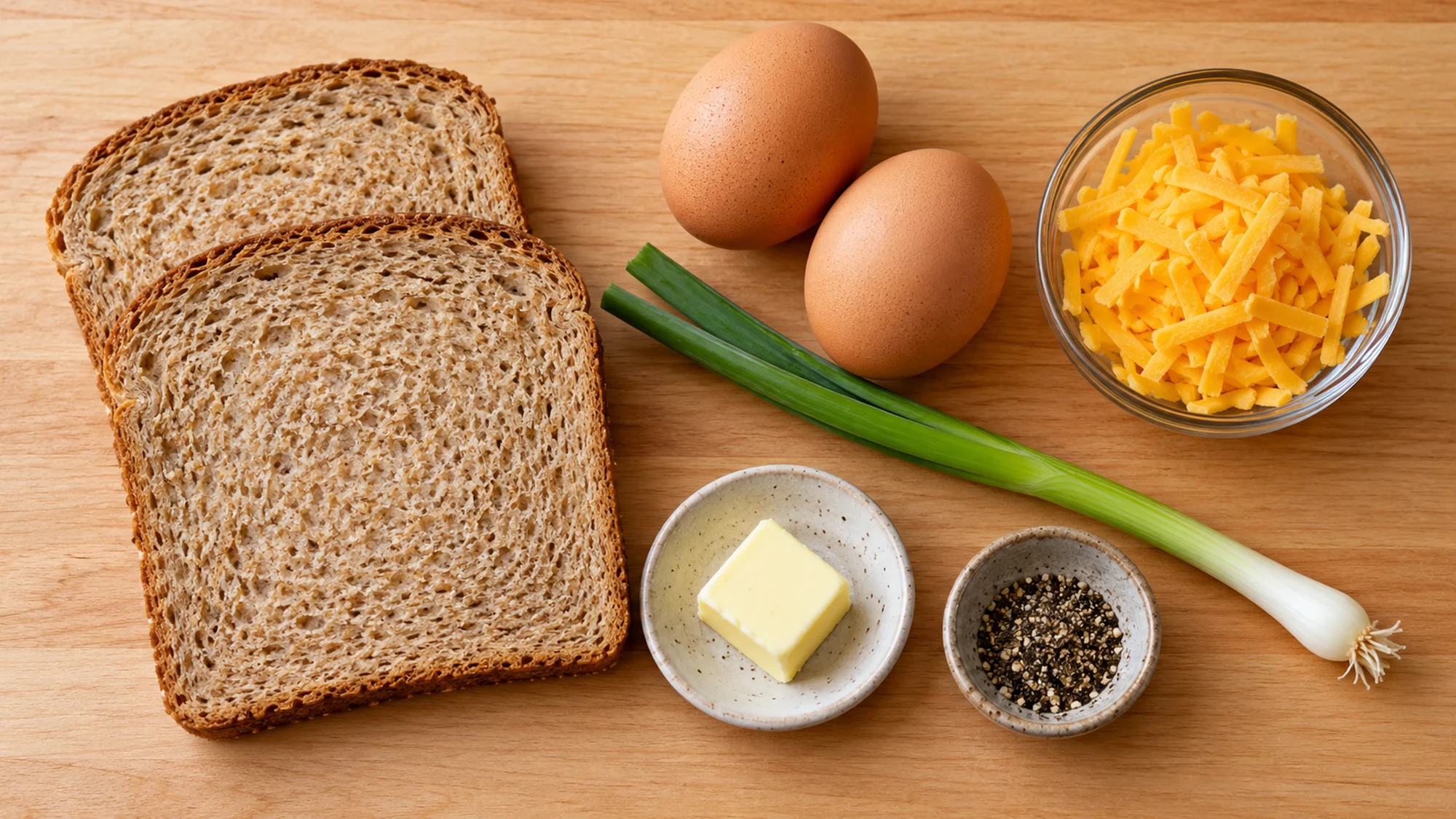
Whole-wheat sandwich bread, a little scallion, and sharp cheddar keep this version savory without a long shopping list. I would choose thin, evenly sliced bread rather than a thick artisan heel; it bends more easily when the egg folds around it. The recipe card gives the quantities and complete method for one generously filled sandwich.
A broad nonstick skillet matters more than fancy equipment. Both slices should fit side by side with a little space around them. Moderate heat gives the egg time to firm up before the bread gets too dark, and a wide spatula makes the turn less dramatic.
Serving Suggestions for a One-Pan Egg Sandwich
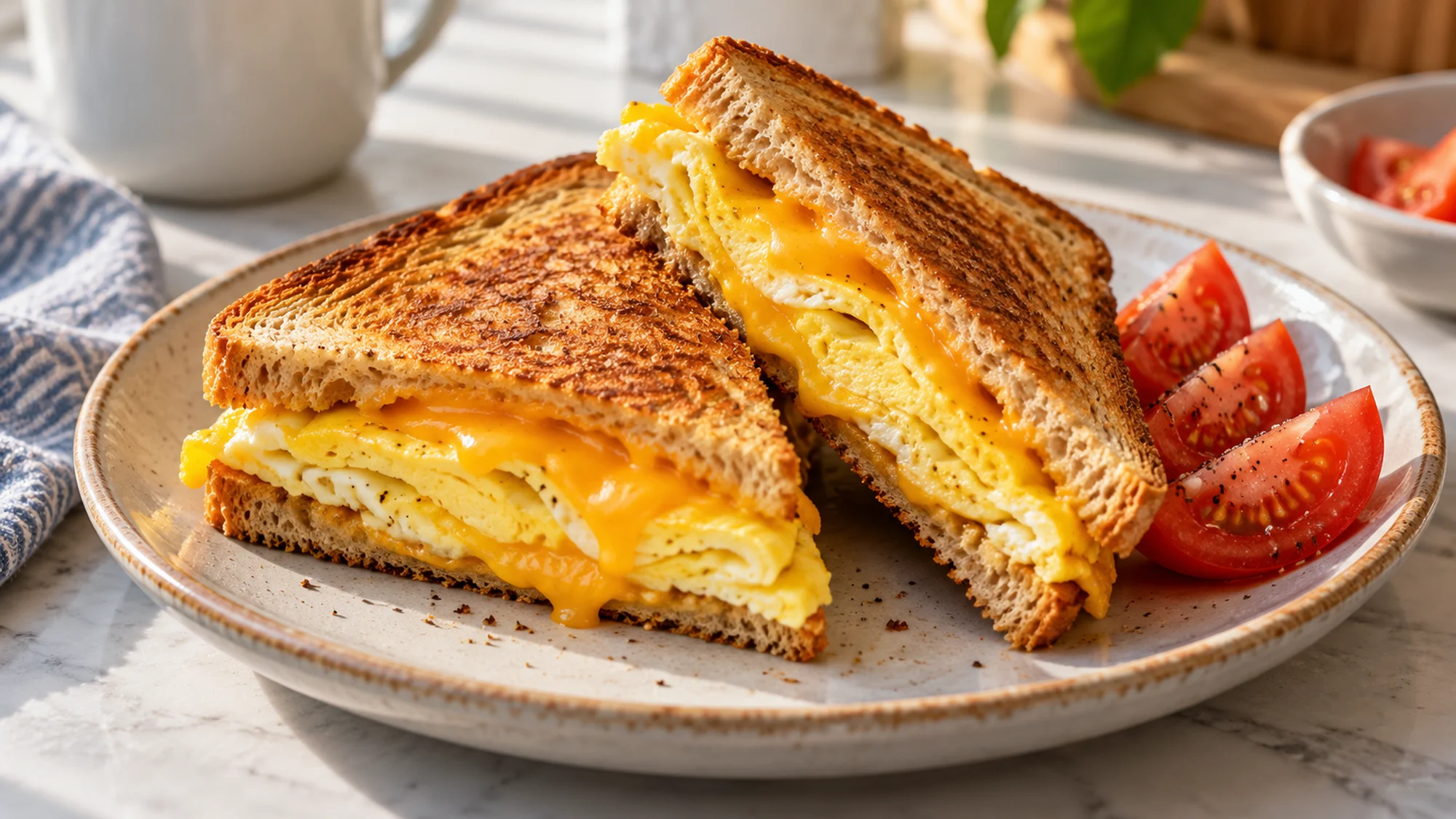
Serve it immediately, while the cheese is soft and the toasted edges still have some crispness. Tomato wedges, cucumber slices, or a piece of fruit make easy partners without another cooking project. I prefer a fresh, juicy side here instead of an extra creamy sauce; the sandwich already brings plenty of richness.
For a bigger breakfast table, put this alongside a small portion of apple cinnamon baked oatmeal rather than enlarging the sandwich until it becomes difficult to fold. Cook additional sandwiches individually so each egg layer has room to set.
| Choice | Best use |
|---|---|
| Thin whole-wheat bread | An easy-to-fold sandwich with a slightly nutty bite |
| Standard white sandwich bread | A softer texture; nutrition will differ |
| Thick sourdough slices | Better saved for another method; harder to fold neatly |
Keep the sides fresh and the bread manageable. A sandwich that stays together is much nicer to eat.
Variations That Keep the Filling Tidy
Swap the cheddar for Monterey Jack or a mild Swiss cheese in the same quantity. A small pinch of chili flakes changes the flavor without adding moisture. Chopped chives can replace scallion if you prefer a gentler onion note.
Vegetables are welcome, but watery fillings need care. Cook mushrooms or spinach separately ahead of time and drain thoroughly before adding a small spoonful. Raw tomato belongs beside this version, not inside it: its juice can soften the toast before you reach the second half.
For gluten-free bread, choose a sturdy sandwich loaf and check all package labels. Bread that crumbles when bent may need a gentler fold and a spatula underneath for support. Dairy-free cheese and a suitable cooking fat are possible substitutions, but their melting behavior and nutrition will not match the cheddar version.
Change the flavor, not the amount of wet filling. A modest layer of cheese melts more evenly than a towering stack.
Health Benefits and Practical Nutrition
Eggs and cheese provide protein, while whole-wheat bread contributes carbohydrate and fiber. The British Egg Industry Council’s nutrient table explains what whole eggs contribute; it does not mean one sandwich can promise a particular health outcome. Our guide to egg albumin nutrition offers more context on egg whites.
The card estimate uses two small 28-gram bread slices, two large eggs, 28 grams of cheddar, and the stated butter and scallion. Bigger slices or an extra handful of cheese change the numbers. Cheese supplies sodium and saturated fat, so there is no need to automatically add salt before tasting.
Cook the egg layer completely, including the center; FoodSafety.gov recommends 160°F for egg dishes without meat. A brown exterior alone is not proof that the filling is cooked. Refrigerate leftovers promptly, although the freshly toasted sandwich has the best texture.
Think of this as a satisfying breakfast component, not a health claim. Portion size, bread choice, and the rest of the meal still count.
Bottom Line
This one-pan egg sandwich keeps the appeal of a cheese omelet and warm toast in one compact package. Choose bread that fits the skillet, resist overfilling, and give the egg a chance to set before turning. Those small decisions make the technique approachable.
Gentle heat, a patient flip, and a fresh side are enough. The full recipe below keeps the measurements and timing in one place.
One-Pan Egg Sandwich Recipe

Ingredients
- 2 large eggs about 100 g edible weight
- 2 slices whole-wheat sandwich bread small, thin slices, about 56 g total
- 1 oz sharp cheddar cheese 28 g; thinly sliced or grated
- 1 teaspoon unsalted butter 5 g
- 1 scallion 15 g; finely sliced
- 1 pinch ground black pepper
Equipment
- 10–12-inch nonstick skillet large enough for both bread slices side by side
- Wide heatproof spatula
- Small bowl and fork
- Instant-read thermometer
Instructions
- Beat the eggs with the scallion and pepper in a bowl. Put the bread and cheese within reach. Warm the skillet over medium-low heat and melt the butter, swirling to coat the base.
- Pour in the eggs. Immediately lay the bread slices side by side on the wet egg, then turn each slice once so both surfaces pick up a little egg. Leave a small gap between the slices.
- Cook for about 2–3 minutes, until the egg sheet is firm enough to lift and the top is mostly set. Loosen around the edge. Slide a wide spatula under the bread and egg and carefully turn the whole sheet over; use a second spatula if helpful.
- Fold any egg overhang inward over the bread. Put the cheese on one slice, then fold the other bread slice over it to close the sandwich. Toast gently for about 1–2 minutes per side, until golden, the cheese melts, and the egg center reaches 160°F/71°C. Reduce heat if the bread browns before the egg cooks; allow extra time if needed.
- Transfer to a plate and cut in half. Serve immediately. Refrigerate leftovers within 2 hours (1 hour above 90°F/32°C), in a covered container at 40°F/4°C or colder, and use within 3–4 days. Reheat until the center reaches 165°F/74°C; the toast will be softer than when fresh.
Nutrition
Video
Notes
Tried this recipe?
Let us know how it turned out!Hi, I’m Emily Pocker! I share recipes and food guides here at Recipes360 to help you find everyday meal inspiration and feel more confident in the kitchen. My goal is to make cooking approachable, enjoyable, and full of flavor.