
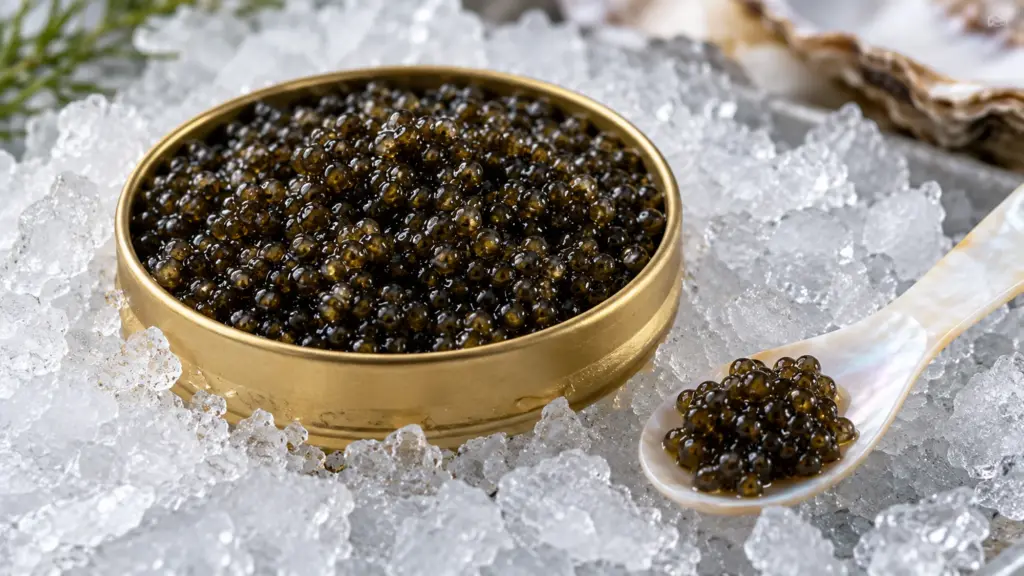
Caviar is salt-cured roe from sturgeon. Those small, glossy eggs are served in modest portions for their briny flavor and delicate texture. Other fish eggs can be delicious too, but salmon roe, trout roe and the tiny roe used on sushi are different products. The fish named on the label is the best starting point.
In its strict sense, caviar means cured sturgeon eggs. Roe is the broader term for fish eggs. Check the species, ingredients and storage instructions before buying: a refrigerated tin of caviar is a perishable seafood product, even when the package looks like a pantry can.
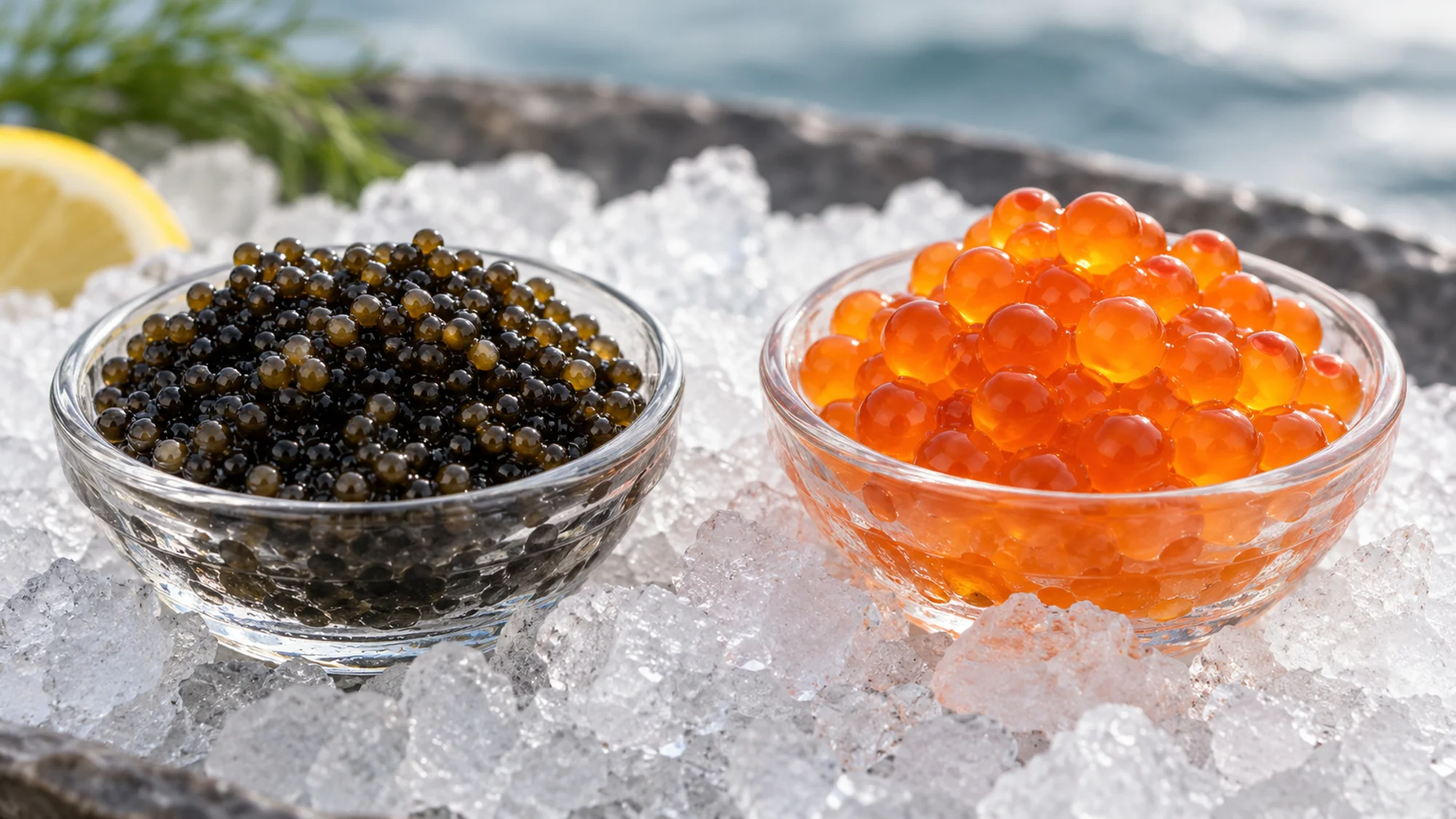
Caviar and roe are related, but different
The USDA Agricultural Marketing Service explains that the unqualified name caviar applies to sturgeon eggs, and that salt curing turns sturgeon roe into the finished product. “Roe” on its own does not tell you that the fish was a sturgeon.
| Label or description | What it identifies | What to check |
|---|---|---|
| Sturgeon caviar | Cured eggs from a sturgeon species | Species, producer and cold-storage instructions |
| Salmon roe | Eggs from salmon | Ingredients and whether the product is pasteurized |
| Trout roe | Eggs from trout | Storage directions for that package |
| Masago | Capelin roe, often used on sushi | Seasonings, coloring and other added ingredients |
Size and color are clues, not proof of identity. Read the product name instead of deciding from a photo. Our masago guide looks more closely at capelin roe and its role in sushi; it is a useful comparison when the orange garnish on a roll is what you have in mind.
How to read a caviar description
Names such as Ossetra and Sevruga refer to different sturgeon types. A producer’s grade is a separate judgment about the batch. Petrossian’s guide to types and grades distinguishes these two ideas, so a species name and a prestige-sounding grade should not be read as interchangeable labels.
Flavor descriptions may mention brine, butteriness or nuttiness, while texture can range from firmer grains to a softer impression. These are tasting descriptions, not a guarantee that every tin from a species will taste identical. Color also varies; black is not the only color associated with sturgeon caviar.
When comparing products, look at the same amount by weight and ask what you actually want: a small tasting portion or a garnish for several people. Check the producer’s origin information and ingredient list. A dramatic name or a darker color alone is a poor substitute for a clearly identified product.
Keep the serving simple
For a first taste, a small amount on its own makes the flavor easier to notice. Plain toast or a blini can provide a base without turning the serving into a complicated project. Keep strongly flavored accompaniments optional so guests can decide how much contrast they want.
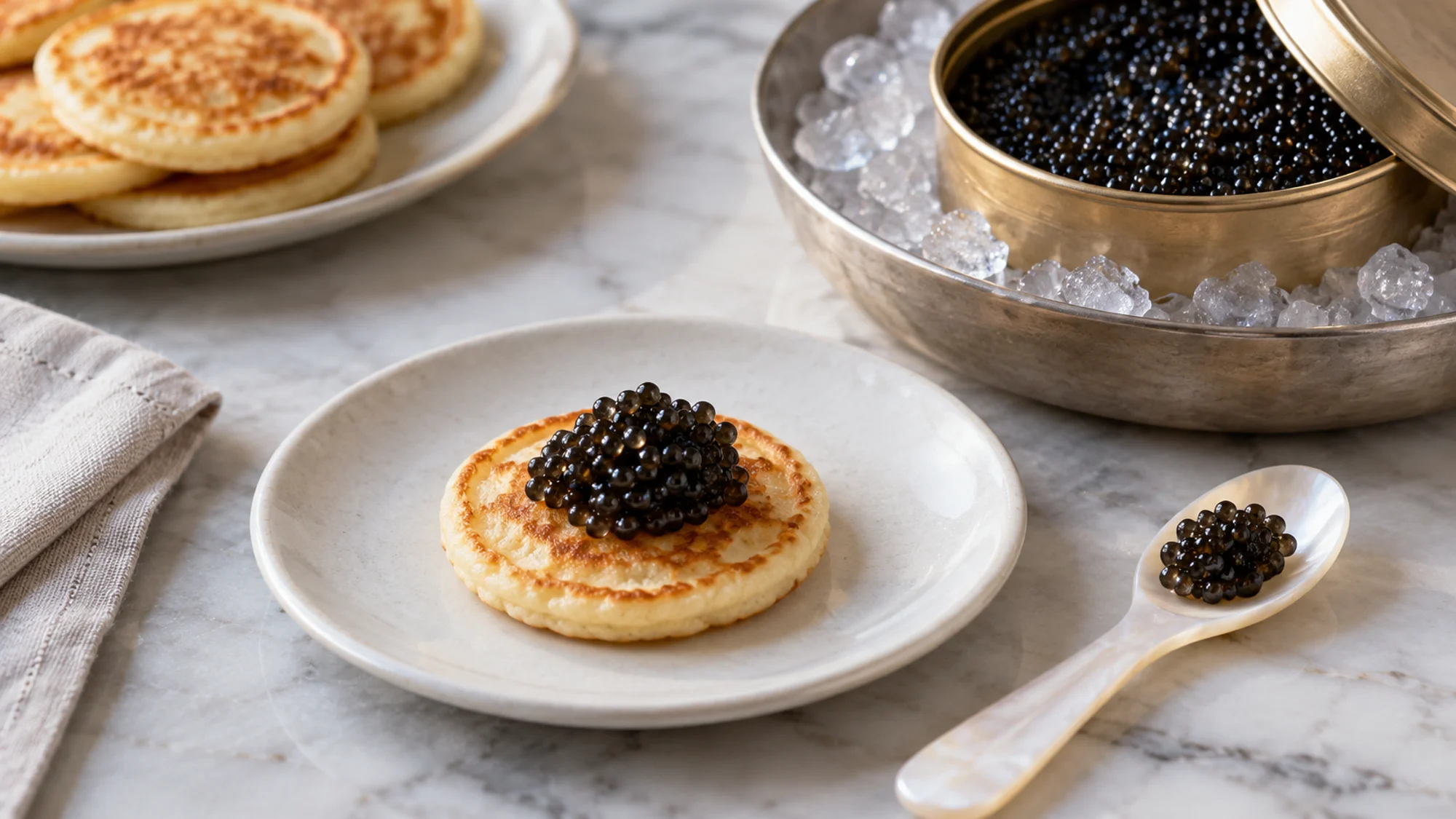
Use a clean, gentle serving utensil rather than crushing the eggs into a paste. Petrossian’s serving advice accepts mother-of-pearl, hardwood or good-quality stainless steel and advises against silver. That is more useful than the sweeping claim that every metal spoon ruins caviar.
Let people know it is fish roe, particularly when serving a mixed appetizer platter. Check accompaniments as well: a blini may contain wheat, and crème fraîche contains milk. The identity of the topping does not tell you everything about the finished bite.
Storage and food safety come first
Follow the directions on your own tin. As one product-specific example, Petrossian instructs customers to keep its caviar at 38°F and finish an opened tin within 24 hours. Do not turn that into a universal shelf life for every brand, processing method or package. Keep the seal intact until needed.

Keep the tin chilled during serving and return it promptly to the refrigerator. The FDA’s seafood safety guidance says perishable food should not sit unrefrigerated for more than two hours, or one hour above 90°F. An attractive serving bowl is not evidence that its contents stayed cold.
Salt curing does not mean the eggs were cooked or pasteurized. FDA advises pregnant people, older adults, children and people with weakened immune systems to avoid raw or undercooked seafood. Check how the product was processed and discuss suitable choices with a clinician if you are in a higher-risk group. Do not taste questionable seafood to decide whether to keep it.
Bottom Line
Caviar is cured sturgeon roe, with a different identity from salmon roe or masago. Buy by clear product information, serve it simply and treat refrigeration as part of the purchase. A small tin that fits your plans is easier to manage than a larger one you cannot finish within its opening instructions.
Insider Tech’s video provides background on sturgeon caviar and its production. It is a historical overview; use the current product label for purchasing and storage decisions.
Sources
- USDA AMS: Roe and Caviar Definitions
- Petrossian: Caviar Types, Grades and Storage
- Petrossian: Serving Caviar
- FDA: Seafood Safety

Hi, I’m Emily Pocker! I share recipes and food guides here at Recipes360 to help you find everyday meal inspiration and feel more confident in the kitchen. My goal is to make cooking approachable, enjoyable, and full of flavor.