
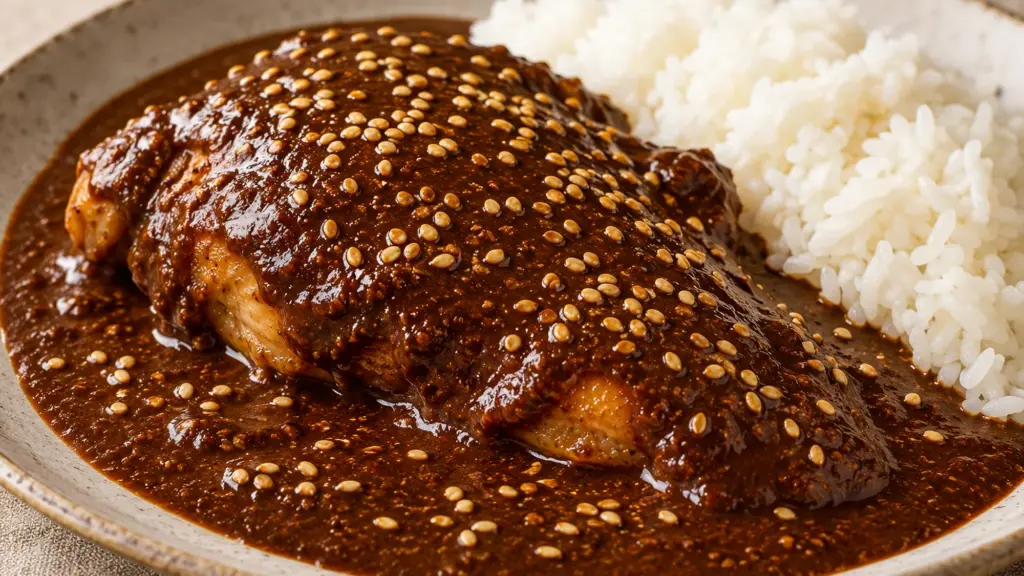
The difficult moment in mole poblano is not adding the chocolate. It is stopping the chiles, seeds and nuts from going a shade too dark while building the sauce’s layers. A gentle toast, a thorough blend and an unhurried simmer give this home-style version its rounded flavor. Chocolate belongs in the background, supporting the dried chiles rather than turning dinner into dessert.
This mole poblano combines ancho, mulato and pasilla chiles with sesame, almonds, raisins and a little Mexican chocolate. Poached chicken finishes in the smooth sauce, which should coat a spoon while remaining loose enough to pour.
Mole recipes vary substantially between households and occasions. This manageable version keeps several characteristic building blocks without claiming to reproduce every celebratory preparation. For useful context, chef Rick Bayless explains the basic structure of a poblano-style mole. Organize the ingredients before heating the skillet; sesame colors quickly.
Serving Suggestions for Mole Poblano
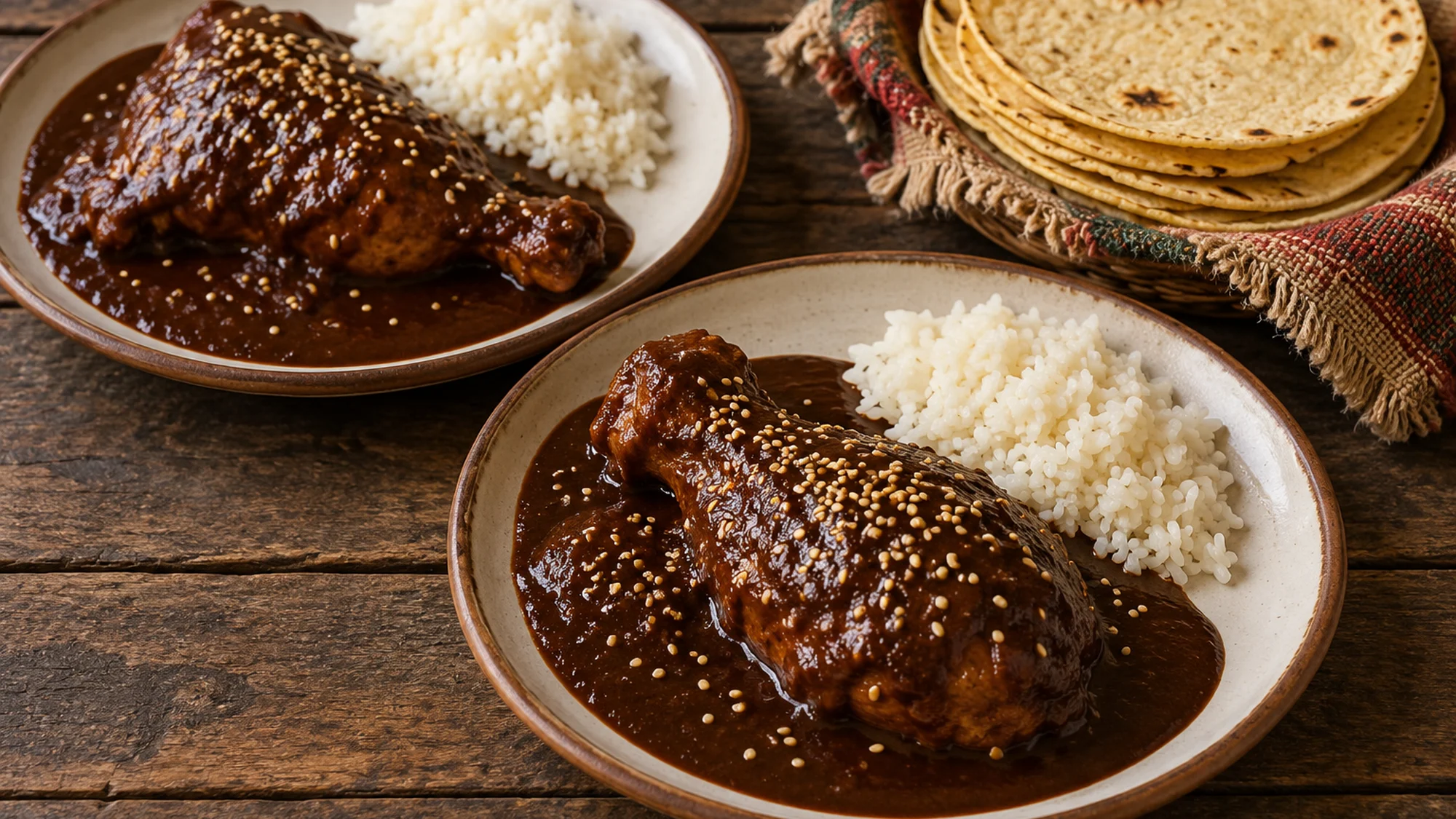
Put one chicken piece on each plate and spoon sauce over it, rather than burying everything beneath an enormous ladleful. A small scattering of toasted sesame makes the surface inviting and echoes an ingredient already in the sauce. Serve additional mole separately, especially when diners have different appetites.
- Add plain fluffy rice to catch the sauce. Its mild flavor leaves room for the chiles and warm spices.
- Offer warm corn tortillas and a simple vegetable side, such as steamed green beans or a cabbage salad with lime.
- Keep garnishes restrained. Cheese, crema and a second spicy sauce can obscure the balance you have just built.
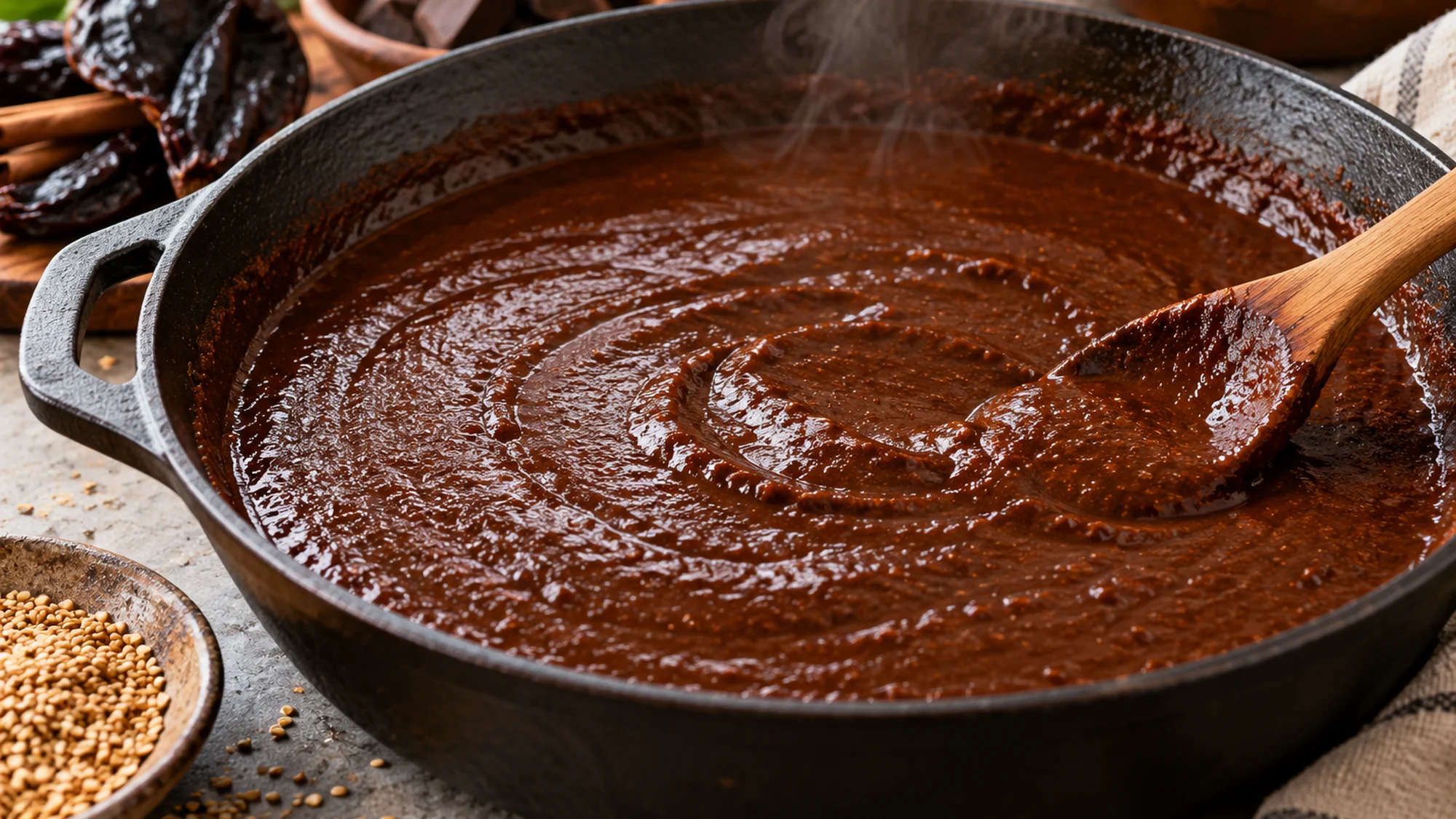
The sauce thickens as it stands because of its ground seeds, nuts and tortilla. Stir in warm broth a little at a time before serving, then taste for salt again. I prefer a sauce that flows slowly from the spoon to one that sits on the chicken like a paste.
Let the mole be the main flavor. Plain rice, warm tortillas and a modest vegetable side make a more useful supporting cast than several rich toppings.
Variations Without Losing the Sauce’s Balance
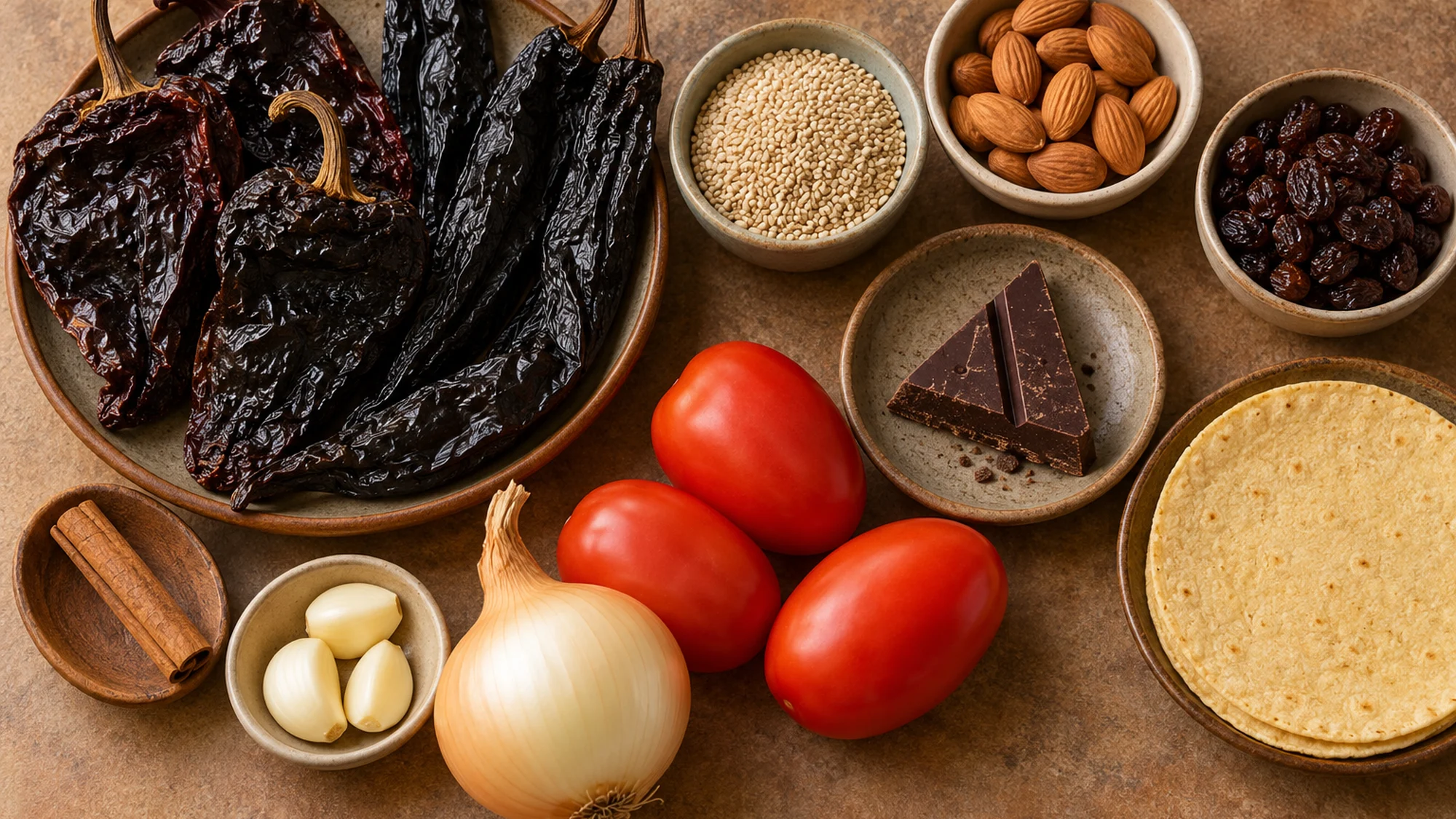
The dried chiles are not interchangeable with fresh poblano peppers. Ancho, mulato and pasilla each contribute something different, and their heat varies by batch. Remove their stems and most seeds, toast briefly and discard any that scorch badly. Bitterness is much easier to prevent than to disguise.
| Change | Likely effect | How to handle it |
|---|---|---|
| Only ancho is available | A simpler, fruitier chile profile | Use the same total dried-chile weight; describe it as an adaptation. |
| Unsweetened chocolate replaces Mexican chocolate | Less sweetness and cinnamon | Start with a smaller amount and adjust gradually after simmering. |
| Sauce is too thick | It can catch on the pan and taste heavy | Whisk in warm broth a few tablespoons at a time. |
| Sauce is thinner than you want | It may slide off the chicken | Simmer uncovered gently, stirring often; do not add raw flour. |
- For a vegetable meal, use vegetable broth and serve the finished sauce over roasted cauliflower. That changes the recipe’s protein and nutrition, so the chicken estimate no longer applies.
- This version contains almonds and sesame. Simply removing the garnish does not remove either allergen from the sauce.
- Make the sauce ahead if convenient, then cool and refrigerate it promptly. Reheat gently with extra liquid before adding freshly cooked chicken.
Aim for balance rather than maximum sweetness or heat. Add broth to loosen, simmer to thicken, and make seasoning changes in small steps.
Health Benefits and Sensible Portions
Chicken provides protein, and the almonds and sesame contribute fats as well as texture. That does not make mole a treatment or a special health food. The sauce is concentrated, with oil, nuts, seeds and chocolate contributing energy; a moderate portion can still be satisfying because its flavor is pronounced.
The card’s nutrition is an estimate for chicken and sauce, not rice or tortillas. The chicken cut, edible yield and amount of sauce served change the result. Lower-sodium broth gives you more control over seasoning, but its label still matters. I would choose the portion first and let the accompaniments complete the meal.
- Cook chicken to at least 165°F in the thickest part, away from bone, following CDC chicken-safety guidance.
- Refrigerate leftovers within two hours in shallow containers. Follow FDA storage and reheating advice; heat leftovers thoroughly to 165°F and bring reheated sauce to a boil.
Enjoy the sauce for its flavor and culinary tradition, not a health promise. Keep allergens visible, use safe chicken temperatures and account for the whole plate.
Bottom Line
Mole poblano becomes more approachable when each stage has a clear job: toast for aroma, blend for smoothness, simmer for balance and thin for serving. Keep the chocolate restrained and the heat gentle. A patient sauce makes even a simple plate of chicken and rice feel carefully considered.
Mole Poblano Recipe

Ingredients
- 3 lb bone-in chicken thighs and drumsticks about 6 pieces; skin removed
- 6 cups low-sodium chicken broth plus more as needed
- 1/2 medium white onion
- 2 cloves garlic peeled
- 3 dried ancho chiles stemmed and seeded
- 2 dried mulato chiles stemmed and seeded
- 1 dried pasilla chile stemmed and seeded
- 3 tablespoons neutral oil divided
- 1/4 cup sesame seeds reserve 1 teaspoon from this amount for garnish
- 1/4 cup whole almonds
- 2 tablespoons raisins
- 1 small corn tortilla torn into pieces
- 2 medium Roma tomatoes chopped
- 1/2 medium white onion chopped
- 2 cloves garlic peeled
- 1/2 teaspoon ground cinnamon
- 1/8 teaspoon ground cloves
- 1/4 teaspoon black pepper
- 1.5 oz Mexican chocolate chopped
- 1/2 teaspoon fine salt or to taste
Equipment
- 1 Large pot
- 1 Heavy deep skillet or Dutch oven
- 1 Blender suitable for warm liquids
- 1 Instant-read thermometer
Instructions
- Place chicken, broth, onion half and 2 garlic cloves in a large pot. Bring to a gentle simmer, partly cover and cook about 35–45 minutes, until every piece reaches at least 165°F in its thickest part away from bone. Transfer chicken to a clean plate. Strain and reserve the broth.
- While the chicken cooks, briefly toast the stemmed and seeded chiles in a dry skillet over medium-low heat, a few seconds per side until fragrant, without blackening. Cover with hot water and soak 15 minutes, then drain.
- Toast the sesame in the dry skillet until lightly golden and transfer to a bowl, reserving 1 teaspoon for garnish. Add 1 tablespoon oil and toast the almonds and tortilla pieces for about 2 minutes. Add raisins briefly until plump, then transfer everything to the bowl. Add another tablespoon oil and cook chopped onion, tomatoes and remaining garlic for 8–10 minutes until softened.
- Blend the softened chiles, toasted ingredients, cooked vegetables, cinnamon, cloves and pepper with 3 cups reserved broth until very smooth. Work in batches and let hot ingredients cool enough for your blender; vent as directed by the manufacturer. Strain if the sauce remains coarse.
- Heat the remaining tablespoon oil in a deep skillet or Dutch oven over medium-low heat. Carefully add the puree and stir frequently for 10 minutes. Add the chocolate and about 1 cup more reserved broth. Simmer gently for 20–25 minutes, stirring along the bottom. Add broth gradually until the sauce coats a spoon but pours easily.
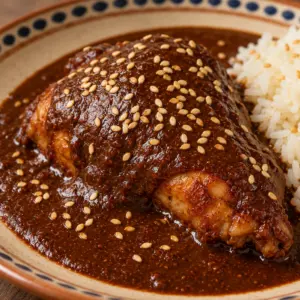
- Taste before adding salt. Add the cooked chicken and simmer gently for 5–10 minutes, until the chicken is hot throughout. Divide between six plates, spoon sauce over each piece and sprinkle with the reserved sesame. Rice and tortillas are optional accompaniments, not included in the recipe nutrition.
Nutrition
Video
Notes
Tried this recipe?
Let us know how it turned out!Hi, I’m Emily Pocker! I share recipes and food guides here at Recipes360 to help you find everyday meal inspiration and feel more confident in the kitchen. My goal is to make cooking approachable, enjoyable, and full of flavor.