
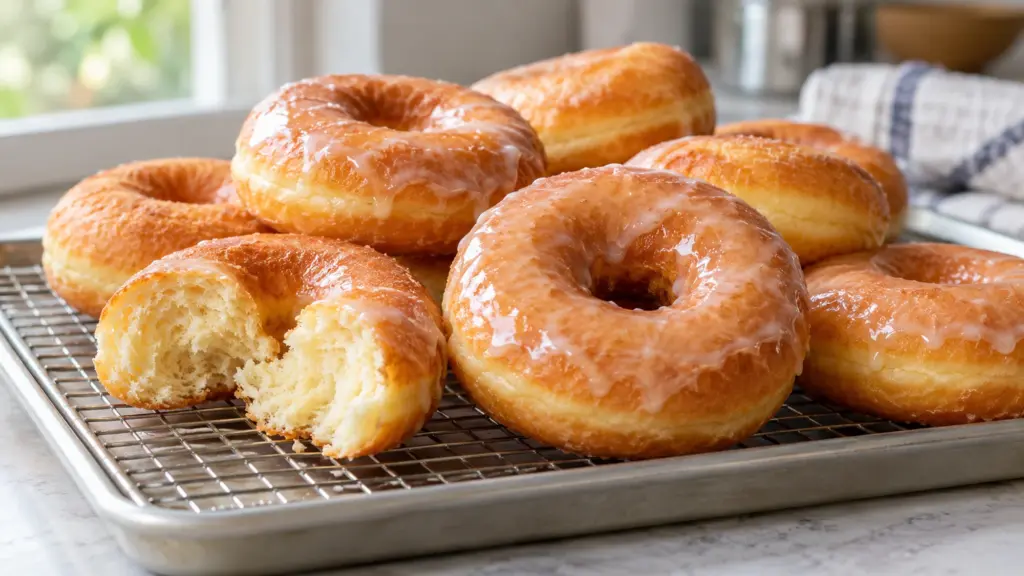
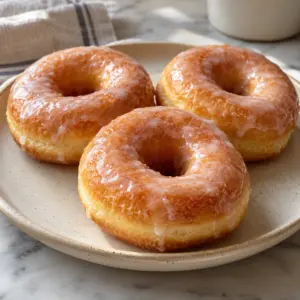
A donut’s thin glaze should give way to a tender middle, not a heavy ring of sweet bread. These donuts use a small yeast dough enriched with milk, egg and butter, plus a little nutmeg for warmth. The batch makes about eight rings with their holes, so there is enough to share without turning the counter into a bakery display.

Give the dough two unhurried rises, keep it soft rather than burying it in flour, and use a thermometer for the frying oil. A brief dip in vanilla glaze finishes the warm rings. Watch the dough’s expansion and the frying color together; neither an exact minute count nor a dark crust proves the middle is cooked.
Serving Suggestions for Glazed Donuts
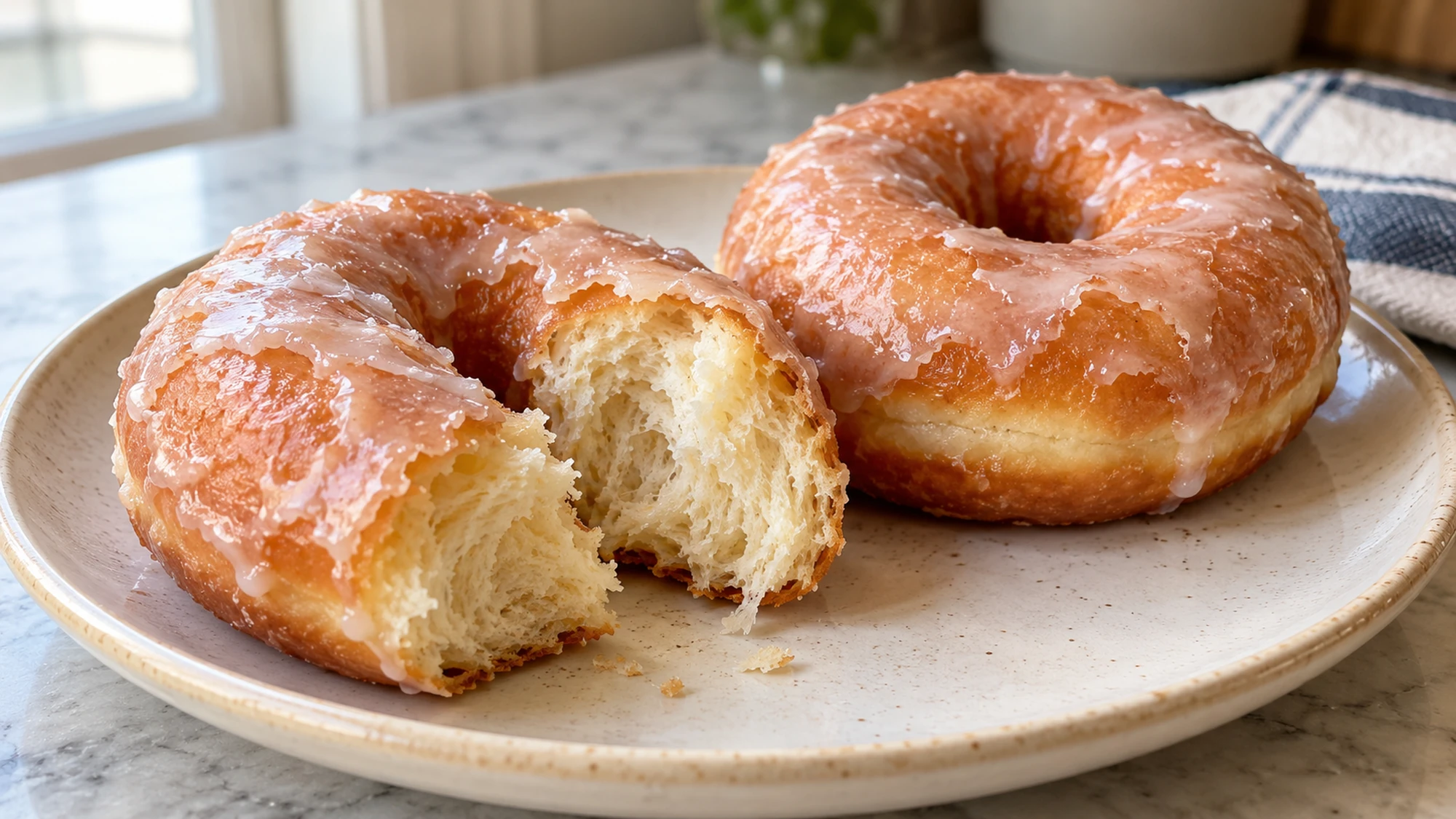
Let excess glaze drip onto a tray beneath the rack, then serve once the coating has settled enough to handle. A plate piled too high can glue the rings together while they are warm. Coffee, tea or a glass of milk makes a straightforward pairing without another sweet topping.
I’d put the donut holes in a separate small bowl so the serving size stays clear. The card treats one ring and its share of holes as one serving, rather than pretending the holes vanish from the batch. For a differently textured sweet, the blog’s chocolate cornflake cakes use cereal crunch instead of fried dough.
- Rack: leave room between glazed rings while the coating sets.
- Batching: fry the holes separately from the larger rings.
- Serving: include each ring’s share of holes when dividing the batch.
The softest texture is on the day of frying. Cool leftovers completely before covering them, and keep the container out of a warm sunny spot. For longer storage, freeze cooled, unglazed donuts rather than expecting the fresh glaze to survive unchanged. Thaw before warming gently and adding a fresh thin coating.
Variations and Donut Texture
Nutmeg belongs in the background here. If it is not your favorite, leave it out and keep the vanilla glaze. A little cinnamon in a separate sugar coating is another option, but use it instead of the glaze rather than automatically stacking both finishes onto every ring.
I prefer a weighed flour measure because a firmly packed cup can turn a workable dough into a dry one. The dough should feel supple and slightly tacky after kneading. Dust the counter lightly for shaping, then resist working every last patch of surface flour into the dough.
These are fried yeast donuts. Putting the same dough in the oven changes the crust, expansion and eating texture; it is not a like-for-like route to the photographed result. Smaller rings and the holes also fry faster than large rings, so cook like sizes together and check the first one inside.
| Choice | What changes | Useful cue |
|---|---|---|
| Thin vanilla glaze | A light sweet coating | Let excess drip off |
| Cinnamon sugar instead | A dry, spiced finish | Coat while slightly warm |
| Smaller rings | Quicker cooking | Fry similar sizes together |
| Too much bench flour | A firmer dough | Keep the dough slightly tacky |
Health Benefits and Portion Balance
Donuts are a sweet fried food, and the most useful nutritional context is the portion and what accompanies it. Milk and egg contribute some protein, while flour, sugar, butter and absorbed frying oil supply much of the energy. A touch of nutmeg changes aroma, not the donut’s status as a treat.
The FDA explanation of added sugars helps distinguish the sugar added to dough and glaze from the milk’s naturally occurring sugar. The estimate allows for some oil absorption, which varies in real frying. It is not a laboratory measurement or a promise that every finished ring has identical nutrition.
Keep flour and raw egg away from finished donuts and glaze utensils. The FDA advises against tasting raw dough. Follow safe frying-oil practices: avoid overheating and replace oil that smells unusual, smokes or foams. Never leave the heating pot unattended.
Bottom Line
For light donuts, put your attention on a soft dough, a visibly puffy second rise and controlled frying heat. I’d choose one modest coating and serve the rings while their texture is still fresh. The small holes deserve the same care as the rings, including their own shorter frying time and a place in the portion estimate.
Donuts Recipe

Ingredients
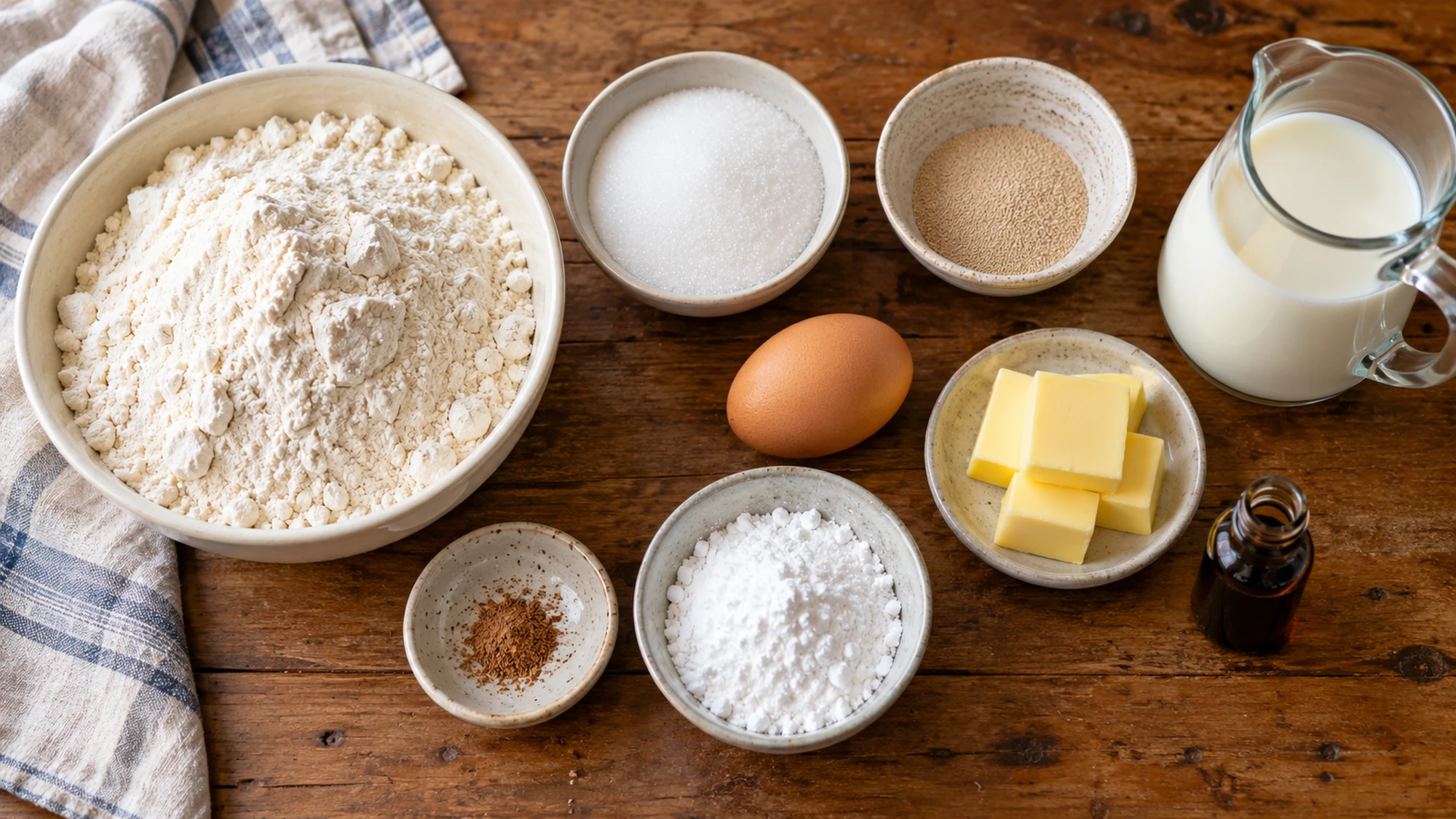
- 300 g all-purpose flour plus a little for the counter
- 4 g instant yeast
- 35 g granulated sugar
- 1/2 tsp fine salt
- 1/4 tsp ground nutmeg
- 150 ml whole milk lukewarm, about 100°F (38°C)
- 1 large egg
- 35 g unsalted butter softened
- neutral frying oil enough for 2 inches in the pot; keep pot less than half full
- 120 g powdered sugar
- 25 ml whole milk plus a few drops if needed
- 1/2 tsp vanilla extract
Equipment
- Digital kitchen scale
- Mixing bowl
- Rolling Pin
- 3-inch and 1-inch round cutters
- Deep heavy pot
- Deep-fry thermometer
- Slotted spoon or spider
- Wire rack over a tray
Instructions
- Mix the flour, instant yeast, granulated sugar, salt and nutmeg. Add the lukewarm milk and egg, mix to a rough dough, then knead in the softened butter.
- Knead for about 8 minutes until smooth, elastic and slightly tacky. Cover the bowl and let rise in a comfortably warm place for about 60–90 minutes, until doubled; use the dough’s expansion as the main cue.
- Roll on a lightly floured counter to about 1/2-inch thickness. Cut approximately eight 3-inch rings with 1-inch holes, gently rerolling scraps once. Put on lightly floured parchment and cover loosely. Let rise about 30–45 minutes until distinctly puffy.
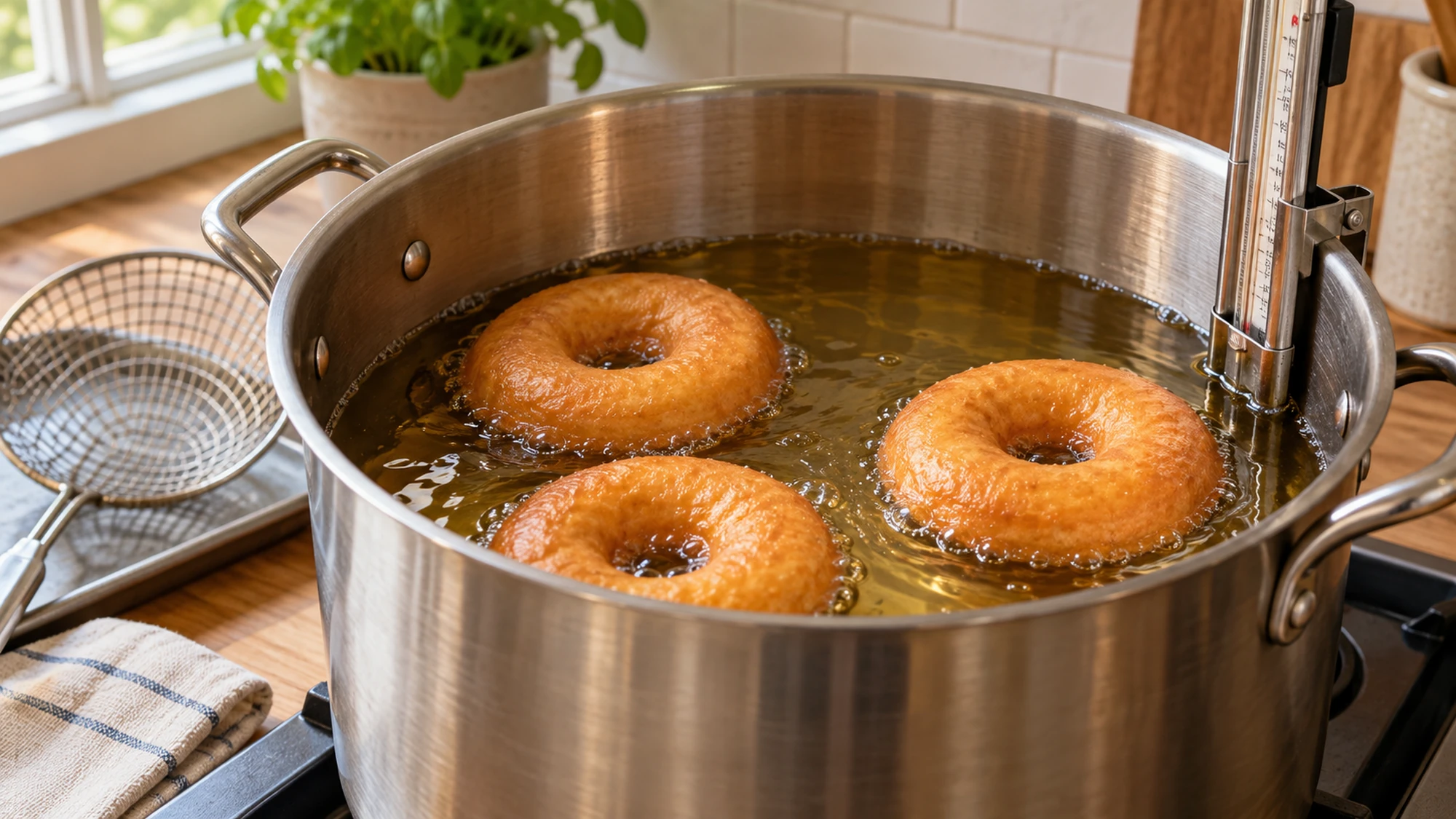
- Set a rack over a tray. Heat 2 inches of oil in a deep heavy pot to 350°F (175°C), checking with a deep-fry thermometer. Keep ample empty space above the oil and never leave it unattended.
- Carefully lower two or three rings at a time into the oil. Fry about 60–90 seconds per side until evenly golden. Open the first cooled test ring to check that the center is cooked, with no sticky raw dough. Let the oil return near 350°F between batches.
- Fry the holes separately, turning as needed, for about 1 minute total until cooked through and golden. Lift the donuts onto the rack to drain.
- Whisk the powdered sugar, milk and vanilla until smooth and pourable. Dip the warm, not piping-hot, rings and holes lightly, let excess drip off and return to the rack. Allow the glaze to set briefly before serving.
Nutrition
Video
Notes
Tried this recipe?
Let us know how it turned out!Hi, I’m Emily Pocker! I share recipes and food guides here at Recipes360 to help you find everyday meal inspiration and feel more confident in the kitchen. My goal is to make cooking approachable, enjoyable, and full of flavor.