
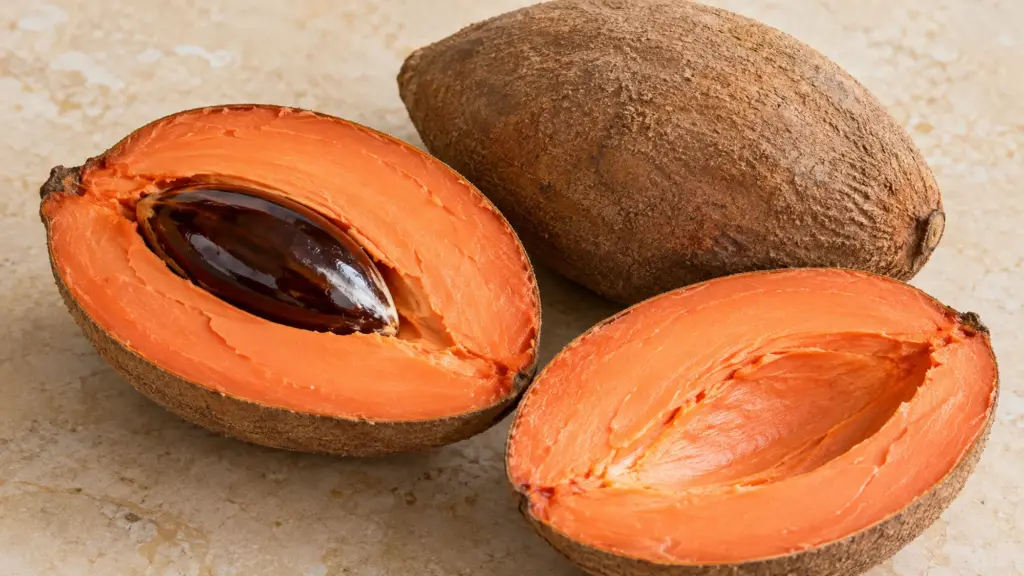
A rough brown mamey can look like the least promising thing in the fruit bowl. Cut a properly ripened one open, though, and you find salmon-orange flesh that is soft enough to scoop rather than crunch.
Mamey sapote is a sweet, creamy tropical fruit. Let whole fruit soften before cutting, eat the flesh rather than the skin or pit, and refrigerate ripe fruit you will not use promptly.
I’d start with a spoonful on its own before blending it into anything. That small pause tells you whether you want its distinctive flavor front and center or softened with another ingredient.
What Is Mamey Sapote?
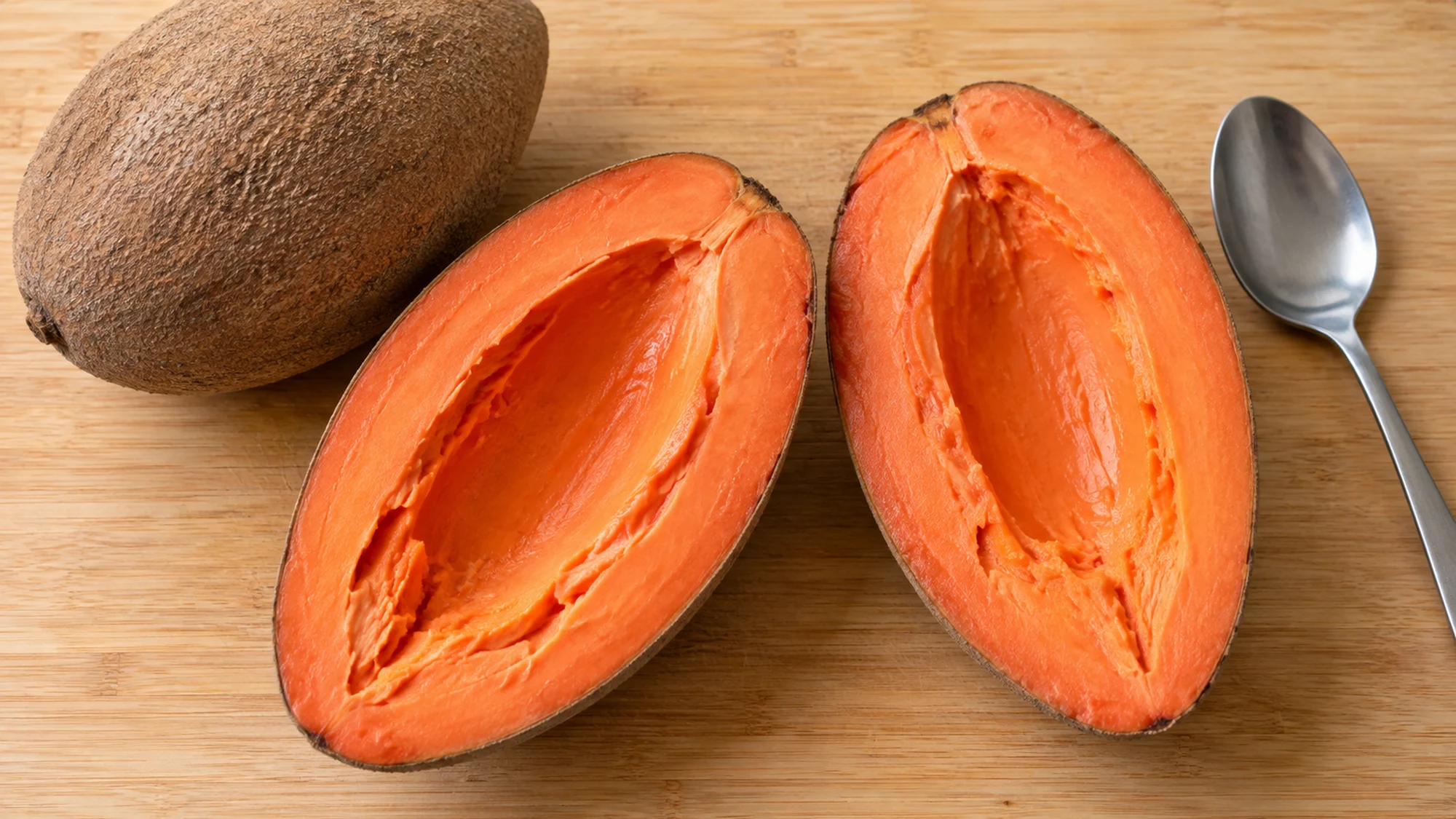
This guide concerns Pouteria sapota, the fruit identified in the University of Florida’s mamey sapote reference. Its origins are in Mexico and Central America, and its rough brown skin conceals flesh ranging from salmon pink to deep reddish orange.
Expect a dense, sweet texture rather than the juicy bite of a melon. UF/IFAS describes an almond-like flavor; the flesh may be smooth or slightly granular, so a little texture is not automatically a flaw.
- Look at the whole name: Ask for mamey sapote when shopping rather than relying on a vague “tropical fruit” label.
- Expect a substantial seed: There is commonly one large shiny brown seed, but some fruits contain more.
- Choose for your plans: A whole fruit lets you judge its ripeness; packaged pulp is a different purchase, with its own ingredient and storage label.
Choosing Mamey That Will Ripen
Maturity at harvest and softness at home are different things. UF/IFAS explains that fruit picked too immature may never soften properly, even after waiting; its flesh can darken and become unsuitable to eat.
For a fruit you intend to open soon, look for softness rather than a rock-hard feel. Ask a knowledgeable seller whether a firm fruit was harvested mature; I’d rather ask that slightly fussy question than buy a bowlful of uncertainty.
| What you find | What to do |
|---|---|
| Whole fruit still firm | Allow time at room temperature; check for softening |
| Whole fruit soft and sound | Prepare it, or refrigerate for short storage |
| Visible rot or leaking breakdown | Do not use it |
| Frozen packaged pulp | Follow its handling instructions and check ingredients |
Growers sometimes scratch the skin to inspect flesh color before harvest. That is a maturity test, not an invitation to damage fruit on a supermarket display. Ask the seller to help, and do not assume that extra days on the counter will rescue every hard specimen.
How to Cut and Eat Mamey
Wash the outside before cutting, even though you will discard the skin. The FDA’s produce guidance explains that a knife can transfer contamination from the surface to the flesh; running water is appropriate, not soap or detergent.
- Wash your hands and use a clean knife and stable cutting board, separate from equipment used for raw meat.
- Cut the fruit lengthwise around the large central seed. Work carefully rather than forcing the blade through the pit.
- Separate the halves and remove every seed. Do not eat, crush or blend the pit; discard the skin too.
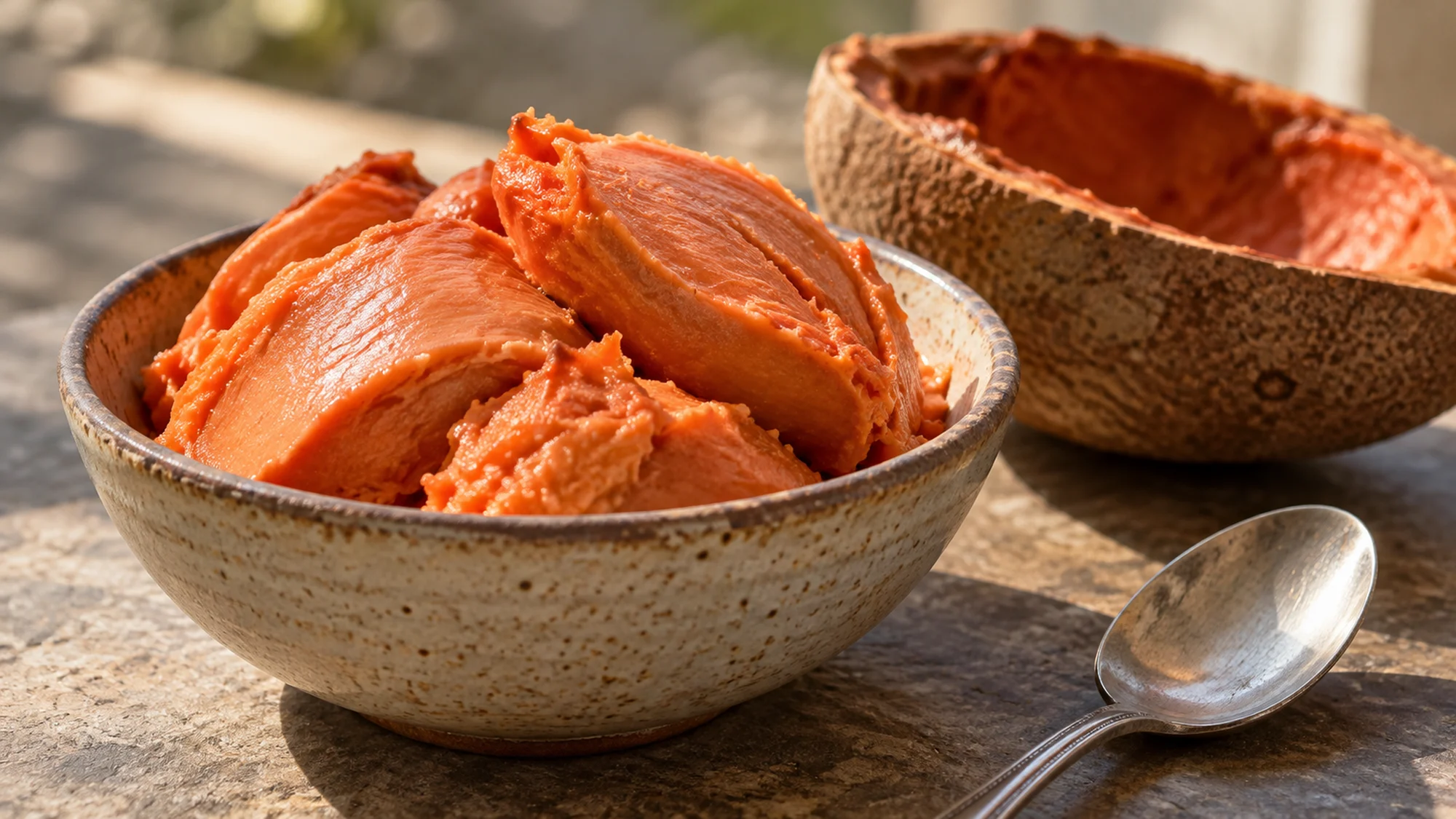
- Scoop out the soft flesh with a spoon, or remove portions for a bowl. Discard fruit that looks rotten rather than trying to disguise it in a drink.
Keep the first serving simple. A spoonful of plain pulp makes it easier to notice the fruit’s texture, while a small addition of milk or your preferred alternative offers a gentler introduction in a blended drink.
Serving and Storing the Pulp
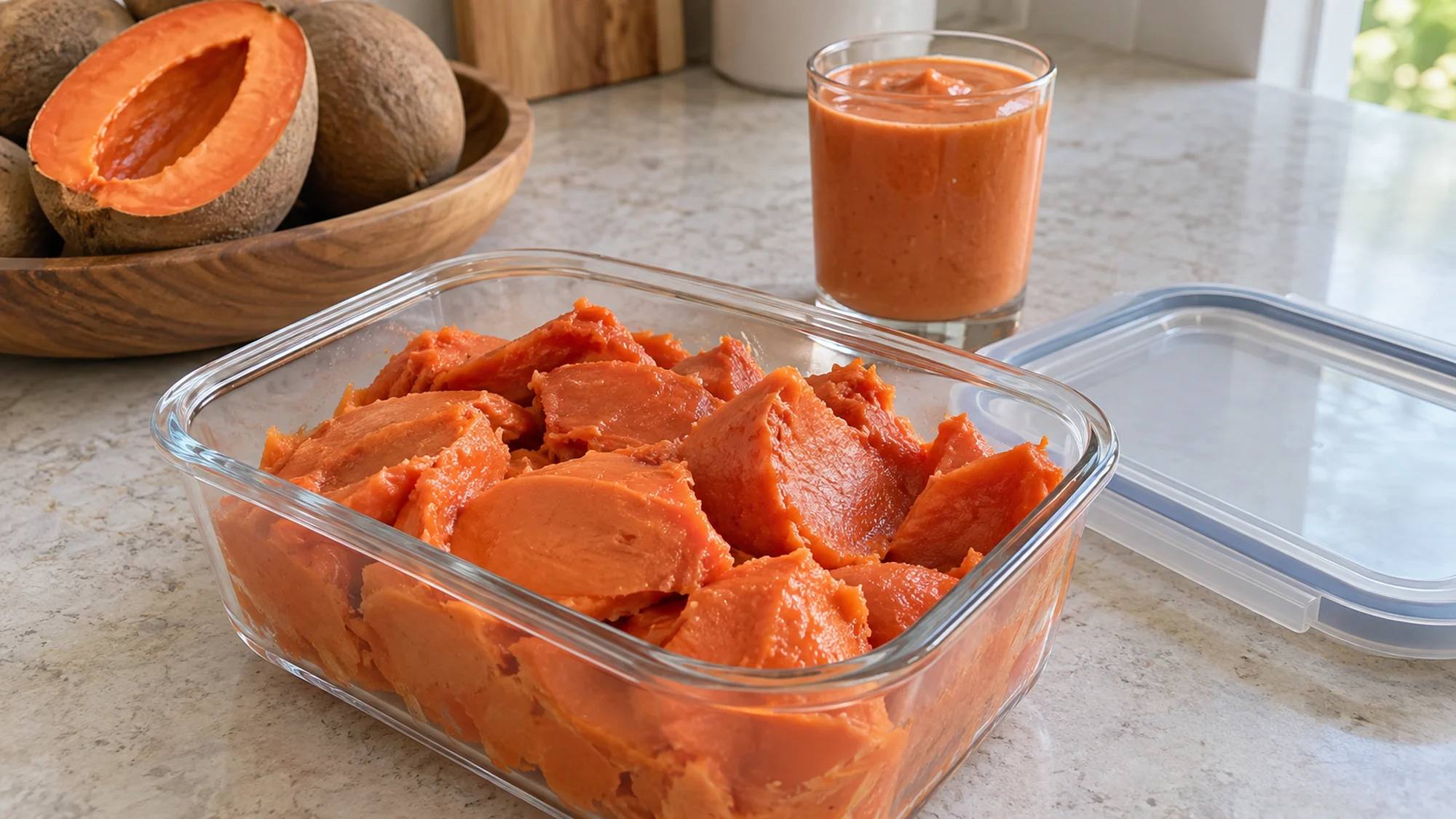
The Florida Department of Agriculture’s storage advice is to ripen whole mamey at room temperature until soft, then enjoy it fresh or refrigerate for one to three days. It also recommends freezing the pulp for later use.
- For breakfast: Spoon a little pulp beside yogurt or stir it into a bowl you already enjoy.
- For a drink: Blend the flesh with a suitable liquid, then assess the texture before adding more.
- For frozen desserts: Choose a recipe designed for mamey rather than assuming it behaves exactly like another fruit.
- For extra pulp: Divide it into manageable freezer portions and label the container; follow any packaged product’s instructions instead.
I’d freeze surplus pulp rather than make a large drink simply to use the whole fruit. If you are planning a mixed fruit plate, our guide to choosing and cutting mangos covers that fruit’s very different flat seed.
Bottom Line
Give mamey time to become spoonable, handle it on a clean board, and keep the pit out of the bowl and blender. Start with the plain flesh, then decide whether its next stop is breakfast, a drink or the freezer.
Sources
- UF/IFAS: Mamey sapote identification and fruit characteristics
- UF/IFAS: Mamey sapote maturity, handling and preparation
- Florida Department of Agriculture: Mamey sapote storage and uses
- FDA: Selecting and serving produce safely

Hi, I’m Emily Pocker! I share recipes and food guides here at Recipes360 to help you find everyday meal inspiration and feel more confident in the kitchen. My goal is to make cooking approachable, enjoyable, and full of flavor.