
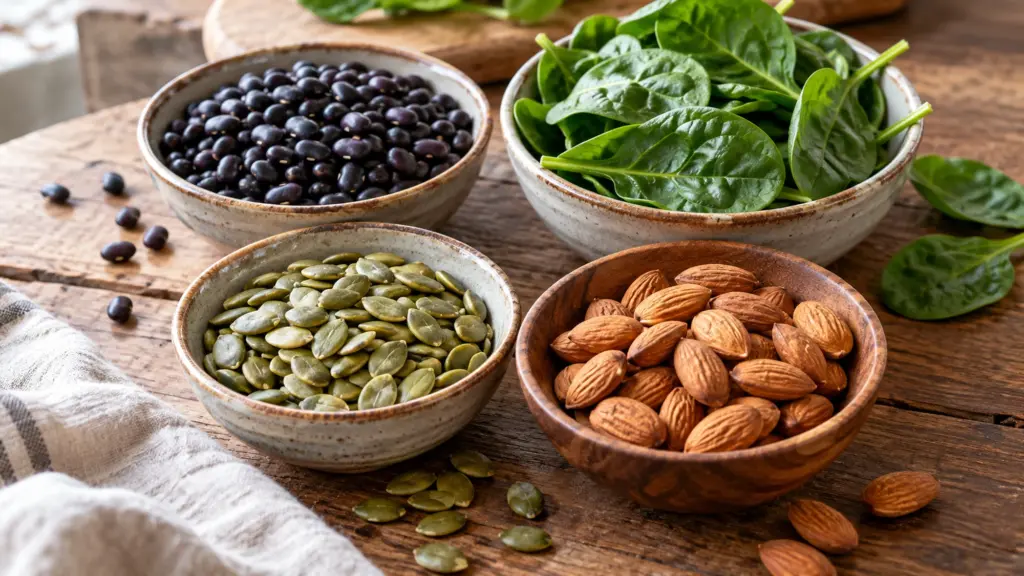
A handful of seeds, a bowl of beans, and some greens can contribute magnesium without turning dinner into a nutrition project. If you are wondering what foods are high in magnesium, start with ingredients you already enjoy and compare amounts you would realistically eat.
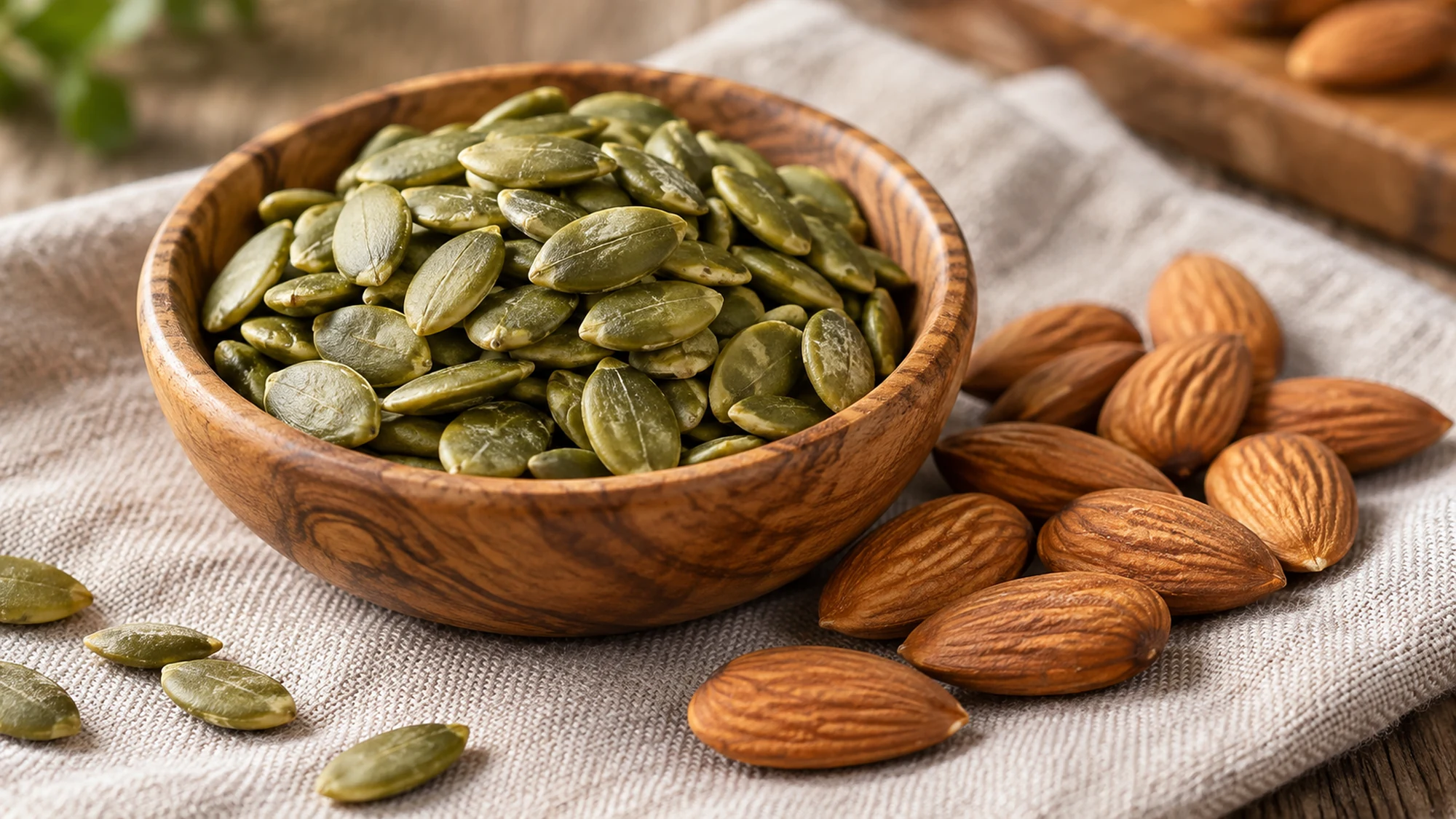
Pumpkin seeds, chia seeds, almonds, spinach, beans, and whole grains are useful magnesium sources. Portions matter: a small serving of seeds can provide a substantial amount, while several other foods contribute smaller amounts across the day.
I would rather build a few familiar meals around these ingredients than chase one supposedly perfect food. Variety also keeps the shopping list and the plate more interesting.
What Foods Are High in Magnesium? Compare Practical Portions
The NIH Office of Dietary Supplements food table gives the following amounts. These are examples for the stated preparations, not promises that every brand or homemade dish has identical values. The portions are customary servings, not equal weights, so this is not a laboratory ranking of the foods.
| Food | Portion | Magnesium |
|---|---|---|
| Pumpkin seeds, roasted | 1 ounce | 156 mg |
| Chia seeds | 1 ounce | 111 mg |
| Almonds, dry roasted | 1 ounce | 80 mg |
| Spinach, boiled | ½ cup | 78 mg |
| Black beans, cooked | ½ cup | 60 mg |
| Brown rice, cooked | ½ cup | 42 mg |
Read this table as a menu of options. Seeds may fit as a topping, beans as part of lunch, and rice as one component of dinner. You do not need to combine every item in one bowl or eat the largest possible portion.
A food can contribute magnesium without being the highest item on a chart. The amount eaten and the overall pattern both matter.
Make the Sources Fit Ordinary Meals
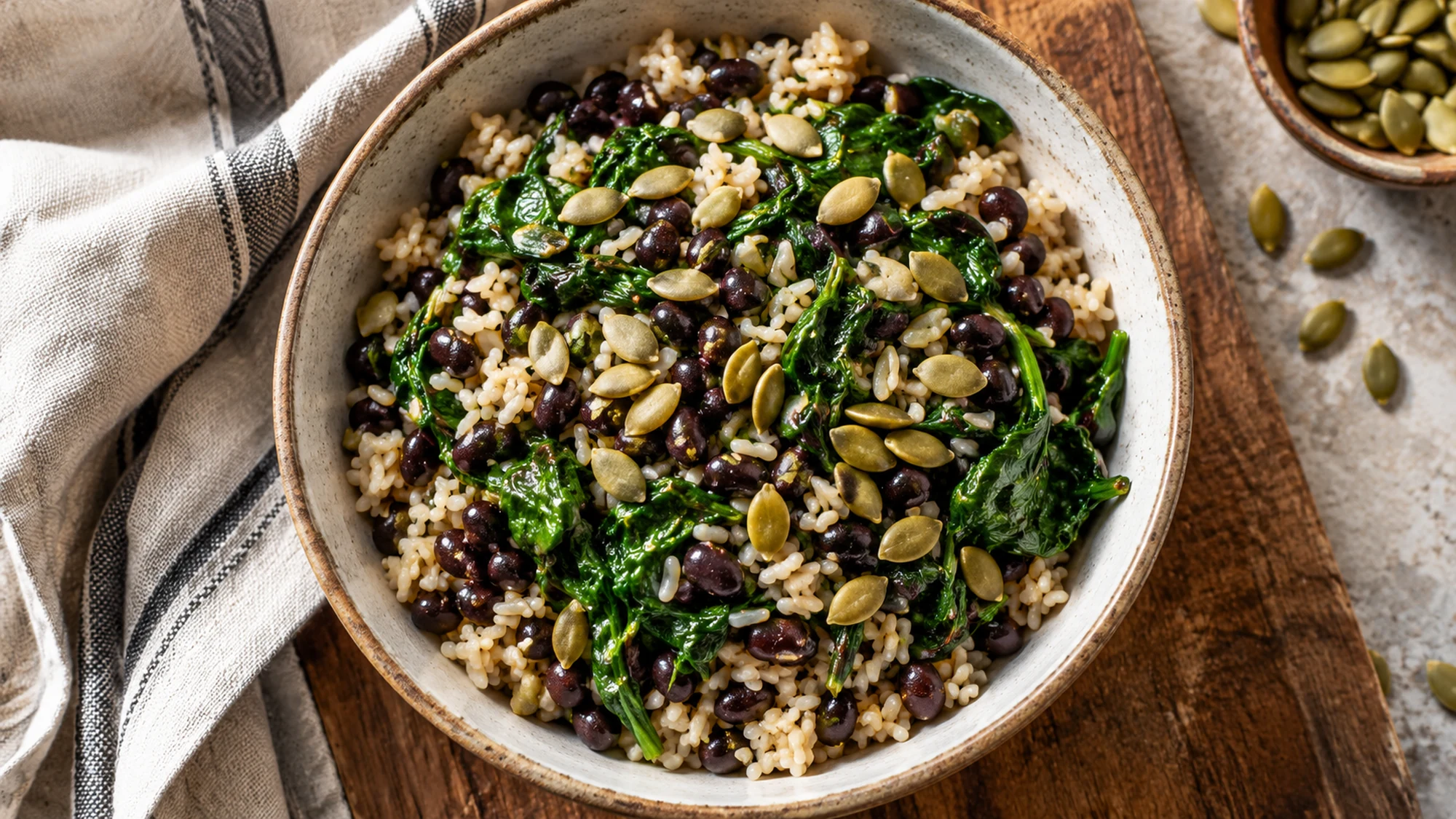
The practical question is where a magnesium-containing ingredient makes a meal more satisfying. Cleveland Clinic’s food overview includes nuts, seeds, legumes, leafy greens, and whole grains. Those groups offer plenty of choices without requiring a specialized product.
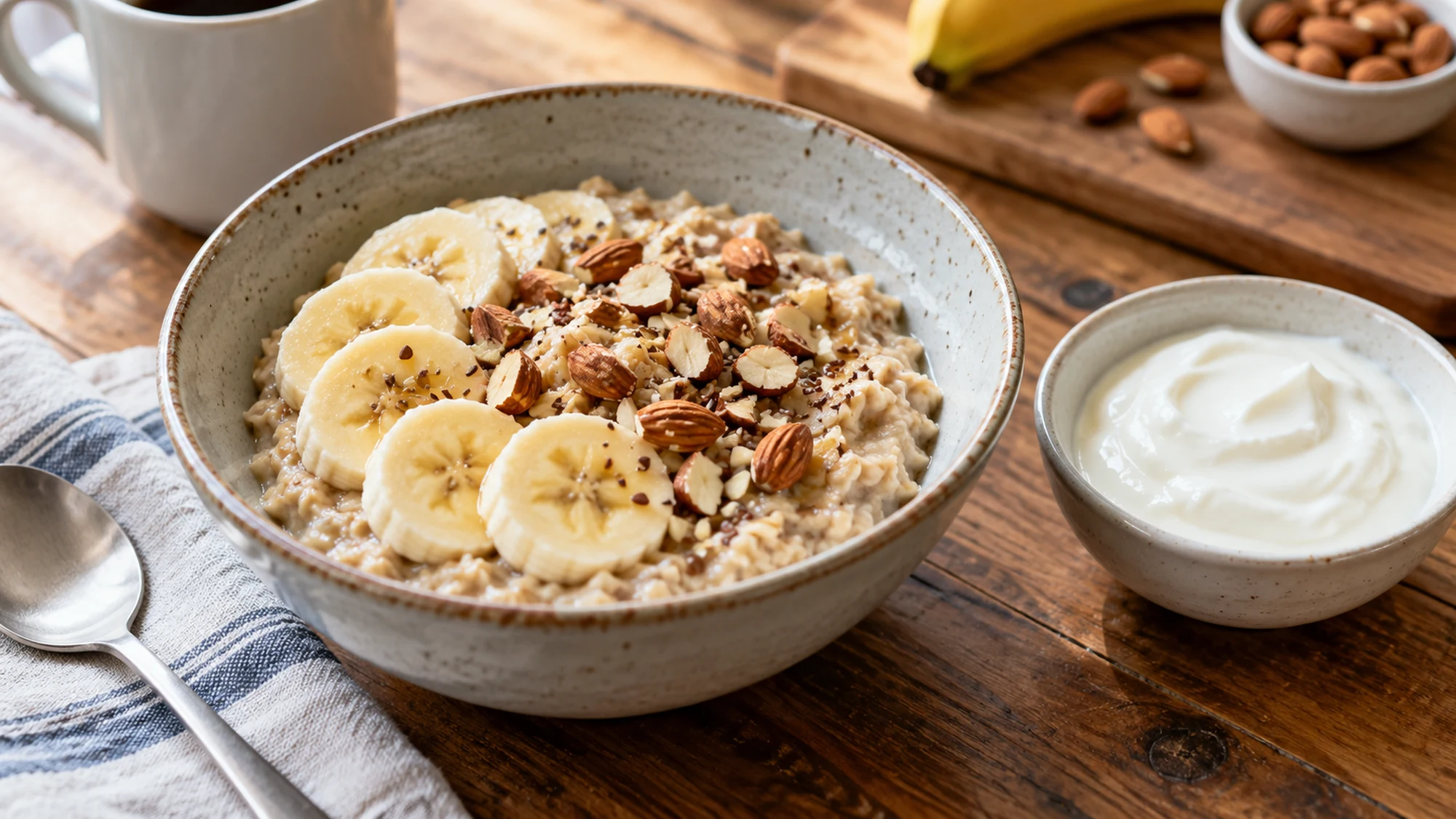
- At breakfast: add a small spoonful of seeds or chopped almonds to oatmeal. Start with the amount whose texture you enjoy rather than treating a topping like a supplement.
- At lunch: fold cooked beans into a grain bowl, soup, or salad. Keep a convenient cooked option available so it is easy to use.
- At dinner: serve leafy greens with a familiar main dish, or use brown rice when its flavor and cooking time suit the meal.
- For a snack: portion nuts into a small bowl instead of eating from a large bag. Choose something you like enough to keep in your normal rotation.
If an ingredient does not work for you, choose another from the list. Nuts and seeds are not mandatory, and food allergies take priority over a nutrient target. A bean-based meal can be useful for more than one reason; our guide to daily protein needs explains why the broader eating pattern matters.
Build on meals you already eat. A manageable addition repeated regularly is more useful than an elaborate plan you dislike.
Read the Label Without Losing the Portion
A package may list magnesium as milligrams, percent Daily Value, or both. According to NIH ODS labeling guidance, 20% of the Daily Value or more per serving is considered high. Some foods in this guide contribute magnesium without reaching that threshold in the portion shown.
Check the serving size before comparing two packages. One label might describe a small handful while another describes a larger bowl. A fortified cereal can also differ substantially from a similar-looking cereal, so use its own label rather than assuming all products match.
- Compare the same amount where possible. Otherwise, notice why the numbers differ.
- Keep preparation in mind. Cooked spinach and a cup of loose raw leaves are not equivalent portions.
- Consider the whole food. Flavor, allergies, sodium, added sugars, and your usual meals still matter.
Use the number to inform a choice, not to turn a food into a health score.
Food Sources Are Not a Diagnosis or Supplement Plan
Magnesium supports normal muscle and nerve function and many other body processes, but a list of foods cannot explain a symptom. Fatigue or cramps can have many causes. If you are concerned about a deficiency, discuss the concern with a qualified clinician rather than diagnosing it from a checklist.
The NIH consumer fact sheet also distinguishes food intake from supplements. Supplements can cause adverse effects and interact with medicines; impaired kidney function raises particular concerns. Do not assume a capsule is necessary because you found a few low-magnesium meals in your week.
Bottom Line
For magnesium, begin with variety: seeds or nuts when suitable, beans, greens, and whole grains. Choose realistic portions and familiar meals. Food information can guide shopping, but it does not replace individual medical advice or establish a need for supplements.
Registered dietitian Amanda Li introduces magnesium in the video below. Treat its broader nutrition discussion as education, not a personal diagnosis or supplement recommendation.
Sources
- NIH ODS: Magnesium—health professional fact sheet
- NIH ODS: Magnesium—consumer fact sheet
- Cleveland Clinic: Magnesium food sources

Hi, I’m Emily Pocker! I share recipes and food guides here at Recipes360 to help you find everyday meal inspiration and feel more confident in the kitchen. My goal is to make cooking approachable, enjoyable, and full of flavor.