
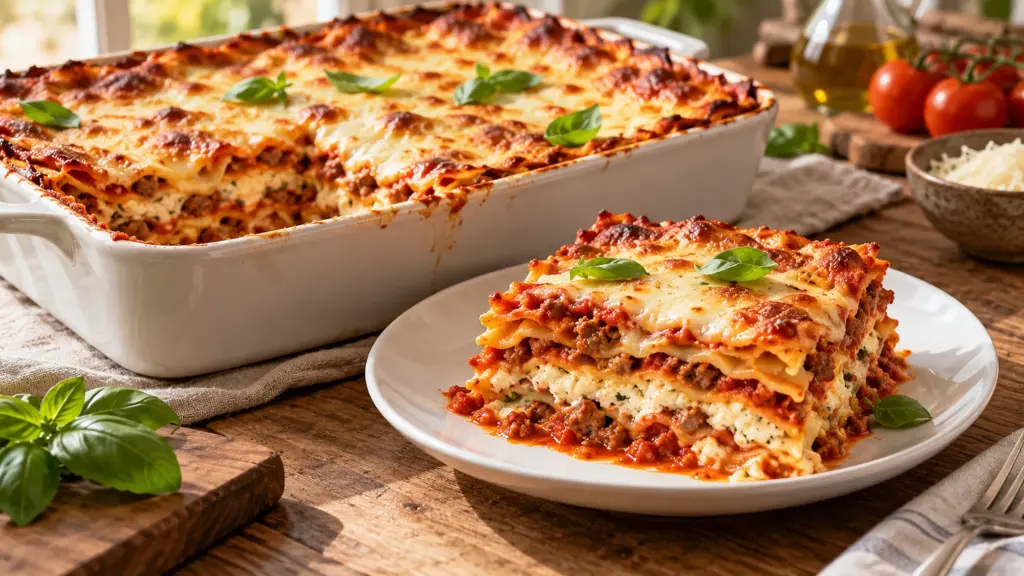
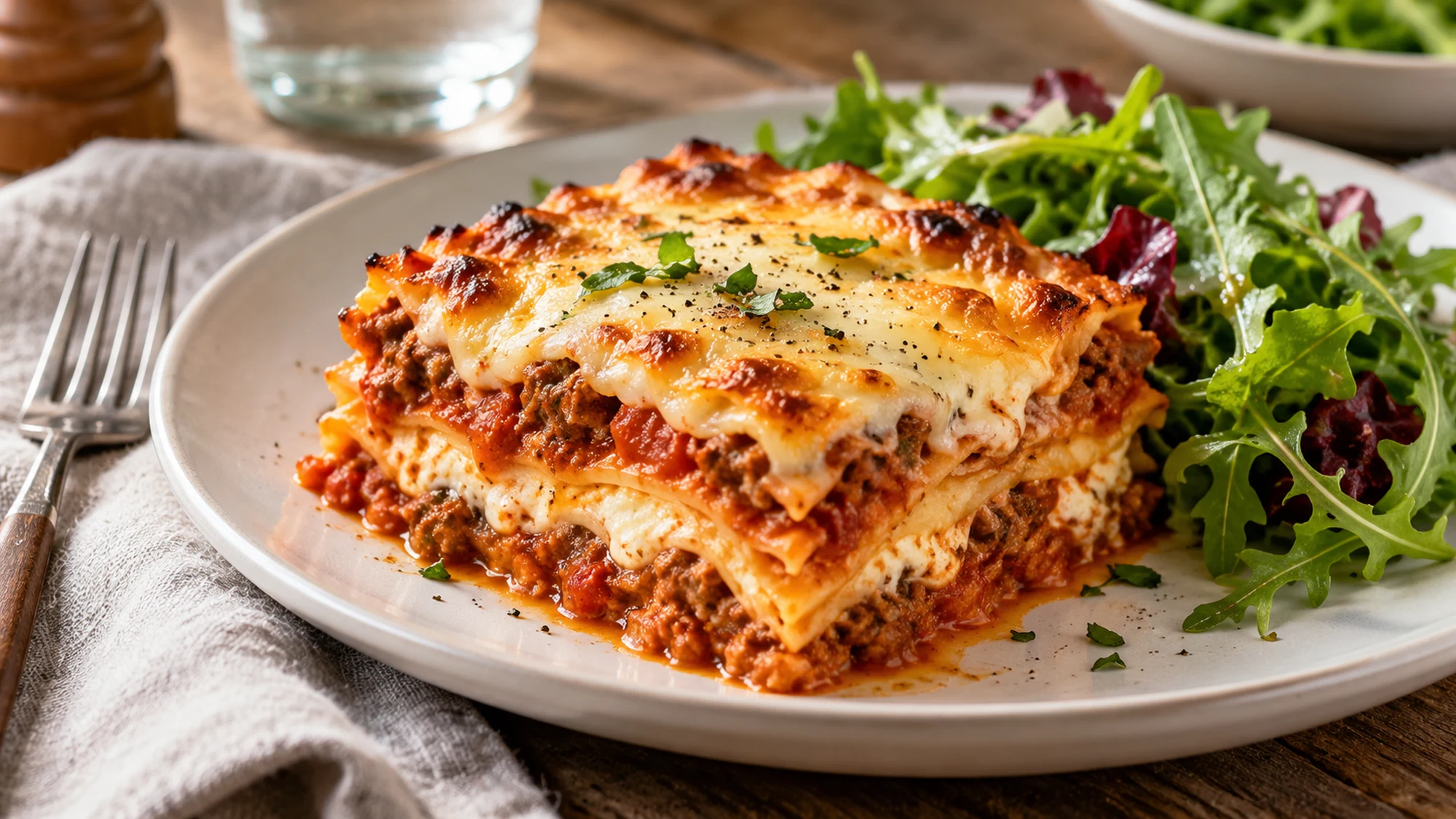
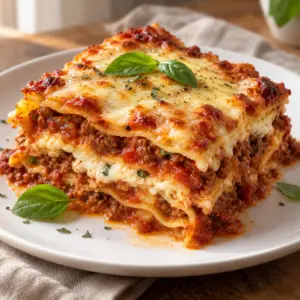
The first square out of a bubbling pan is rarely the neatest, but it should still look like layers rather than pasta soup. This lasagne recipe puts a thick beef-and-tomato sauce between tender sheets, with creamy ricotta and a golden mozzarella top.
For a lasagne that slices cleanly, simmer the sauce until spoonable, cook the pasta only to al dente and rest the baked pan for 20 minutes. The rest lets the layers settle without drying the pasta.
This is a ricotta-based, Italian-American-style bake, not a traditional béchamel lasagne. It makes a generous family pan without a separate white sauce. I like the contrast between the soft middle and the browned corners; the trick is keeping every pasta edge covered before the pan goes into the oven.
Serving Suggestions for This Lasagne Recipe
Serve the lasagne warm after its resting time, using a broad spatula to support each portion. A crisp green salad with lemon or vinegar is a useful partner because the pasta already brings plenty of richness. Garlic bread is welcome, but it is an optional extra rather than something the meal needs.
- For a family supper, put the salad and dressed vegetables on the table while the lasagne rests.
- For a casual gathering, cut the pan into smaller portions and let people help themselves to more.
- For planned leftovers, set aside portions promptly rather than leaving the entire pan out throughout the evening.
I’d keep a second dish simple and fresh rather than adding another creamy casserole. If you enjoy this kind of layered dinner, the chicken enchilada casserole offers a different flavor direction for another night. The same useful principle applies: enough sauce for tender layers, without excess liquid collecting underneath.
Give the pan its short rest, then serve it with something crisp and bright.
Variations Without Watery Layers
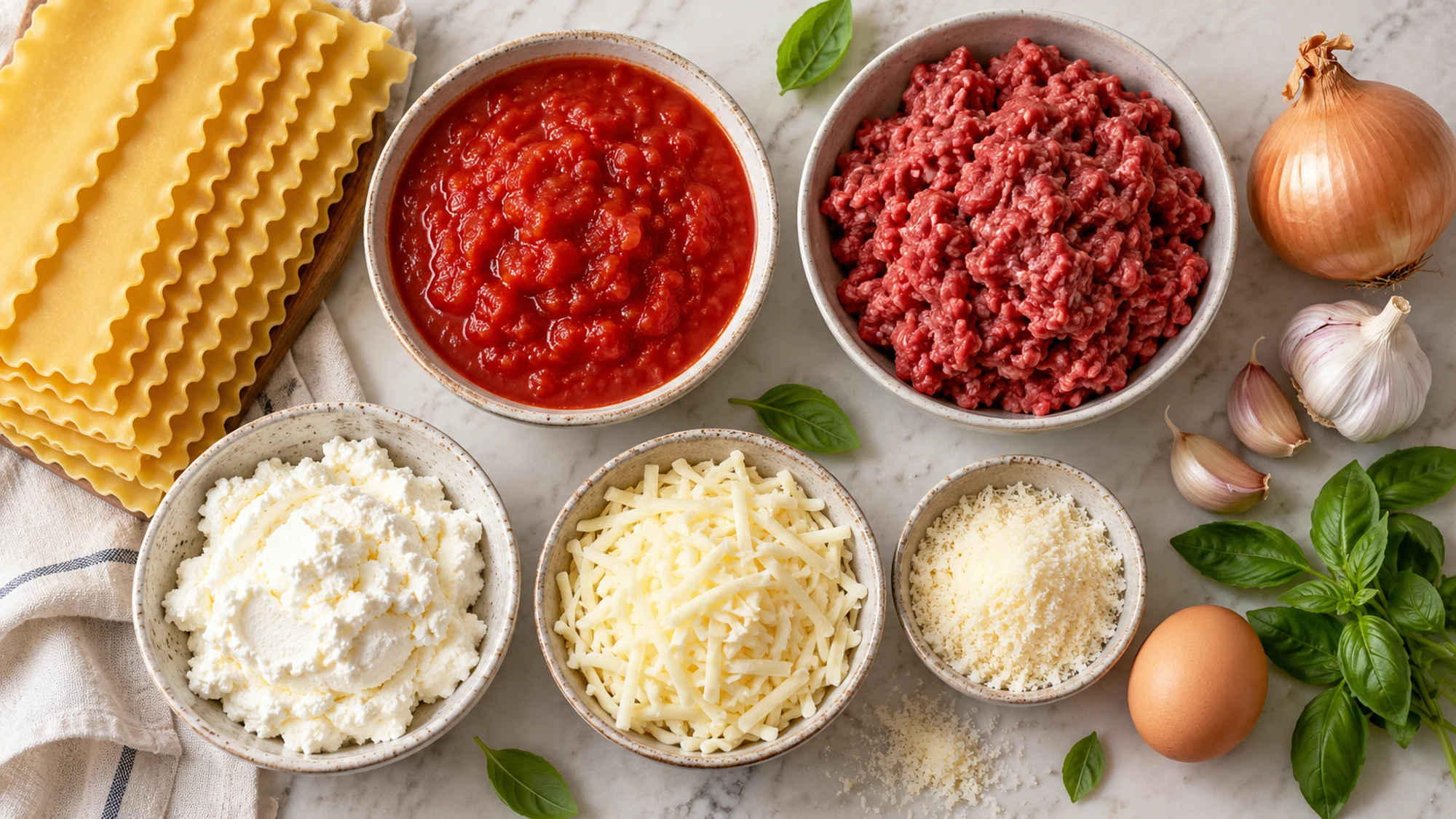
The recipe is designed for dried lasagne sheets that you boil before assembling. No-boil noodles need a different liquid balance, so this is not the place for a straight swap. Ricotta should look creamy rather than wet; if liquid has collected in the container, drain that away before mixing.
| Ingredient | Role | Watch for |
|---|---|---|
| Boiled dried pasta sheets | Separate the layers and absorb sauce | Cook just to al dente; do not substitute no-boil sheets directly |
| Ricotta and egg | A soft, cohesive cheese layer | Drain visible excess liquid before mixing |
| Low-moisture mozzarella | Melting cheese and a browned top | Fresh mozzarella brings more water |
| Simmered meat sauce | Moisture, savory flavor and structure | It should spread, not pour like soup |
A little chopped fresh basil stirred into the sauce gives a different finish from dried oregano. You can also replace part of the beef with finely chopped mushrooms, but cook them until their released moisture evaporates first. The aim is a thick sauce, not a casserole carrying an extra cup of vegetable water.
- Prefer a less rich cheese layer? Part-skim ricotta works, though brands vary in moisture and texture.
- Want a sharper top? Keep the Parmesan in the recipe rather than simply piling on more mozzarella.
- Using gluten-free pasta? Follow that package’s boiling guidance and handle the sheets gently; texture and cooking time can differ.
Adjust flavor with herbs and cheese choices, but preserve the moisture balance that holds the layers together.
Health Benefits and Meal Balance
Beef and dairy contribute protein, while the cheese also supplies calcium. That does not make every portion the right size for every appetite: this is a substantial dish, and cheese and prepared tomato products can add saturated fat and sodium. A vegetable side gives the plate more variety without changing the lasagne itself.
Use a thermometer rather than the color of the topping as the final safety check. FoodSafety.gov lists 165°F for casseroles, including meatless versions. The center should reach that temperature even when the corners are already bubbling and the mozzarella looks ready.
- Refrigerate portions within two hours, or one hour above 90°F; CDC food-safety guidance explains why prompt chilling matters.
- Use shallow covered containers and keep refrigerated leftovers for three to four days.
- Reheat only the portion you need to 165°F in the center; add a spoonful of water and cover if the edges begin to dry.
Treat this as a satisfying main dish, add vegetables alongside and cool leftovers promptly.
Bottom Line
A good lasagne recipe needs a little organization more than complicated technique. Prepare a thick sauce, keep the cooked noodles separate until you layer them and distribute the filling evenly. Once the pan is safely cooked, let it stand before cutting. That brief pause gives you a better slice and time to finish the salad.
Keep the sauce thick, cover the pasta edges and let the baked layers settle before serving.
Lasagne Recipe

Ingredients
- 1 tablespoon olive oil
- 1 medium onion finely chopped
- 1 pound 90% lean ground beef 454 g
- 3 cloves garlic minced
- 2 tablespoons tomato paste
- 1 28-ounce can crushed tomatoes 794 g
- 1 15-ounce can tomato sauce 425 g
- 1 teaspoon dried oregano
- 3/4 teaspoon fine salt or to taste
- 1/2 teaspoon black pepper
- 12 dried lasagne sheets about 12 ounces/340 g; regular boiling type, not no-boil
- 15 ounces ricotta 425 g, excess liquid drained
- 1 large egg
- 1/2 cup grated Parmesan 50 g, divided
- 2 tablespoons chopped fresh basil plus optional leaves to serve
- 3 cups shredded low-moisture mozzarella 340 g, divided
Equipment
- 1 9-by-13-inch deep baking dish
- 1 Large saucepan or Dutch oven
- 1 Large pasta pot
- 1 Mixing bowl
- 1 Instant-read thermometer
Instructions
- Heat the oil in a large saucepan over medium heat. Cook the onion for 4–5 minutes. Add the beef and break it into small pieces; cook until no pink remains. Stir in the garlic and tomato paste for 1 minute, then add the crushed tomatoes, tomato sauce, oregano, salt and pepper. Simmer uncovered for 20–25 minutes, stirring occasionally, until thick but spreadable.
- Meanwhile, heat the oven to 375°F (190°C). Boil the lasagne sheets in a large pot of water according to their package, stopping at al dente. Drain and lay separately on a clean tray so they do not stick. Lightly oil a deep 9-by-13-inch baking dish.
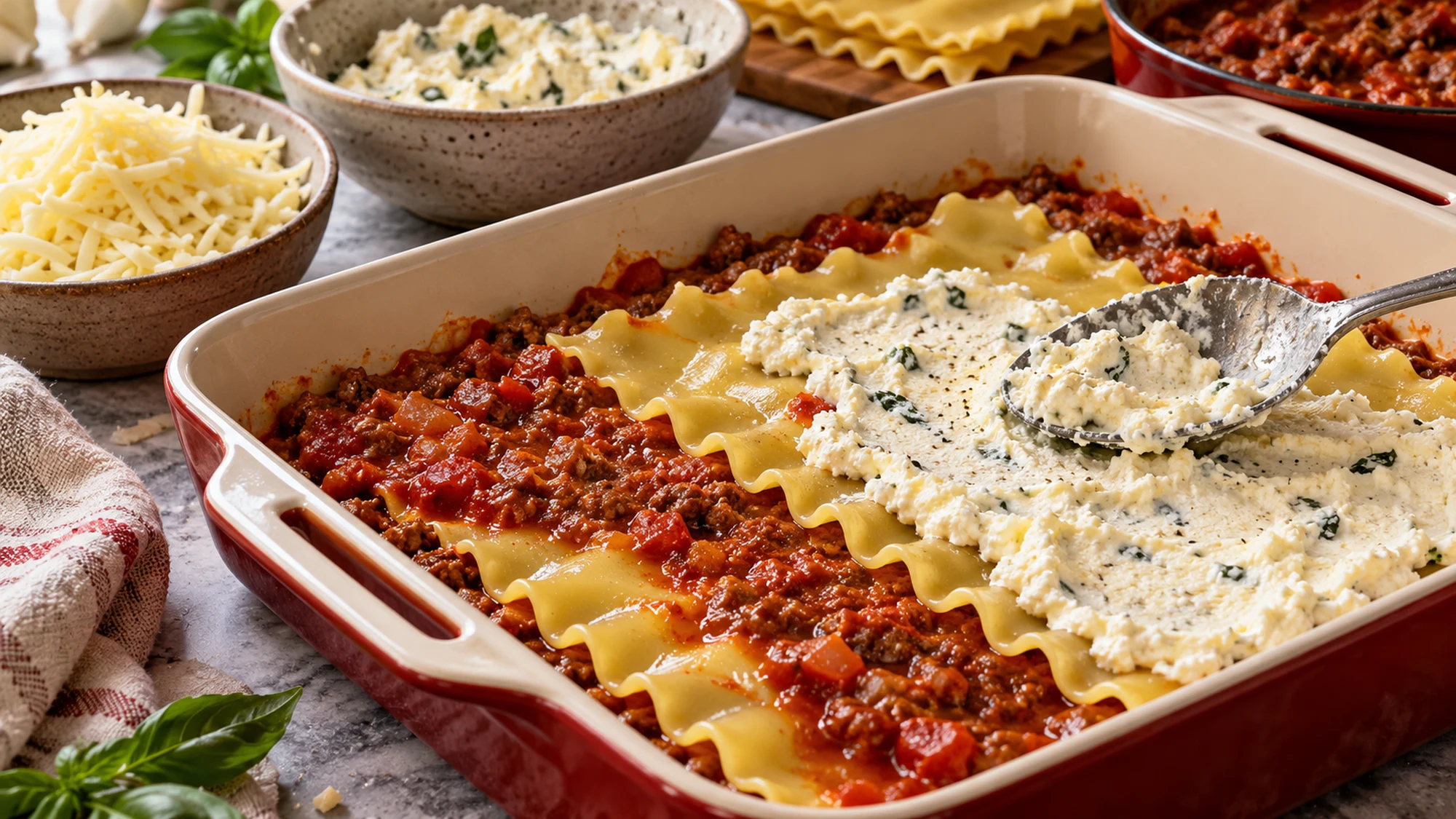
- Stir the ricotta, egg, basil and half the Parmesan together. Keep two cups of mozzarella for the internal layers and one cup for the top.
- Spread about 1 cup of sauce across the bottom of the dish. Arrange 4 pasta sheets over it, slightly overlapping or trimming to fit. Add half the ricotta mixture, one cup mozzarella and about one-third of the remaining sauce. Repeat with 4 sheets, the remaining ricotta, one cup mozzarella and another third of the sauce. Finish with the final 4 sheets, all remaining sauce, the last cup of mozzarella and the remaining Parmesan. Cover every pasta edge.
- Cover with lightly oiled foil, tenting it away from the cheese. Bake for 30 minutes, then uncover and bake another 15–20 minutes, until bubbling and golden. Check the center reaches 165°F (74°C) with a food thermometer; bake longer if needed.
- Let rest for 20 minutes before slicing into 8 servings. Garnish with optional basil. Refrigerate leftovers in shallow containers within 2 hours, or within 1 hour if above 90°F.
Nutrition
Video
Notes
Tried this recipe?
Let us know how it turned out!Hi, I’m Emily Pocker! I share recipes and food guides here at Recipes360 to help you find everyday meal inspiration and feel more confident in the kitchen. My goal is to make cooking approachable, enjoyable, and full of flavor.