
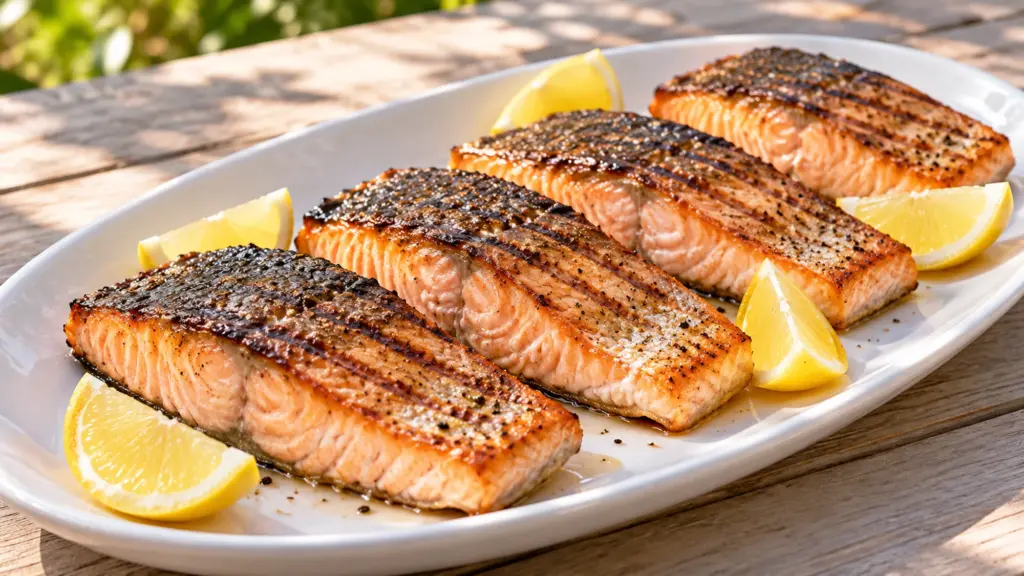
If a salmon fillet resists the spatula, a quick tug can leave dinner attached to the grate. Learning how to grill salmon starts with a clean, hot cooking surface and a little patience. This recipe gives the flesh a brief sear, then finishes the fish skin-side down with lemon added after cooking.
Use similarly thick, skin-on portions, oil them lightly and leave a cooler part of the grill available. Turn carefully, then cook each portion to 145°F (63°C) in its thickest part.
The seasoning stays deliberately simple: oil, salt, pepper and lemon. I’d practice the heat and release cues before adding a sticky glaze. A fish spatula supports more of the fillet than narrow tongs, and a thermometer gives a clearer finish than guessing from the color of the top.
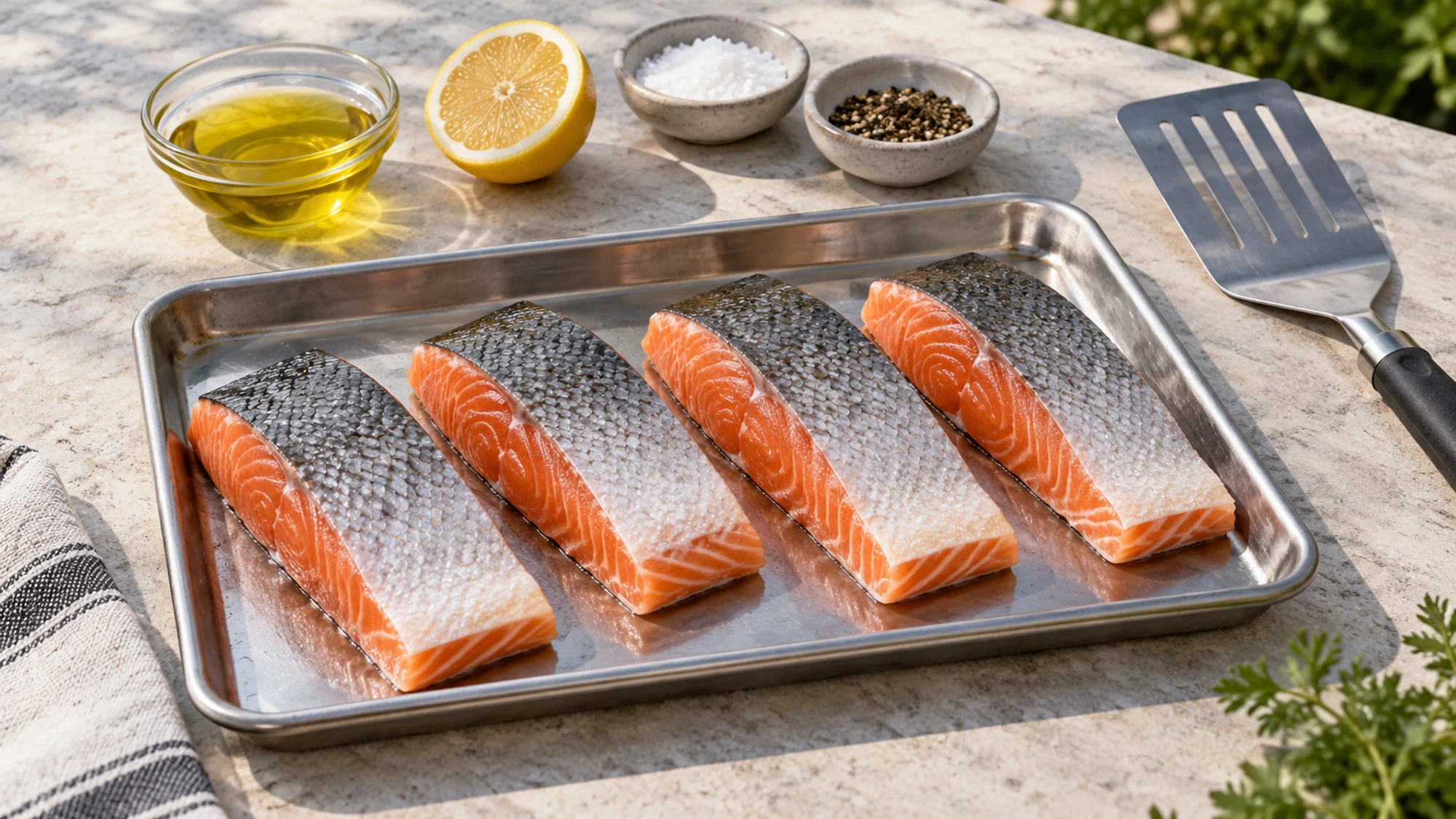
Serving suggestions for grilled salmon
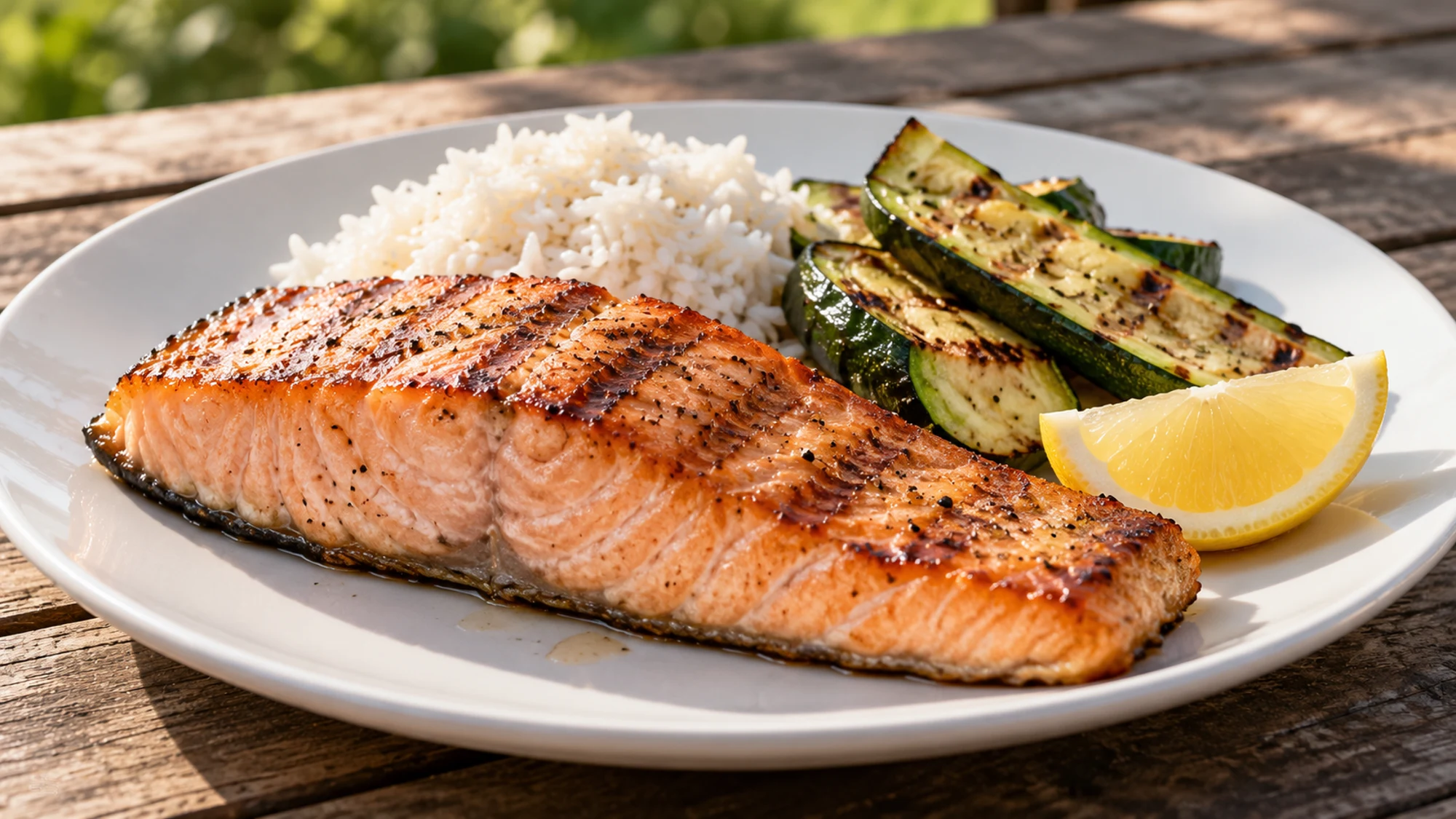
Have the sides ready to plate before the fish comes off the grill. Salmon can go from pleasantly cooked to dry while you finish another dish. A squeeze of lemon after cooking adds brightness without leaving the raw fish sitting in a long acidic marinade.
- For a straightforward dinner: add rice and grilled zucchini, keeping their seasoning light enough for the fish to remain the focus.
- For a fresh contrast: offer a crisp salad on the side rather than covering the salmon with a heavy dressing.
- For serving the skin: leave it attached until plating. People can eat the crisp skin or separate the flesh with a fork.
Use a clean platter for the finished fish, not the tray that held it raw. If you want more help placing the probe, the salmon internal temperature guide explains checking the thick center and keeping the sensor away from a hot cooking surface.
Finish the sides first, plate the fish promptly and use fresh lemon to adjust each serving.
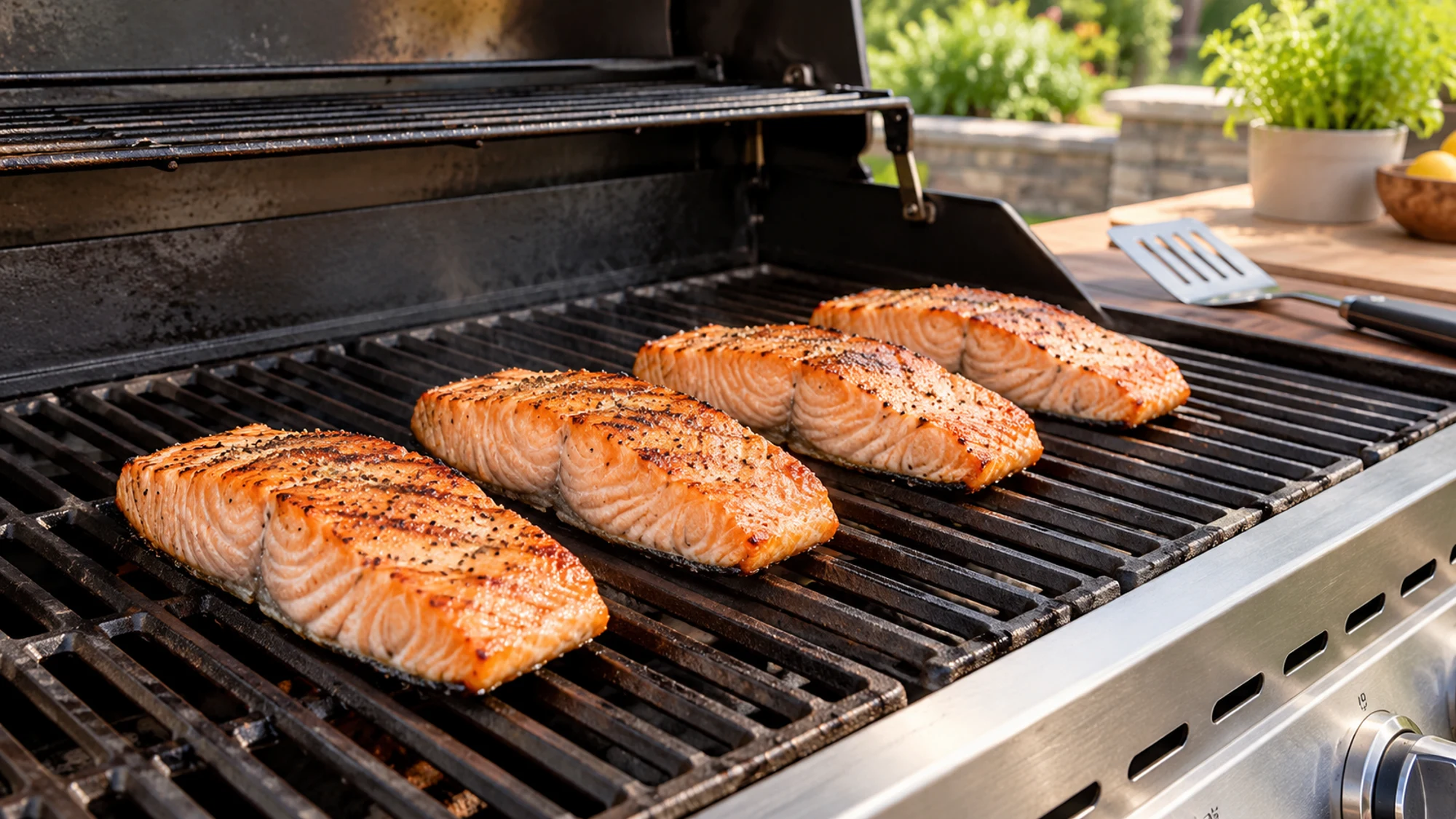
Variations: How to grill salmon with different cuts
Weight alone does not describe cooking behavior. A thin tail piece and a compact center-cut portion can weigh the same while needing different attention. The card uses skin-on center cuts about one inch thick, so treat its time range as a starting point when your fish has another shape.
| Your salmon | Useful adjustment | Why it matters |
|---|---|---|
| Thin tail piece | Check it earlier and separately | It can finish before thicker portions |
| Thick center cut | Use the cooler zone if the surface darkens | The center needs time to reach temperature |
| Previously frozen fillet | Thaw as directed and dry the surface well | Excess surface moisture changes searing |
| Skinless portion | Use extra support when turning | It lacks the skin that helps hold the fillet together |
- Fish sticking: wait briefly and ease the spatula underneath with small movements. Do not scrape forcefully through the flesh.
- Flare-up: move the fish to the cooler zone and reduce the heat as needed. Avoid letting flames touch the fillets.
- Uneven finishing: measure each portion and remove those that reach the target rather than waiting for the entire group.
I prefer to keep the cooler zone available even for a short cook. It gives you somewhere to finish a thick piece without continuing to darken its surface. For a different appliance, the oven-roasted lemon-dill salmon recipe offers a separate method with its own timing.
Keep control of where the fish cooks, and respond to its thickness and surface instead of forcing every piece through the same minute count.
Health benefits and safe handling
Salmon supplies protein and other nutrients, while its fat content varies by species and source. The card’s estimate uses representative raw Atlantic salmon values, plus all the measured oil and lemon. Leaner wild salmon or a smaller portion changes that estimate; rice, vegetables and sauces are separate.
- Doneness: FoodSafety.gov lists 145°F (63°C) for fish. Place the probe in the thickest part and let the reading settle.
- Raw-fish handling: wash hands and utensils before touching finished sides or cooked fish.
- Storage: chill leftovers promptly in a shallow container. Reheated leftovers use the 165°F (74°C) target.
The FDA seafood guide recommends keeping fresh seafood at 40°F (4°C) or below and using it within two days, or freezing it. Follow the package’s thawing directions. I’d plan the thawing step before lighting the grill rather than trying to hurry it on the counter.
Keep the fish cold before cooking, use a clean serving setup and check the center rather than relying on grill marks.
Bottom Line
Knowing how to grill salmon means managing the surface and the center together. Start with clean hot grates, turn with support, finish skin-side down and measure each portion before serving with lemon.
How to Grill Salmon Recipe

Ingredients
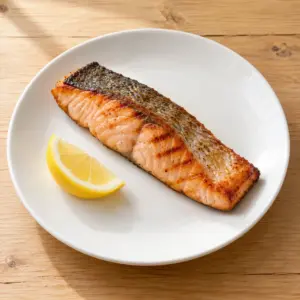
- 4 skin-on center-cut salmon fillets 6 ounces (170 g) each, about 1 inch thick; 680 g total
- 2 teaspoons olive oil 10 ml, about 9 g
- 1/2 teaspoon fine salt or less to taste
- 1/4 teaspoon freshly ground black pepper
- 1 lemon cut into wedges; about 30 ml juice used for serving
Equipment
- Gas or charcoal grill with space for a cooler cooking zone
- Fish spatula
- Instant-read food thermometer
- Paper towels
- Clean serving platter
Instructions
- Preheat a clean grill to medium-high heat, about 400–450°F (205–230°C), following the manufacturer’s instructions. Leave a cooler zone available by reducing or turning off a burner, or banking coals to one side.
- Keep the salmon refrigerated until preparation. Pat the thawed fillets dry with paper towels and check for pin bones. Brush the measured olive oil over both sides and season with the salt and pepper.
- Set the fillets flesh-side down on the hot grates, leaving space between them. Close the lid and sear for about 2–3 minutes, until the fish releases with gentle help from a fish spatula. If it resists, wait briefly rather than tearing it away.
- Turn carefully so the skin faces down. Close the lid and cook for about 5–9 minutes more, checking early with a food thermometer. Move the fish to the cooler zone if the surface darkens too quickly or a flare-up occurs.
- Cook each portion to 145°F (63°C) in the thickest part, checking from the side when appropriate for your probe. Remove individual portions as they reach the target; thickness and grill performance change the timing. Transfer to a clean platter and serve promptly with the lemon wedges.
Nutrition
Video
Notes
Tried this recipe?
Let us know how it turned out!Hi, I’m Emily Pocker! I share recipes and food guides here at Recipes360 to help you find everyday meal inspiration and feel more confident in the kitchen. My goal is to make cooking approachable, enjoyable, and full of flavor.