
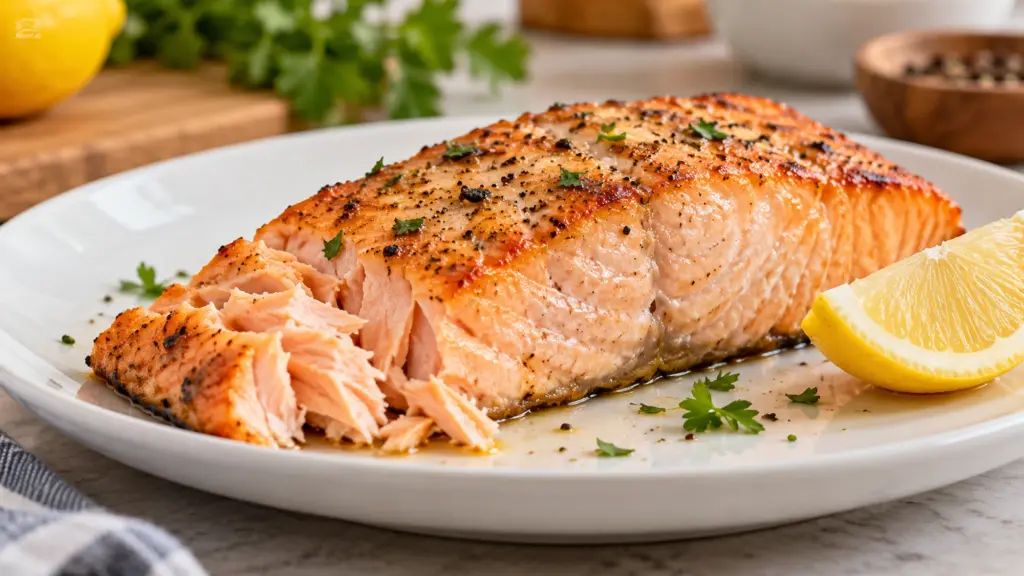
A salmon fillet can look beautifully browned while its thick middle is still catching up. The thin tail tells a different story from the center, which is why a cooking timer alone can leave you guessing.
The recommended salmon internal temp is 145°F (63°C). Check the center of the thickest part with a food thermometer; a browned surface, pink color or recipe’s estimated time is not a substitute for that reading.
I’d make thermometer placement the priority before worrying about an exact baking minute. A small change in where the probe lands can turn an uncertain dinner into a much clearer decision.
Salmon Internal Temp: Start With the 145°F Benchmark
FoodSafety.gov lists 145°F (63°C) for fish, including salmon. This is the home-cooking reference to use whether your fillet goes into an oven, skillet, grill or air fryer. The appliance setting is not the temperature inside the fish.
Recipes sometimes use lower temperatures to describe a preferred texture. Those preferences are not interchangeable with the federal safety recommendation. This guide does not recommend pulling salmon below 145°F and assuming it will become safe while resting.
FDA’s seafood guidance also emphasizes thorough cooking, particularly for pregnant people, children, older adults and people with weakened immune systems. Previously frozen salmon is not automatically safe to serve undercooked: freezing does not eliminate every harmful germ.
Put the probe where the answer matters
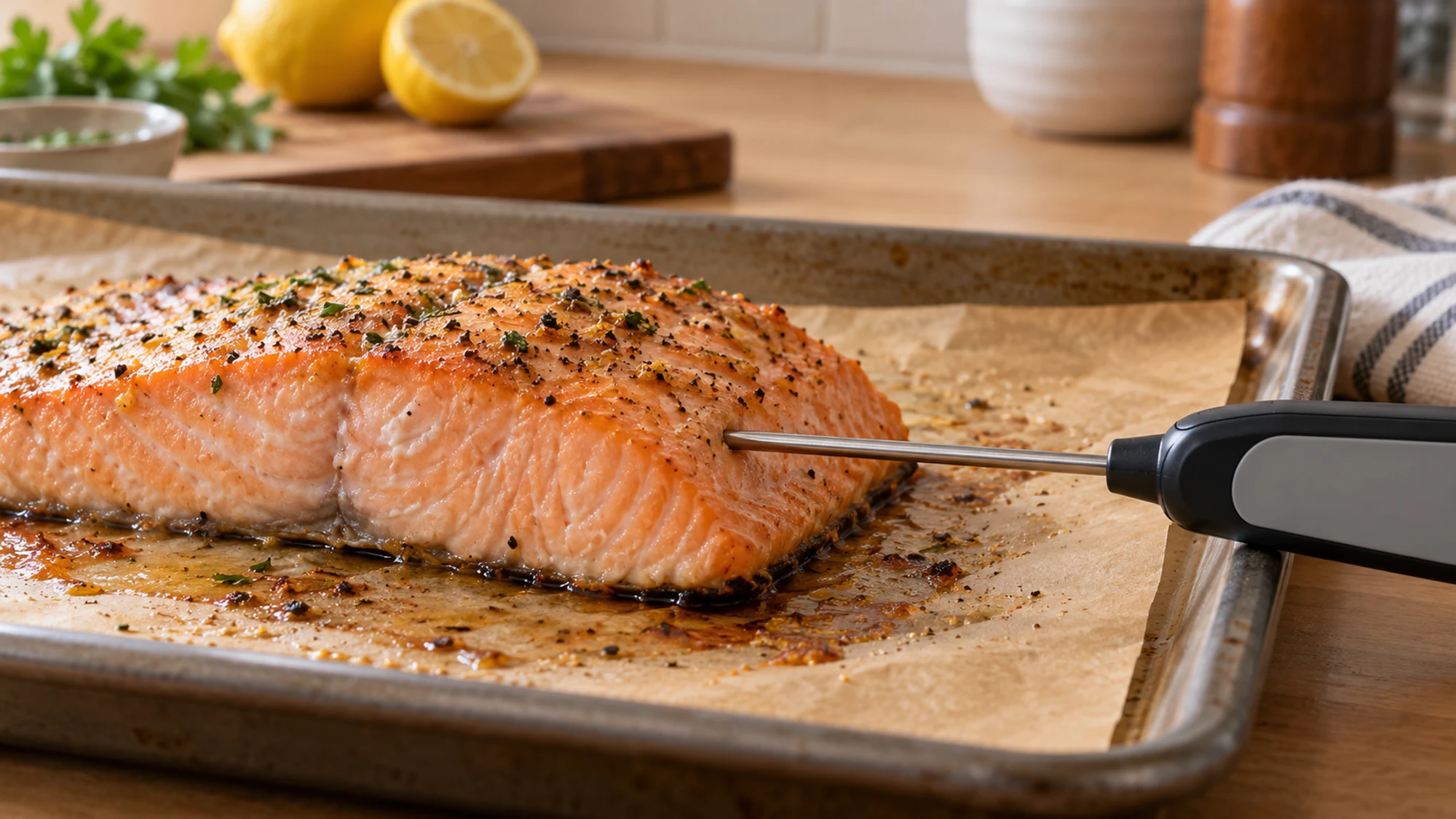
USDA recommends checking the thickest part, away from bone. For a fillet, aim for the middle of that thickness rather than the hot surface or the tray beneath it. Follow your thermometer’s instructions for its sensing area and required insertion depth.
USDA’s placement guidance for thin foods describes inserting the probe from the side toward the center. That approach can make it easier to keep a suitable thin probe inside a shallow salmon portion. Use a thermometer designed for the thickness you are measuring.
- Keep the probe off the baking sheet, skillet and bones.
- Wait for the reading to settle according to the thermometer’s instructions.
- Check another thick spot and each separate portion; one reading does not describe the entire tray.
- If a reading is below 145°F, continue cooking, then check again with a clean probe.
The useful number comes from inside the thickest part—not the pan, the crust or the thinnest edge.
Use timing and appearance as clues, not proof
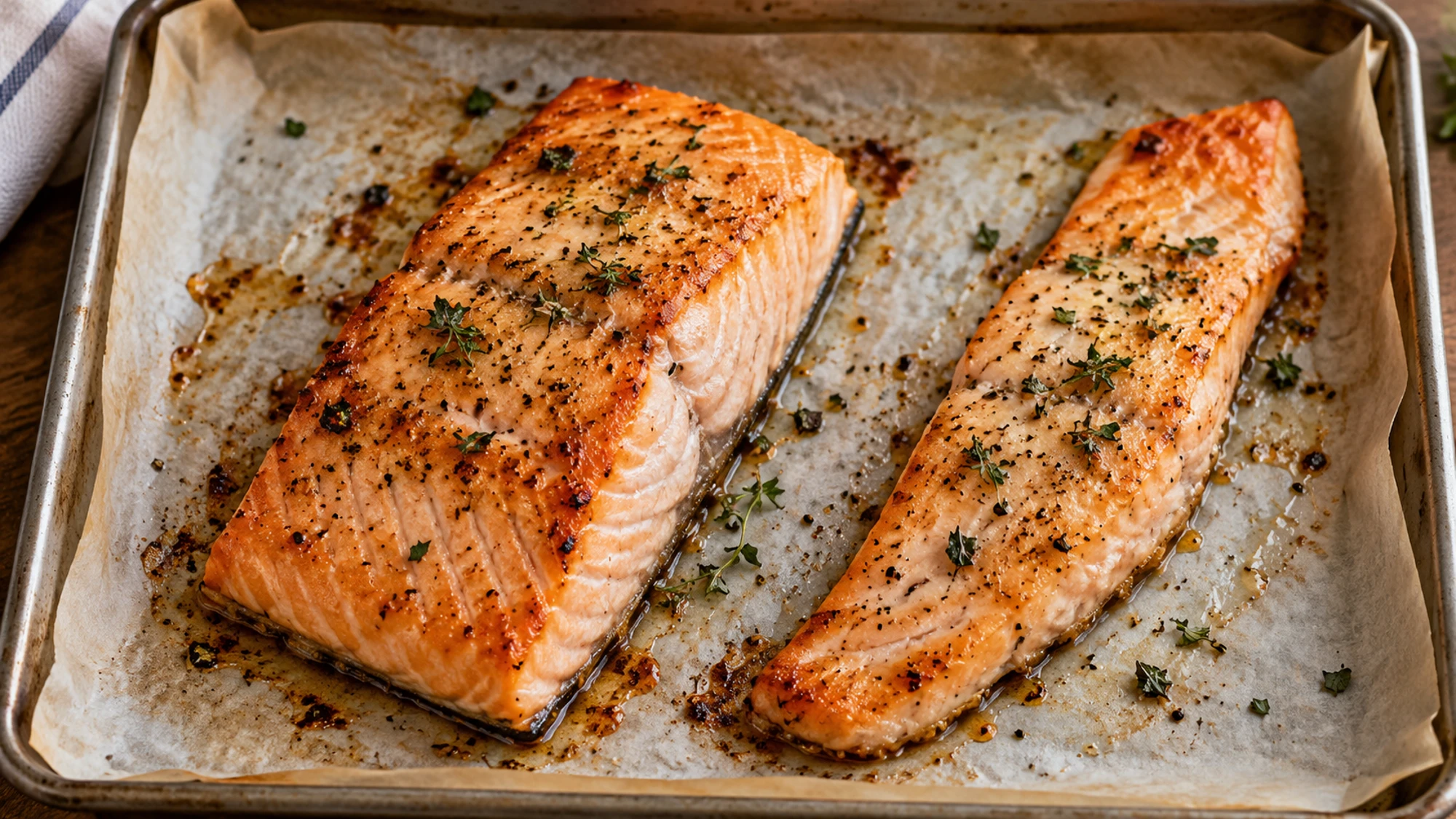
Thickness, starting temperature, portion size and appliance performance all affect cooking time. Two pieces with the same weight can finish differently if one is broad and thin and the other compact and thick. Start checking before the recipe’s upper time estimate rather than leaving both unattended. For a meal built around that check, the lemon-dill salmon recipe offers a serving idea; still measure your own portions.
Salmon does not have to turn white to be cooked. Its natural color varies, and a browned top says more about the surface than the center. Opaque flesh that separates into flakes is a useful supporting observation; a correctly placed thermometer gives the temperature check.
| What you notice | What to do next |
|---|---|
| Thin tail and thick center on one fillet | Check the thick center; do not judge by the tail alone. |
| Several portions on one tray | Measure each portion and remove those that reach the target. |
| Browned top but center below 145°F | Keep cooking and recheck the center. |
| Cooked salmon being reheated | Use the leftover target: 165°F (74°C). |
Keep the meal safe before and after cooking
Temperature checking is only one part of the job. Keep raw seafood separate from ready-to-eat food, clean utensils between tasks, and thaw frozen fish in the refrigerator rather than on the counter. FDA recommends refrigerating fresh seafood at 40°F or below and using it within two days, or freezing it for longer storage. Follow any package-specific thawing directions.
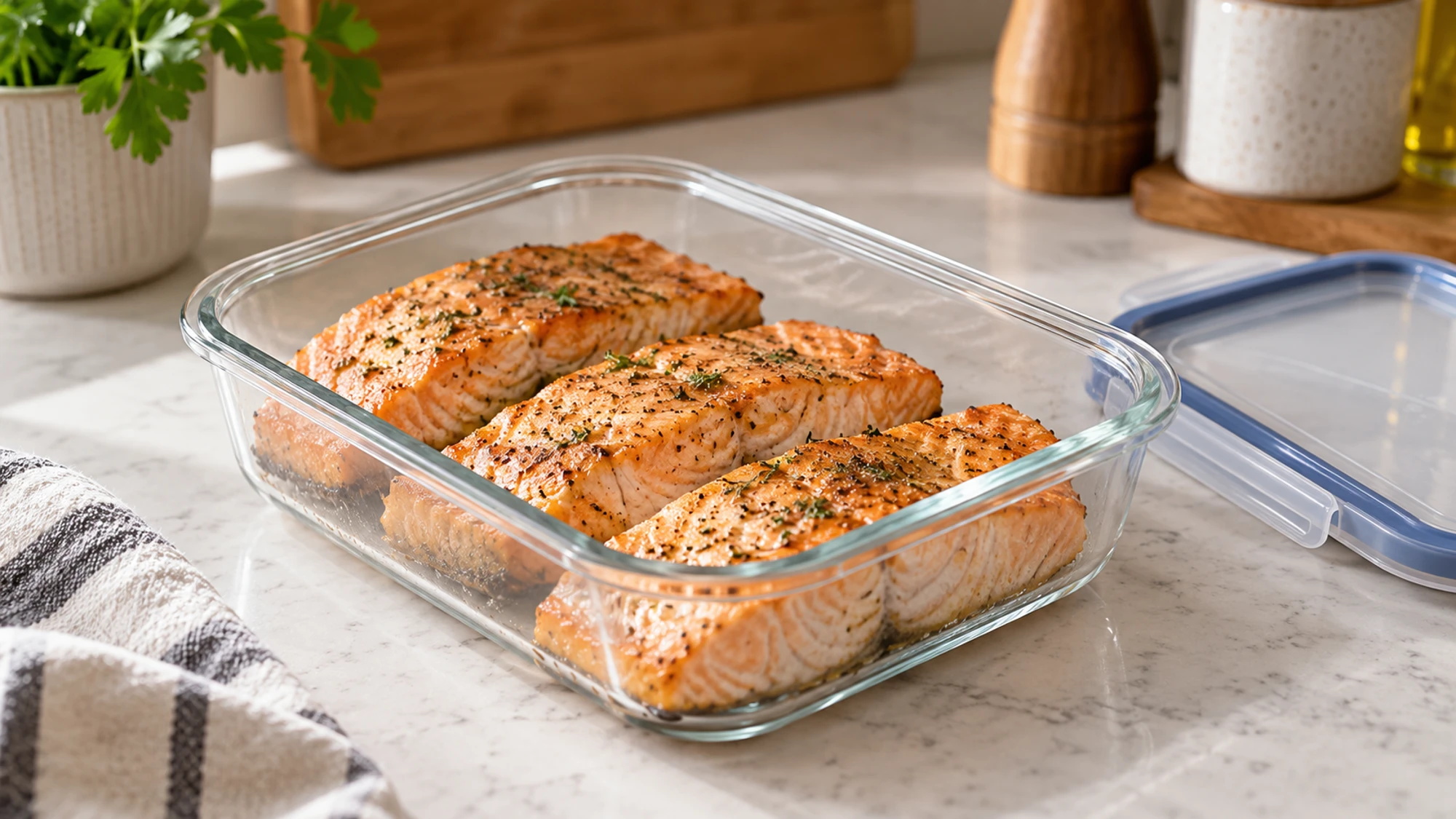
For leftovers, FoodSafety.gov recommends shallow containers and prompt refrigeration. Do not leave perishable food out longer than two hours, or one hour when the surrounding temperature exceeds 90°F (32°C). You do not need to wait for a container to reach room temperature before refrigerating it.
CDC advises using refrigerated leftovers within three to four days. If you reheat the salmon, the leftover target is 165°F (74°C), not the initial 145°F cooking target. Labeling the container with the cooking date makes that distinction easier to manage.
Bottom Line
Aim for 145°F (63°C) in the thickest part of salmon, with the probe properly positioned and the reading settled. Check separate pieces individually, use visual cues only as supporting clues, and refrigerate leftovers promptly. A thermometer is most helpful when you measure the right place.
For broader seafood-handling guidance, this FDA video covers selecting and serving fresh and frozen seafood safely.
Sources
- FoodSafety.gov: Safe minimum internal temperatures
- FDA: Selecting and serving seafood safely
- USDA: How to use a food thermometer
- USDA: Correct thermometer placement
- FoodSafety.gov: Four steps to food safety
- CDC: Leftover food safety

Hi, I’m Emily Pocker! I share recipes and food guides here at Recipes360 to help you find everyday meal inspiration and feel more confident in the kitchen. My goal is to make cooking approachable, enjoyable, and full of flavor.