
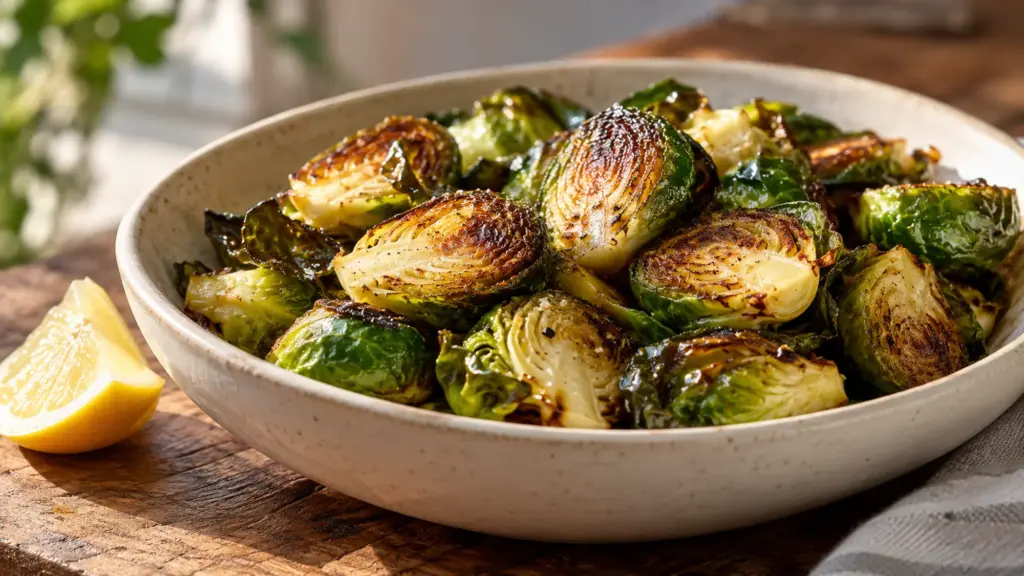
The first promising sign is the smell: a nutty, toasted aroma instead of the boiled-cabbage cloud nobody ordered. If you are wondering how to roast Brussels sprouts, start with dry halves, a hot oven and enough space on the pan. A little patience against the hot metal gives the flat sides their deeply golden edges.
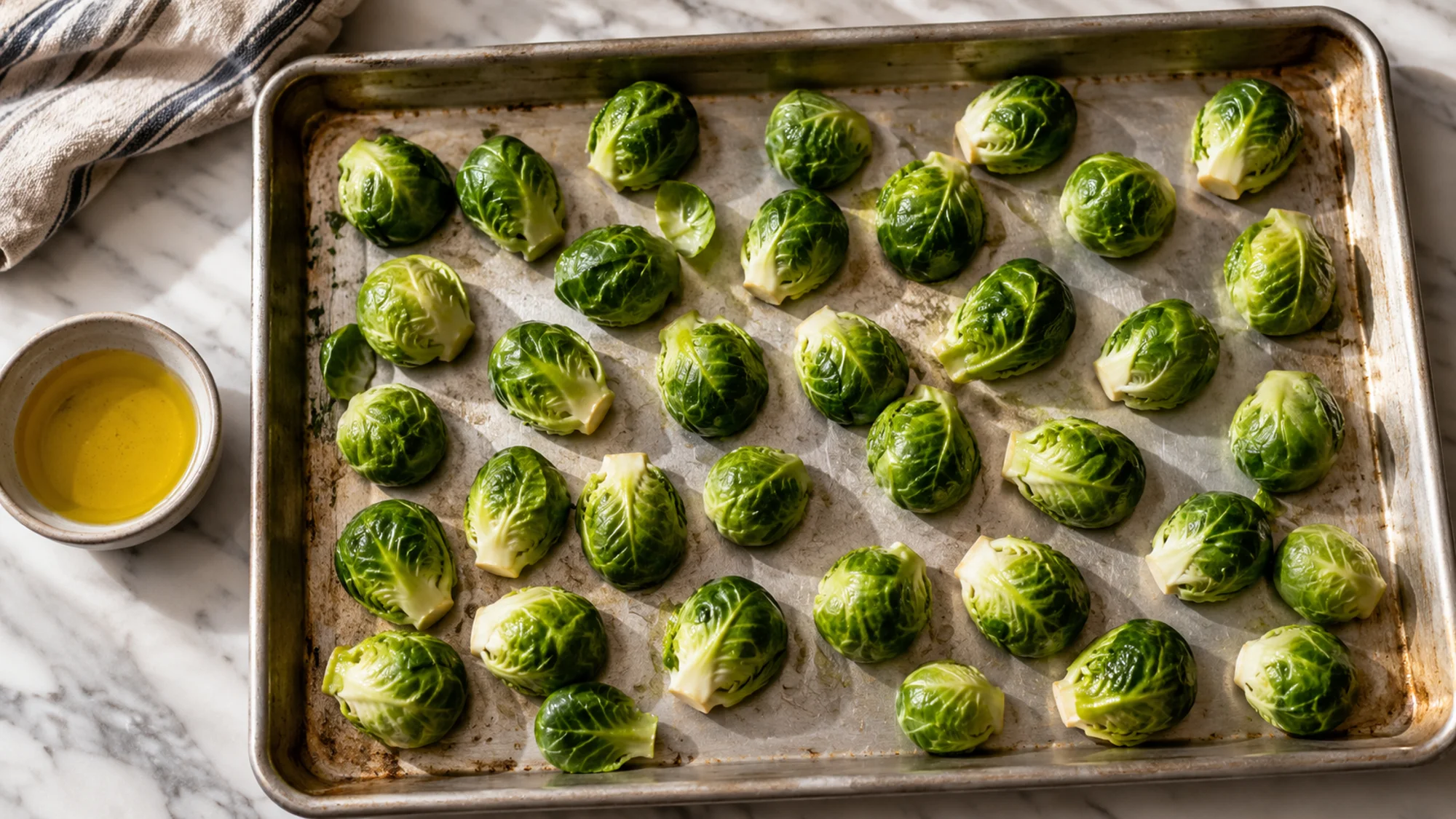
For browned Brussels sprouts with tender centers, toss dry, trimmed halves with olive oil and seasonings, arrange them cut-side down, and roast at 425°F (220°C). Add lemon after roasting so the surface can brown before it gets wet.
Choose firm sprouts with tightly packed leaves, and try to buy similar sizes. Small ones can finish before large ones soften, so halve the small-to-medium sprouts and quarter unusually large ones. I prefer fresh sprouts for this method; frozen sprouts release more water and need their own timing rather than a straight swap.
Serving Suggestions for Roasted Brussels Sprouts
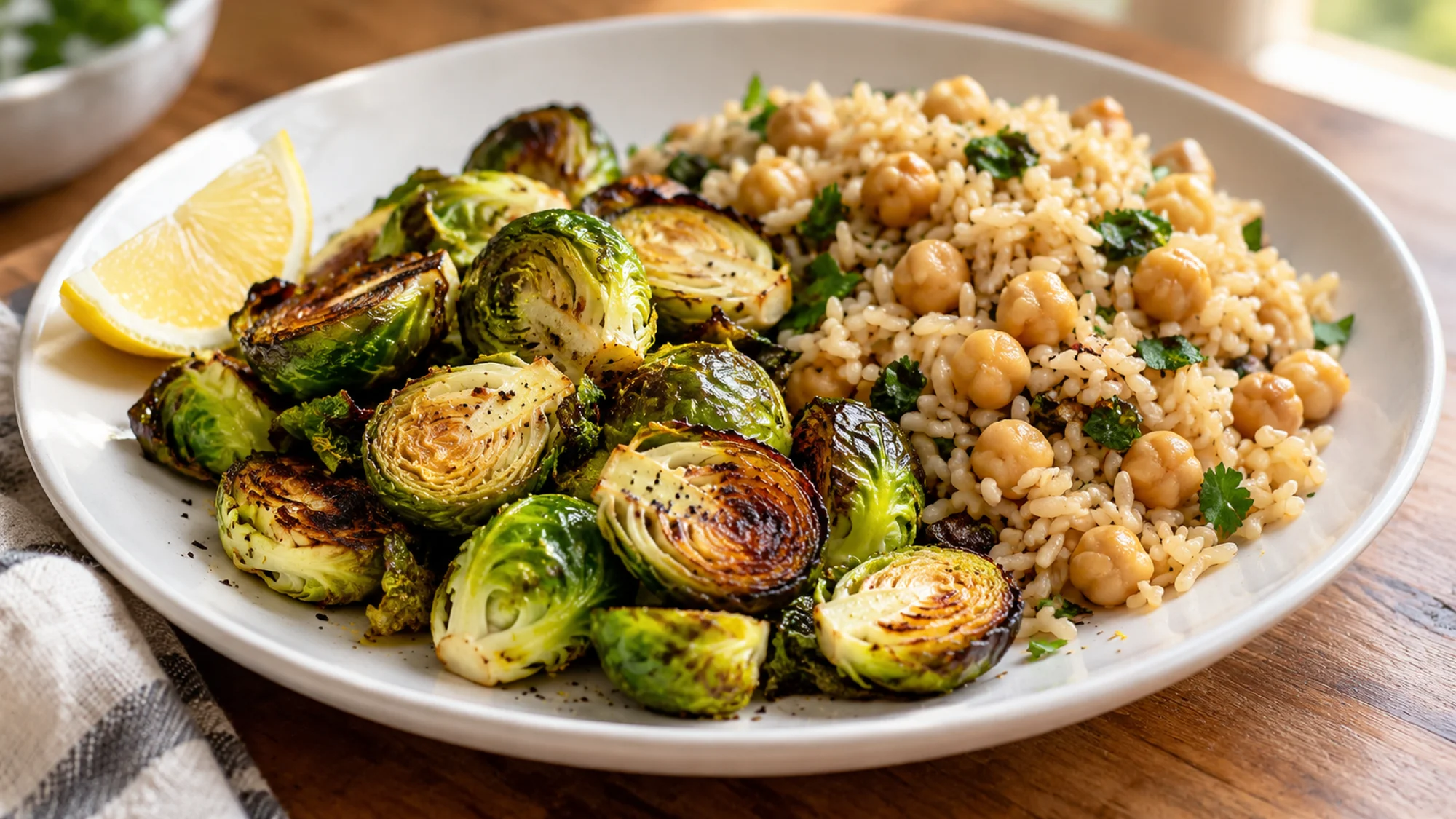
Serve the sprouts soon after they leave the oven, while the loose leaves still have a delicate crunch. They are happy beside roast chicken, fish or a baked potato, but they can also be the warm vegetable in a grain bowl. A squeeze of lemon makes the browned edges taste brighter without covering them in sauce.
- A simple dinner: add them to lemon-thyme whole chicken after the chicken has finished resting. Cook the sprouts on their own pan, not in raw poultry juices.
- A plant-based bowl: combine sprouts with brown rice and chickpeas, then add a small spoonful of dressing. Keep some sprouts on top so their texture stays noticeable.
- A lighter lunch: serve with chickpea cucumber salad, letting the cool cucumber contrast with the warm vegetables.
If the rest of dinner is running late, leave the sprouts uncovered briefly rather than sealing a hot bowl with a lid. Trapped steam softens those crisp edges. For a longer delay, chill them safely instead of holding them at room temperature through the evening.
Put roasted sprouts on the plate last. Their browned leaves are at their best before a heavy dressing or tight lid softens them.
How to Roast Brussels Sprouts With Different Finishes
The basic recipe leaves room for small finishing changes. I would keep the first batch simple so you can judge the balance between a tender center and a browned surface. Strong sauces can be delicious, but they should be a deliberate variation rather than a rescue plan for undercooked vegetables.
| Finish | Add after roasting | Useful detail |
|---|---|---|
| Lemon | The recipe’s 2 teaspoons lemon juice | Brightens the flavor without a sweet coating. |
| Parmesan | A small handful of finely grated cheese | Adds salt, so taste before adding more. |
| Balsamic | A light drizzle of balsamic vinegar | Use a little at first; too much softens the leaves. |
| Chili | A pinch of crushed red pepper | Adds heat without changing the roasting method. |
- For pale sprouts: check that they are dry and spread out. Use a second pan if they touch in a dense layer.
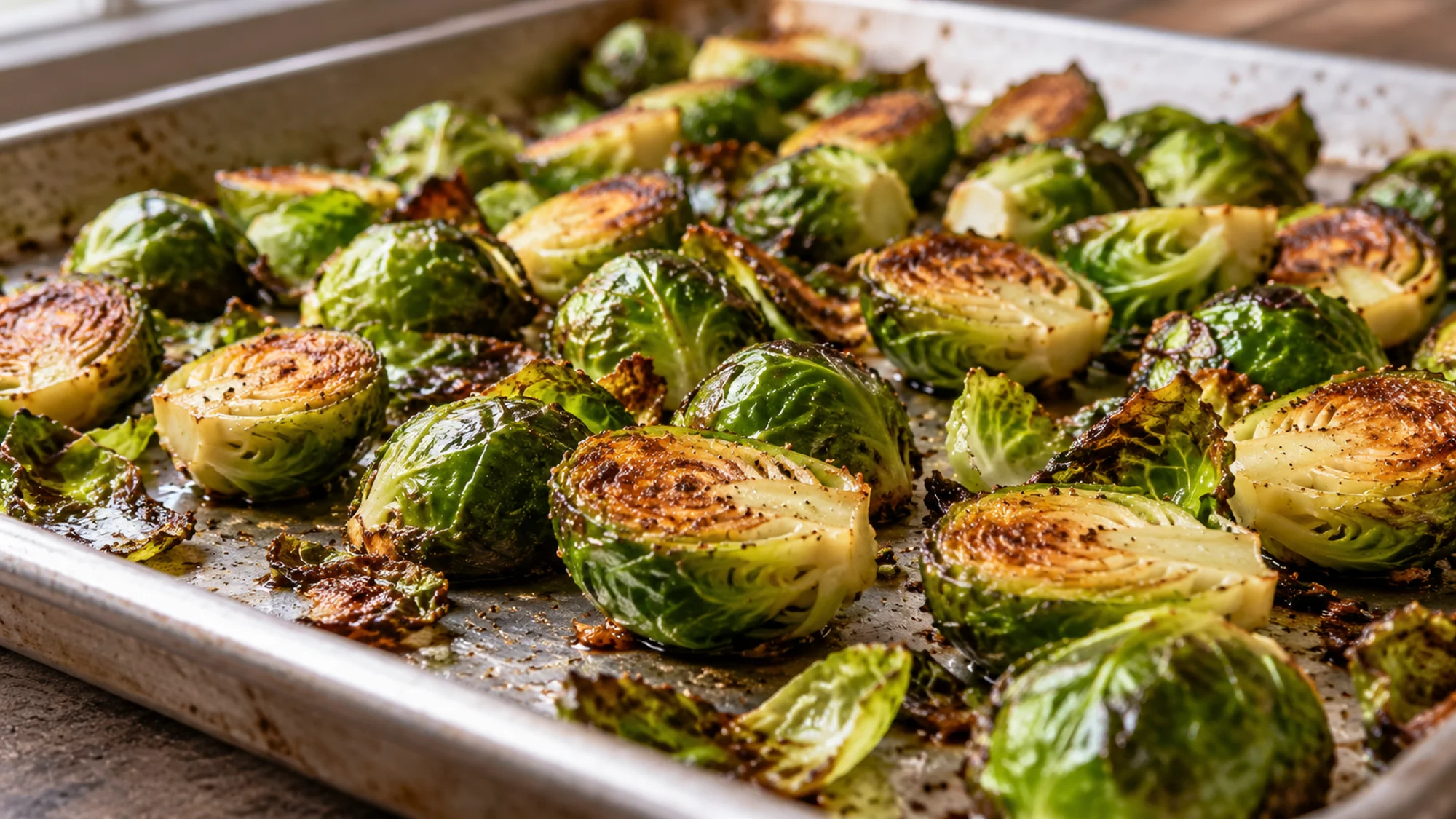
- For scorched leaves: remove loose, very small leaves before roasting, or take browned pieces off the pan early.
- For firm centers: use a fork to check tenderness and give the larger pieces more time. Color alone does not tell you how the center feels.
Keep the roasting stage dry and roomy; add bright, salty or spicy finishing flavors afterward.
Health Benefits Without the Hype
Brussels sprouts bring vegetables, fiber and useful nutrients to a meal. USDA’s fresh Brussels sprouts fact sheet identifies fiber and vitamins C and K among their nutrients. Roasting changes texture and flavor, but it does not make a serving a detox treatment or a substitute for a varied diet.
- Measure the oil: enough to coat the vegetables helps browning; extra oil changes the energy content without fixing a crowded pan.
- Make the meal complete: pair sprouts with a protein food and a satisfying starch rather than expecting a side dish to do every job.
- Handle leftovers promptly: Oregon State Extension’s roasting guidance recommends refrigerating leftovers within 2 hours. Reheat a portion in the oven if you want a drier surface than the microwave gives.
The practical benefit is a vegetable you enjoy eating. Flavor, variety and reasonable portions matter more than grand health claims.
Bottom Line
Learning how to roast Brussels sprouts is mostly about managing moisture and space. Dry them well, expose the cut faces to the pan and check both browning and tenderness. Finish with lemon, then bring them straight to the table while the crisp edges still have something to say.
How to Roast Brussels Sprouts Recipe

Ingredients
- 1 1/2 pounds fresh Brussels sprouts about 680 g, trimmed and halved; quarter unusually large sprouts
- 2 tablespoons olive oil
- 1/2 teaspoon fine salt
- 1/4 teaspoon black pepper
- 2 teaspoons lemon juice freshly squeezed
Equipment
- 1 Large rimmed baking sheet
- 1 Mixing bowl
- 1 Spatula
Instructions
- Heat the oven to 425°F (220°C). Rinse the sprouts, dry very well, trim the stem ends and remove damaged leaves. Halve them through the stem; quarter very large ones so the pieces cook at a similar rate.
- Toss the sprouts with the olive oil, salt and pepper. Arrange them cut-side down on a large rimmed baking sheet in one uncrowded layer. Use a second sheet if necessary.
- Roast for 20–30 minutes. Begin checking at 20 minutes: the cut faces should be golden brown and a fork should enter the thickest pieces easily. Turn a few pieces to inspect them; remove small browned pieces early if needed.
- Transfer to a serving bowl and toss gently with the lemon juice. Serve promptly for the crispest edges. Refrigerate leftovers within 2 hours, or within 1 hour if the temperature is above 90°F (32°C).
Nutrition
Video
Notes
Tried this recipe?
Let us know how it turned out!Hi, I’m Emily Pocker! I share recipes and food guides here at Recipes360 to help you find everyday meal inspiration and feel more confident in the kitchen. My goal is to make cooking approachable, enjoyable, and full of flavor.