
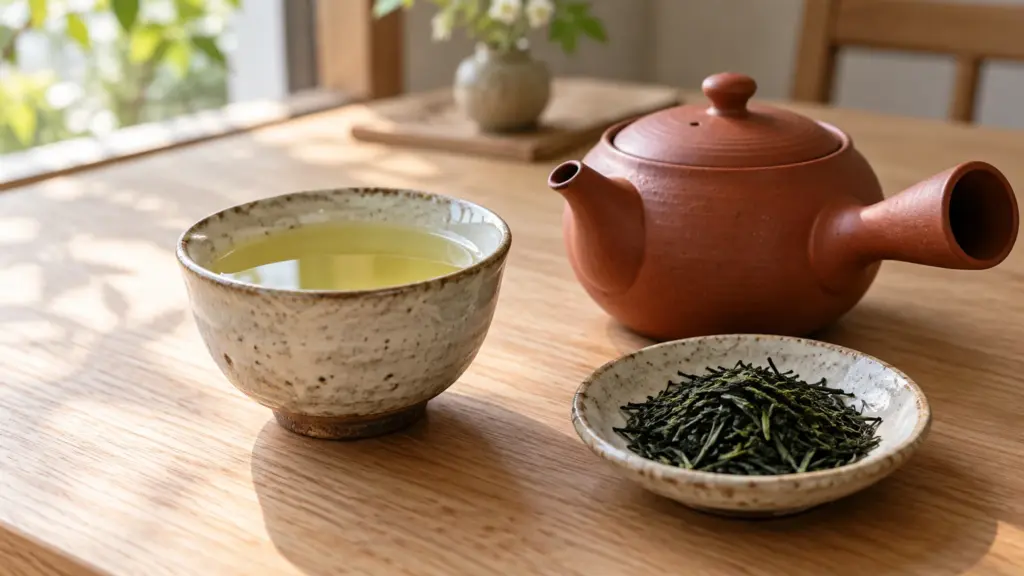
A bag marked sencha and a tin of matcha may both contain Japanese green tea, but they do not make the same drink. One gives you an infusion you pour off the leaves; the other suspends finely ground tea in your cup. Choosing between them starts with flavor and preparation, not a promise of better health.
Choose sencha for a fresh, gently brisk cup, gyokuro for savory depth, hojicha for roasted aroma, genmaicha for toasted-rice character, or matcha for a whisked powdered tea. Follow the instructions for your particular tea before adjusting the brew.
I would start with a small packet rather than an ambitious collection. A tea you enjoy making on an ordinary afternoon is a better introduction than an expensive tin that feels too precious to open.
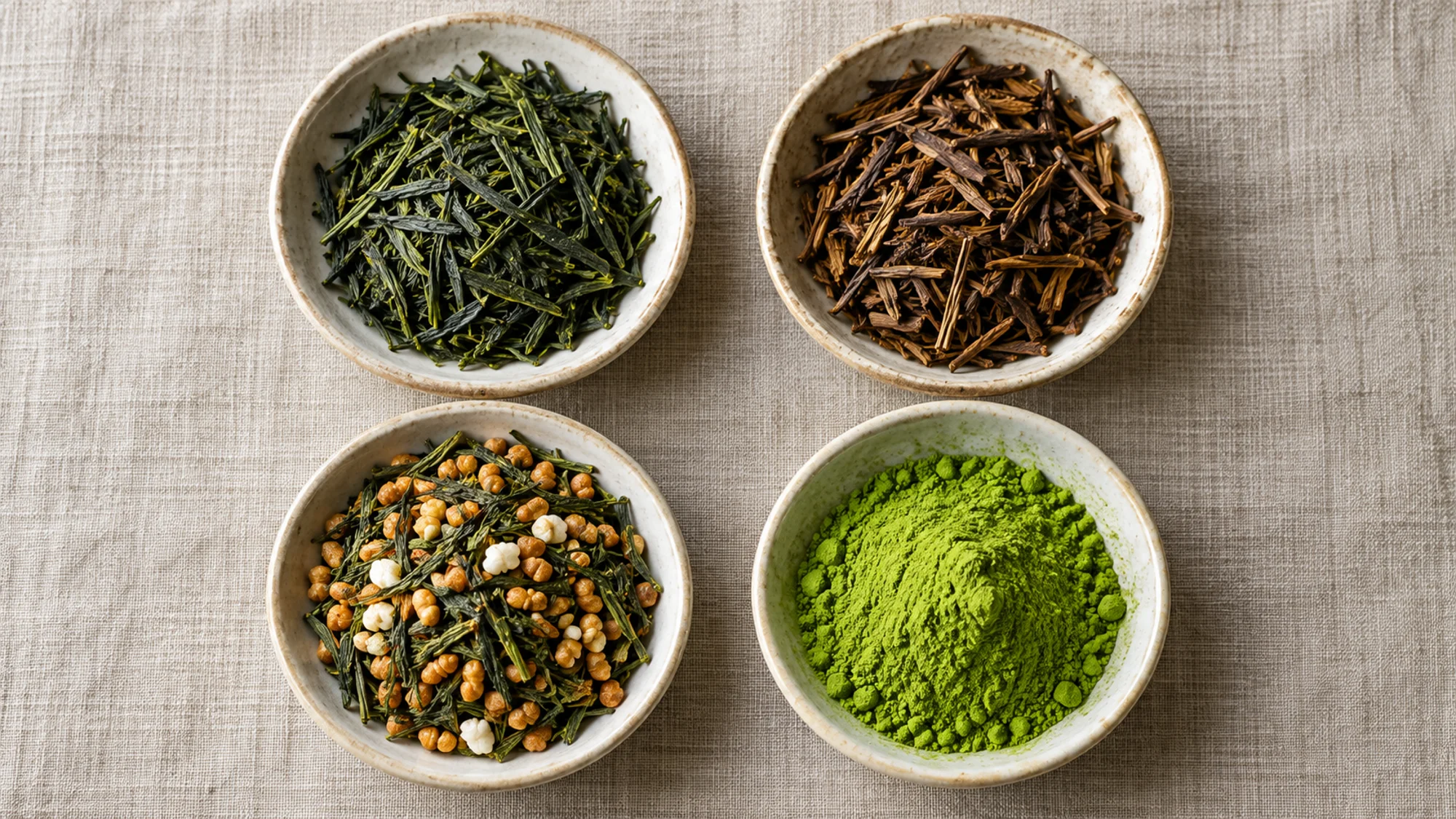
Japanese Green Tea Types at a Glance
These teas offer different textures and aromas, not a ladder from basic to superior. Ippodo’s guide to tea types describes sencha’s balance of sweetness and sharpness, gyokuro’s lingering umami, and the roasted character of hojicha and genmaicha.
The table is a flavor-and-format guide, not a caffeine ranking. Tea leaf, growing conditions, serving size and preparation can all affect what ends up in the cup.
| Tea | What distinguishes it | Choose it when you want |
|---|---|---|
| Sencha | Infused leaves; fresh, brisk character | An everyday leaf tea |
| Gyokuro | Shade-grown leaf tea; rich umami | A small, savory cup to sip slowly |
| Hojicha | Roasted tea; brown leaves and amber brew | Toasty aroma rather than grassy notes |
| Genmaicha | Tea mixed with toasted rice | A gentle roasted-rice character |
| Matcha | Finely powdered tea whisked into water | A fuller-textured drink |
Brew for the Leaf, Not Just the Color
Green tea does not have one universal temperature. The Global Japanese Tea Association’s brewing guidance explains that water temperature, leaf-to-water ratio and steeping time all change extraction and flavor. Hotter or longer is not automatically better.
For a specific starting example, Ippodo’s basic sencha method uses 10 grams of leaves with 210 milliliters of water at 80°C/176°F, served after 60 seconds. That is the seller’s concentrated method, not a rule for every brand or tea bag.
- Read the packet first: Use its leaf quantity, water amount and timing together; temperature alone does not define the method.
- Separate leaves from the drink: Pour the infusion out when ready rather than letting leaves sit in your mug indefinitely.
- Change one thing: If the cup is too sharp, try a shorter infusion or cooler water next time, keeping the other measurements steady.
- Remember roasted teas: Hojicha and genmaicha often suit hotter water than delicate leaf teas; follow the producer’s directions.
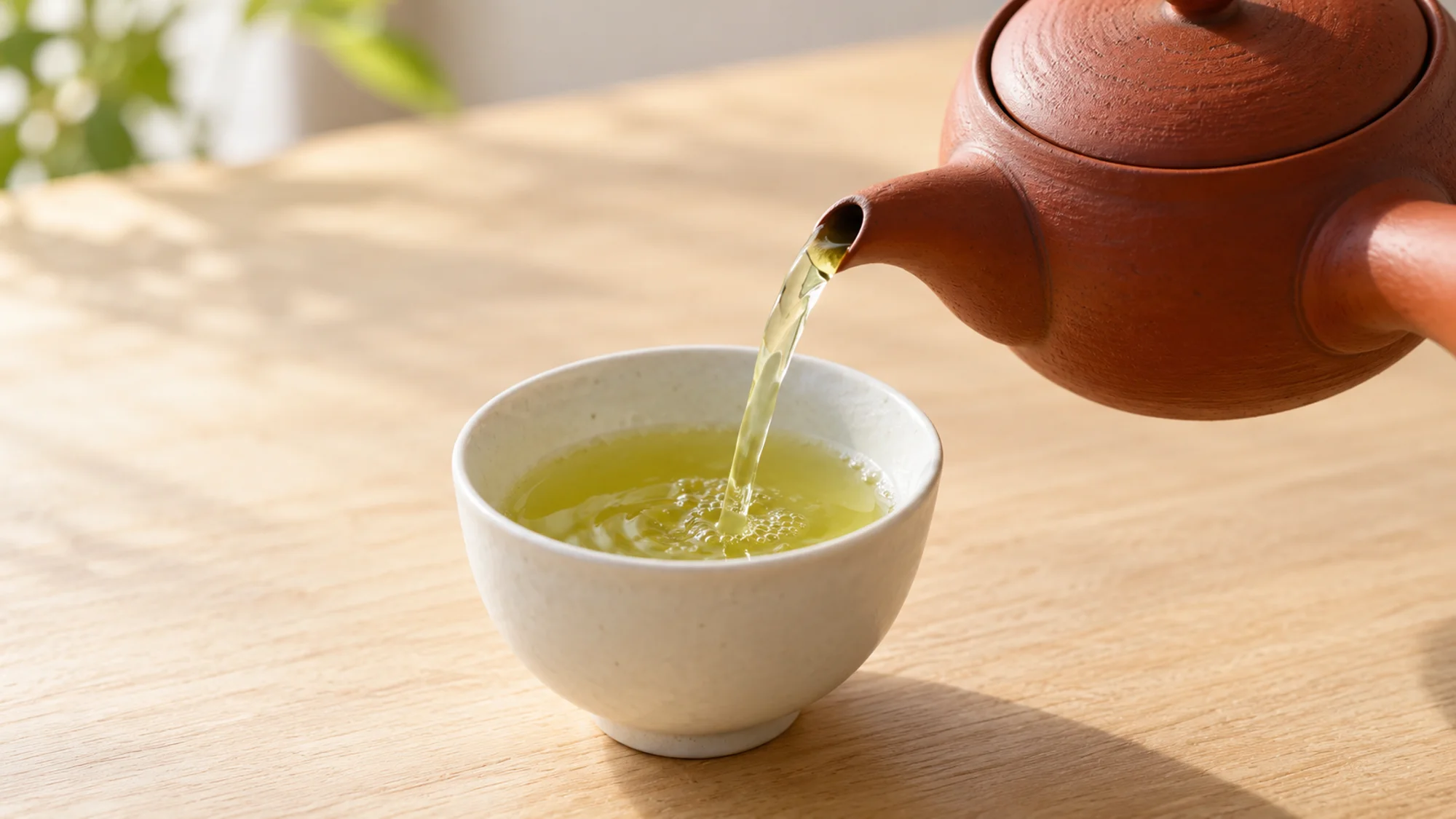
Matcha Is Not Simply Stronger Sencha
Matcha is consumed as suspended powder, whereas sencha is normally steeped and strained. That difference changes the mouthfeel and preparation: a whisked cup can feel fuller, while a leaf infusion stays clearer. It also means a spoonful of powder and a cup of brewed leaves are not interchangeable serving measures.
I prefer to keep the first cup plain so its flavor is easier to understand. Milk and sweetener are legitimate choices, but a sweetened matcha mix is a different product from unsweetened matcha powder.
- Check the ingredient list before buying: plain tea and a sugar-containing latte blend need different expectations.
- Use the maker’s preparation instructions rather than replacing loose leaves gram-for-gram with powder.
- For a cold, milky variation, our strawberry matcha latte combines whisked matcha with fruit and milk; it is a separate drink, not a plain-tea comparison.
Caffeine and Health Claims: Keep the Distinctions
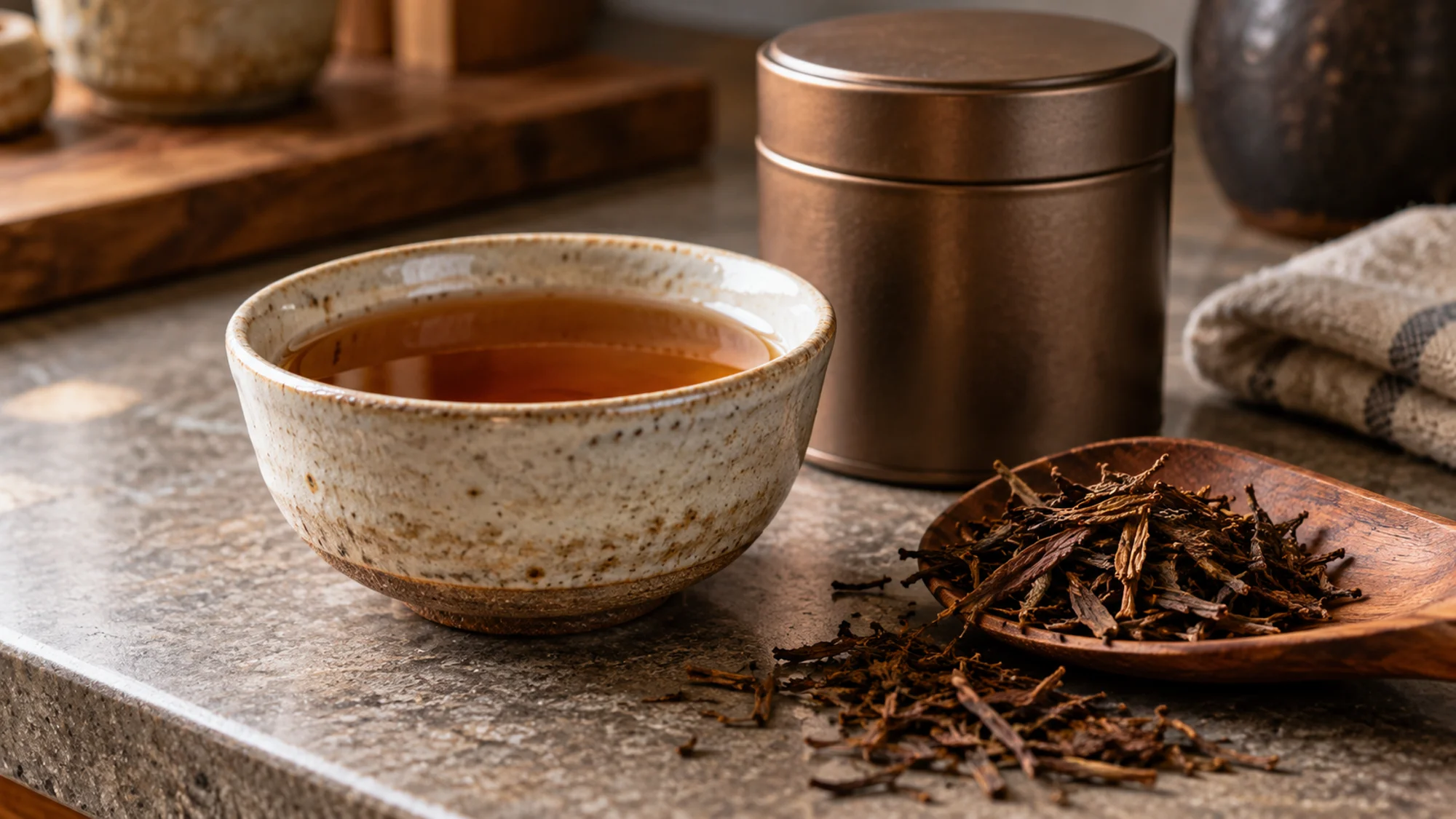
Japanese green tea contains caffeine; roasted color does not make hojicha caffeine-free. NCCIH’s green-tea overview separates ordinary tea drinking from concentrated extracts and notes that evidence for health benefits has important limits. Enjoying tea does not require calling it a detox or a treatment.
Do not assume every matcha, sencha or hojicha serving supplies a fixed caffeine amount. Product information, the amount used and your own sensitivity matter. If sleep is affected, consider a smaller serving or an earlier time rather than treating any tea name as a guarantee.
- Pregnancy or breastfeeding: Discuss overall caffeine intake with your clinician, including coffee, tea and other sources.
- Medicines: Green tea can interact with some medicines; ask a pharmacist or clinician about your specific treatment.
- Extracts are different: Concentrated supplements are not equivalent to a cup of tea. NCCIH reports adverse effects, including uncommon liver injury, primarily with extract products.
Bottom Line
Start with the flavor you want and the instructions on the packet. Sencha, gyokuro, hojicha, genmaicha and matcha can all make a satisfying cup, but they reward different preparation. I would choose curiosity over health hype: buy a manageable amount, measure your first brew and adjust thoughtfully.
Mei Leaf’s Understanding Japanese Green Tea video explores Japanese tea styles and production. Use it for tea context, while keeping the health guidance above grounded in NCCIH.
Sources
- Ippodo: Types of tea
- Ippodo: Basic sencha
- Global Japanese Tea Association: Brewing
- NCCIH: Green tea usefulness and safety

Hi, I’m Emily Pocker! I share recipes and food guides here at Recipes360 to help you find everyday meal inspiration and feel more confident in the kitchen. My goal is to make cooking approachable, enjoyable, and full of flavor.