
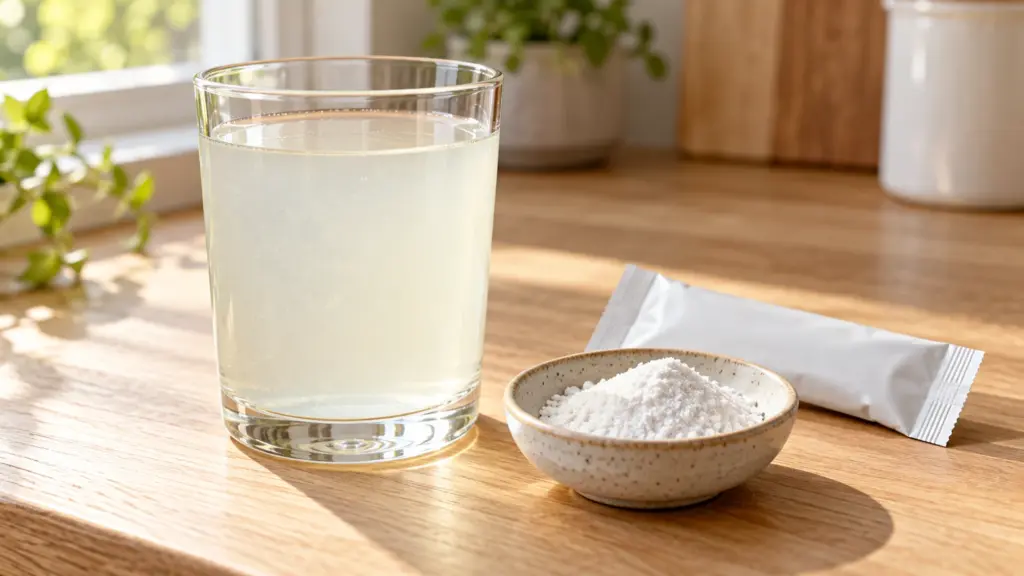
The cupboard now has drink packets next to the coffee, and each one seems to promise a better glass of water. Electrolyte powder can be convenient when you need to replace fluid and salts, but choosing one starts with a less glamorous question: what are you actually trying to replace?
An electrolyte powder is an optional tool, not an everyday requirement. Match it to your activity and health needs, compare the amounts per prepared serving, and follow the mixing directions rather than assuming a stronger drink works better.
I would rather compare two labels carefully than choose the packet with the loudest hydration claim. A sensible purchase might be a mix for a particular situation—or no powder at all.
What Electrolyte Powder Adds to Water
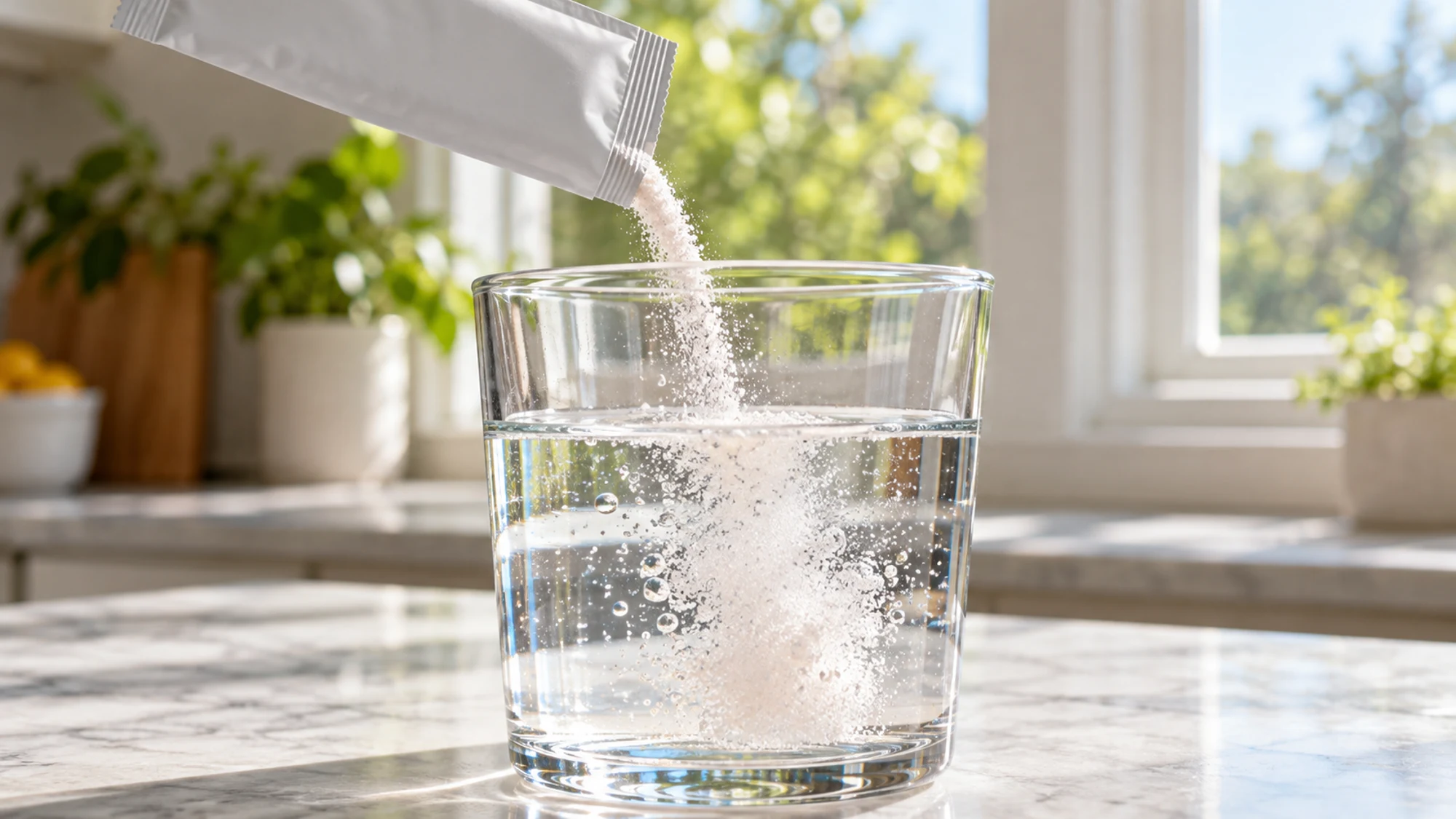
Electrolytes are minerals that carry an electrical charge in body fluids. Sodium and potassium help regulate fluid balance and normal nerve and muscle function; the NIH potassium fact sheet explains those roles. A powder may supply these minerals, but the ingredient mix and amounts vary between products.
- Minerals: compare the actual sodium and potassium amounts, not just a large number advertising an “electrolyte blend.”
- Sweetness: some mixes contain sugar; others use non-sugar sweeteners. These are different formulations, not interchangeable labels.
- Extras: added vitamins, caffeine or other ingredients deserve their own check. A longer list does not establish a greater hydration benefit.
You also obtain fluid from ordinary drinks and foods. CDC’s water guidance notes that needs vary with activity, weather and individual circumstances. Powder does not turn hydration into a separate task from eating and drinking normally.
Compare the Prepared Drink, Not the Scoop
Two packages can use different scoop sizes and water volumes, so compare them on a consistent basis. Read the serving size, the amount of water required and the number of servings in the container before judging sodium, sugar or cost.
| Label detail | What to compare | Common mix-up |
|---|---|---|
| Serving size | One packet or the stated scoop weight | Assuming every scoop is one serving |
| Sodium | Milligrams per serving and % Daily Value | Reading a whole blend as sodium alone |
| Sugar | Grams per prepared serving | Assuming all powders are sugar-free |
| Water volume | The product’s stated dilution | Using less water for a “stronger” drink |
| Servings per tub | Number of correctly mixed drinks | Comparing package price alone |
For sodium, FDA calls 5% Daily Value or less low and 20% or more high per serving. That is a general label-reading tool, not a personalized replacement prescription for heavy sweating. Count the whole packet if you drink the whole mixture, even when you add extra water.

When an Electrolyte Mix May Be Useful
Long, sweaty activity is different from answering emails in an air-conditioned room. NIOSH’s workplace heat guidance recommends water for shorter moderate activity in the heat and balanced electrolyte drinks when sweating continues for several hours. Its advice belongs to a heat-safety plan that also includes rest and cooling.
- An ordinary day: begin with access to water and regular meals rather than automatically adding a supplement.
- Prolonged sweating: consider the duration, heat, workload and your individual plan; do not judge needs from thirst or a salty taste alone.
- Illness: seek appropriate advice for fluid losses. A general sports powder is not automatically equivalent to a specifically recommended oral rehydration solution.
The NIDDK explains that diarrhea requires replacing fluid and electrolytes and that some people need individualized guidance. I would keep that medical use separate from choosing a pleasant drink for the gym. Our Liquid I.V. guide applies a similar label-reading approach to one brand.
Who Should Check Before Using It Regularly
More minerals are not always better. NIH warns that kidney disease and certain medicines can make excess potassium dangerous, including ACE inhibitors and potassium-sparing diuretics. A product marketed for hydration still contributes to your overall mineral intake.
- Ask your clinician or pharmacist before starting a routine if you have a potassium, sodium or fluid restriction, or take medicine that affects these levels.
- Do not combine several powders, salt substitutes and supplements without checking their overlapping ingredients.
- Use the supplied directions; do not dry-scoop or improvise a concentrated replacement solution.
- Persistent dizziness, unusual weakness or excessive thirst deserve assessment rather than repeated experiments with drink mixes.
My preference is to make the powder solve a defined problem, not become another box to tick. Flavor and portability can be useful, but neither proves that everyone needs a daily serving. Avoid forcing large volumes of fluid just to finish a bottle.
Bottom Line
Choose electrolyte powder by need, formulation and dilution—not by the promise on the front. Water and ordinary meals remain a practical starting point; prolonged losses or medical conditions call for a more specific plan.
Mayo Clinic’s explanation below addresses drinking during exercise. It is general context, not a powder endorsement or a substitute for a workplace heat-safety or medical plan.
Sources
- CDC: Water and Healthier Drinks
- NIOSH: Workplace Heat Recommendations
- FDA: Sodium in Your Diet
- NIH: Potassium
- NIDDK: Treatment of Diarrhea
- Mayo Clinic: Drink to Thirst

Hi, I’m Emily Pocker! I share recipes and food guides here at Recipes360 to help you find everyday meal inspiration and feel more confident in the kitchen. My goal is to make cooking approachable, enjoyable, and full of flavor.