
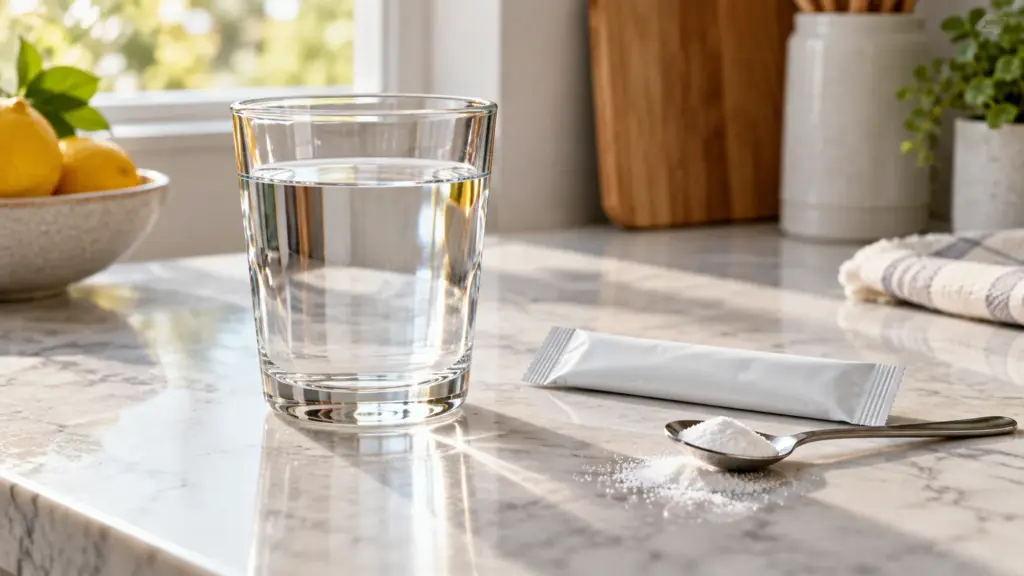
A little packet promises a lot when you are tired, thirsty and staring into the cupboard. So, is Liquid IV good for you? It can be useful when you need an electrolyte drink, but it is not automatically healthier than water or a necessary daily habit for everyone.
Match the drink to the situation: plain water is a sensible everyday default, while an electrolyte mix may help replace losses during prolonged sweating. Check the exact Liquid I.V. formula, serving directions, sodium and sugar before deciding.
I would start with what your day actually involved, not the most dramatic claim on the pouch. Sitting at a desk and spending hours sweating outdoors are different situations, even if the same lemon-lime flavor sounds appealing in both.

Is Liquid IV Good for You on an Ordinary Day?
For most everyday hydration, you do not need to upgrade every glass. CDC notes that water, other beverages and water-containing foods contribute to fluid intake, and that needs vary with activity, climate and individual circumstances.
- Start with regular access to water. Keep a bottle nearby or serve a glass with meals.
- Think about the whole day. Food and other drinks also contribute fluid and nutrients.
- Separate taste from necessity. Enjoying a flavored drink does not mean your body requires that product every day.
The Harvard Nutrition Source review of electrolyte drinks finds no evidence that they are healthier than water for the average person. If flavor is the main attraction, our lemon water guide offers a simpler option without promising a detox or cure.
Check the Exact Formula, Not Just the Brand
Liquid I.V. sells both original Lemon Lime Hydration Multiplier and a Lemon Lime Sugar-Free version. They are distinct products: do not assume one ingredient list, sugar amount or serving profile describes every flavor, range or country.
| Choice | Useful label check | What it does not tell you |
|---|---|---|
| Plain water | Usually no added sugar or sodium | Your total fluid needs |
| Original drink mix | Sugar, sodium and directions per stick | That you need it every day |
| Sugar-free mix | Sweeteners, sodium and serving size | That it is electrolyte-free |
| Specialty formula | Other added ingredients and warnings | That it matches the original product |
I prefer reading the back of the exact package before comparing front-label promises. Check whether the facts are per stick or per prepared serving, then use the stated amount of water. Adding more water changes concentration, but drinking the whole mixture still supplies the nutrients from the entire packet.

When Extra Electrolytes May Be Useful
Sweat carries away fluid and salts. In its heat-stress hydration guidance, NIOSH explains that regular meals with adequate water usually maintain balance, while prolonged sweating over several hours can make balanced electrolyte drinks an option. That context matters more than treating a packet as a general wellness requirement.
- Prolonged sweaty activity: consider the duration, heat and actual losses rather than simply whether you exercised.
- Shorter everyday activity: water and regular meals may be enough; a brief walk does not automatically call for supplementation.
- A clinician-directed plan: follow your own advice if a health condition changes your fluid or electrolyte needs.
- Illness: vomiting or diarrhea may require a specific oral rehydration approach; do not assume any sports-style powder is interchangeable with a recommended solution.
A drink that tastes good may be easier to sip, but hydration advice depends on context. NIOSH advises regular drinking before thirst during work in the heat, while Mayo Clinic discusses thirst-guided drinking during exercise; neither supports forcing excessive fluid. Follow a suitable activity or medical plan rather than a universal online target.

When to Pause Before Making It a Habit
Sodium is useful in the body, but more is not always better. FDA’s label guidance uses a Daily Value of less than 2,300 milligrams and calls 20% DV or more per serving high; use the percentage on your actual packet rather than a number from an older review.
- Medical limits: ask your clinician before changing intake if you have a sodium, potassium or fluid restriction, kidney disease or heart failure.
- Several products together: count the nutrients from other drinks, supplements and foods rather than considering one packet in isolation.
- Persistent symptoms: recurring dizziness, weakness or excessive thirst deserve medical attention, not repeated self-treatment with drink powder.
- Children or pregnancy: follow product-specific guidance and professional advice rather than applying an adult routine automatically.
My everyday preference is the least complicated option that meets the need. Sometimes that is a convenient electrolyte mix; often it is a glass of water alongside lunch. Neither choice needs a moral label, and a branded powder does not replace meals, rest or appropriate medical care.
Bottom Line
Liquid I.V. can be useful in the right circumstances, but it is optional, not a universal hydration upgrade. Choose by your activity, health needs and the exact label, with water as a practical everyday starting point.
Mayo Clinic’s short educational video discusses hydration during exercise. It is general guidance, not an endorsement of Liquid I.V. or an individualized treatment plan.
Sources
- Liquid I.V.: original Lemon Lime product
- Liquid I.V.: Sugar-Free Lemon Lime product
- CDC: water and healthier drinks
- NIOSH: heat-stress hydration
- Harvard Nutrition Source: electrolyte drinks
- FDA: sodium label guidance
- Mayo Clinic: drink to thirst

Hi, I’m Emily Pocker! I share recipes and food guides here at Recipes360 to help you find everyday meal inspiration and feel more confident in the kitchen. My goal is to make cooking approachable, enjoyable, and full of flavor.