
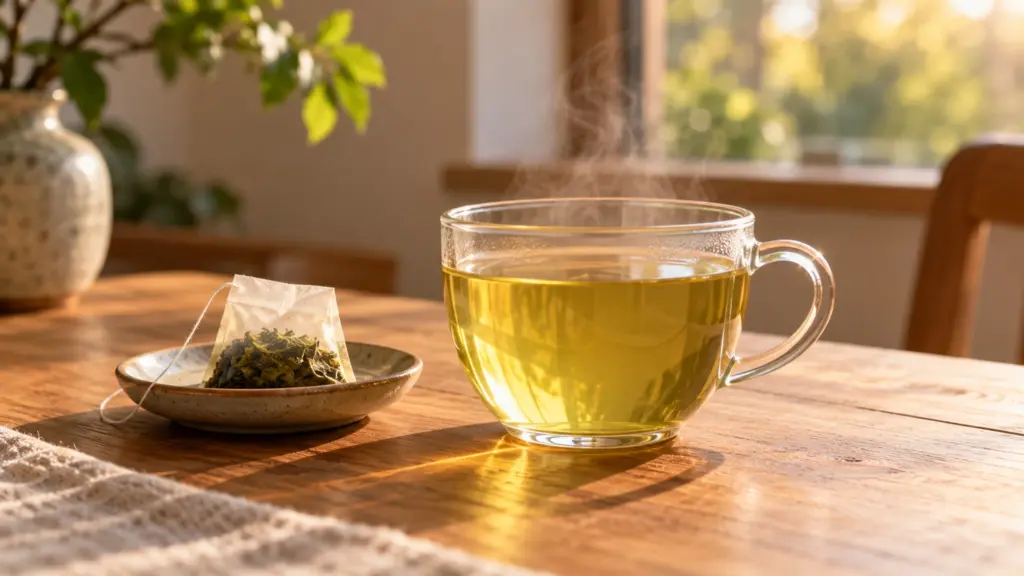
A warm cup sounds appealing, but another caffeinated drink may not. Drinking decaf green tea offers a way to keep the familiar light, leafy flavor while reducing caffeine. The useful detail is in that last word: reducing does not necessarily mean eliminating.
Drinking decaf green tea can reduce your caffeine intake while keeping a tea-based drink in your routine. Decaf still may contain a little caffeine, and it is not the same product as a caffeine-free herbal infusion or a concentrated green tea extract.
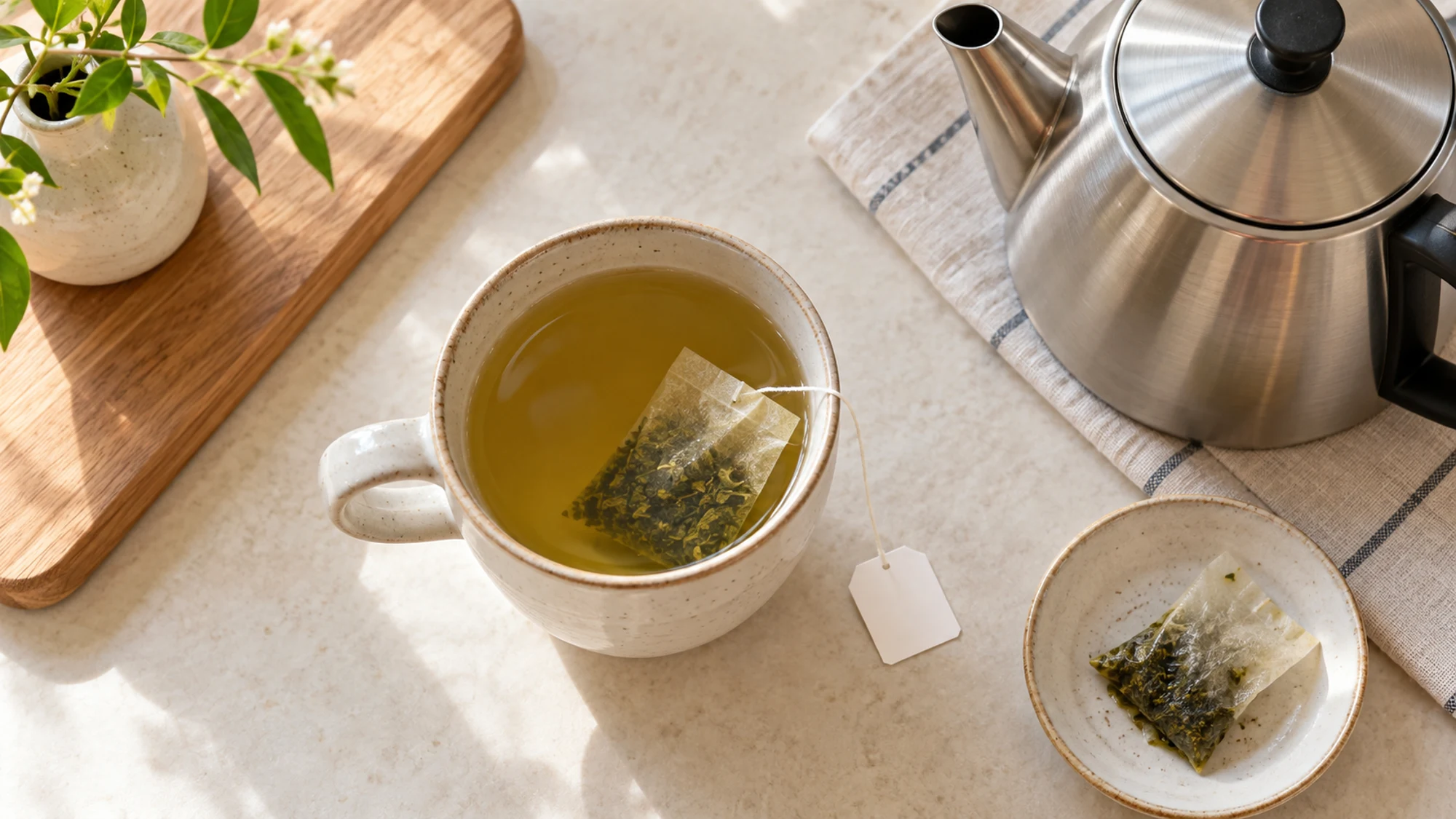
Drinking decaf green tea still means checking caffeine
Decaffeinated tea starts as tea that naturally contains caffeine. Twinings explains that decaf retains residual caffeine. If you need to avoid caffeine strictly, do not assume the word “decaf” on the front of a box is a zero-caffeine guarantee.
As one product-specific example, Bigelow Green Tea Decaf lists decaffeinated green tea as its ingredient and displays a 1–8 mg caffeine chart for decaffeinated tea. That is manufacturer guidance for its product category, not a laboratory result for every cup you might brew.
- Read the exact blend and market label rather than transferring a number from another brand.
- Check the serving basis: a tea bag, a measured cup, and a large mug may not describe the same preparation.
- Count repeated servings when assessing your day’s caffeine intake.
- If a medical reason requires strict avoidance, ask your clinician which drinks fit that instruction.
Choose the drink that matches your goal
The Twinings North America Green Decaf page likewise lists decaffeinated green tea, illustrating that plain decaf can remain a simple tea product. Flavored blends, bottled drinks, and latte mixes need their own ingredient and nutrition checks.
| Your goal | Useful choice | Check first |
|---|---|---|
| Less caffeine, familiar tea flavor | Decaf green tea | Residual caffeine guidance |
| A caffeine-free drink | A suitable caffeine-free herbal infusion | The whole blend and its label |
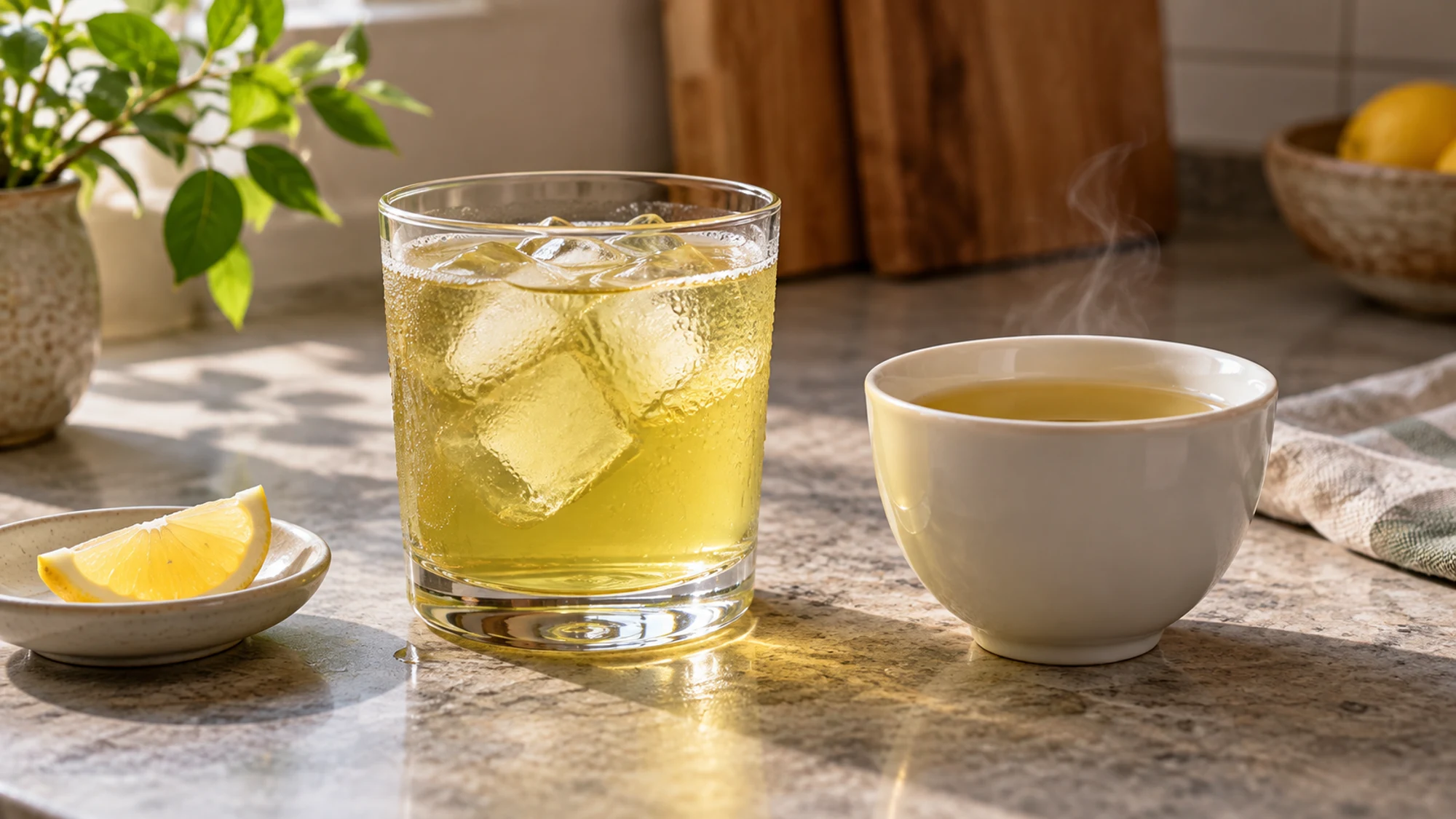
| A cold tea drink | Brewed decaf served over ice | Serving size and additions |
| A concentrated product | Assess separately from brewed tea | Supplement ingredients and safety |
I’d choose the cup I enjoy drinking before getting caught up in grand wellness promises. A gentle flavor can make a small afternoon pause pleasant without requiring a story about detoxing or fixing your metabolism. I’d also keep the first purchase small: an unfamiliar decaf blend deserves a few ordinary cups before you commit to a cupboard full of it.
Make a cup you actually want to drink
Start with the directions for the box in your hand. Bigelow’s current decaf green tea page recommends water just below boiling and a four-minute steep. That is a product instruction, not a universal time for every green tea; different blends may recommend something else.
- Use a timer so you can adjust the next cup deliberately instead of guessing.
- Taste before adding sweetener, then decide whether you want it.
- For an iced version, follow the brand’s iced preparation directions and account for dilution from the ice.
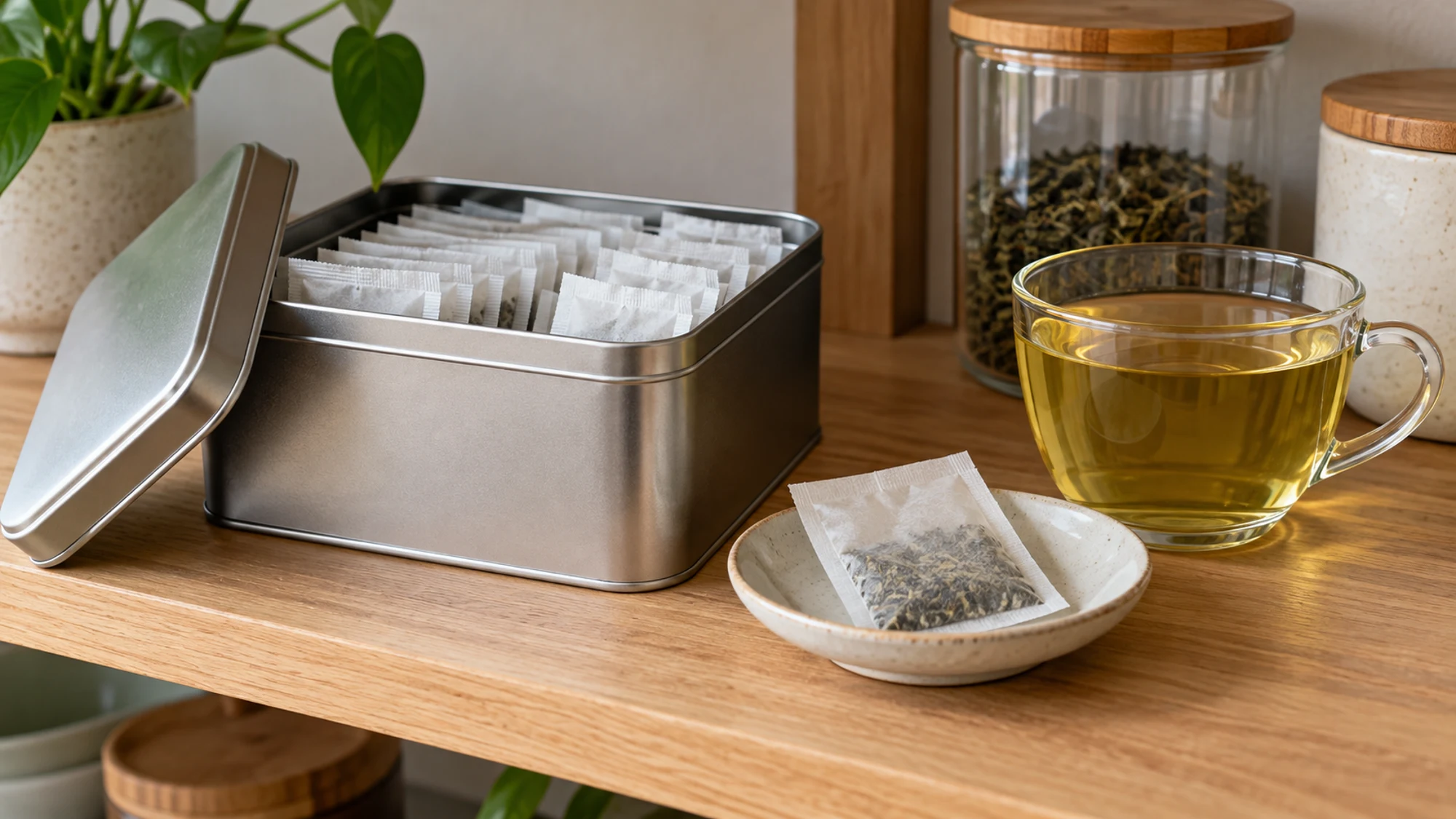
- Keep dry tea protected from moisture and strong kitchen odors, and follow its storage instructions.
For more general brewing choices, our green tea bags guide covers the cup itself. Here, the separate decision is caffeine reduction. A very short rinse or steep is not a reliable way to turn an ordinary tea bag into a verified decaf product.
Keep health evidence and medicine questions separate
NCCIH distinguishes brewed green tea from extracts and says conclusions remain uncertain for many promoted health uses. Liver injury reports have primarily involved concentrated extract products. A normal cup and a capsule with concentrated ingredients should not be treated as interchangeable.
Medicine questions can involve more than caffeine. A small crossover study in healthy volunteers found that brewed green tea reduced exposure to nadolol. It did not establish the effect of every decaf product, so do not invent a safe spacing interval or assume decaffeination removes this concern.
- Ask a pharmacist about your particular medicines and the tea you use, especially with nadolol.
- Discuss caffeine guidance during pregnancy or breastfeeding with your care team.
- If you are changing drinks because of palpitations, poor sleep, or other symptoms, describe those symptoms rather than relying on a tea label as a diagnosis.
Bottom Line
Drinking decaf green tea is a practical option when you want less caffeine and still enjoy green tea. Check the exact product, recognize that residual caffeine can remain, and keep supplement claims and medicine questions separate from choosing a pleasant cup.
Teabloom’s brief landscape explainer outlines common commercial tea-decaffeination methods.
Sources
- Bigelow: Green Tea Decaf ingredients, caffeine chart, and preparation
- Twinings North America: Green Decaf ingredients
- Twinings Canada: residual caffeine and tea guidance
- NCCIH: green tea evidence and safety
- Primary clinical study: brewed green tea and nadolol

Hi, I’m Emily Pocker! I share recipes and food guides here at Recipes360 to help you find everyday meal inspiration and feel more confident in the kitchen. My goal is to make cooking approachable, enjoyable, and full of flavor.