
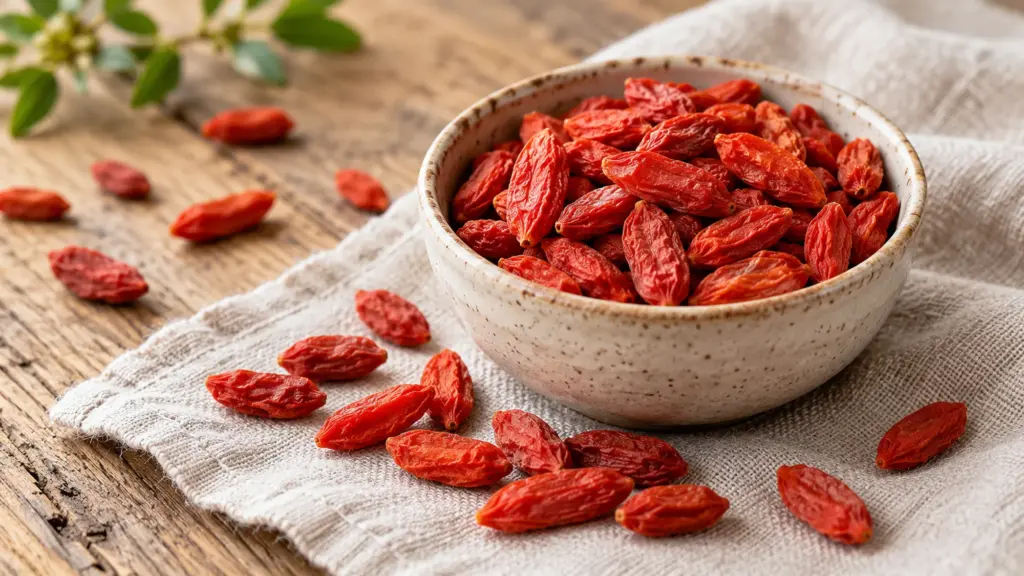
Those little red-orange berries in the dried-fruit aisle look more like chewy raisins than a miracle food. Goji berry benefits are best understood in that ordinary-food context: they offer variety, fiber and carotenoid pigments, with some promising research but no reason to expect them to cure a health problem.
Goji berries can be a useful dried-fruit addition to meals, and small studies have explored their eye-health potential. They are not a proven disease treatment, and people taking warfarin or other anticoagulants should avoid them unless their healthcare team specifically approves.
I would choose a small bag because I liked the taste and had a place for it at breakfast, not because the package promised a transformation. Here is what the evidence can tell you—and what matters when you bring the berries home.
Goji Berry Benefits: Food Value Versus Big Claims
Goji berries, also called wolfberries, come from Lycium plants. The dried berries have a sweet-tart, slightly earthy character; a published study of dried goji berries documents fiber and the carotenoid zeaxanthin in the product it used, but the exact nutrition of your purchase depends on its label and serving size.
That is a sensible reason to treat them as one fruit option, not a category above other foods. A colorful topping can make plain yogurt or oats more appealing, but the rest of the meal still matters more than a fashionable ingredient scattered on top.
- Read the serving size before comparing nutrition: a spoonful and a large handful are not equivalent.
- Check the ingredient list for added sweeteners rather than assuming every dried-fruit package is the same.
- Compare price per ounce and choose a quantity you will actually use.
- Do not pay extra for vague promises about detoxing, immunity or anti-aging; those words are not a clinical result.
What the Eye-Health Study Does—and Does Not—Show
A 2021 randomized pilot trial analyzed 27 healthy adults aged 45–65 over 90 days. Participants consumed either 28 grams of goji berries or a lutein-and-zeaxanthin supplement five days a week; some measures of macular pigment increased from baseline in the berry group.
The study was small and unmasked, and it measured a pigment marker rather than proving prevention of vision loss. I find that distinction worth keeping close to the headline: an encouraging research signal is not a reason to skip eye examinations or replace a treatment your eye-care professional recommends.
| What you hear | What it can mean | What it does not establish |
|---|---|---|
| Contains carotenoids | The food supplies plant pigments | A guaranteed improvement in vision |
| Small eye-health trial | A biomarker changed in a short study | Long-term prevention of blindness |
| Laboratory antioxidant activity | Compounds behave a certain way in tests | A cure or a need for large daily doses |
| Used in traditional medicine | A history of use | Proven safety for every person or medicine |
Simple Ways to Use Goji Berries
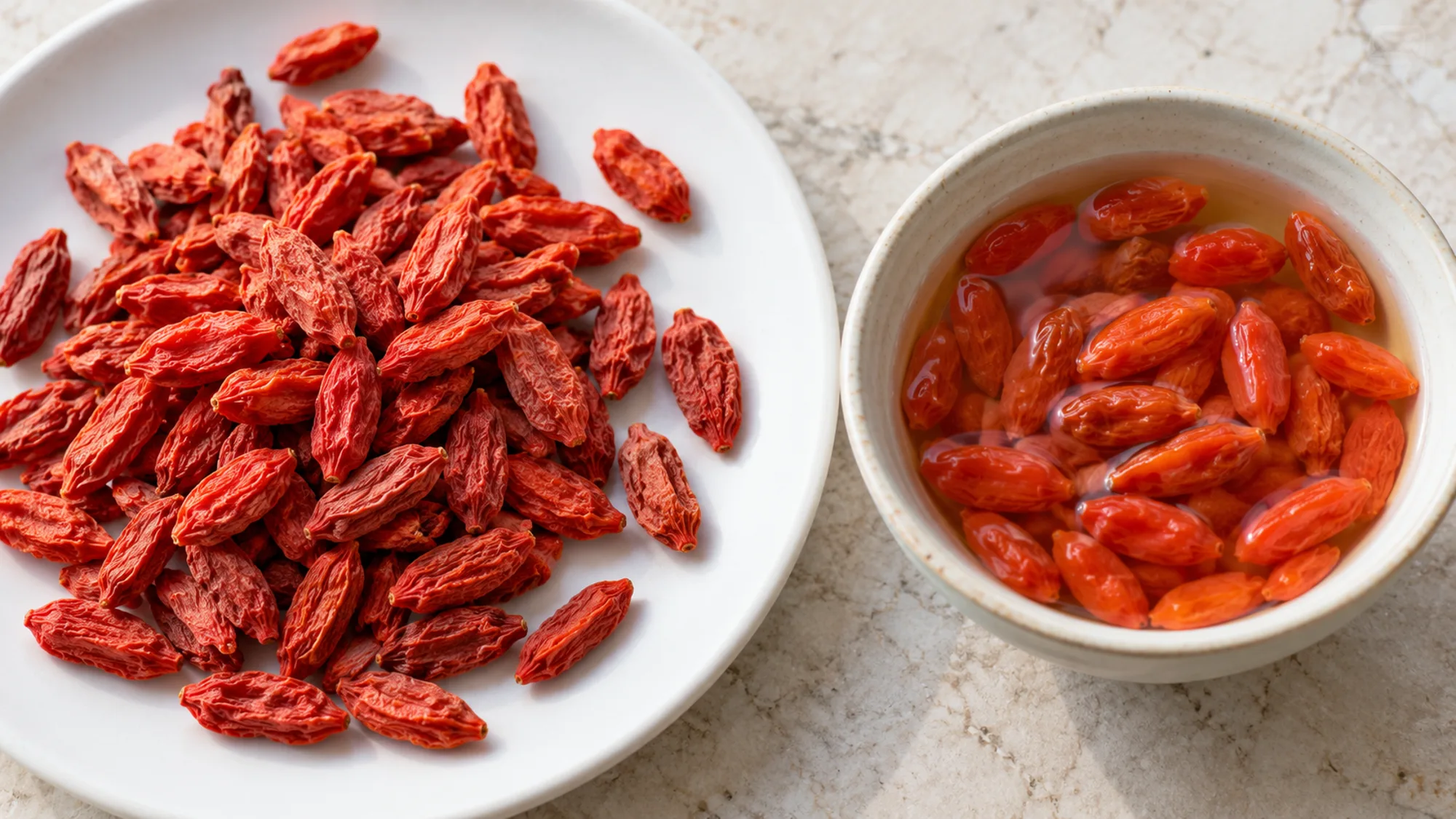
Dried goji berries are often chewy, and soaking them in warm water softens their texture. My preference would be to start with a small spoonful as a topping and see whether their flavor belongs in the meal, rather than redesigning breakfast around a new bag.
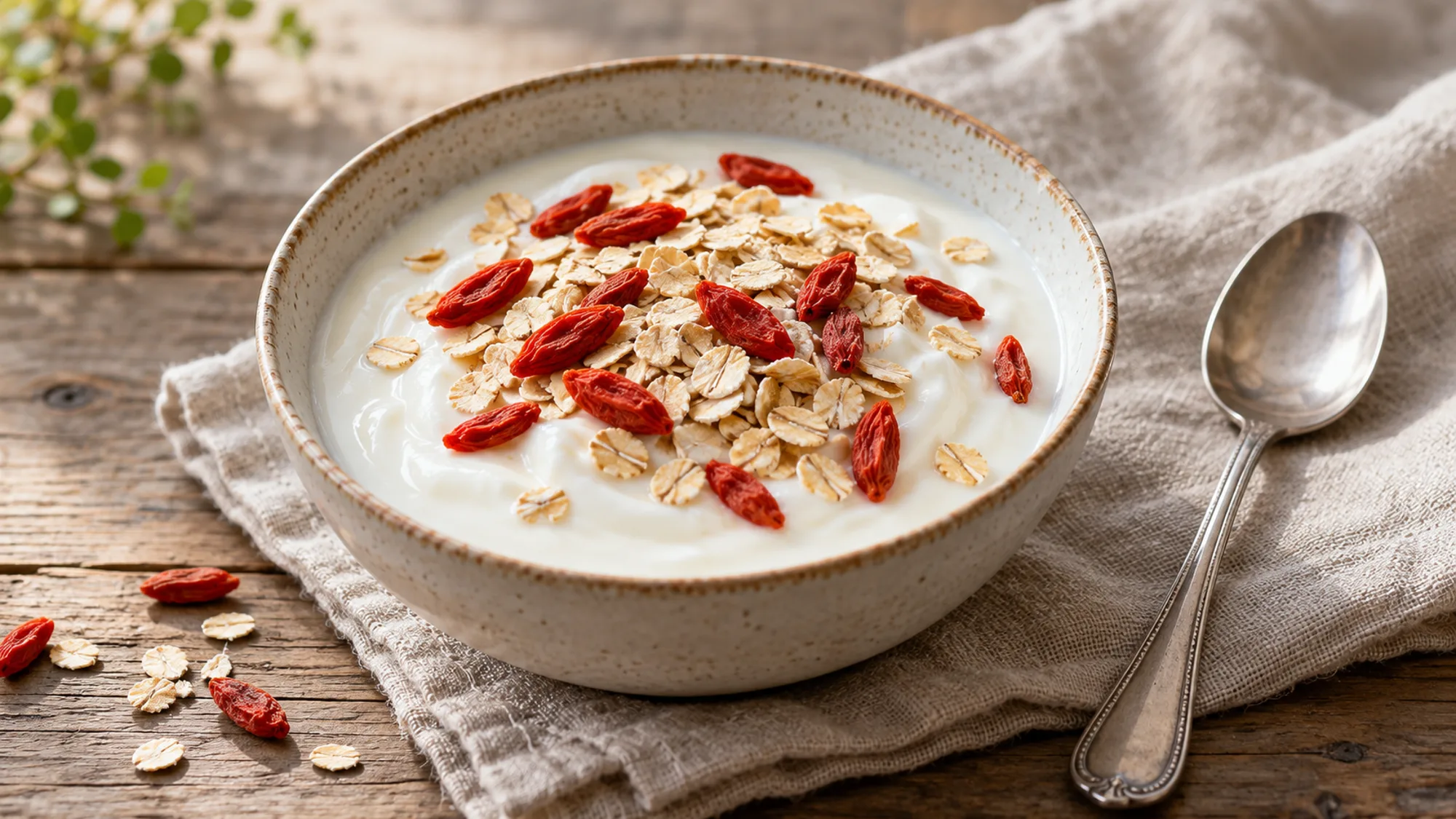
- Fold softened berries into plain yogurt or add them after reheating a serving of apple cinnamon baked oatmeal.
- Add a modest scattering to a grain bowl, where their sweet-tart flavor can contrast with savory ingredients.
- Use them with other dried fruit in a mix rather than treating the entire bag as one serving.
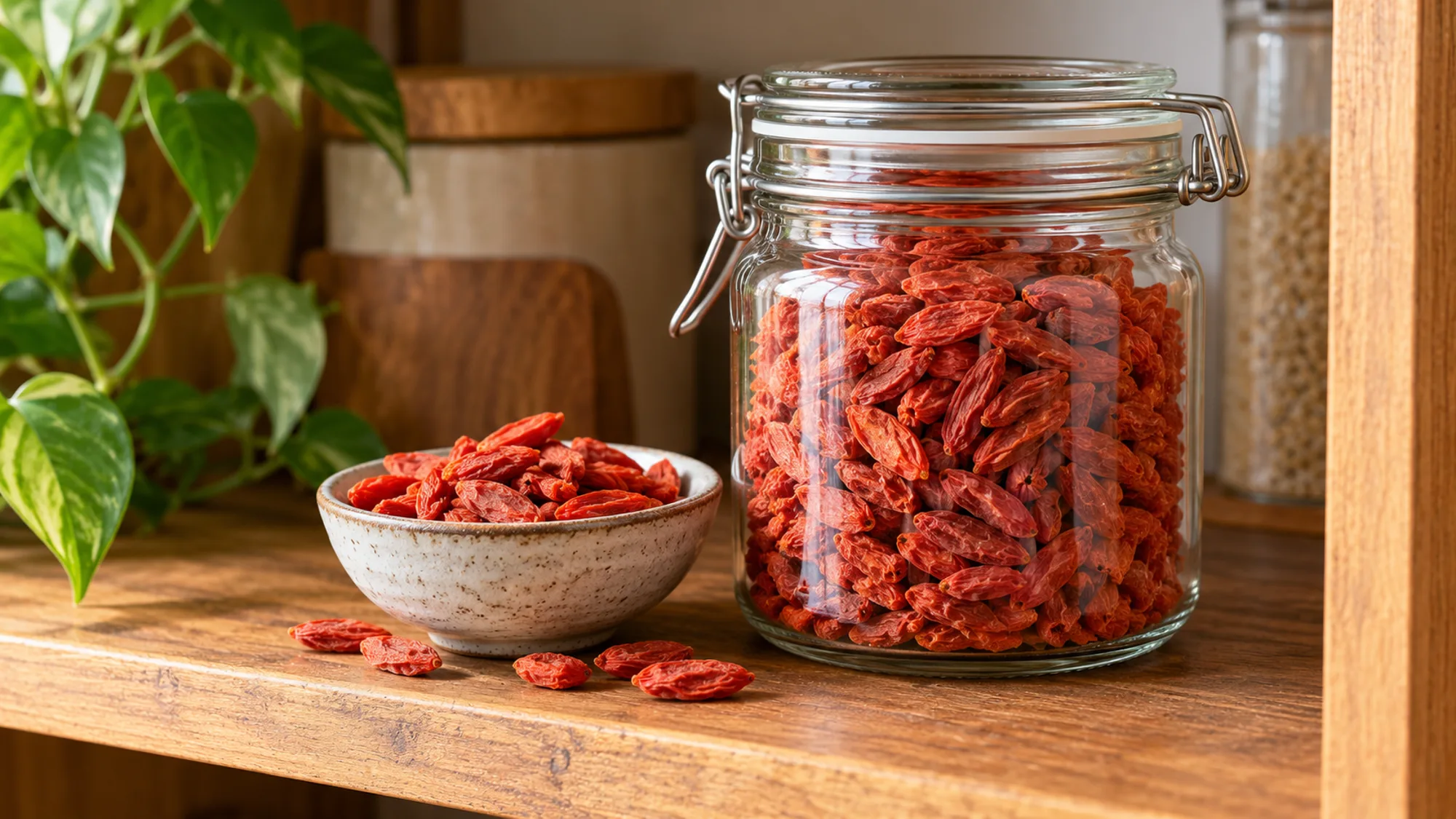
- Follow the package’s storage instructions and keep the container well sealed; use a dry spoon when taking berries out.
- Buy a smaller package first if you are unsure about the earthy finish. Expensive pantry clutter is still pantry clutter.
A label matters more than a universal spoon-size rule. Dried berries, sweetened blends, juice and concentrated extracts are different products; a study of one cannot be assumed to apply to all the others, and this guide does not recommend a supplement dose.
Check Medicines and Allergies Before Adding Them
The interaction warning is not limited to capsules. Memorial Sloan Kettering’s Lycium guide describes elevated INR in people taking anticoagulants after using Lycium products and advises against use with warfarin or other anticoagulants. Ask the clinician managing your medicine before trying the berries, juice or extracts; do not adjust your prescription yourself.
The same resource notes allergic reactions, particularly among people at higher risk of plant-food allergies. A “natural” label does not answer an allergy or medicine question, and a food guide cannot determine your personal risk.
- Tell your pharmacist about the specific product, including teas and powders, rather than only asking about supplements generally.
- If you have a relevant food allergy or take regular medication, check suitability before experimenting.
- If a new food causes a suspected allergic reaction, stop eating it and seek appropriate medical advice.
- Seek emergency help for trouble breathing or swelling of the throat. Do not try to manage a severe reaction by changing the recipe.
Bottom Line
Goji berries can add color, chew and variety to everyday food, but they are optional—not a missing piece everyone needs. Enjoy them if they suit your taste, budget and medical situation, keep the health claims modest, and give the warfarin interaction warning more weight than the marketing.
Gastrofork’s video below offers two culinary ways to enjoy goji berries. Use it for food ideas, not as evidence that the berries treat a condition.
Sources
- Goji berry intake and macular pigment: randomized pilot trial, 2021
- Memorial Sloan Kettering: Lycium benefits, risks and interactions

Hi, I’m Emily Pocker! I share recipes and food guides here at Recipes360 to help you find everyday meal inspiration and feel more confident in the kitchen. My goal is to make cooking approachable, enjoyable, and full of flavor.