
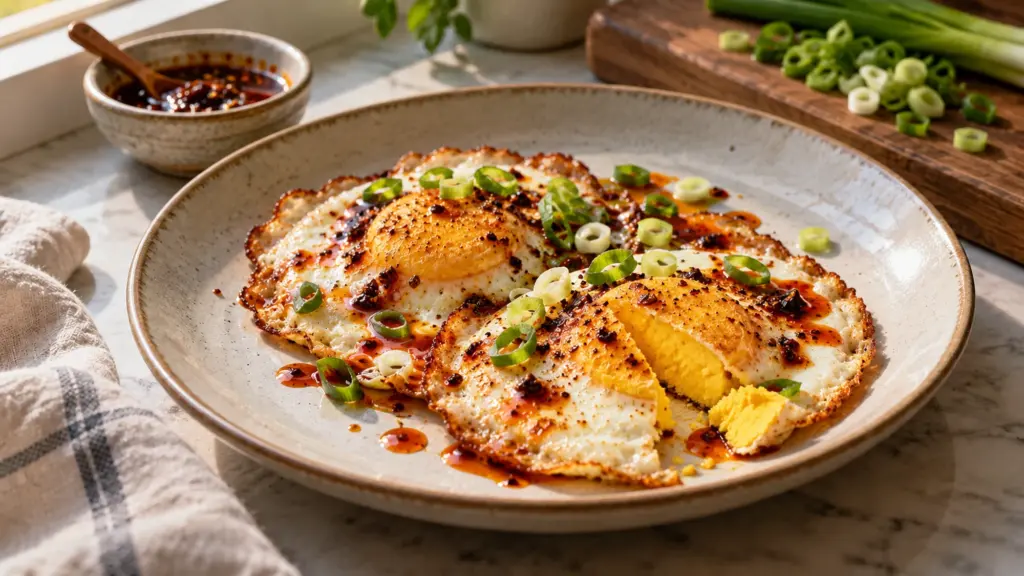
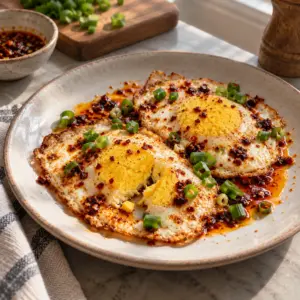
The eggs are nearly done, and the chili oil is still in its jar. That is intentional. These chili oil eggs cook first in a little neutral oil, then receive their spicy finish off the heat. It is a useful approach when your condiment contains delicate chile flakes or garlic that could scorch while the yolks finish cooking.

Cook the eggs until both whites and yolks are firm, then spoon chili oil over the warm surface. You keep control of the egg cooking and the condiment’s heat separately.
I’d choose a chili oil whose flavor you already enjoy as a table condiment. Some jars are mostly flowing red oil; others are packed with crunchy solids. Either can be used as a finishing spoonful, but neither needs a long stay in a hot skillet for this recipe.
Serving Suggestions for Chili Oil Eggs
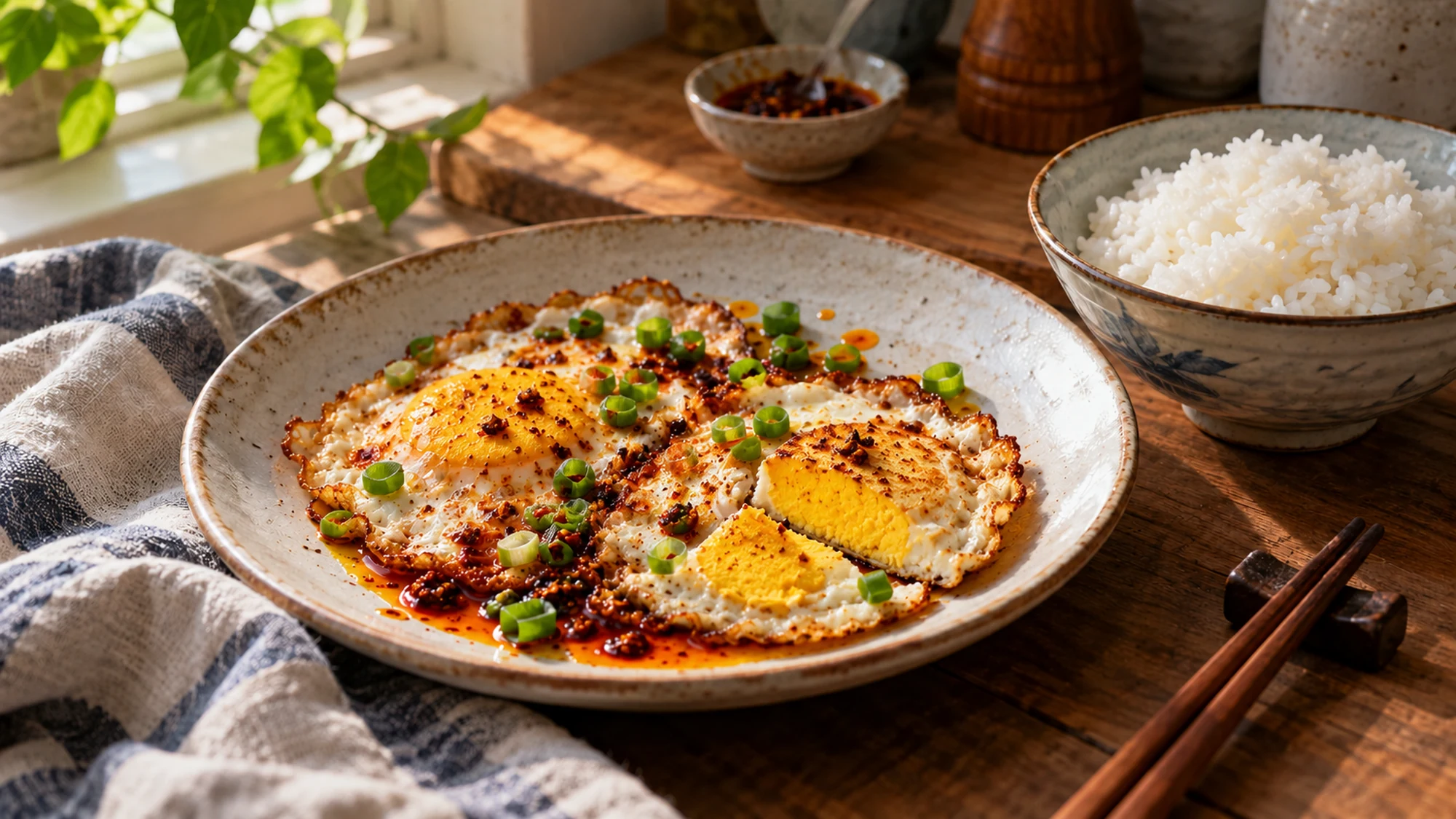
Serve the eggs as soon as they leave the skillet. Their warm surface carries the chili aroma, while sliced scallions provide a fresh contrast. Put the rice, toast or vegetables on the plate before cooking so the eggs do not wait while you assemble the rest of breakfast.
| Choice | What to expect |
|---|---|
| A | l |
| P | r |
A split air fryer jacket potato also makes a substantial base. Its plain center gives the seasoned oil somewhere useful to go. Optional accompaniments are separate from the measured eggs and are excluded from the nutrition estimate.
These are at their best freshly cooked. If you save leftovers, follow Illinois Extension’s advice: refrigerate within two hours in a covered container, use within three to four days, and reheat to 165°F (74°C). Expect the reheated eggs to become firmer; food safety and the original texture are different questions.
Have the accompaniments ready first. Finish the hot eggs with chili oil and scallions at the table, where the amount of heat can suit the person eating.
Variations Without Burning the Condiment
There is room to adjust the finish without complicating the skillet step. The measured recipe contains eggs, neutral oil, chili oil, scallions and a small optional pinch of salt. Keep additions deliberate, especially when the jar already contains salty seasonings.
- Milder serving: use half the finishing chili oil. You do not need to replace the missing amount with more frying oil.
- Chili crisp: spoon a little of its solids and oil over the cooked eggs. Check the label for garlic, soy, sesame or other ingredients relevant to your guests.
- Different herbs: use chopped chives instead of scallions. Add them after cooking so their fresh flavor stays noticeable.
- More servings: cook in batches rather than crowding the pan. Add each batch’s measured portion of frying oil and keep the finished plates moving.
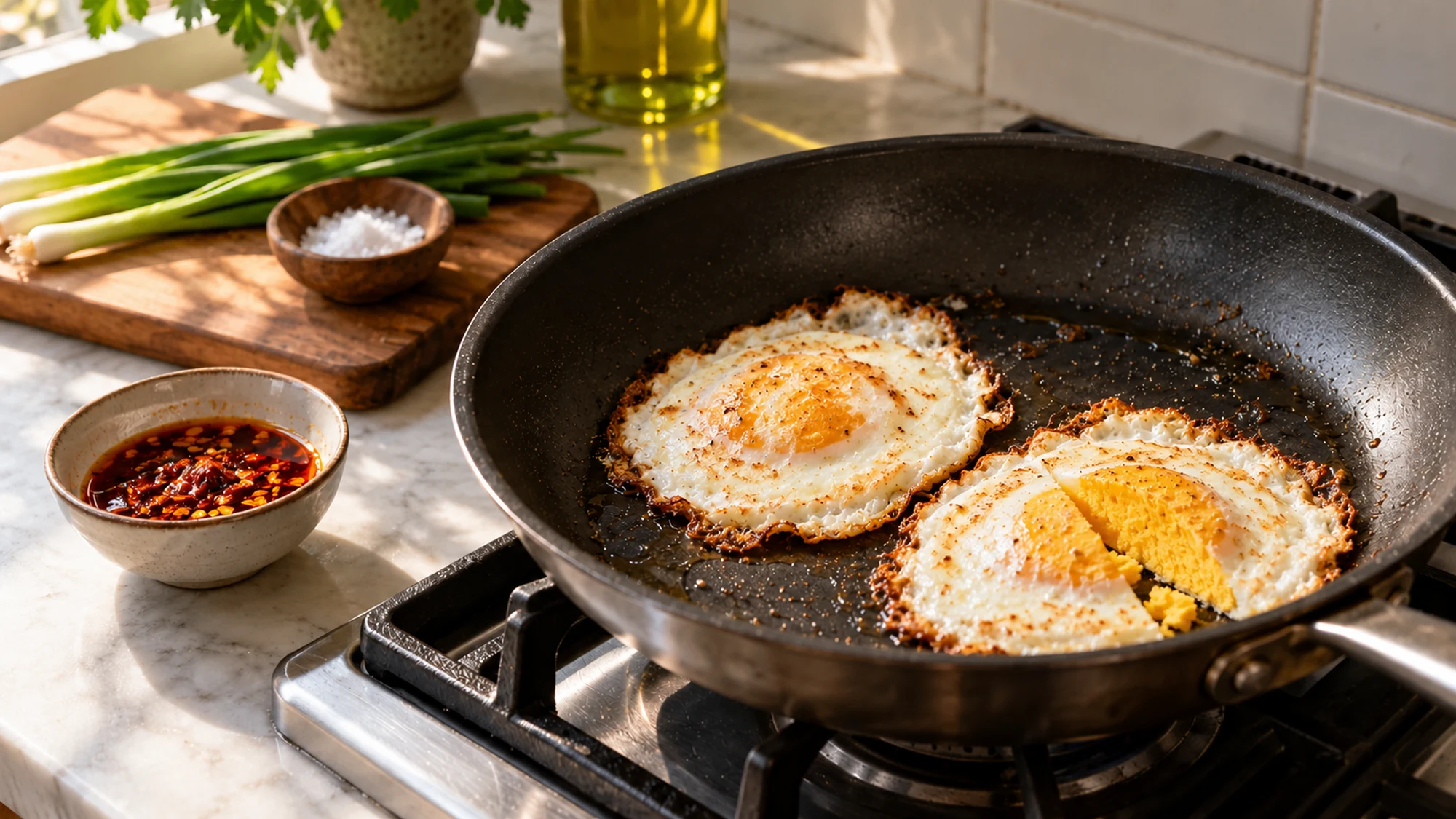
A lid helps the top of the eggs cook without pushing the underside toward a hard brown crust. If the pan looks dry or smokes, lower the heat. I’d favor a clean release and evenly set whites over dramatic, brittle edges that compete with the finished dish.
Treat chili oil as the final seasoning here. Let the skillet cook the eggs, then add the condiment where it can stay fragrant.
Health Benefits and Ingredient Choices
Eggs contribute protein to the meal. USDA’s budget cooking material identifies about six grams of protein in one egg. Two eggs therefore provide a useful protein portion, while the vegetables and grain you choose alongside contribute different nutrients.
- Oil still counts: the card estimate includes all the measured frying and finishing oil, even though some may remain in the pan.
- Read the jar: salt and allergen ingredients differ widely between chili oils. A brand substitution can change the meal substantially.
- Choose the whole plate: rice or toast contributes carbohydrate; greens can add vegetables without another rich topping.
For safety, FoodSafety.gov recommends keeping eggs refrigerated and cooking them thoroughly. This card specifies firm yolks and whites rather than a runny center. The approximate nutrition is for two eggs with half the measured oil and scallions, excluding sides.
Enjoy the eggs as part of the meal you assemble around them. Protein, added oil, salt and accompaniments all deserve a place in that picture.
Bottom Line
Chili oil eggs do not require a smoking pan or a complicated sauce. Cook the eggs steadily, get the plate ready and add the spicy finish after the heat is off. That small separation makes a short recipe easier to control.
Chili Oil Eggs Recipe

Ingredients
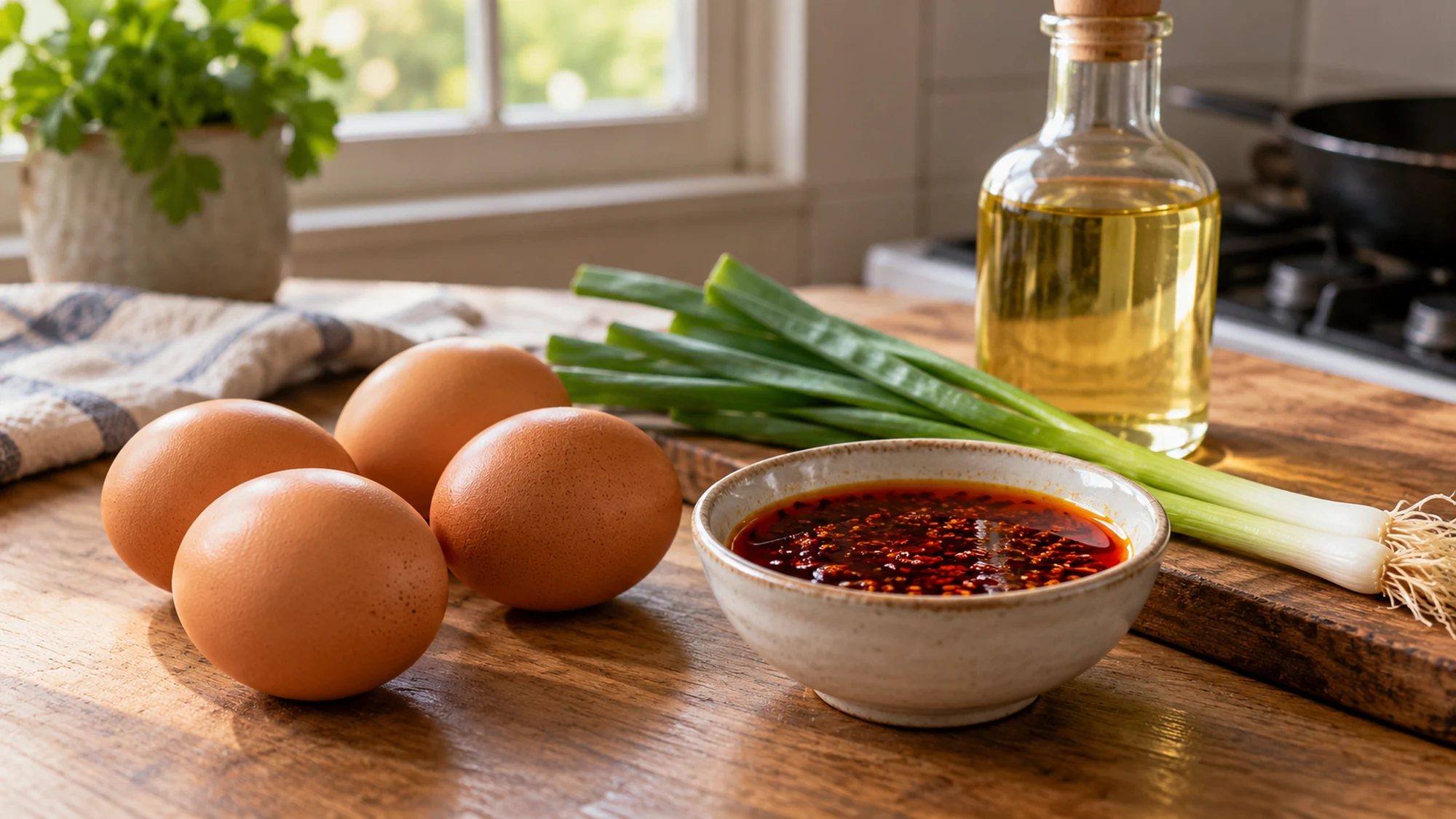
- 4 large eggs 200 g edible weight
- 2 teaspoons neutral cooking oil 10 mL
- 2 teaspoons commercially prepared chili oil 10 mL; choose a heat level you enjoy and check ingredient labels
- 2 scallions about 30 g, thinly sliced
- 1 pinch fine salt optional, only if needed after tasting the chili oil
Equipment
- 1 12-inch nonstick skillet with lid
- 1 Flexible spatula
- 1 Small bowl
- 1 Knife and cutting board
Instructions
- Slice scallions and measure chili oil. Put any optional sides on the serving plates. Crack each egg into a small bowl before sliding it into the pan to make shell fragments easier to spot.
- Heat neutral oil in the skillet over medium-low heat. Add the eggs with space between them. Cover and cook gently for 4–6 minutes, until whites are opaque and mostly firm; lower the heat if the bottoms brown too quickly.
- Gently flip the eggs with the spatula and cook another 1–3 minutes, until both whites and yolks are firm. Continue as needed; timing varies with egg size and pan. Cook in batches if the pan is crowded.
- Turn off the heat. Divide eggs between two plates, spoon chili oil over them and scatter with scallions. Taste before adding the optional pinch of salt. Serve immediately. Rice, toast and vegetables are optional sides and are not included in the measured recipe.
Nutrition
Video
Notes
Tried this recipe?
Let us know how it turned out!Hi, I’m Emily Pocker! I share recipes and food guides here at Recipes360 to help you find everyday meal inspiration and feel more confident in the kitchen. My goal is to make cooking approachable, enjoyable, and full of flavor.