
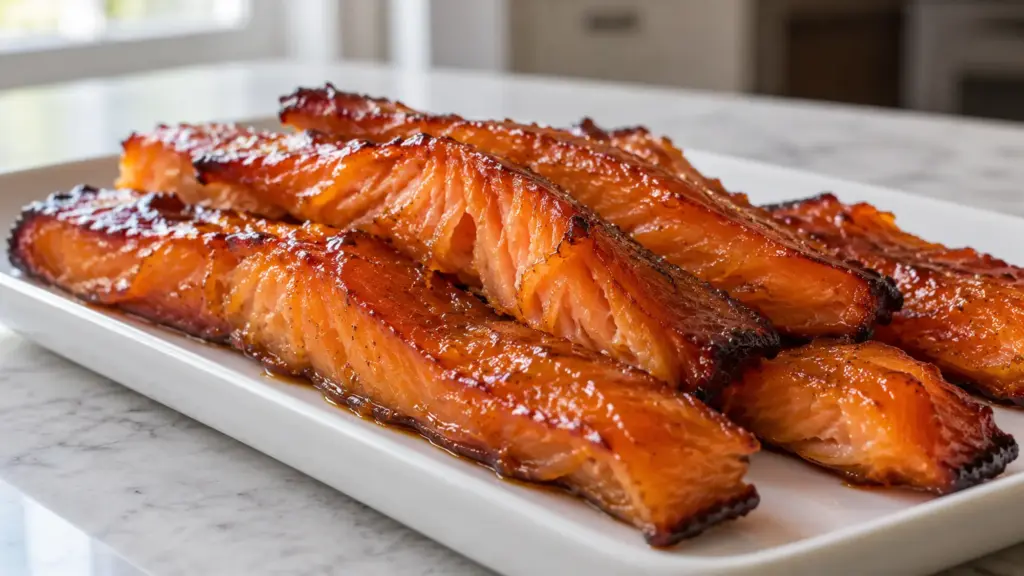
The shine on candied salmon tells only half the story. Beneath that maple coating, the fish should still flake rather than snap like jerky. This hot-smoked version uses a brown-sugar cure, a refrigerated drying stage and thin coats of maple syrup to build a sweet surface without burying the salmon in sauce.
For candied salmon with a glossy finish, keep the pieces evenly thick, dry them in the refrigerator, and use a thermometer throughout the smoke. This is perishable cooked fish, even when it looks like candy.
I’d choose a thick center-cut fillet over a bag of mixed tail pieces: similar thickness makes the cooking easier to manage. Plan ahead for the curing and drying time, and use a smoker whose temperature you can control. The method below includes a final temperature hold based on University of Alaska Fairbanks home-smoking guidance.
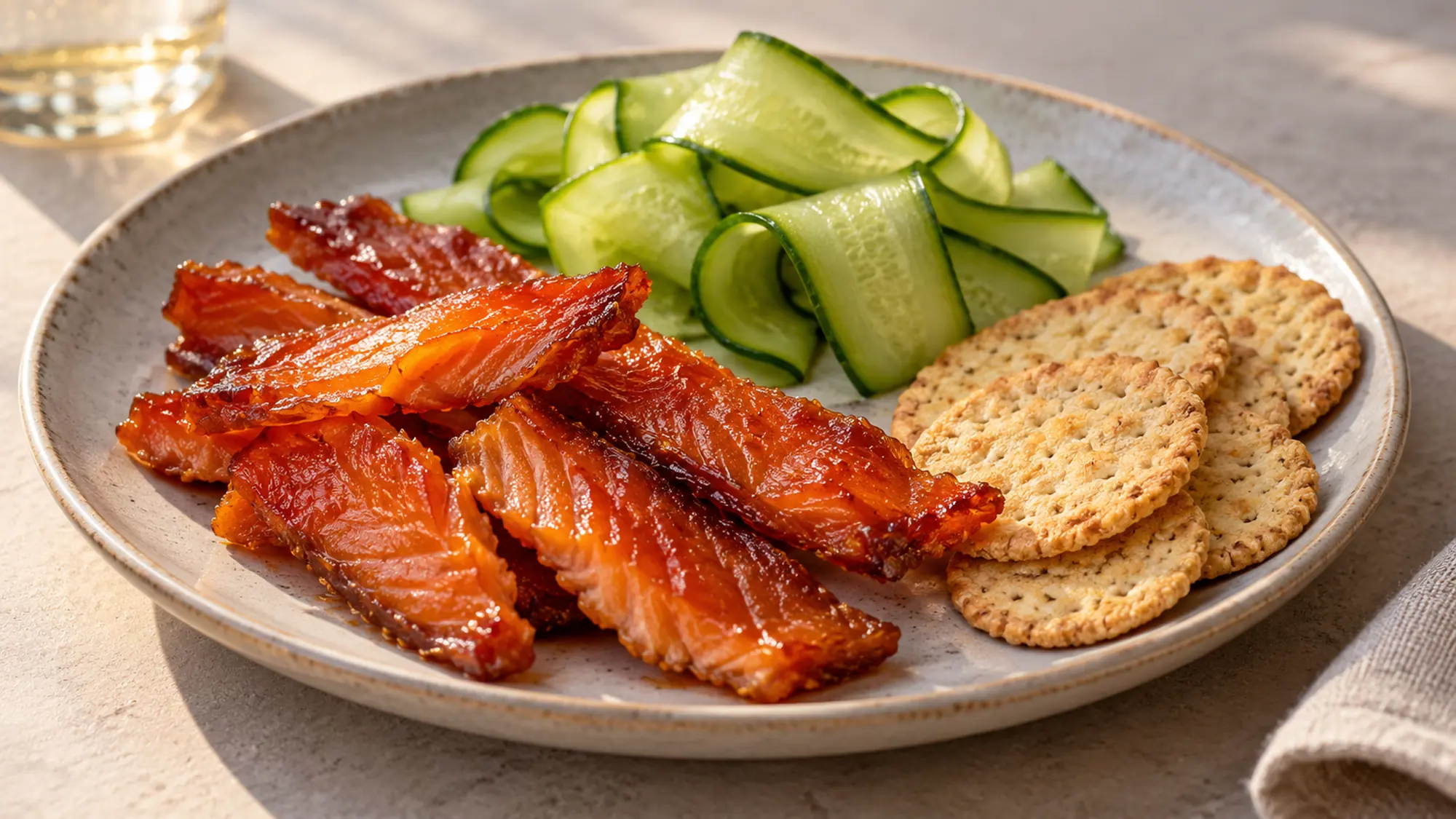
Serving suggestions for candied salmon
Serve small portions while the maple coating is set and the interior remains tender, or chill the fish promptly for a snack board. Cool cucumber, plain crackers and a little acidity make useful companions because the fish already carries plenty of sweetness and smoke. Add accompaniments just before serving so crackers stay crisp.
- For a light lunch: flake the fish over rice and sliced cucumber; add lemon at the table.
- For sharing: offer short strips with crackers and separate forks. Put out a small amount and replenish from the refrigerator.
- For a fuller plate: add a plain jacket potato in the air fryer and steamed greens.
Keep serving dishes clean and separate from anything that touched raw fish. The FDA’s seafood handling guidance explains safe thawing and limits room-temperature serving to two hours, or one hour above 90°F (32°C). A picnic cooler needs ice packs; the glaze does not provide refrigeration.
Choose simple, fresh accompaniments and serve the fish in small batches; let the smoky maple flavor do the work.
Variations and texture choices
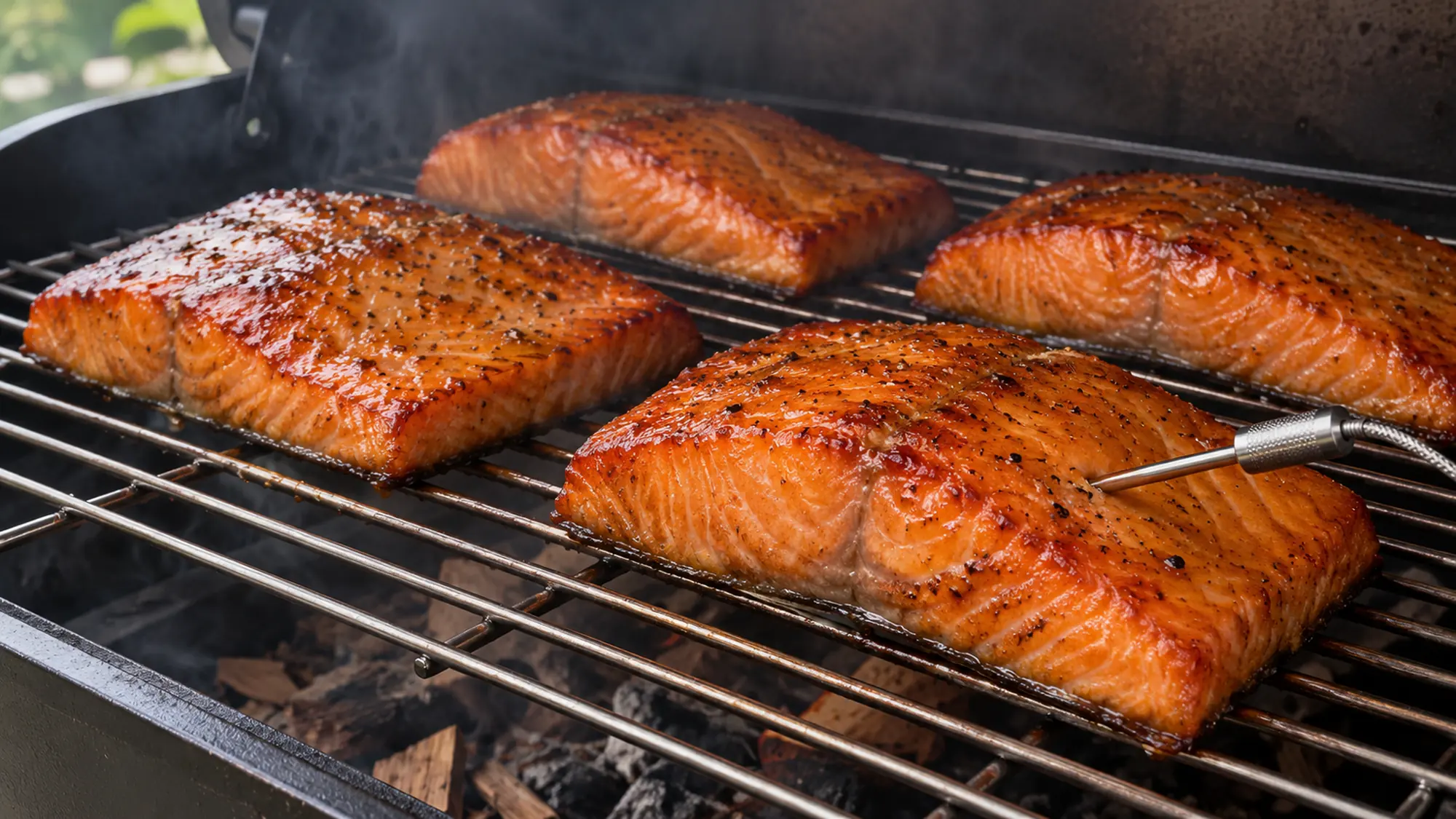
The easiest adjustment is the finish. A little cracked black pepper provides contrast without adding another sauce. I’d keep the first batch mild and use a gentle smoking wood such as alder or apple. Heavy smoke can turn an otherwise delicate strip into something that tastes more like the fire than the fish.
| Choice | What changes | Practical limit |
|---|---|---|
| Atlantic salmon | Richer, fattier pieces | Choose similarly thick portions |
| Sockeye salmon | Leaner texture, deeper color | Watch temperature rather than copying the clock |
| Black pepper finish | Sharper contrast to maple | Add sparingly before smoking |
| No smoker | Different cooking method | Use an oven-specific recipe rather than cold smoking |
- White beads on the surface: a little coagulated protein can appear as the fish heats; it is not a reason to keep cooking after the required temperature hold.
- Dark, bitter edges: reduce direct heat and apply thinner syrup coats. Do not let the fish sit over flames.
- Uneven results: move thinner pieces to a cooler zone and monitor each thick piece.
Keep the temperature controls and safe handling unchanged when adjusting the pepper or wood; flavor variations are easier than changing the process.
Health benefits and portion considerations
Salmon contributes protein, but the word candied matters here: brown sugar and maple syrup add sweetness, and the cure adds salt. Neither smoking nor choosing maple syrup turns this into an unrestricted snack. The calorie estimate in the card includes the fish and glaze plus an allowance for retained cure sugar; the amount actually retained will vary.
- Portion deliberately: this recipe makes six modest portions from two pounds of raw fish; cooking reduces its weight.
- Check restrictions: fish is a major allergen, and crackers or sauces may introduce additional allergens.
- Store cold: refrigerate promptly in a shallow container and use within three to four days, following USDA cooked-seafood storage advice.
Nutrition estimates are a planning aid rather than a laboratory result. Cure uptake, fish species and the amount of syrup left on the brush change the final numbers. For a less sweet meal, I’d change the surrounding plate first: vegetables and an unsweetened starch balance the eating experience without pretending the glaze has disappeared.
Enjoy a measured portion for its protein and flavor, while accounting for the added sugar and salt.
Bottom Line
Candied salmon rewards patient refrigeration, light glazing and careful temperature control. Keep the center flaky, the coating glossy and leftovers cold; sweetness is the finish, not a preservation method.
Candied Salmon Recipe

Ingredients
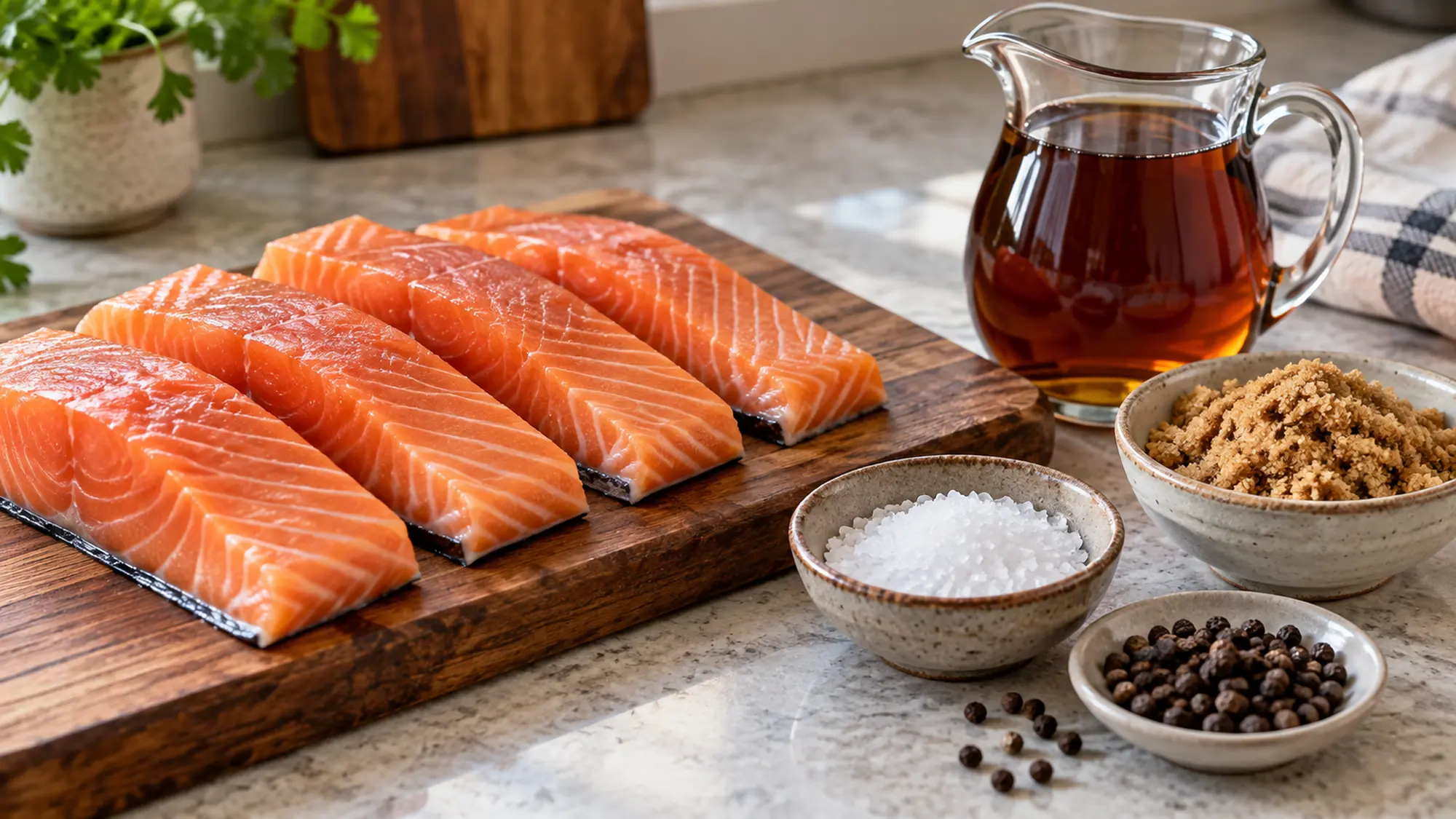
- 2 pounds skin-on salmon fillet 907 g, pin bones removed, center-cut, cut into strips about 1 inch thick
- 1/2 cup packed brown sugar 100 g
- 1 1/2 ounces kosher salt 43 g; weigh rather than using a volume substitution
- 1/2 cup pure maple syrup 120 ml
- 1/2 teaspoon coarsely ground black pepper
- 1 teaspoon neutral oil for rack
Equipment
- 1 Temperature-controlled smoker and food-safe wood
- 1 Probe food thermometer
- 1 Kitchen scale
- 1 Nonreactive covered dish
- 1 Rack and rimmed tray
- 1 Pastry brush
Instructions
- Keep the salmon refrigerated while preparing. Mix the brown sugar and weighed salt. Coat the salmon evenly in a nonreactive dish, cover and refrigerate below 38°F (3°C) for 2 hours. Do not reuse this cure.
- Remove the fish from the cure and rinse gently under cold water without splashing surrounding surfaces. Discard the cure. Pat the fish dry, place skin-side down on a rack over a tray, and refrigerate uncovered below 38°F (3°C) for about 8 hours, until the surface feels tacky. Keep it away from ready-to-eat foods.
- Prepare the smoker according to its instructions with alder or apple wood and indirect heat. Start at about 180°F (82°C). Lightly oil a clean rack, arrange fish with space between pieces, and insert a clean probe into the thickest piece.
- Smoke for about 1 hour, then brush with a thin layer of maple syrup and sprinkle with pepper. Raise the smoker gradually to 200–225°F (93–107°C). Brush with the remaining syrup in thin coats about every 30 minutes, keeping the brush and syrup away from raw fish.
- Continue until every thick piece reaches at least 160°F (71°C), then hold the fish at or above that internal temperature for 30 minutes. Expect roughly 3–4 hours total cooking, but temperature, thickness and equipment control the timing. If the smoker cannot maintain this, transfer with clean utensils to a 300°F (149°C) oven, bring the fish to 160°F internally and maintain it for 30 minutes, adjusting heat to prevent scorching.
- Transfer to a clean plate. Serve promptly or cool in shallow containers and refrigerate within 2 hours. Store below 38°F (3°C), use within 3–4 days and reheat leftovers to 165°F (74°C). Do not store at room temperature or treat this as shelf-stable jerky.
Nutrition
Video
Notes
Tried this recipe?
Let us know how it turned out!Hi, I’m Emily Pocker! I share recipes and food guides here at Recipes360 to help you find everyday meal inspiration and feel more confident in the kitchen. My goal is to make cooking approachable, enjoyable, and full of flavor.