
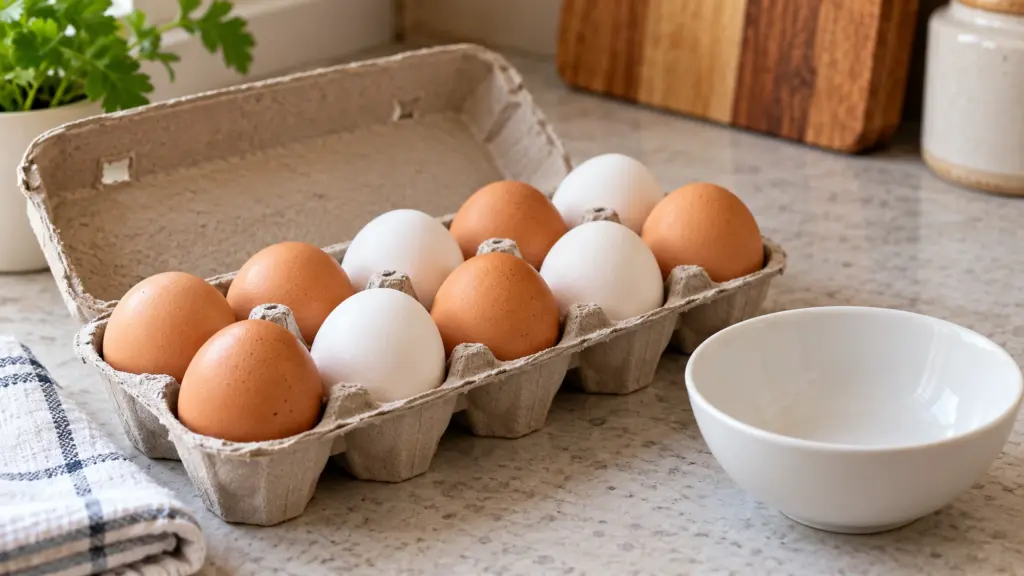
An egg carton at the back of the refrigerator can turn a simple breakfast into a guessing game. Before reaching for a glass of water, check the details that matter more: how the eggs were stored, whether their shells are intact and what happens when you crack one into a separate bowl.
How to tell if eggs are bad starts with storage history and obvious spoilage—not the float test. A bad smell or abnormal appearance means discard the egg, but a normal-looking egg can still carry harmful bacteria. Freshness and safety are different questions.

How to Tell if Eggs Are Bad Starts Before Cracking
This guide concerns refrigerated store-bought eggs in the United States. Different supply chains handle eggs differently, so follow local guidance elsewhere. The FDA recommends buying refrigerated eggs with clean, uncracked shells and keeping them at 40°F (4°C) or below.
I would make the storage question the first decision, not the final tie-breaker. If you know the carton was left somewhere warm, a pleasing appearance cannot erase that history. If you genuinely cannot establish how a questionable carton was handled, choose another ingredient rather than trying to prove safety with a kitchen trick.
- Check the carton and shell condition before adding an egg to other ingredients.
- Keep the original carton so dates and handling information stay with the eggs.
- Use a refrigerator thermometer rather than judging coldness by touch.
- Do not taste a raw egg to investigate whether it has spoiled.
What the Float Test Actually Tells You
USDA explains that an egg can float when its air cell becomes large enough. That is a clue about age and quality, not a reliable test for harmful bacteria. A floating egg is not automatically rotten, and a sinking egg does not earn a safety guarantee.
That distinction changes how to use the information. A float demonstration may be interesting, but it should not decide whether a mishandled egg belongs in your meal. Keep the practical checks focused on storage, shell condition and spoilage, then handle and cook otherwise suitable eggs safely.
| Observation | What it can suggest | What it cannot prove |
|---|---|---|
| Egg floats | An enlarged air cell and older quality | That the egg is rotten or pathogen-free |
| Egg sinks | A smaller air cell | That bacteria are absent |
| Shell looks clean | No obvious exterior problem | That the interior is safe |
| No unusual smell | No obvious odor-related spoilage | That Salmonella is absent |
| Known warm storage | A handling concern worth acting on | Safety based on later refrigeration |
The float test answers a buoyancy question. It does not test an egg for Salmonella.
Crack Separately and Notice Real Warning Signs
Use a clean small bowl before adding each egg to batter or a larger batch. This makes it easier to discard an obviously spoiled egg without losing the rest of your ingredients. If the contents smell unpleasant or look abnormally discolored, discard them and clean the bowl and any contacted surfaces.
USDA distinguishes normal egg features from spoilage signs. A cloudy white can indicate freshness, and a small blood spot is not itself proof of spoilage. Do not confuse every unfamiliar feature with the same problem.
- A strange odor is a reason to reject the egg, not an invitation to cook the smell away.
- An intact shell does not cancel a questionable storage history.
- Do not mix a suspicious egg into a dish and hope the other ingredients will hide it.
- Wash your hands and clean tools after handling raw eggs, including eggs you decide not to use.
Dates, Refrigeration and Cooking Work Together
Illinois Extension gives a refrigerated shell-egg range of three to five weeks under proper storage and explains that carton dates alone do not settle safety. FDA recommends using eggs within three weeks for best quality. Those statements address different goals; neither means an egg can be stored carelessly until a deadline.
Think of the carton date as one useful piece of a larger picture. Keep older cartons visible, avoid buying more than you can reasonably use and write down when a cooked batch was made. Those small habits are more dependable than repeatedly testing eggs you no longer trust.
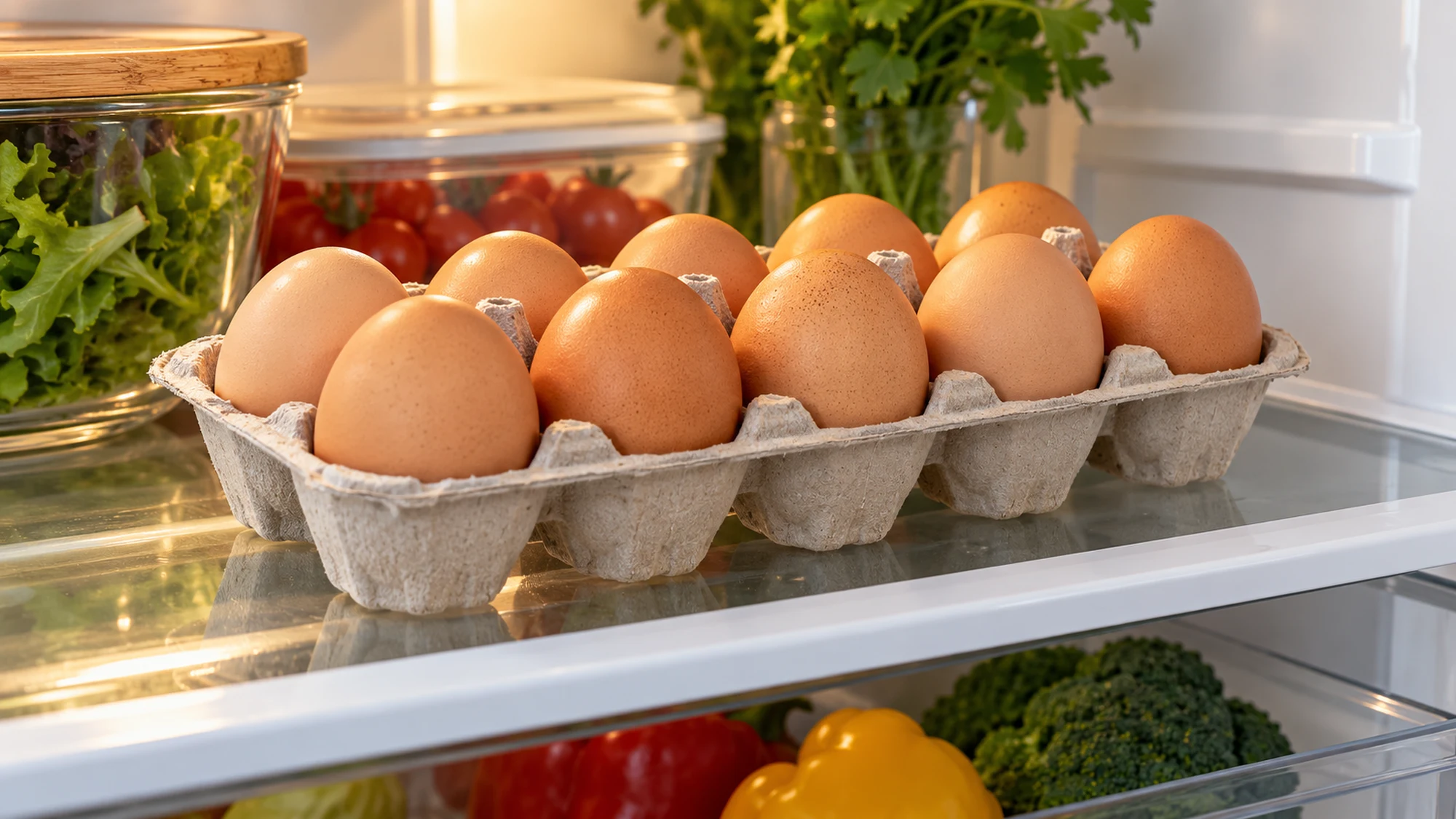
- Keep eggs in their carton on an interior refrigerator shelf, not in the warmer door.
- For ordinary egg dishes, cook whites and yolks firm; cook casseroles containing eggs to 160°F (71°C).
- For preparations served raw or undercooked, use pasteurized eggs or pasteurized egg products.
- Refrigerate cooked egg dishes promptly; do not leave them out more than two hours, or one hour above 90°F (32°C).

Bottom Line
You cannot prove an egg is safe by floating, sniffing or looking at it alone. Start with reliable cold storage, reject obvious spoilage and damaged eggs, and cook suitable eggs properly. When the history is doubtful, replacing the egg is the simpler decision.
The FDA’s egg-safety video explains buying, storing and cooking eggs safely.
Sources
- FDA: egg safety
- USDA: what floating means
- Illinois Extension: storing store-bought eggs
- USDA: egg appearance and safety

Hi, I’m Emily Pocker! I share recipes and food guides here at Recipes360 to help you find everyday meal inspiration and feel more confident in the kitchen. My goal is to make cooking approachable, enjoyable, and full of flavor.