
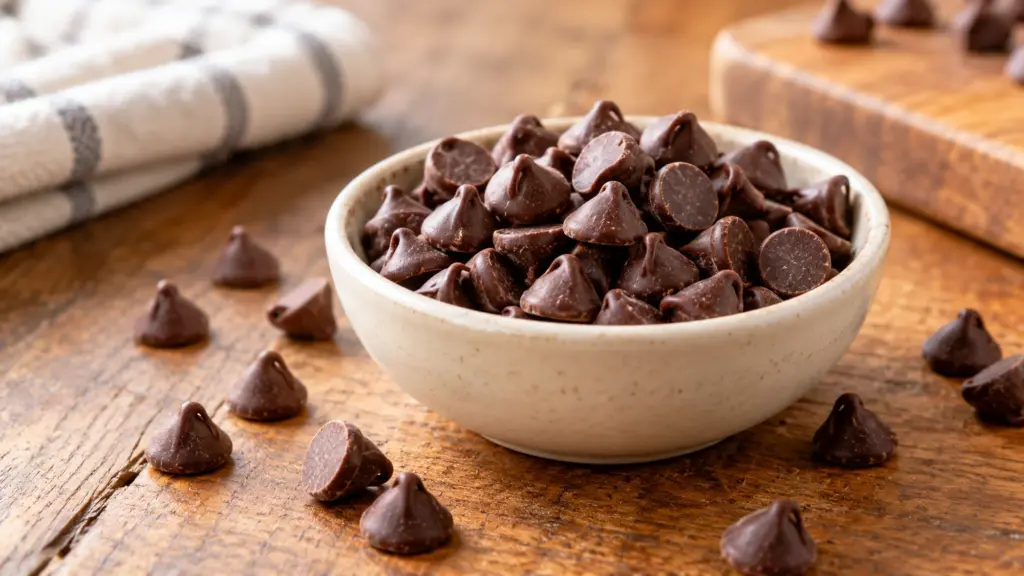
Chocolate chips are small baking pieces made for adding chocolate throughout cookies, muffins and other desserts. Their size and formulation affect how they spread, soften and melt. Semisweet, milk chocolate, white morsels and coating wafers can serve different purposes, so the bag’s name and ingredients both matter.
Choose chips for little pockets of chocolate in a bake, and check the manufacturer’s directions before melting them for a sauce or coating. Stir before adding more heat: a chip can look intact even when it has softened. Dark color does not guarantee a milk-free product.
Know What Is in the Bag
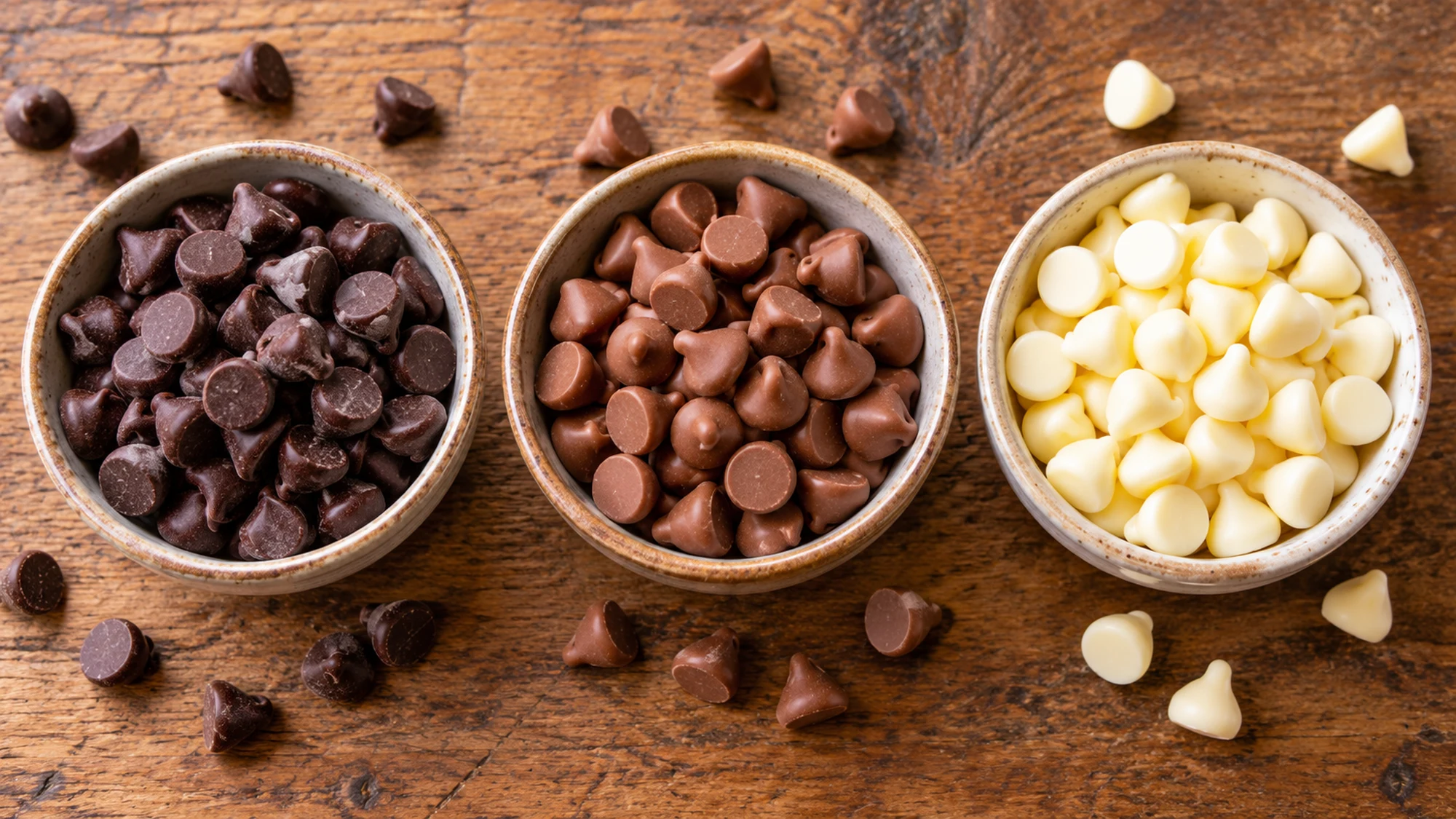
Semisweet and milk chocolate chips offer different balances of cocoa, sugar and dairy. As a concrete example, Toll House semisweet morsels list chocolate, cocoa butter and milkfat, while its milk chocolate morsels also list nonfat milk. Both products declare milk and soy. These are examples, not a formula shared by every brand.
White chips need a closer look. The U.S. standard for white chocolate describes a product made with cacao fat, dairy ingredients and sweeteners. Some white baking morsels instead use vegetable fats: Toll House Premier White Morsels list palm-kernel and palm oils and are described as vanilla flavored.
I would choose by the flavor and the job rather than assume that every pale chip is white chocolate. For the wider differences between cocoa percentages and styles, see our dark chocolate guide.
Match the Type to the Task
| Product | Useful role | Check before substituting |
|---|---|---|
| Semisweet or dark chips | Chocolate pockets in cookies and muffins | Taste, cocoa percentage if listed, and dairy ingredients. |
| Milk chocolate chips | A sweeter, milky chocolate flavor | Milk and other allergens; sweetness of the whole bake. |
| White chocolate or white morsels | Pale, sweet additions to blondies or cookies | Whether cocoa butter or vegetable fat is used. |
| Compound coating wafers | Dipping, drizzling and molded decorations | Melting directions and whether tempering is required. |
Coating wafers are a separate useful option for a shell or drizzle. Ghirardelli describes its compound coating wafers as products that melt for dipping without tempering. That convenience belongs to the specified coating product; it does not mean ordinary chocolate chips automatically set with the same finish.
Chip size changes how chocolate is distributed. Mini chips can scatter small bits throughout a spoonful of batter, while larger pieces leave more distinct pockets. I would keep the recipe’s stated weight when changing sizes, then consider how many pieces will land in each serving.
Melt Gently and Stir Often
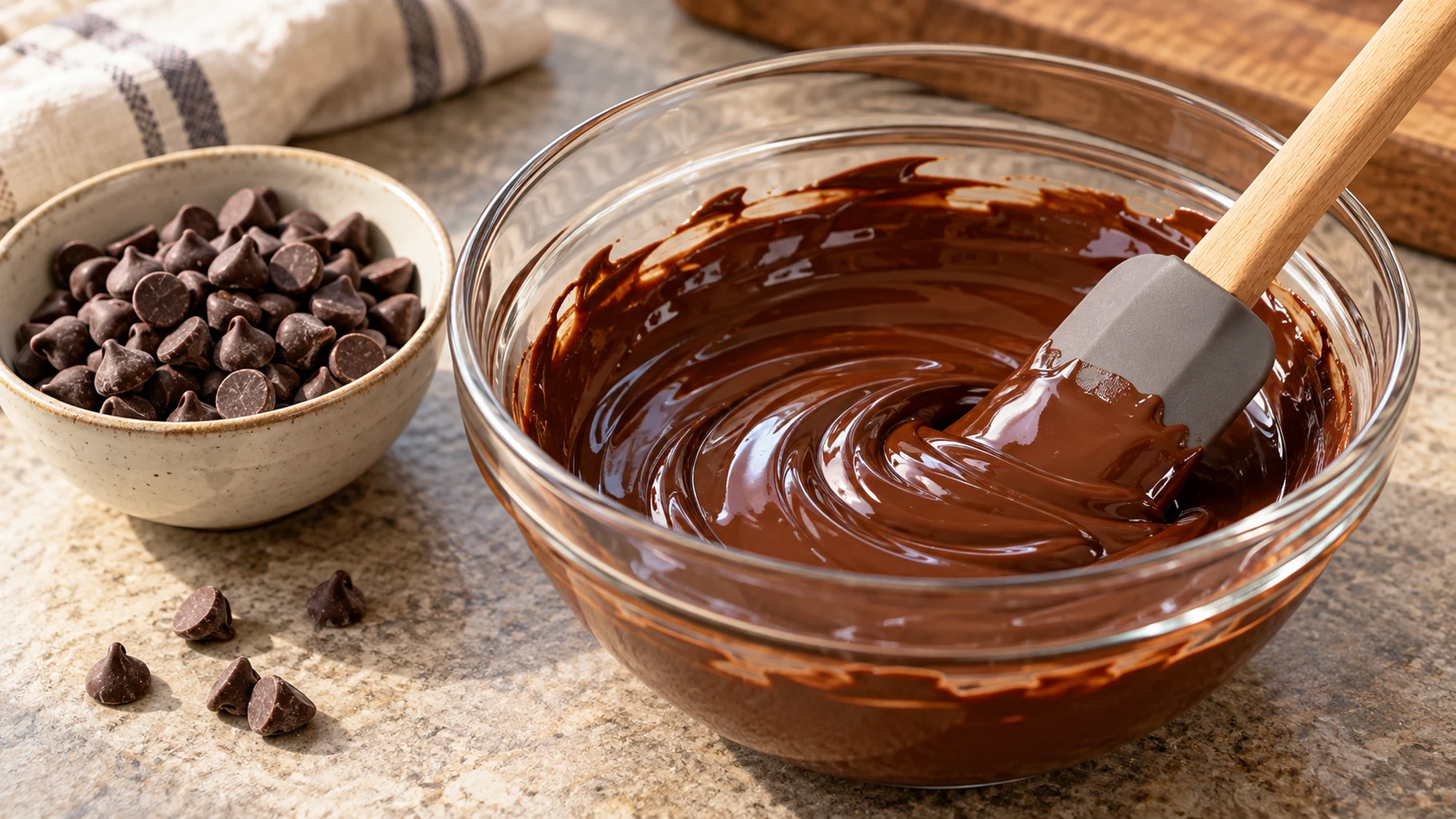
Chips are not necessarily unmeltable just because a baked cookie still shows their outlines. Toll House’s dipped-fruit directions warn that morsels can retain some original shape while melted. Stirring reveals their condition and helps avoid adding heat after it is no longer needed.
Use a dry, suitable bowl and follow the specific bag’s microwave or double-boiler directions. The milk-morsel instructions call for stirring and short additional microwave intervals, and warn against water touching the chocolate. With a double boiler, keep steam and splashes out of the bowl.
- Stop heating when stirring produces a smooth mixture; do not wait for every piece to collapse on its own.
- Do not assume a thick melted chip mixture needs more heat. For a thinner dip, use a recipe designed for that product.
- For ganache or a sauce, use a recipe with a planned liquid-to-chocolate ratio rather than an improvised splash of water.
Store Them Well and Read Allergen Labels
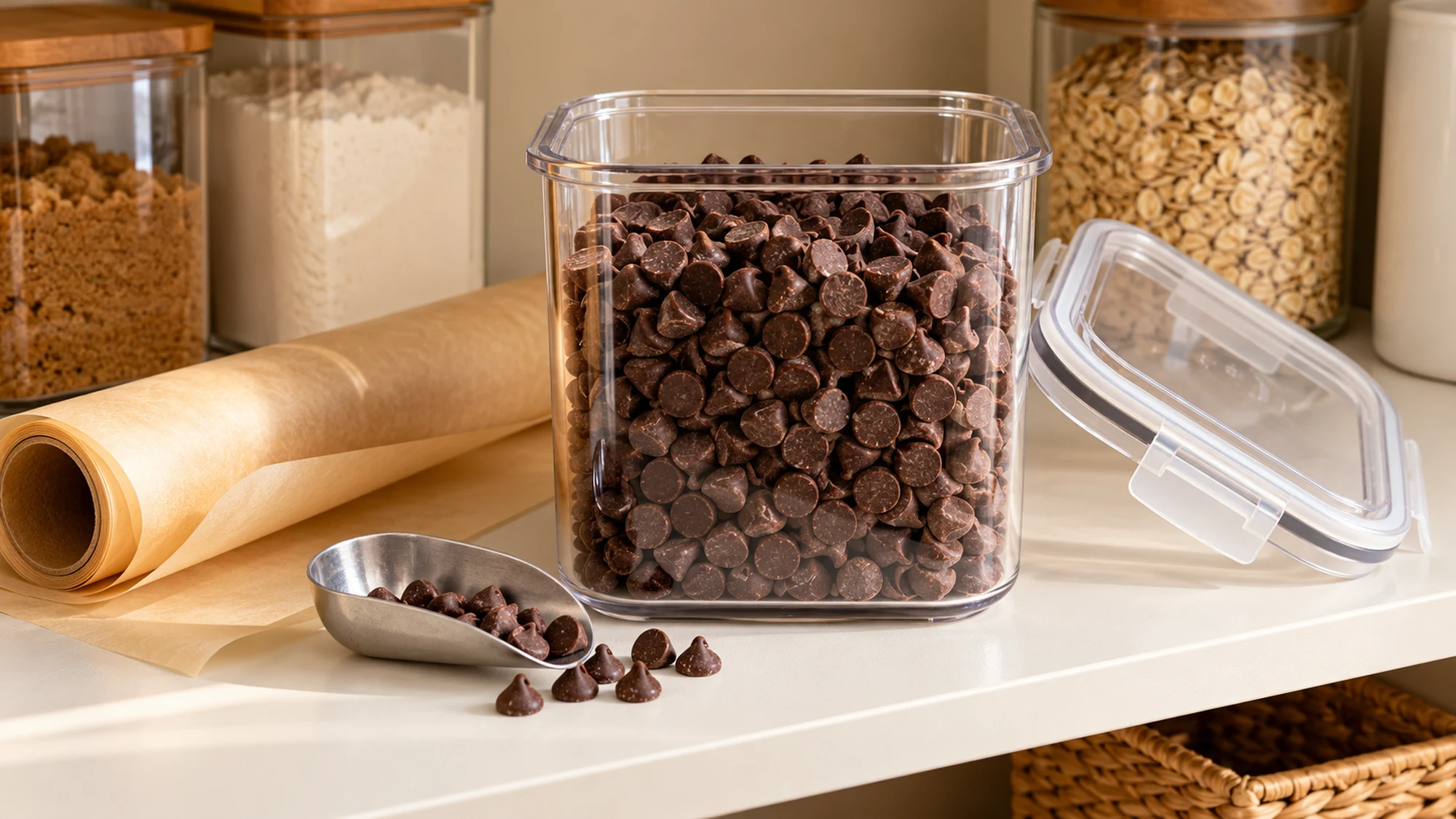
Reseal an opened bag or transfer the chips to a clean, airtight container, retaining the ingredient label and date. Keep them away from a hot oven or sunny window. Ghirardelli recommends cool, dry, airtight storage at 60–75°F for its chocolate; follow any more specific instructions on your own package.
Check the label each time you buy. Milk and soy appear in the named examples above, and peanut or tree-nut ingredients or cross-contact statements depend on the product. FDA explains that a “may contain” statement is voluntary, so its absence does not establish that a product is suitable for a particular allergy.
If you mix chips into an unlabeled container, keep the packaging information with it. This is especially useful when several similar-looking varieties share a pantry: neither color nor a familiar brand name reliably identifies the ingredients.
Bottom Line
Chocolate chips work best when their formula matches their purpose. Pick the flavor you want for baking, use the maker’s directions for melting, and choose a specified coating product when its easy-setting properties matter. Always read the actual bag for milk, soy and other allergen information.
Sources
- Toll House: Semisweet morsel ingredients and allergens
- Toll House: Milk morsel ingredients and melting directions
- Toll House: Premier White Morsels
- eCFR: White chocolate standard
- Ghirardelli: Premium Coating Wafers
- Toll House: Dipped Fruit melting guidance
- Ghirardelli: Chocolate storage
- FDA: Have Food Allergies? Read the Label

Hi, I’m Emily Pocker! I share recipes and food guides here at Recipes360 to help you find everyday meal inspiration and feel more confident in the kitchen. My goal is to make cooking approachable, enjoyable, and full of flavor.