
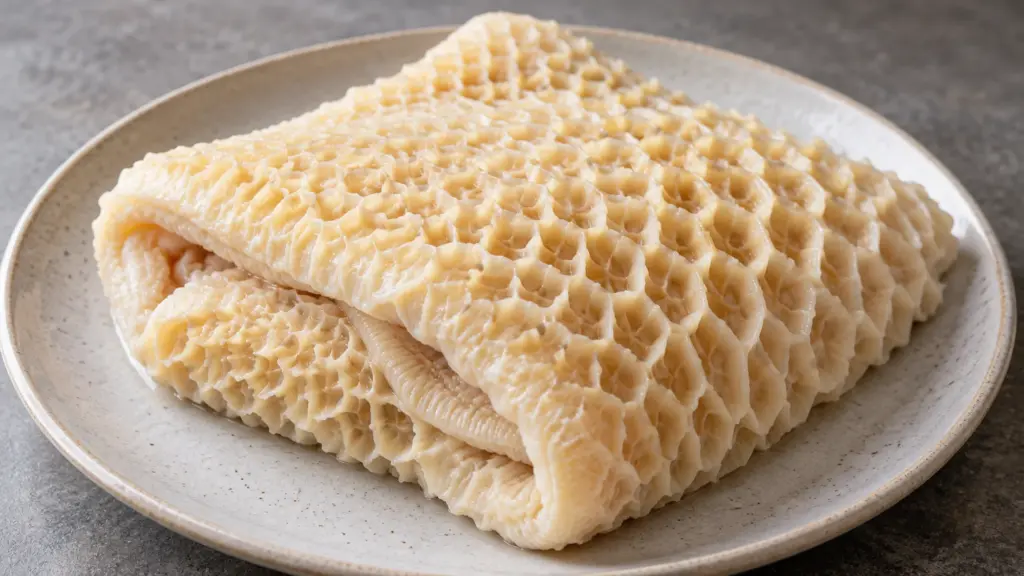
The pale, patterned piece in the butcher’s case does not look much like a steak. Beef tripe is a different kind of cut altogether: its appeal is the way its folds hold broth and sauce, provided you give it the preparation and cooking it needs.
Beef tripe is the edible lining of a cow’s stomach, not its intestines. Honeycomb tripe has distinctive raised pockets and a mild flavor. Buy a clearly labeled product, check whether it is raw or already cooked, and plan for tenderness rather than a quick sear.
I would make that raw-versus-cooked question the first conversation at the counter. Two similar-looking packages can call for very different amounts of kitchen time.
What Is Beef Tripe?
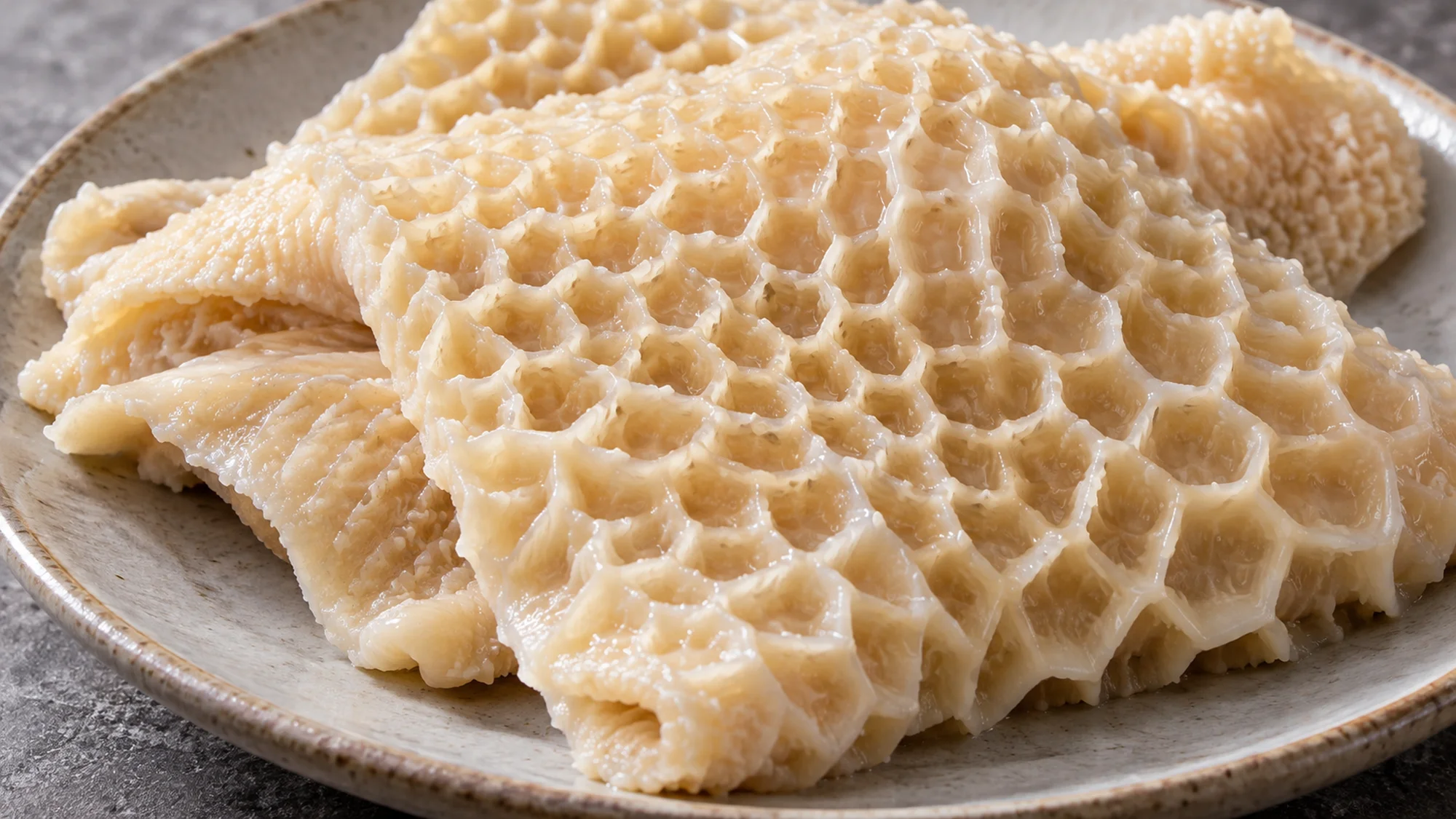
The USDA’s tripe guide identifies the stomach lining as the source and describes honeycomb as a relatively mild, tender variety. Beef cattle have a stomach with four compartments; edible tripe commonly comes from the first three. Those different surfaces help explain why every piece does not have the same pattern.
Tripe belongs to the group often called offal or variety meats. It is not ground beef, a muscle steak or a ready-made soup. The name tells you the part of the animal, while the package tells you what processing it has received.
- Honeycomb: look for the recognizable pocketed surface; its texture catches sauces.
- Other forms: smoother or folded tripe can behave differently, so choose the kind named in your recipe.
- At a restaurant: ask how it is prepared if the cut is unfamiliar. A slow-simmered stew and a thinly sliced topping are different eating experiences.
Buying and Handling Beef Tripe
Choose inspected meat from a reputable supplier and keep it cold on the way home. USDA storage guidance gives raw variety meats, including tripe, a refrigerator window of one to two days at 40°F (4.4°C) or below; freeze it if your cooking plans move later.
| Package wording | What it does—and does not—tell you | Your next step |
|---|---|---|
| Cleaned or prepared | Not necessarily cooked or ready to eat | Read preparation instructions |
| Raw | Needs thorough cooking | Allow time for safe cooking and tenderness |
| Fully cooked | Has already undergone cooking | Follow storage and reheating directions |
| Frozen | Temperature state, not cooking status | Check whether it is raw or cooked |
Keep raw juices away from salad ingredients and cooked food. The USDA’s cross-contamination guidance calls for washing hands and cleaning utensils and surfaces after raw-meat contact. Do not treat rinsing, salt or vinegar as a substitute for safe cooking, and do not use household cleaners on food.
Clean-looking tripe is still a perishable meat. Preparation wording and safe handling matter more than how white or tidy the piece looks.
Tenderness Takes More Than Reaching a Temperature
For safety, the USDA recommends 160°F (71.1°C) for organ and variety meats, measured with a food thermometer. Tenderness is a separate goal: tripe can need substantially longer moist cooking after it has reached a safe temperature. Follow a recipe written for the product and appliance you are using.
- Simmer gently: keep the tripe in the recipe’s cooking liquid rather than treating it like a steak.
- Check the texture: a finished piece should yield to a fork and be pleasantly tender, not stubbornly rubbery.
- Keep appliance methods separate: do not transfer stovetop timing directly to a pressure cooker; follow its tested instructions.
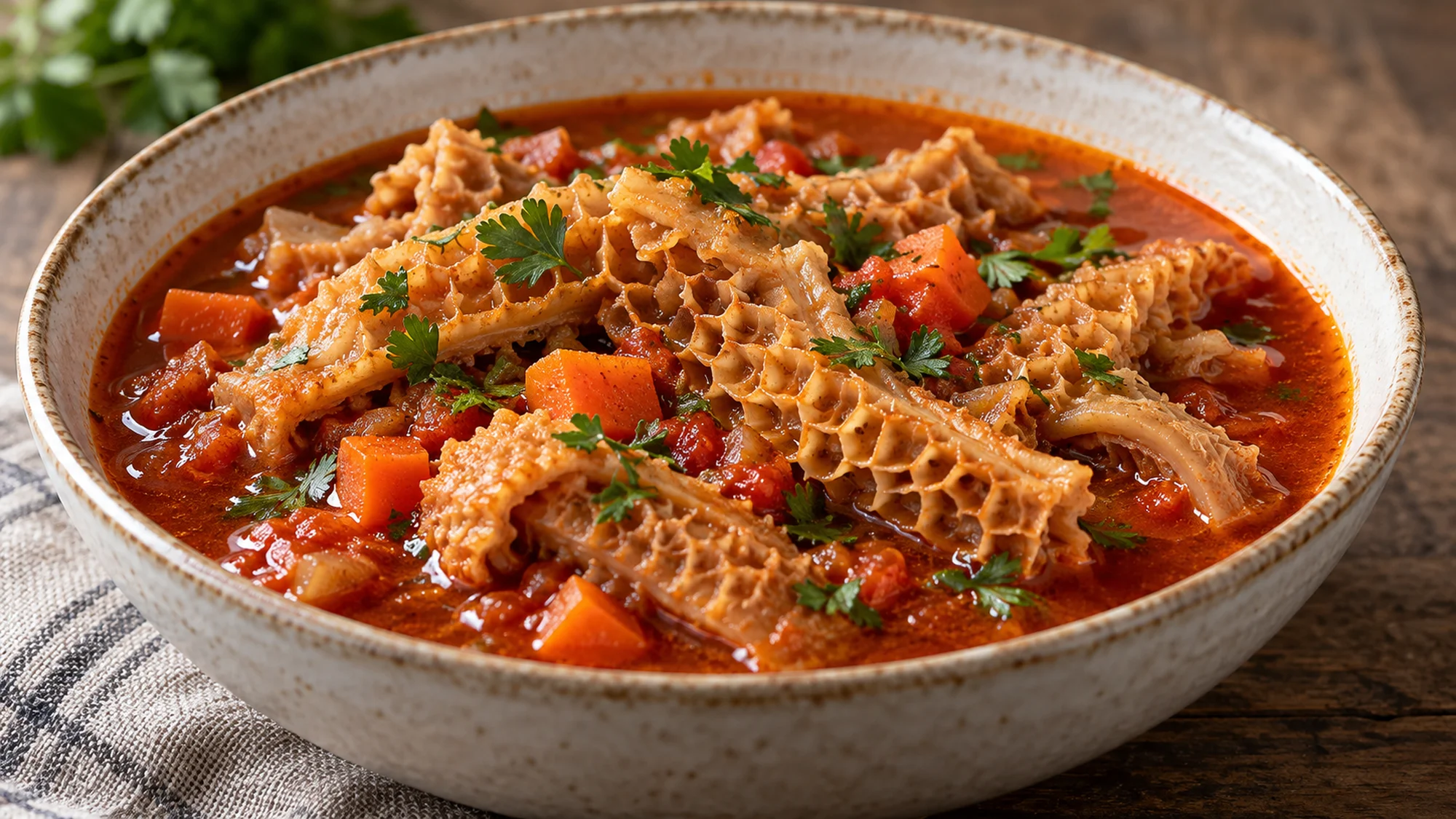
- Finish with flavor: tomato, aromatics and spices can complement the mild meat once the required preparation is complete.
As a concrete example—not a universal timing rule—Mely Martinez’s Rumba Meats preparation simmers cut honeycomb tripe before using it in quesadillas. I like that two-stage idea: tenderize first, then choose the final dish. Brothy versions are another option; our guide to pho explains the wider bowl rather than prescribing a tripe cooking method.
Nutrition and Leftovers: Read the Serving
Tripe contributes protein, but a finished stew is not nutritionally identical to plain meat. Rumba’s honeycomb tripe label lists 14 grams of protein and 100 calories per 4-ounce (112-gram) serving of its product. Those figures are one package example, not a promise for every cooked portion or restaurant bowl.
- Count the accompaniments: broth, oil, cheese and sauces change the meal’s sodium, fat and energy.
- Pair the dish with vegetables and a suitable grain or other side for variety.
- Do not turn a protein number into a claim that tripe treats a health condition or is necessary in a balanced diet.
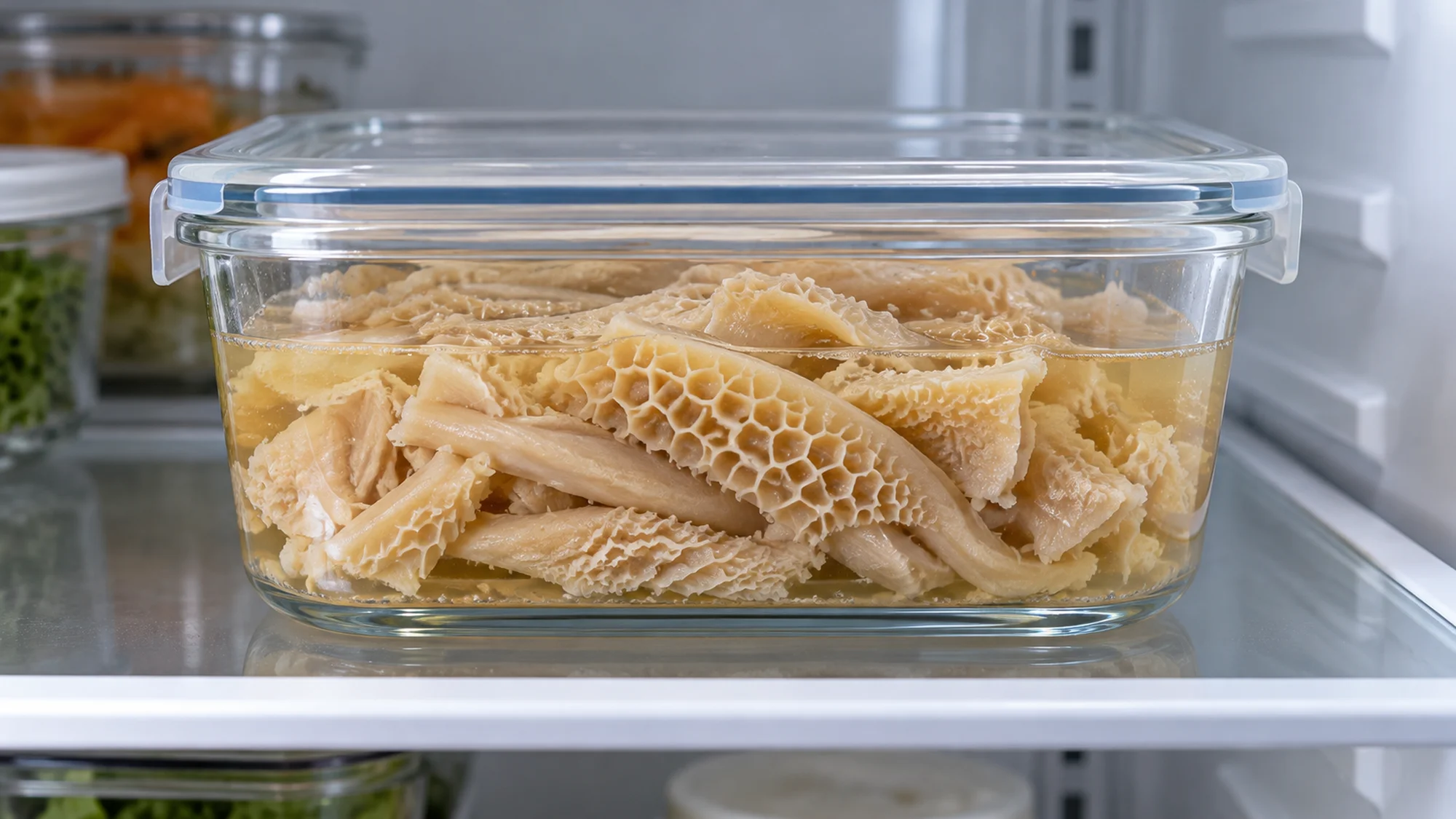
Divide cooked portions into shallow containers and refrigerate promptly. USDA leftover guidance says within two hours, or one hour when the surrounding temperature is above 90°F (32°C), then use refrigerated leftovers within three to four days. Reheat to 165°F (74°C) throughout; smell alone cannot establish safety.
Bottom Line
Choose beef tripe with its preparation clearly stated, keep it cold, and give it enough moist cooking to become tender. I would start with a small honeycomb portion and a specific recipe rather than improvising the safety steps. Once the texture is right, its mild flavor leaves plenty of room for a good sauce.
The video below, from Mexico in My Kitchen and featured by Rumba Meats, shows a quesadilla use for cooked tripe. It is a serving example, not a replacement for the handling guidance above.
Sources
- USDA: What is tripe?
- USDA: Beef storage times
- USDA: Beef cooking temperatures
- USDA: Preventing cross-contamination
- USDA: Safe leftover handling
- USDA: Reheating leftovers
- Rumba Meats: Honeycomb tripe product label
- Rumba Meats and Mely Martinez: Tripe preparation

Hi, I’m Emily Pocker! I share recipes and food guides here at Recipes360 to help you find everyday meal inspiration and feel more confident in the kitchen. My goal is to make cooking approachable, enjoyable, and full of flavor.