
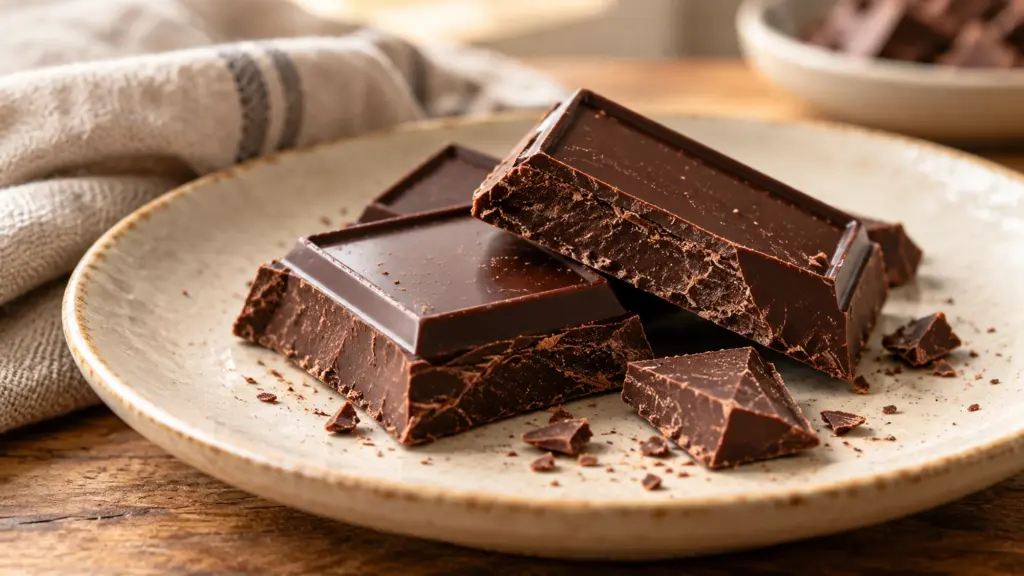
Two dark chocolate bars can show the same cocoa percentage and still taste quite different. Dark chocolate combines cocoa ingredients with sugar and, depending on the product, other ingredients. Choose it by flavor, the job it needs to do and the full label; a bigger percentage is not automatically a better bar.
The cocoa percentage describes how much of the chocolate comes from cocoa ingredients, including cocoa butter. It does not measure quality or guarantee that a bar is dairy-free. For baking, match the chocolate specified in the recipe before changing the percentage.
What dark chocolate percentages actually tell you
Valrhona explains that the percentage includes both cocoa material and cocoa butter. A 70% bar contains 70% cocoa-derived ingredients, while much of the remainder is usually sugar. The number does not reveal the balance between cocoa butter and the other cocoa components, so it cannot predict every detail of flavor or texture.
- Compare similar products: A plain bar and a filled chocolate have different jobs and ingredient lists.
- Use sweetness as a clue: A higher percentage often leaves less room for sugar, but read the actual label.
- Leave room for preference: Bitter, fruity, roasted and nutty impressions can vary between bars. The percentage is a starting point.
- Keep the recipe in view: Switching to a much darker chocolate can change the balance of an otherwise familiar dessert.
I’d choose a bar I enjoy eating rather than chase the highest number on the shelf. Ghirardelli likewise notes that higher cacao content is not always better; the preferred intensity depends on the person and the occasion.
Choose the form that suits your plan
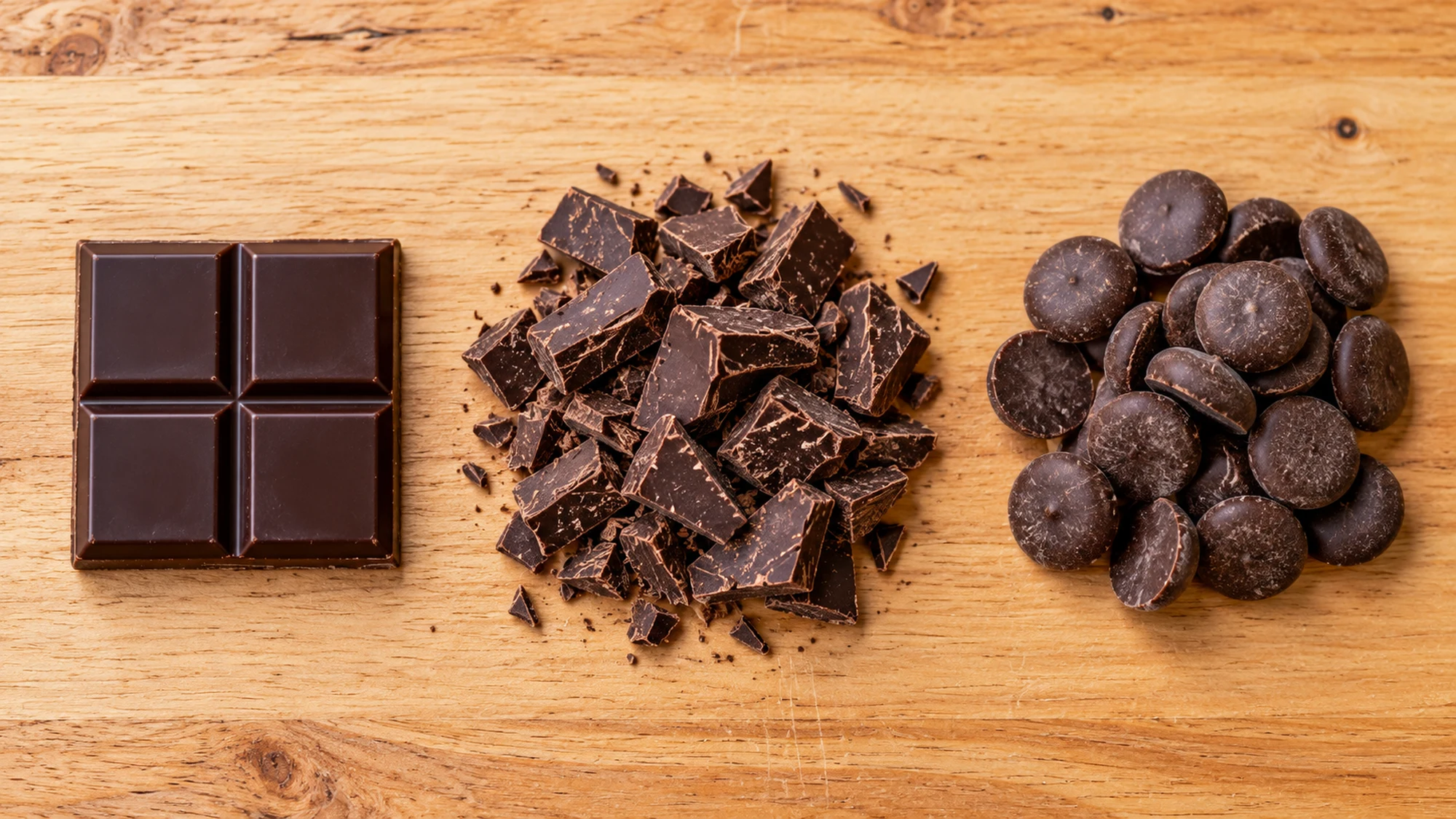
Bars, baking drops and couverture can all be dark chocolate. Couverture is formulated for work such as coating and molding, where fluidity matters. Shape alone does not tell you how a product will behave, so look for the maker’s intended applications rather than assume every small chocolate piece is interchangeable.
| Your plan | Useful choice | Check first |
|---|---|---|
| Eat a square | A plain bar | Flavor and sweetness you enjoy |
| Mix into batter | Recipe-specified bar or drops | Cocoa percentage and weight |
| Make a thin coating | Couverture for coating | Fluidity and tempering instructions |
| Replace cocoa powder | A tested substitution | Added fat and sugar change the formula |
For a first attempt, I’d follow the named type and weight in a dependable recipe. Once you understand the result, changing one feature at a time makes the effect easier to judge. Cocoa powder, unsweetened baking chocolate and a sweetened bar are different ingredients. For powder-label distinctions, see this site’s cacao vs cocoa guide.
Melt dark chocolate gently and keep tools dry
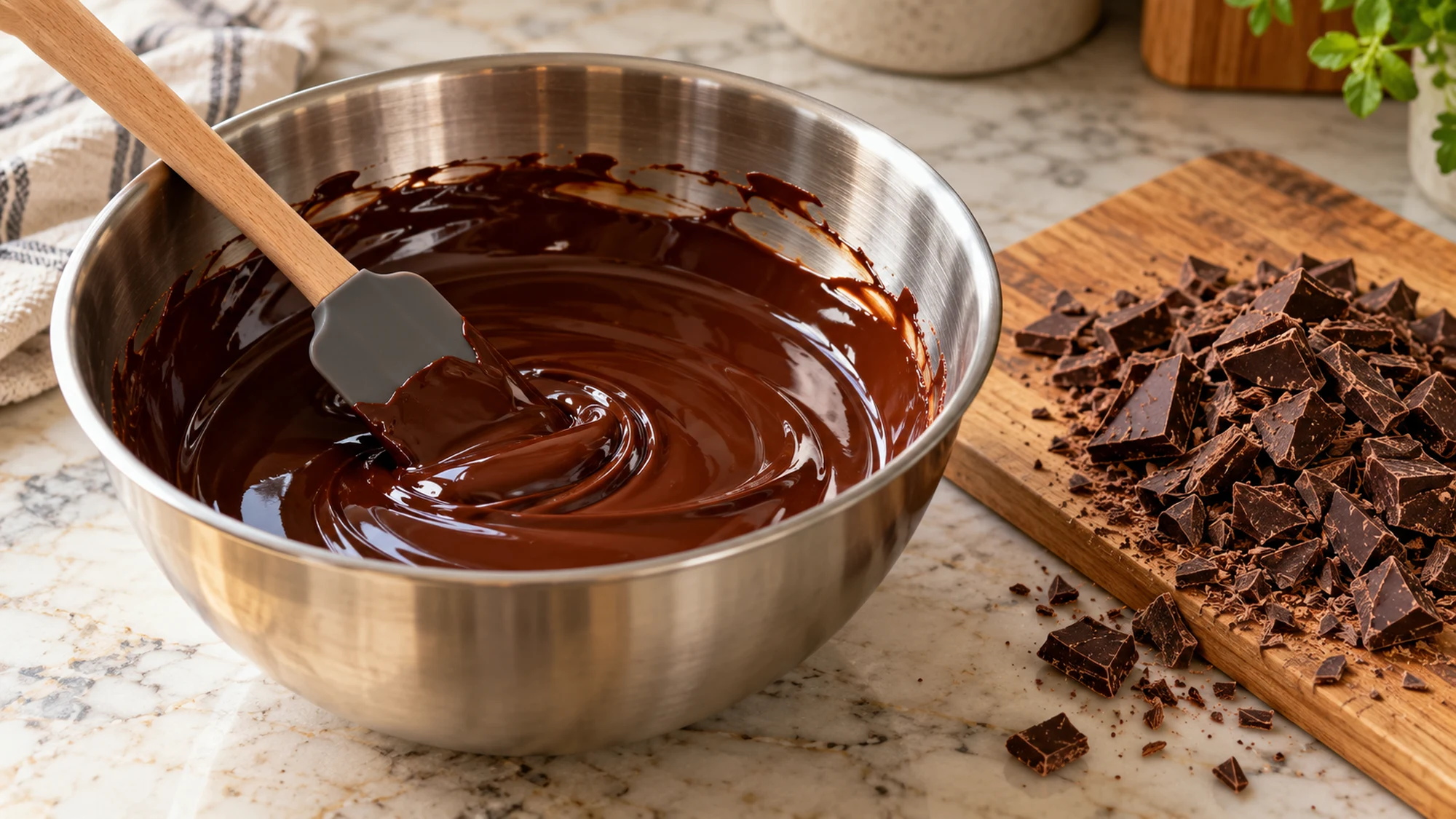
King Arthur Baking’s melting comparison emphasizes even heating and stirring. Chop a bar into small pieces, use a suitable heatproof bowl and warm it in short bursts if using a microwave. Stir between bursts, including when the pieces still appear solid; appearances alone can tempt you into overheating them.
- Dry the bowl, spatula and work area before starting.
- Keep accidental splashes and steam out of plain melted chocolate; a little water can make it stiff and grainy.
- Follow a specific formula when adding cream, water or another liquid for a sauce. Deliberate liquid-based preparations are different from an accidental splash.
- Use a chocolate-specific tempering method for a firm, glossy coating; simply melting chocolate is a different task.
Tempering controls how cocoa butter sets after melting. It matters for dipped or molded chocolate that should set with shine and snap, whereas chocolate stirred into cake batter does not need the same finish. Use the maker’s temperature guidance for that exact chocolate; there is no benefit in borrowing a random temperature from a different product.
Store it carefully and check the whole label
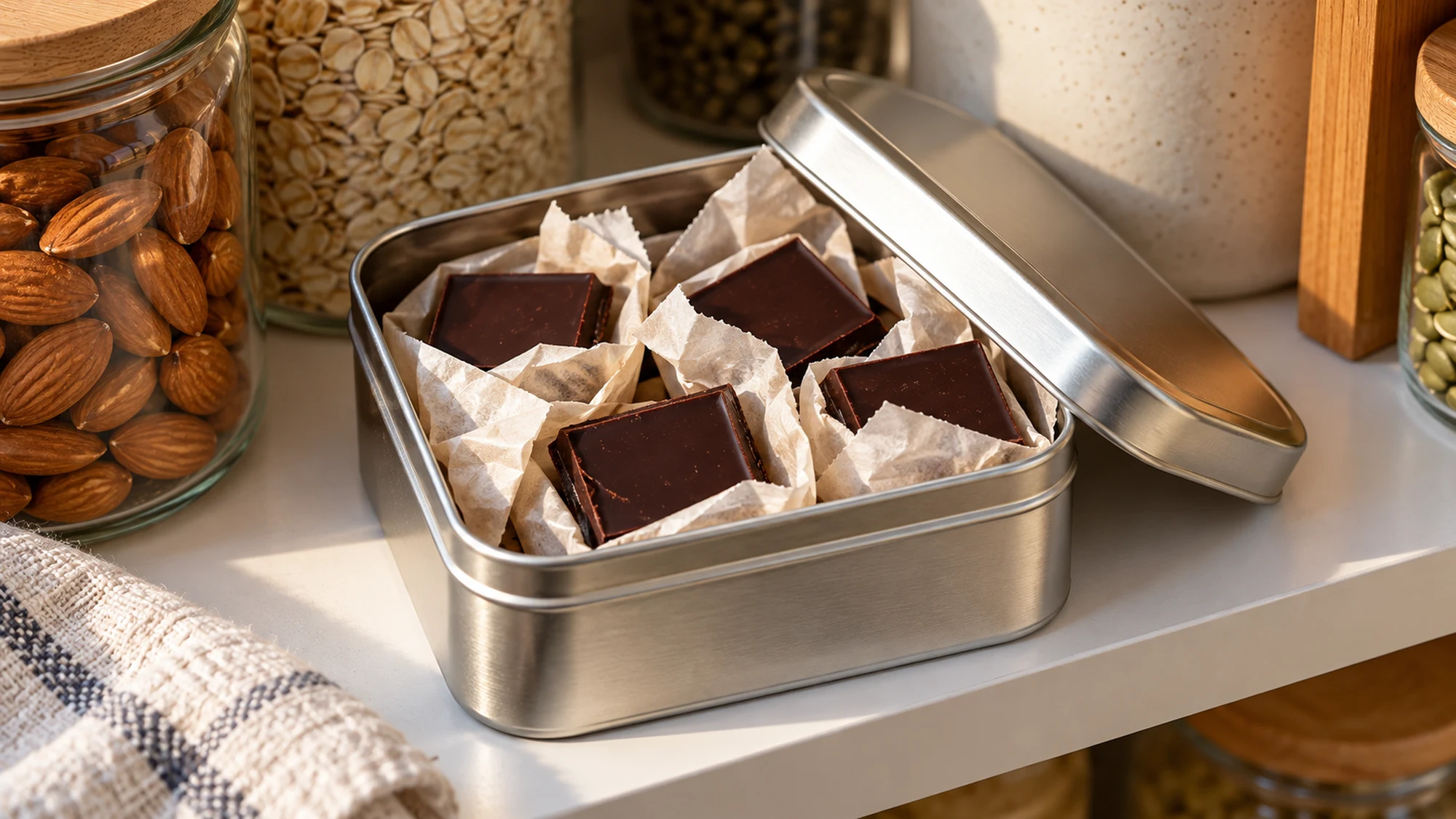
Callebaut’s storage guidance recommends protecting pure chocolate from light, strong odors and moisture, ideally at 54–64°F (12–18°C). Close the packaging well and follow the product’s date and directions. If it has been chilled, let the sealed package return to room temperature before opening to reduce condensation.
FDA guidance on dark chocolate makes an essential distinction: milk can be an ingredient, and unintended milk can also enter through shared equipment. Read the ingredients, allergen statement and advisory wording every time. If milk allergy is a concern, contact the manufacturer about its controls rather than relying on the word “dark.”
- Check nuts, soy and other relevant allergens separately, including in flavored or filled products.
- Do not treat cocoa percentage as a health score or a reason to ignore the serving size and Nutrition Facts.
- Store filled chocolates according to their own instructions; a cream filling changes the storage question.
Bottom Line
Choose dark chocolate for the flavor and purpose you want. Let the cocoa percentage guide comparison, keep melting gentle, protect the stored bar from heat and moisture, and use the complete label for allergy decisions. A useful match matters more than a dramatic number.
Sources
- Valrhona: Dark chocolate and cocoa percentage
- Ghirardelli: Chocolate questions and answers
- King Arthur Baking: How to melt chocolate
- Callebaut: Good storage practices
- FDA: Dark chocolate and milk allergy

Hi, I’m Emily Pocker! I share recipes and food guides here at Recipes360 to help you find everyday meal inspiration and feel more confident in the kitchen. My goal is to make cooking approachable, enjoyable, and full of flavor.