
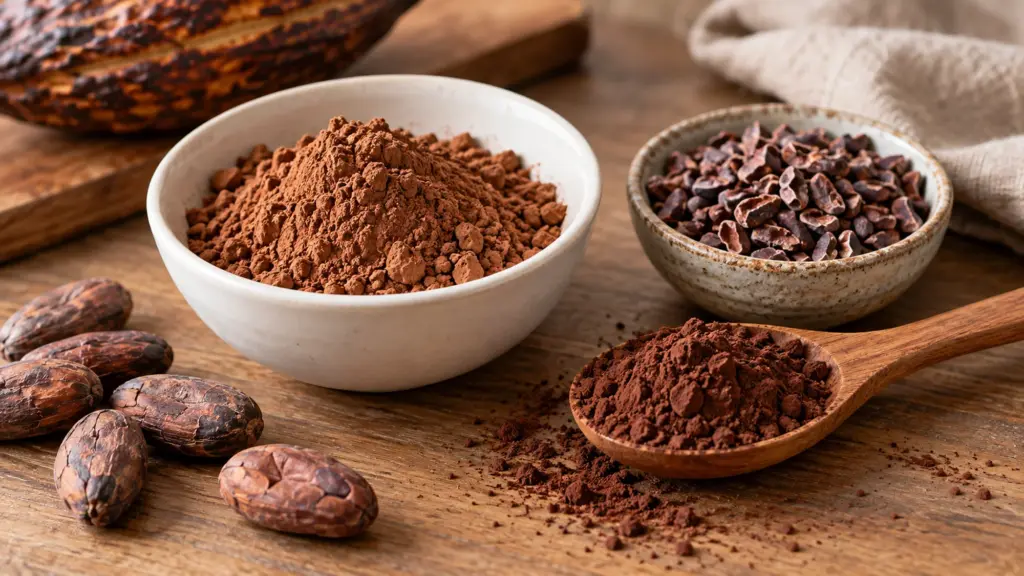
Two bags of brown powder can turn a simple baking purchase into a vocabulary puzzle. One says cacao; the other says cocoa. The useful answer to cacao vs cocoa starts with the ingredient inside: the words overlap, while the form, processing and added ingredients tell you much more about what to buy.
Cacao and cocoa come from the same plant, and their names are not a dependable raw-versus-roasted rule. Check whether you are buying nibs, unsweetened powder or a sweetened mix, then look for natural or Dutch-process wording.
Cacao vs cocoa: why the words overlap
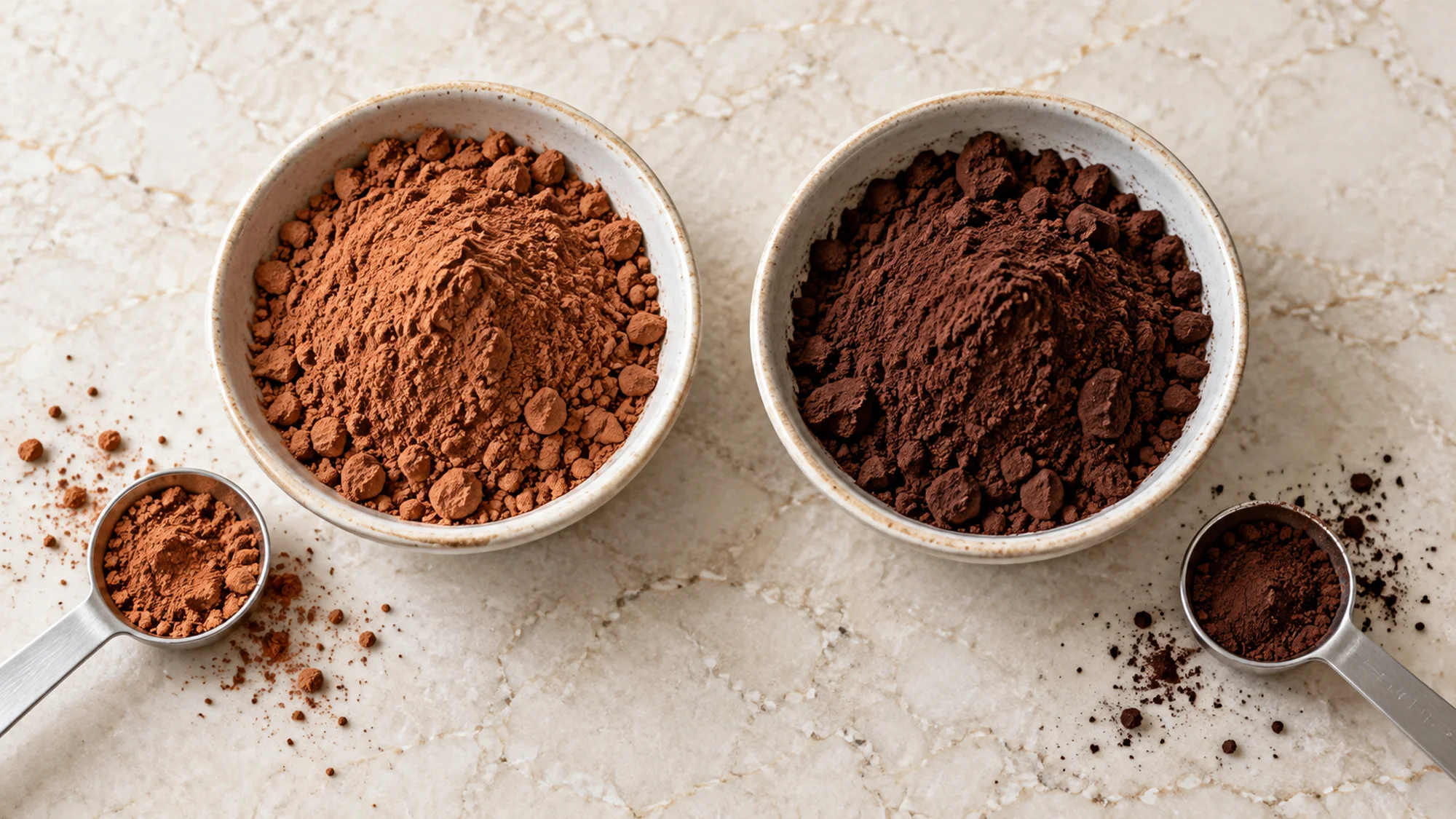
Cacao commonly names the tree, its pods and beans; cocoa often names processed ingredients. But usage is not consistent. A 2026 OECD working paper’s terminology note explains that there is no widely agreed distinction and that international organizations use “cocoa beans” for both raw and roasted forms.
A concrete example is more useful than a tidy rule: Guittard’s Organic Natural Cocoa Powder is also labeled “100% Cacao.” Both words appear on one product. I’d give the ingredient description more attention than whichever word is printed largest on the front.
- Do not infer raw: the word cacao alone does not document the temperatures or steps used.
- Do not infer sweetened: cocoa powder can be unsweetened; a drink mix is a separate product.
- Ask when it matters: use the manufacturer’s process information for a specific product.
First compare the ingredient forms
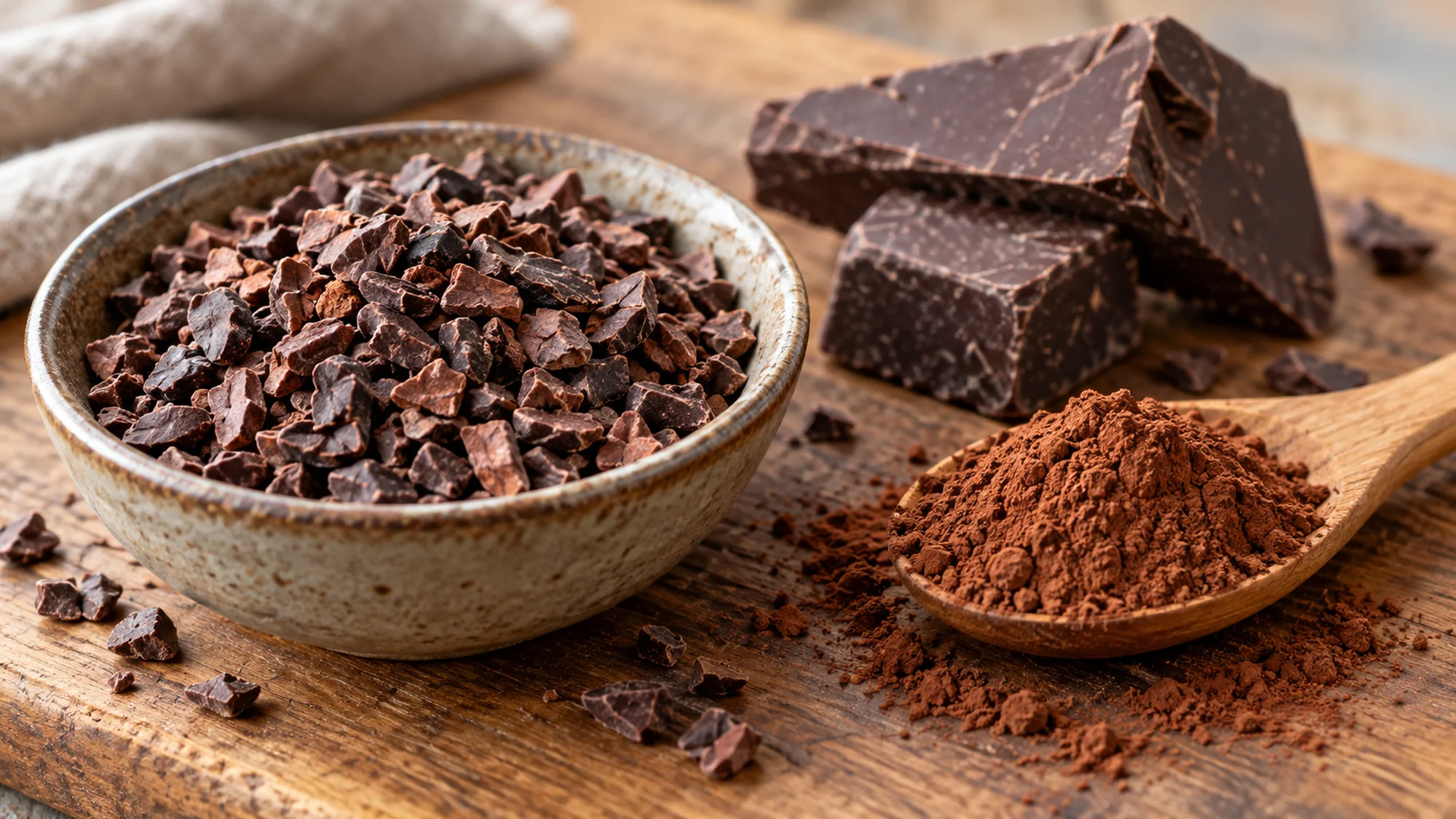
Valrhona describes the path from beans to cocoa ingredients: fermentation and drying precede further processing, nibs are pieces of the shelled bean, and pressing cocoa paste separates much of its fat from the solids used for powder. These forms have different jobs in the kitchen.
| Form | What it contributes | Useful distinction |
|---|---|---|
| Nibs | Crunch and concentrated cocoa flavor | Pieces, not a smooth powder |
| Natural powder | Cocoa flavor and acidity | Not alkalized |
| Dutch-process powder | Darker color, reduced acidity | Alkalized |
| Cocoa butter | Fat and melting behavior | Not a powder substitute |
Nibs give a little crunch over a creamy dessert; fine powder disperses through a batter. Neither behaves like a spoonful of cocoa butter. If you transfer powder into a kitchen jar, keep the original product information or copy the exact type onto the label. A plain jar of brown powder gives you very little help when a recipe makes a specific request weeks later. I’d keep that physical difference in mind before treating two packages as substitutes just because both mention cacao.
Natural and Dutch-process matter in baking
Guittard’s cocoa guide describes natural powder as more acidic and Dutch-process powder as treated to reduce acidity, usually with a darker color and a mellower flavor. That is a processing distinction within cocoa powder, separate from the cacao-versus-cocoa wording.
- For cakes and quick breads: follow the cocoa type specified by the recipe.
- For a drink or frosting without chemical leaveners: flavor and color may give you more freedom.
- For a switch: expect a change in taste and appearance; do not assume identical results.
King Arthur’s baking comparison explains why acidity matters with baking soda and baking powder. The recipe’s complete ingredient balance counts, so avoid a universal replacement rule based on one leavener. Our chocolate cake recipe, for example, specifically calls for natural unsweetened cocoa.
Read nutrition and allergy details product by product
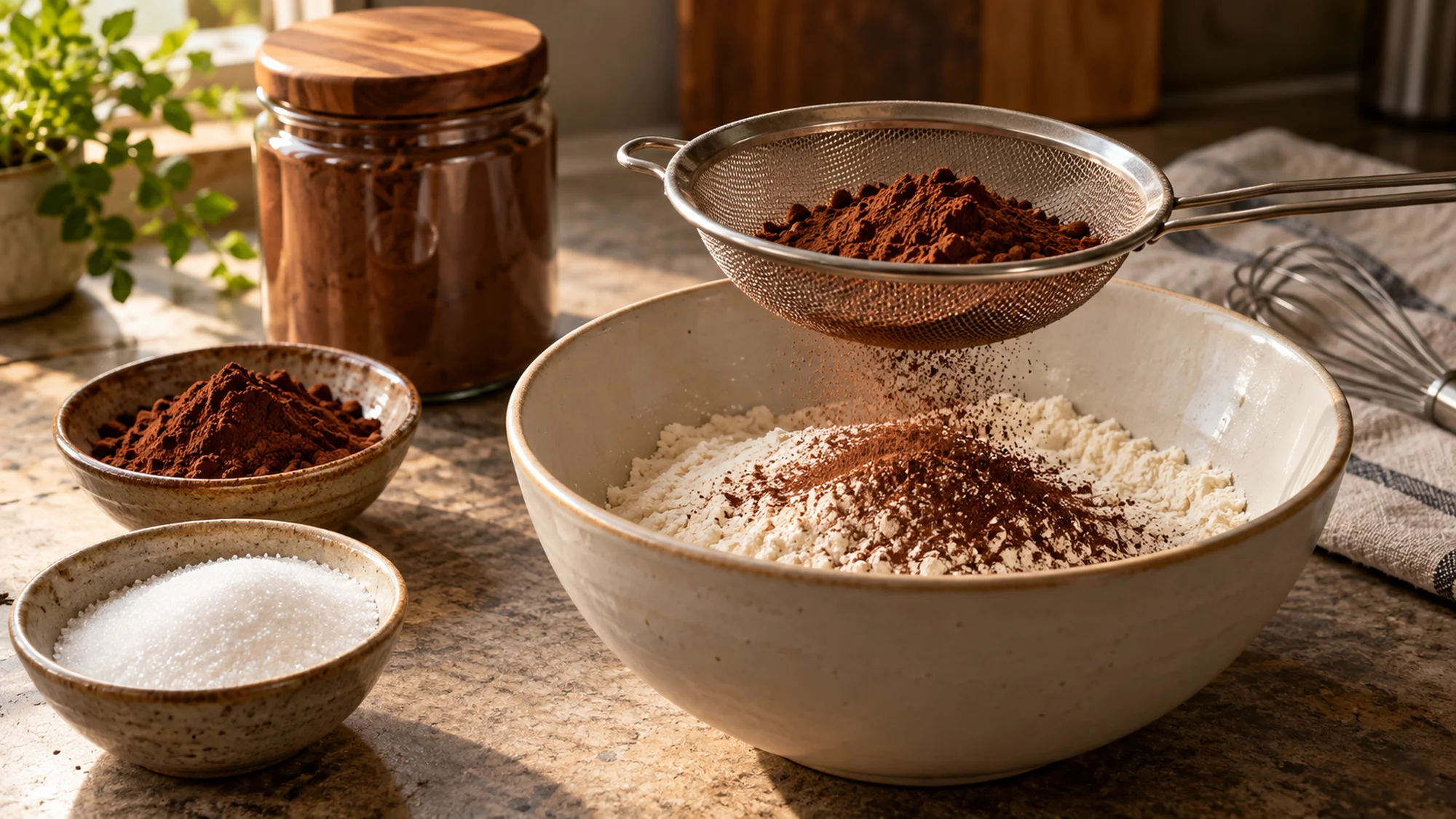
The spelling is not a nutrition score. Compare the same amount of the same form: a spoonful of plain powder and a sweetened chocolate drink mix are not interchangeable servings. A claim about one product’s composition should stay attached to that product, rather than becoming a promise about everything called cacao.
- Ingredient list: check for sugar, milk ingredients and other additions rather than relying on the name.
- Serving size: match gram weights when comparing nutrition panels.
- Processing description: look for natural, alkalized or Dutch-process details when choosing a powder for baking.
- Allergy information: check the current package and manufacturer guidance, including shared-equipment information.
Guittard’s natural-powder listing states that its vegan-friendly designation does not rule out traces from shared equipment. That is a useful reminder: ingredient preferences and allergy suitability answer different questions. I’d choose for the dish and the person eating it, without paying extra for an unsupported health promise.
Bottom Line
For cacao vs cocoa, read past the headline word. Match the ingredient form, check natural versus Dutch-process for baking, and compare the actual label. The right powder is the one that fits your recipe and dietary needs.
Sources
- OECD working paper: terminology note, Box 2.1
- Valrhona: cocoa processing and forms
- Guittard: cocoa powder guide
- Guittard: natural-powder product information
- King Arthur: natural and Dutch-process baking comparison
- Iowa State Extension: cocoa explanation and video reference

Hi, I’m Emily Pocker! I share recipes and food guides here at Recipes360 to help you find everyday meal inspiration and feel more confident in the kitchen. My goal is to make cooking approachable, enjoyable, and full of flavor.