
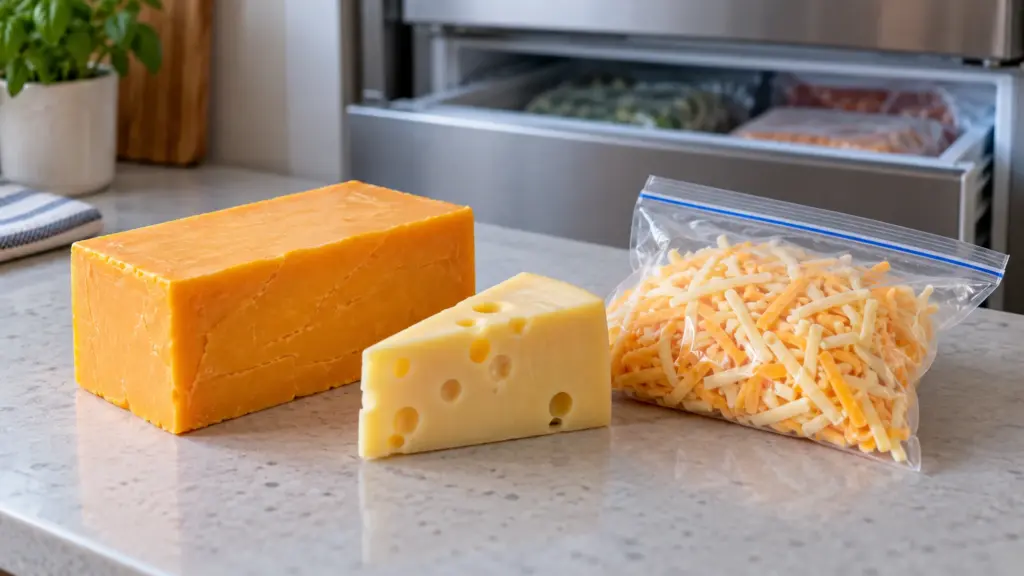
Yes, you can freeze cheese, especially firm varieties such as cheddar and Swiss. The tradeoff is texture: a block that sliced neatly before freezing may crumble afterward. If the cheese is headed for a hot sandwich, pasta or a baked dish, that change is usually easier to work around.
Freeze cheese in small, well-wrapped portions while it is still fresh. Hard and semi-hard cheeses are generally better candidates than soft, creamy cheeses. Thaw in the refrigerator and plan to use the cheese in cooking when a smooth slice matters less.
Which cheeses freeze well?
Start with the cheese you have and what you want to do with it later. The National Center for Home Food Preservation recommends freezing hard or semi-hard cheese when necessary, while noting that refrigeration gives the best quality. Freezing can preserve flavor without preserving the original texture.
| Cheese or form | What to expect | Useful plan after thawing |
|---|---|---|
| Cheddar or Swiss blocks | Can become crumbly or mealy | Grate or crumble into cooked dishes |
| Low-moisture mozzarella or other firm melting cheese | Texture may change | Reserve for dishes where it melts |
| Shredded firm cheese | Convenient to portion; may clump | Pack in amounts you will use together |
| Cream cheese, cottage cheese or ricotta | Often separates or loses its creamy texture | Keep refrigerated when fresh texture is important |
Soft cheese is a separate decision. Freezing a creamy spread and freezing a block for melting do not give the same result. For that specific case, our cream cheese freezing guide explains the texture limitations in more detail.
Portion and package before freezing
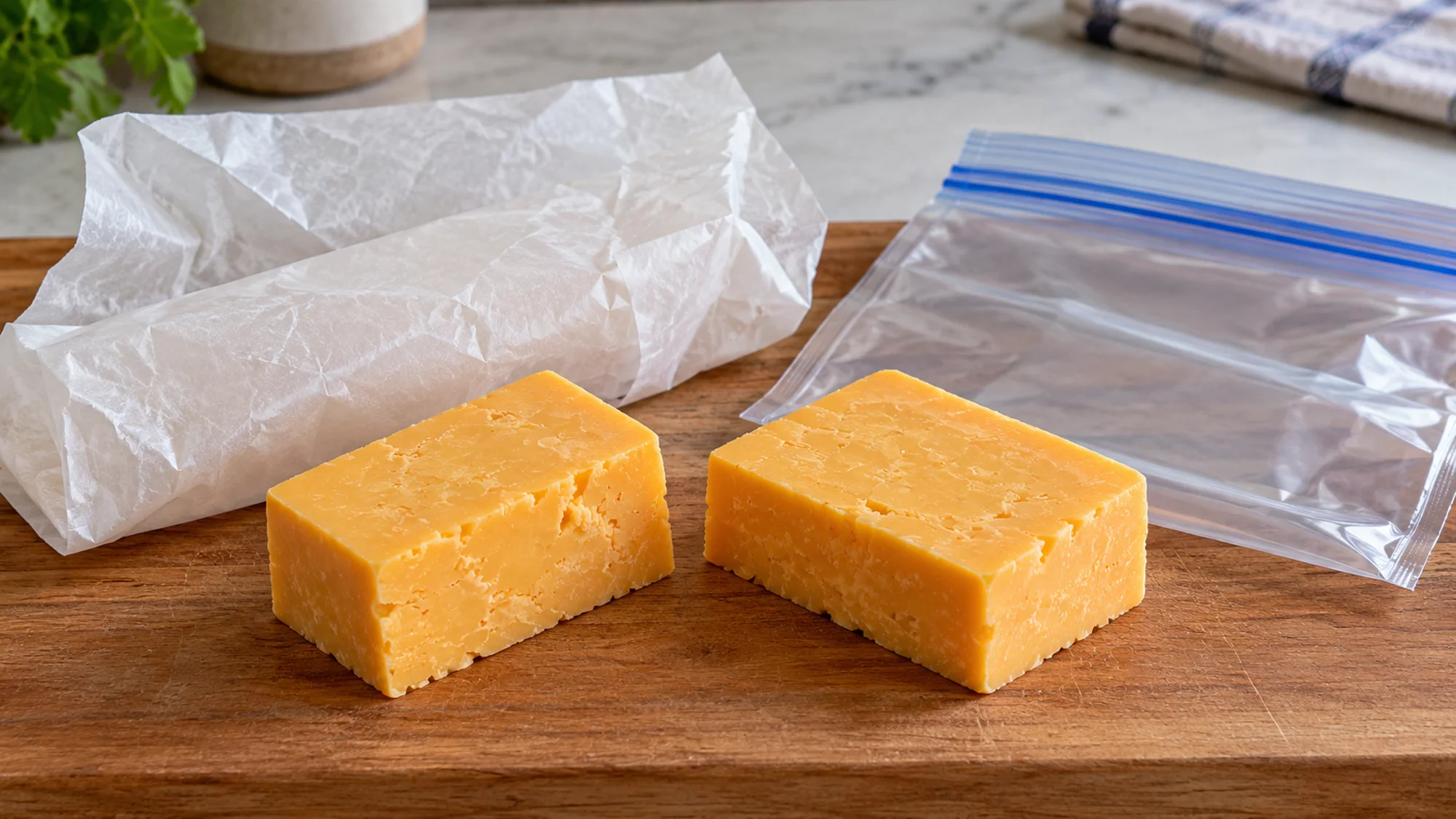
A giant block is awkward when you need only a little. Nebraska Extension suggests cutting hard or semi-hard cheese into half-pound to one-pound blocks, wrapping them in plastic wrap and putting them in freezer bags. Smaller household portions are practical when they match a planned use.
Keep the wrapping close to the cheese and press excess air out of the outer bag before sealing it. Divide shredded cheese into meal-sized bags, or keep a suitable unopened package intact. The point is to limit exposure and avoid thawing the entire supply for one meal.
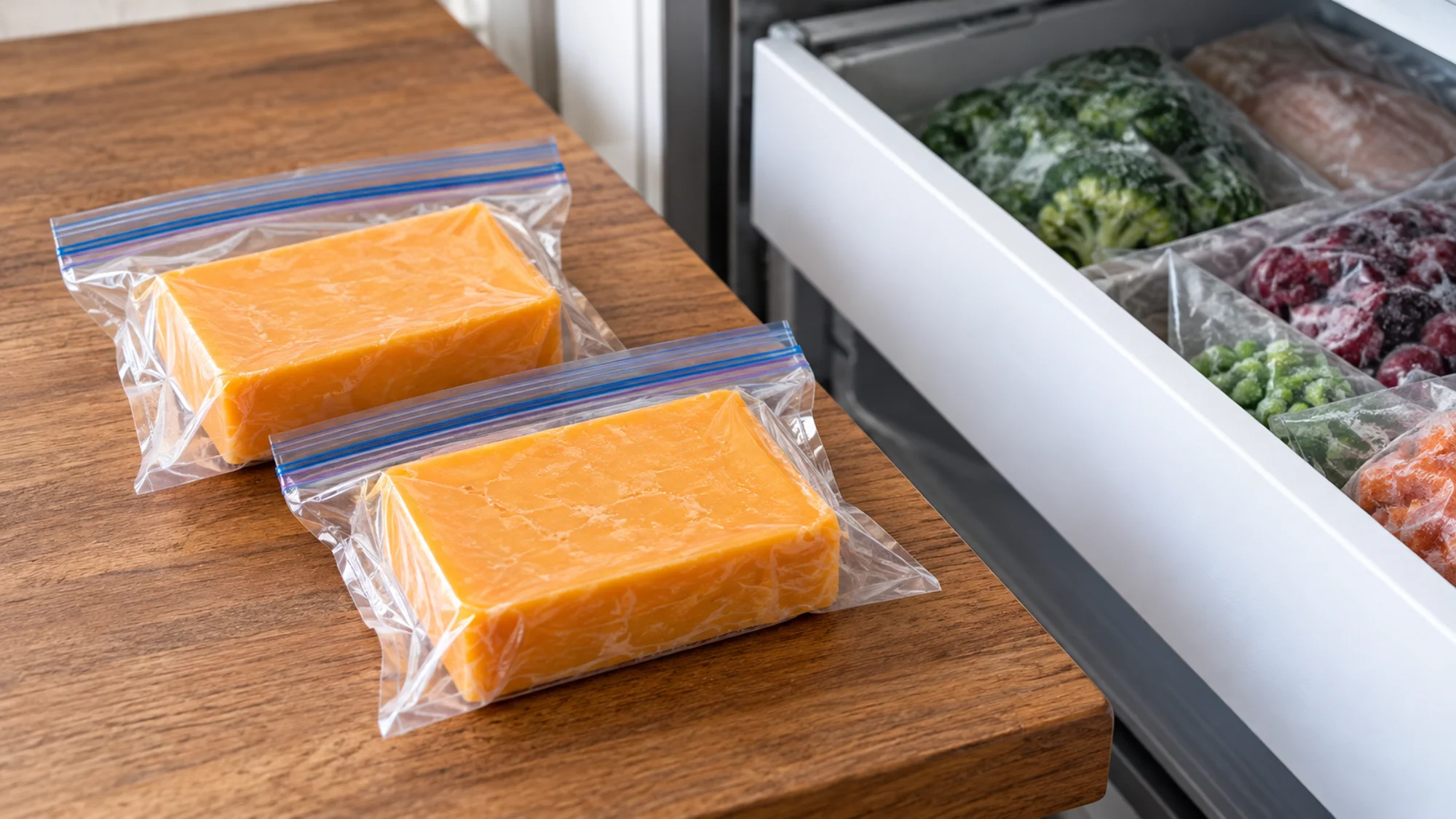
Label each portion with the cheese type and freezing date. Add a note such as “for melting” if that will help you remember why it is there. Package different cheeses separately so you can choose the flavor you need without opening several bags.
How long can cheese stay frozen?
Think in terms of quality, not a countdown that suddenly makes cheese unsafe. The Illinois Extension freezer chart gives hard cheeses such as cheddar and Swiss about four to six months for top quality at 0°F. NCHFP recommends six months for these hard cheeses. Marking a four-to-six-month use window is a sensible planning choice.
Keep the freezer at 0°F or below and the refrigerator at 40°F or below, using an appliance thermometer to check. USDA’s storage guidance explains these temperature targets. A date on the bag cannot compensate for a freezer that has warmed up.
Freeze cheese while it is in good condition. Freezing does not repair food that has spoiled or make earlier unsafe handling disappear. If you do not know how a perishable cheese was stored, do not use freezing as a way to postpone that safety decision.
Thaw gently and choose the right use
Move the wrapped portion to the refrigerator. Nebraska Extension allows about 24 to 48 hours for thawing, depending on the portion. Keeping it wrapped while it thaws gives moisture a chance to be reabsorbed; a larger block will take longer than a small bag of shreds.

Once thawed, use it promptly. Colorado State University Extension also recommends refrigerator thawing to reduce crumbling. If the block breaks instead of slicing, grate or crumble it rather than forcing it into tidy sandwich slices.
Melting is the most forgiving destination: think a cheese topping, a hot sandwich filling or a stirred-in addition to a cooked dish. Save cheese with a delicate texture for fresh serving when possible. For a cheese board, freezing may preserve the ingredient but miss the result you wanted.
Bottom Line
You can freeze cheese, but it helps to freeze with a purpose. Firm cheese, tight packaging, useful portions and refrigerator thawing give you a more manageable result. Expect some texture loss and aim to use hard cheeses within about four to six months for quality. Keep the freshest, creamiest cheeses refrigerated when their original texture is the main attraction.
Joyfully Thriving’s video shows three practical ways to portion cheese for freezing. Use the extension guidance above for storage and thawing decisions.
Sources
- National Center for Home Food Preservation: Freezing Cheese
- Nebraska Extension: Freezing Milk and Cheese
- Illinois Extension: Freezer Storage
- Colorado State University Extension: Food Storage
- USDA: Keeping Foods Safe

Hi, I’m Emily Pocker! I share recipes and food guides here at Recipes360 to help you find everyday meal inspiration and feel more confident in the kitchen. My goal is to make cooking approachable, enjoyable, and full of flavor.