
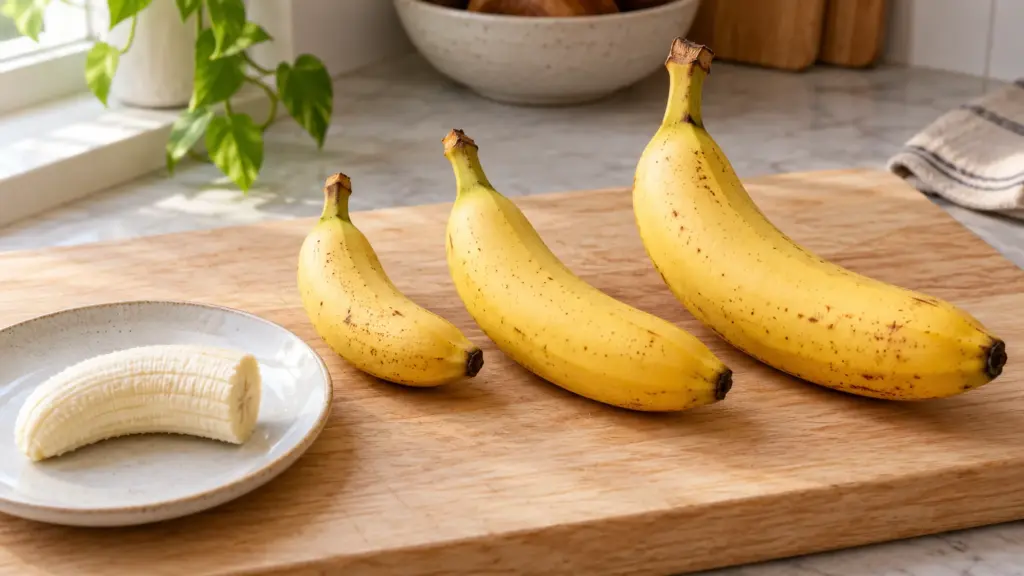
A banana looks like one serving until you put a small one beside a particularly generous one. If you’re asking how many carbs in a banana, size is the first useful detail: a medium reference portion of 118 grams peeled has about 27 grams of total carbohydrate.
A medium banana has about 27 grams of total carbs; half has about 13.5 grams. These are estimates for the edible fruit. Weigh the peeled portion when you need a closer count, and include the rest of the meal.
How many carbs in a banana by portion?
The USDA raw-banana reference provides 22.84 grams of carbohydrate per 100 grams of edible fruit. The table scales that figure to practical portions. These are reference estimates, not a laboratory result for the particular banana on your counter.
| Peeled portion | Weight | Total carbs |
|---|---|---|
| Half of a 118 g banana | 59 g | 13.5 g |
| Weighed portion | 75 g | 17.1 g |
| Reference portion | 100 g | 22.8 g |
| Medium reference | 118 g | 27.0 g |
| Larger weighed portion | 150 g | 34.3 g |
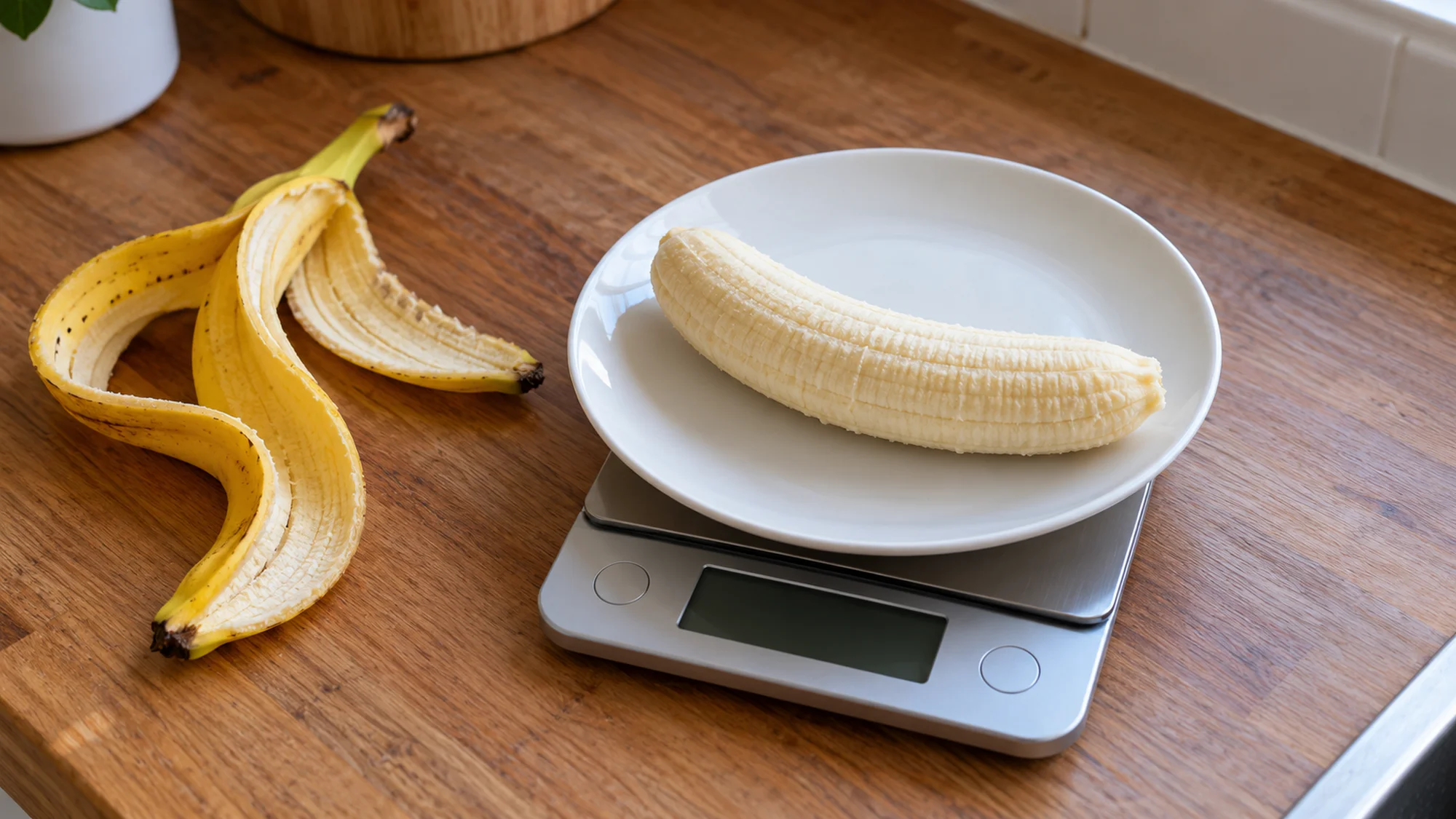
- Peel first: the discarded skin does not belong in the weight you use.
- Zero the scale: put the plate on it, reset to zero, then add the fruit.
- Count what you eat: a few slices and a whole banana need different entries.
I’d weigh an unfamiliar portion once before relying on its appearance. Length alone misses thickness, and a bowl of slices makes it surprisingly easy to lose track of the amount.
Total carbohydrate is different from sugar
Sugar is only part of the answer. The FDA’s carbohydrate-label guide explains that total carbohydrate includes dietary fiber and sugars. Starch also contributes to the total. A sugar-only figure therefore leaves out part of the banana’s carbohydrate.
- Total carbs: use this figure when following a plan that counts total carbohydrate.
- Fiber: already sits within the U.S. total, rather than being an extra amount to add.
- Net carbs: a calculation that subtracts components such as fiber; it is not the same figure as total carbohydrate.
The CDC describes a carbohydrate serving as about 15 grams for diabetes meal planning. That teaching unit is different from one piece of fruit. Follow your own care team’s counting method rather than switching between total and net figures or using this article to calculate an insulin dose.
Ripeness changes the mix, not the need to count
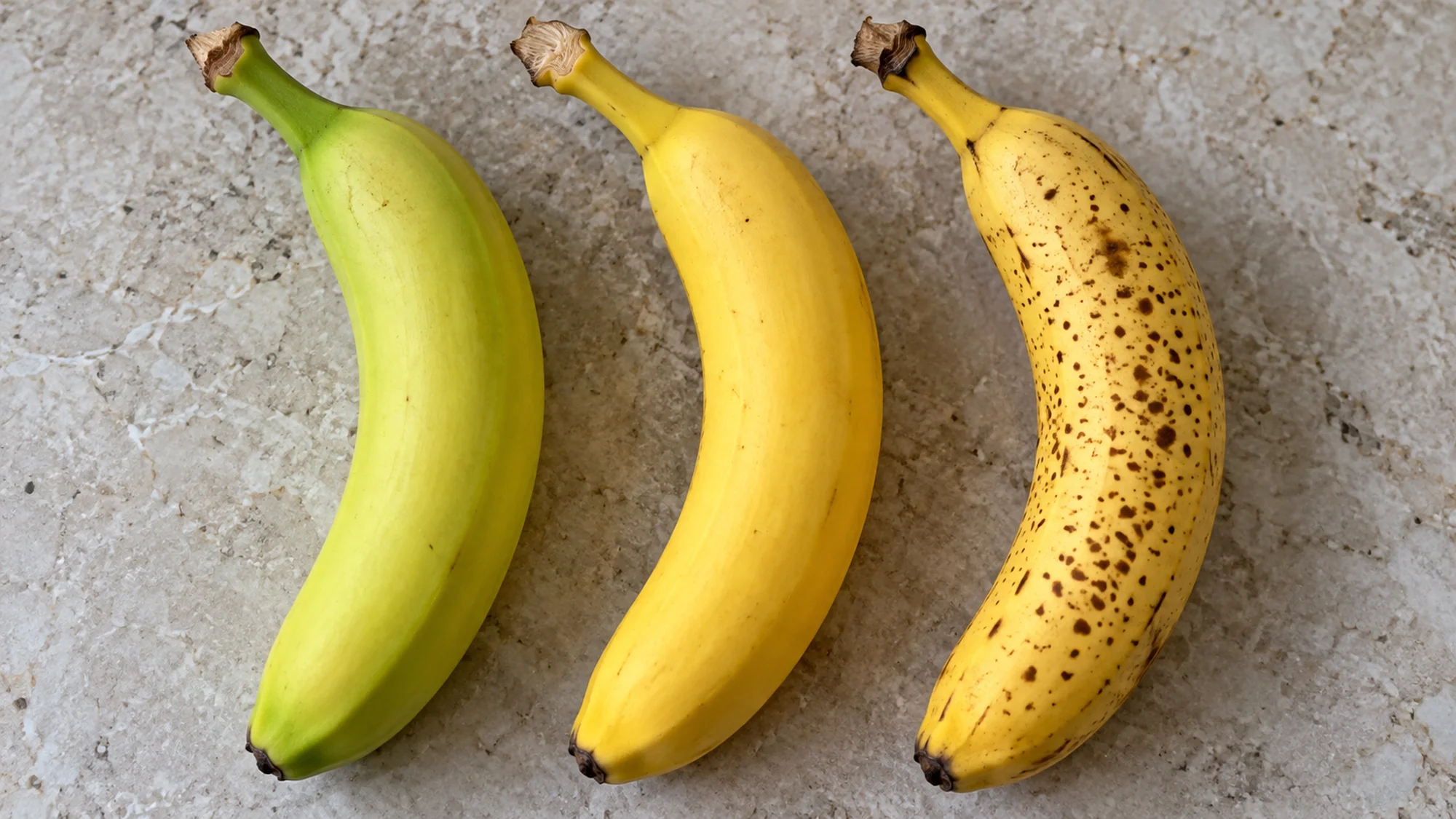
A firmer banana and a soft, freckled one can differ in starch, sugars and texture. A 2021 laboratory study of retail bananas found changes in carbohydrate composition across ripeness stages and variation among samples. It also found that the analytical method affected measured dietary fiber.
That study measured food composition; it did not establish your personal blood-glucose response. Peel color cannot provide an exact carb number. I’d choose ripeness for the texture I want, then use a consistent portion reference instead of treating a green banana as carbohydrate-free.
- For tidy slices: choose fruit firm enough to hold its shape.
- For mashing: softer fruit blends more easily.
- For tracking: use an entry matching raw banana, rather than banana chips, bread or a sweetened drink.
Count the breakfast around the banana
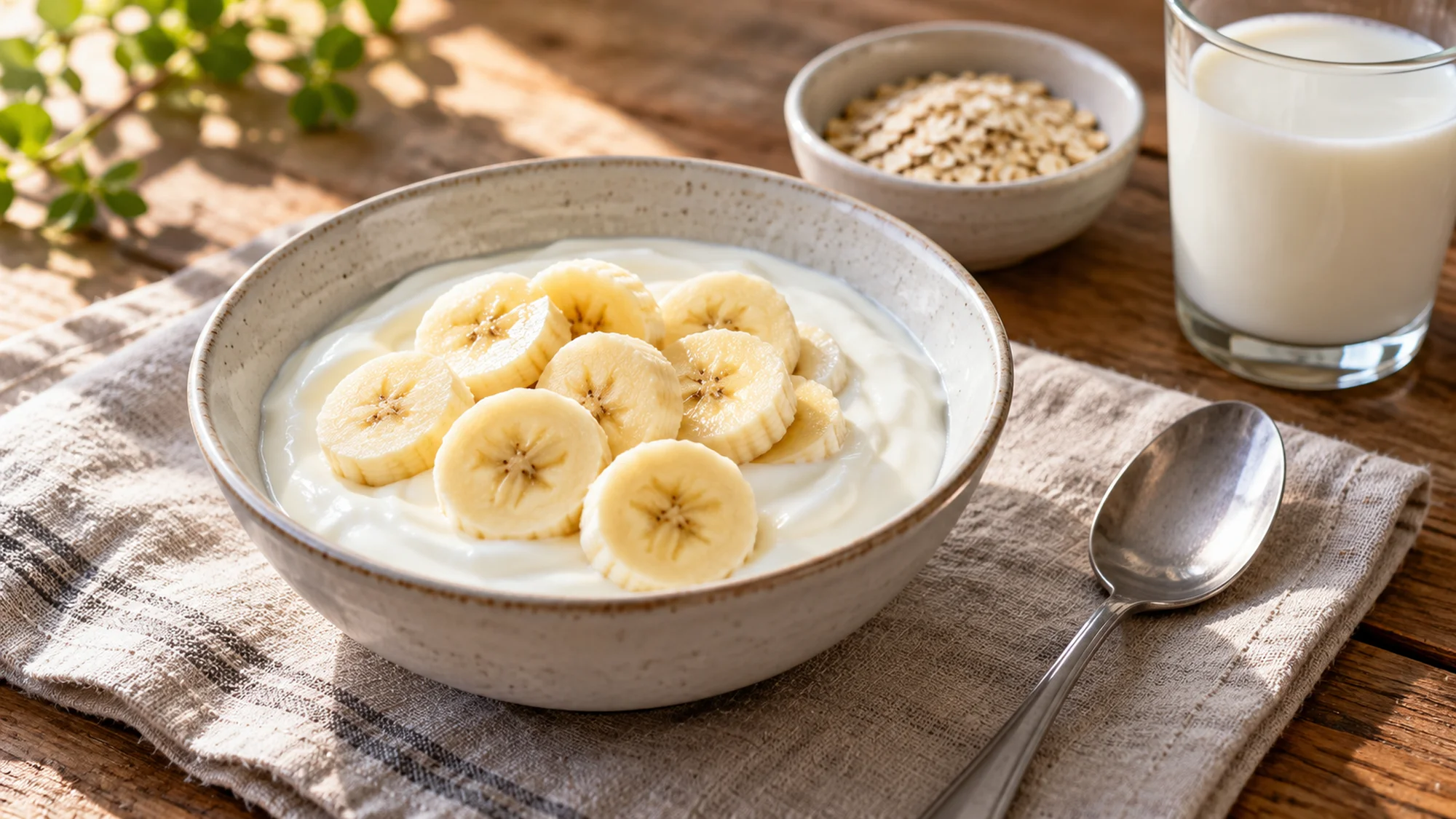
The American Diabetes Association includes fruit in diabetes eating plans; having carbs does not automatically exclude it. The practical task is choosing a portion that fits the meal. A banana stirred into yogurt is a different total from the same fruit eaten alone.
- Yogurt or milk: read its own carbohydrate amount and match the portion you pour.
- Oats or cereal: count the quantity used, checking whether the entry is dry or prepared.
- Smoothie additions: include every fruit, juice, milk and sweetener instead of counting only the banana.
- Packaged banana snacks: use the package label; drying and added ingredients change the comparison.
The CDC meal-planning guidance notes that protein, fat and fiber eaten with carbs can slow the blood-sugar rise. They do not erase the carbohydrate grams. For everyday pairing ideas, our simple snack combinations show how fruit can sit alongside other foods; adapt portions and textures for the person eating.
Bottom Line
Start with about 27 grams of total carbohydrate for a 118-gram peeled banana. Adjust for the portion, use total carbs consistently, and count the foods served with it. A useful estimate beats giving every banana the same number.
Sources
- USDA: raw banana nutrient reference
- FDA: total carbohydrate
- CDC: carb counting
- Phillips and colleagues: banana ripeness study, 2021
- American Diabetes Association: fruit
- CDC: meal planning
- Diabetes UK: carb-counting video series

Hi, I’m Emily Pocker! I share recipes and food guides here at Recipes360 to help you find everyday meal inspiration and feel more confident in the kitchen. My goal is to make cooking approachable, enjoyable, and full of flavor.