
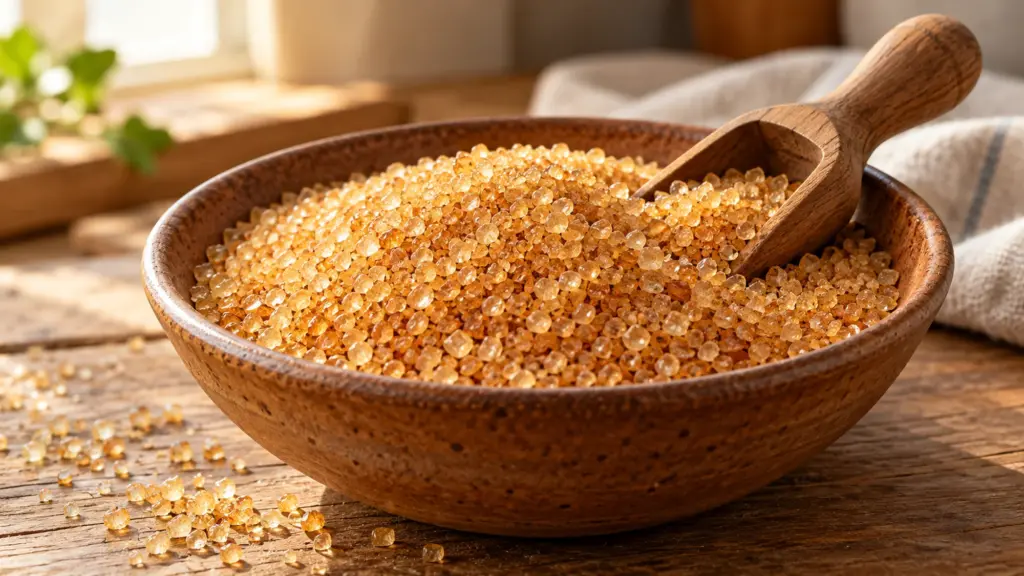
Demerara sugar is a coarse, golden cane sugar prized for its crunch and caramel-like flavor. It is especially useful when you want visible crystals on a baked topping, not when you need sugar to disappear quickly into a delicate batter.
Use demerara sugar for a crisp finishing touch and gentle molasses flavor; do not treat it as a healthier sugar or an automatic swap in every recipe.
I think of it as a texture ingredient as much as a sweetener. Before reaching for the bag, ask whether your recipe needs a crunchy surface, a smooth mixture or the moisture of soft brown sugar—the answer makes the choice easier.
What makes demerara sugar different?
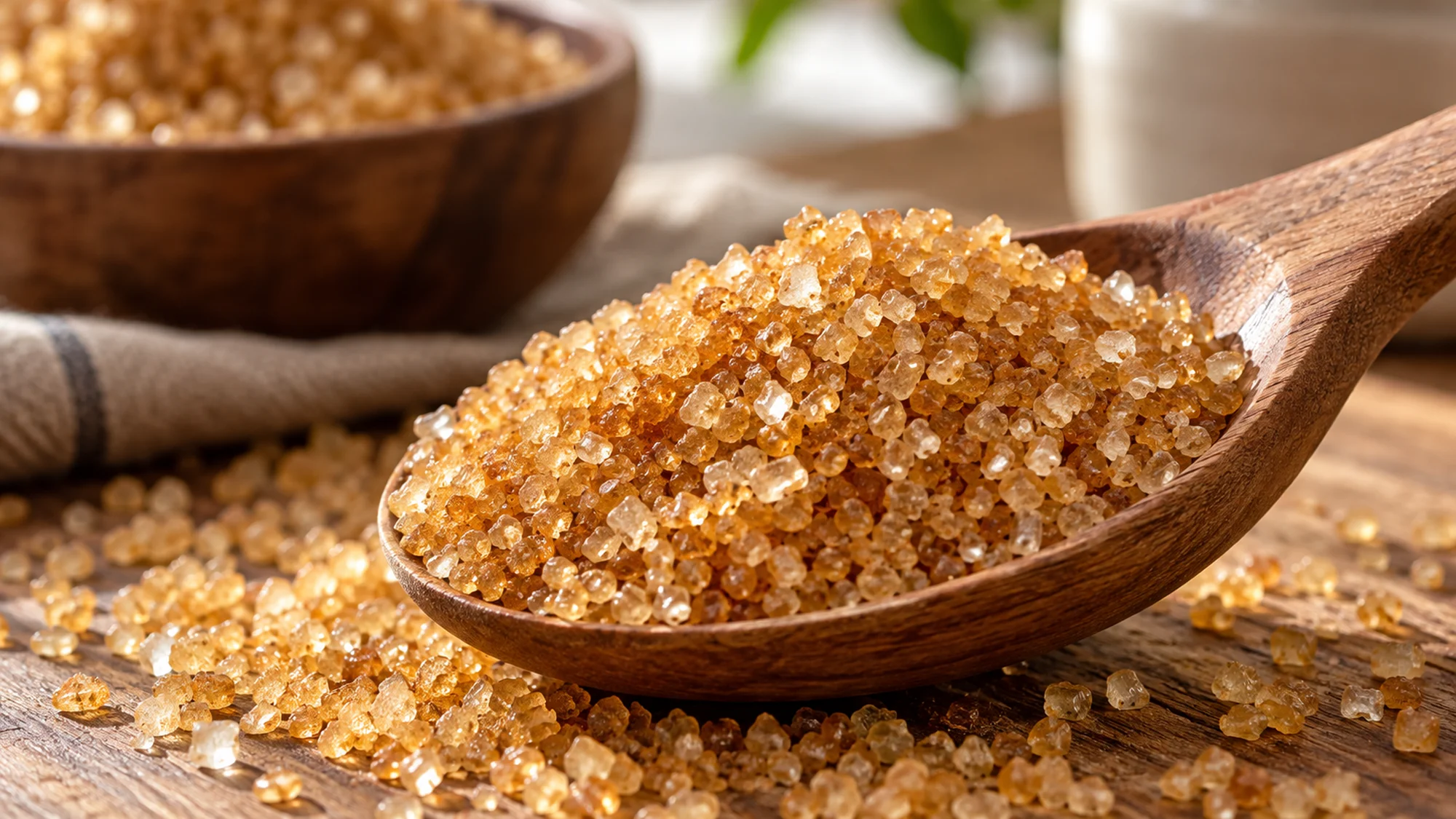
The large crystals are the first clue. Compared with ordinary white granulated sugar, demerara usually looks more amber and feels more substantial between your fingers. Its molasses character can suggest toffee or caramel, though the intensity varies by producer.
Billington’s describes its demerara as an unrefined cane sugar with caramel flavor, suited to coffee, crumbles and porridge. That describes a particular product; processing terms and naming are not identical across every market. Check the actual bag instead of relying on the color alone.
- Look for clearly visible, coarse golden crystals.
- Read the ingredient list and the manufacturer’s suggested uses.
- Match crystal size to the job rather than buying by a health claim.
- Keep the recipe’s specified sugar when its texture is important.
Where demerara sugar works best
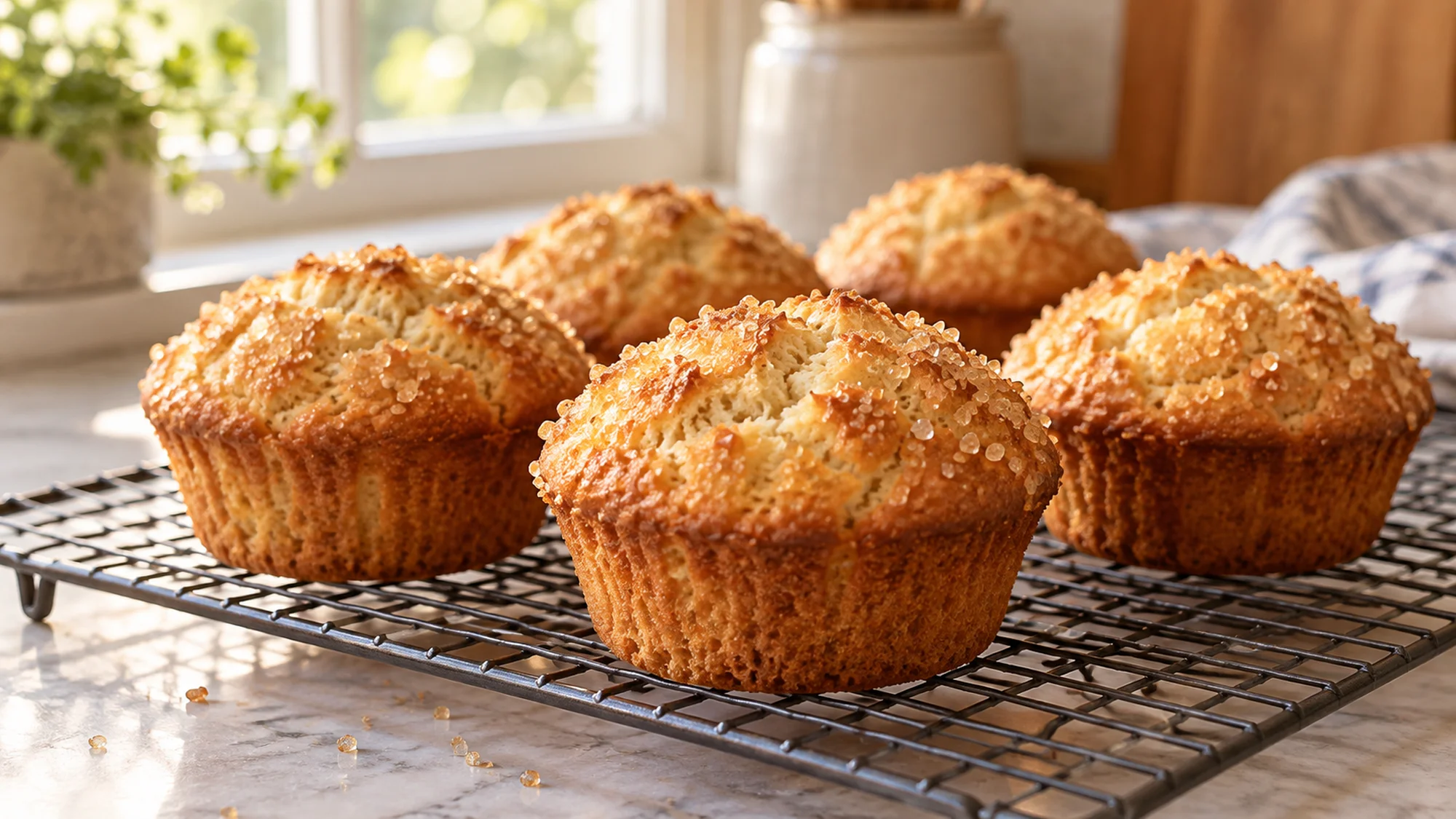
A light sprinkle on muffins, scones or a fruit crumble makes good use of the crystals. It adds contrast without asking the sugar to dissolve completely. I would choose a small, even scattering rather than a thick sandy layer that overwhelms the bite.
A topping is an easy place to notice what you are paying for: the crystals remain part of the eating experience. It can also sweeten a hot drink, but give it time to dissolve and stir before deciding the cup needs more. In a cold drink, loose crystals can collect at the bottom; a syrup is a different ingredient with its own preparation and storage requirements.
| Kitchen job | Why it can work | What to watch |
|---|---|---|
| Muffin or scone topping | Adds a coarse sweet crunch | Avoid an excessively thick layer |
| Crumble topping | Contributes caramel-like flavor | Follow the recipe’s sugar amount |
| Coffee or hot tea | Dissolves with stirring | Taste before adding more |
| Fine cake batter | May leave noticeable crystals | Use the specified sugar for predictability |
Substitutes depend on the texture you need
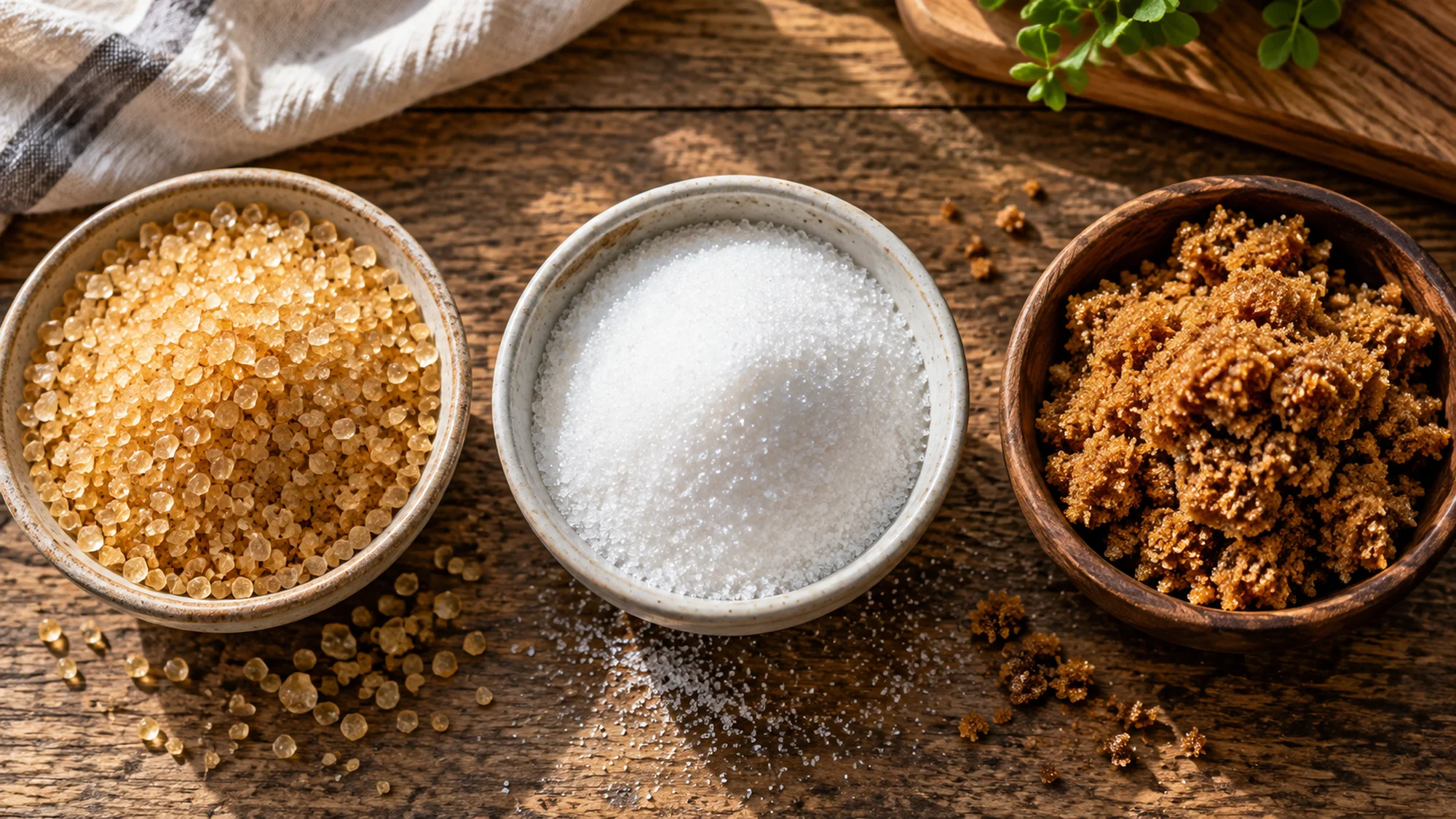
Turbinado is often a practical topping substitute, but the names are not a universal guarantee of different products. Domino says its former Demerara Cane Sugar and current Turbinado Sugar are the same product. Other brands may differ, so compare the crystals and flavor rather than assuming a fixed hierarchy.
Soft brown sugar is moist and fine-textured, not simply a smaller version of demerara. Muscovado generally brings a stronger molasses character and a sticky texture; white granulated sugar gives a cleaner sweetness without the same golden crunch. I would not swap these blindly in a recipe whose structure depends on the original sugar.
- For a finishing sprinkle, choose a similarly coarse sugar if available.
- For creaming with butter, follow the tested recipe’s sugar type.
- For a smooth sauce, consider whether the substitute can dissolve fully.
- For a flavor-sensitive bake, expect a change rather than promising an identical result.
Baking, nutrition and keeping the bag useful
Domino notes that coarse turbinado crystals may not dissolve fully in batters or doughs, so results can vary even when substitution is possible. This is why I prefer demerara on top of a bake before experimenting inside it. Change one ingredient at a time, and keep the rest of the recipe stable.
Golden color is not evidence of a meaningful nutritional advantage. The FDA includes packaged sweeteners such as table sugar within added sugars; demerara remains a sugar to use for sweetness, not a mineral supplement or a treatment. Compare serving sizes when reading labels rather than contrasting unrelated portions.
Keep the bag closed in a dry pantry, away from moisture and strong odors, and use a clean, dry spoon. A small labeled container can make sprinkling easier, but retain the original packaging information. If you seldom need coarse sugar, buying a modest quantity is more practical than collecting several nearly interchangeable bags.
Bottom Line
Demerara sugar earns its place through flavor and texture: golden crystals, a little caramel character and a pleasant finishing crunch. Use it where those qualities are welcome, choose substitutes by the job they need to do, and keep expectations realistic when changing a batter. There is no need to give an enjoyable baking ingredient a health halo.
Sources
- Billington’s: Cane sugar varieties
- Domino: Turbinado and former demerara FAQ
- FDA: Understanding added sugars

Hi, I’m Emily Pocker! I share recipes and food guides here at Recipes360 to help you find everyday meal inspiration and feel more confident in the kitchen. My goal is to make cooking approachable, enjoyable, and full of flavor.