
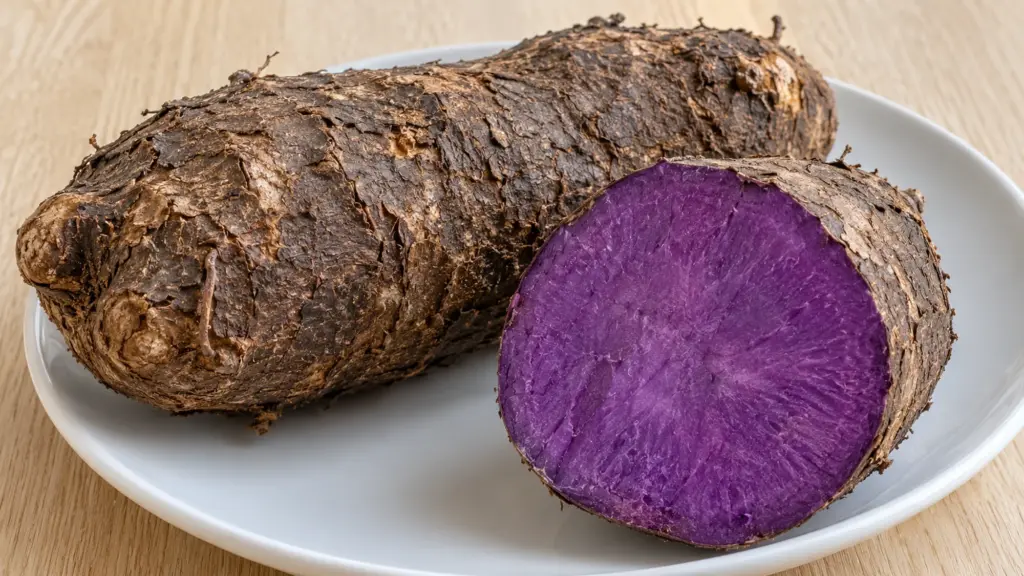
A purple dessert can send you shopping for ube and still leave you facing three very different ingredients: a rough-skinned yam, a jar of sweet paste and a small bottle of flavoring. They share a name on the shelf, but they have different jobs in the kitchen.
Ube is the purple yam Dioscorea alata, distinct from taro and purple sweet potato. Match the form your recipe requests: cooked yam provides substance, halaya is a prepared sweet paste, and flavoring cannot replace the yam’s bulk.
What is ube, exactly?
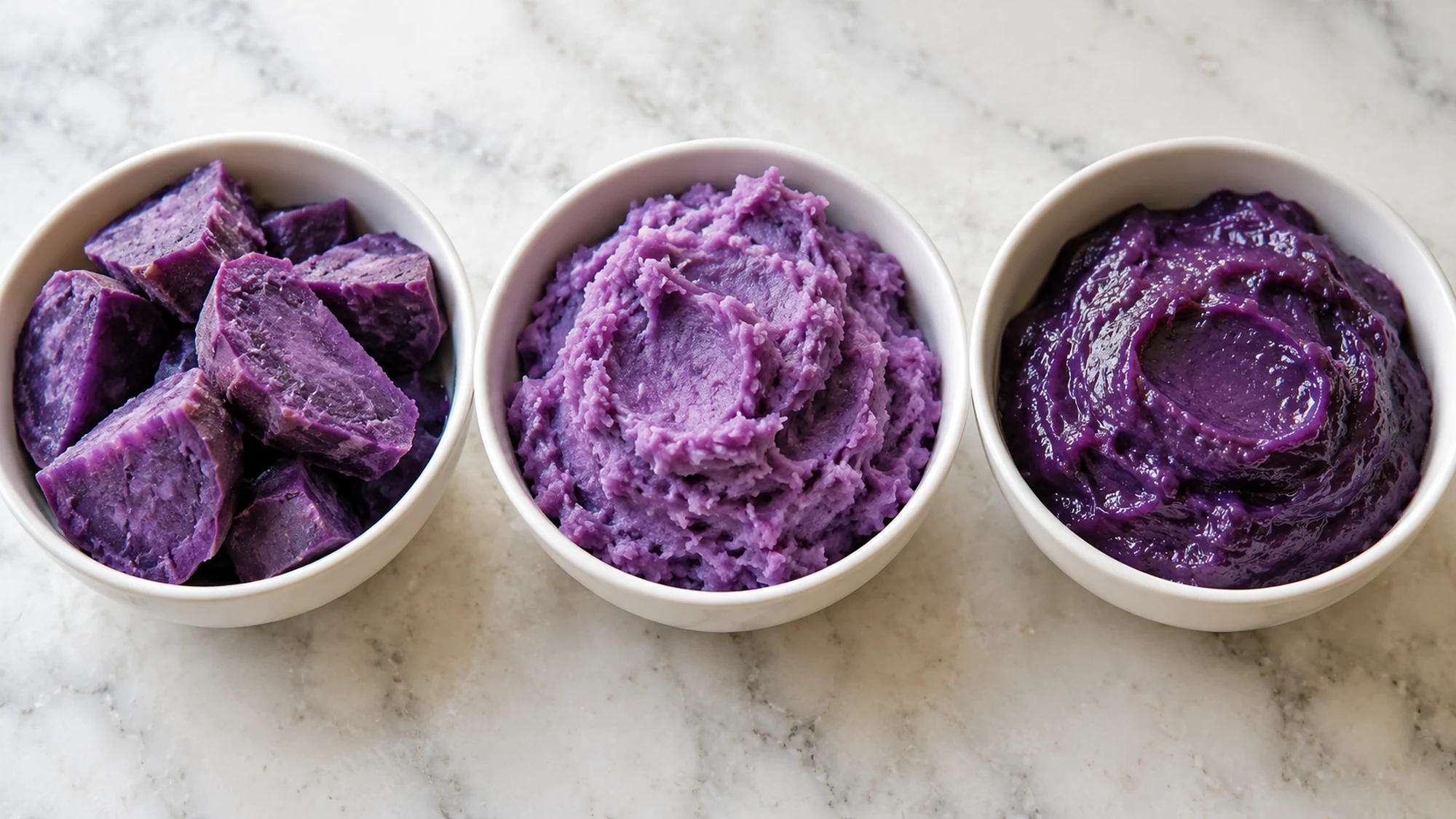
Singapore’s NParks identifies ube as Dioscorea alata, also called greater or winged yam. The species includes tubers with white, ivory or purple flesh; the purple-fleshed forms are associated with Filipino desserts, ice cream, jam and pastries. That distinction helps explain why a yam’s name and a dessert’s color do not tell the whole story.
I’d check the ingredient name before being persuaded by the shade of purple. A carton, powder or bakery filling may contain more than one ingredient. If the package describes a mix, treat it as a mix rather than assuming it is simply dried yam.
- Fresh yam: a whole food ingredient that needs preparation and cooking.
- Frozen yam: check whether it is raw, cooked, grated or mashed.
- Powder: follow the specific rehydration and cooking instructions.
- Prepared dessert: read the complete ingredients, including sweeteners and milk.
Ube, taro and purple sweet potato
These are different plants. NParks lists taro as Colocasia esculenta and sweet potato as Ipomoea batatas. Their culinary preparations are not interchangeable simply because a product looks purple. The botanical names below give you a dependable way to separate the categories.
| Ingredient | Plant | Useful distinction |
|---|---|---|
| Ube | Dioscorea alata | A true yam; choose the required prepared form |
| Taro | Colocasia esculenta | A different plant, not another name for ube |
| Purple sweet potato | Ipomoea batatas | A purple-fleshed sweet potato variety |
Our purple sweet potato guide covers choosing and cooking that separate ingredient. For an ube dessert, use an ube recipe unless its author provides a suitable swap. I would be especially cautious when replacing a sweetened filling with plain cooked tuber: sweetness and consistency both need attention.
Cook the yam before using it
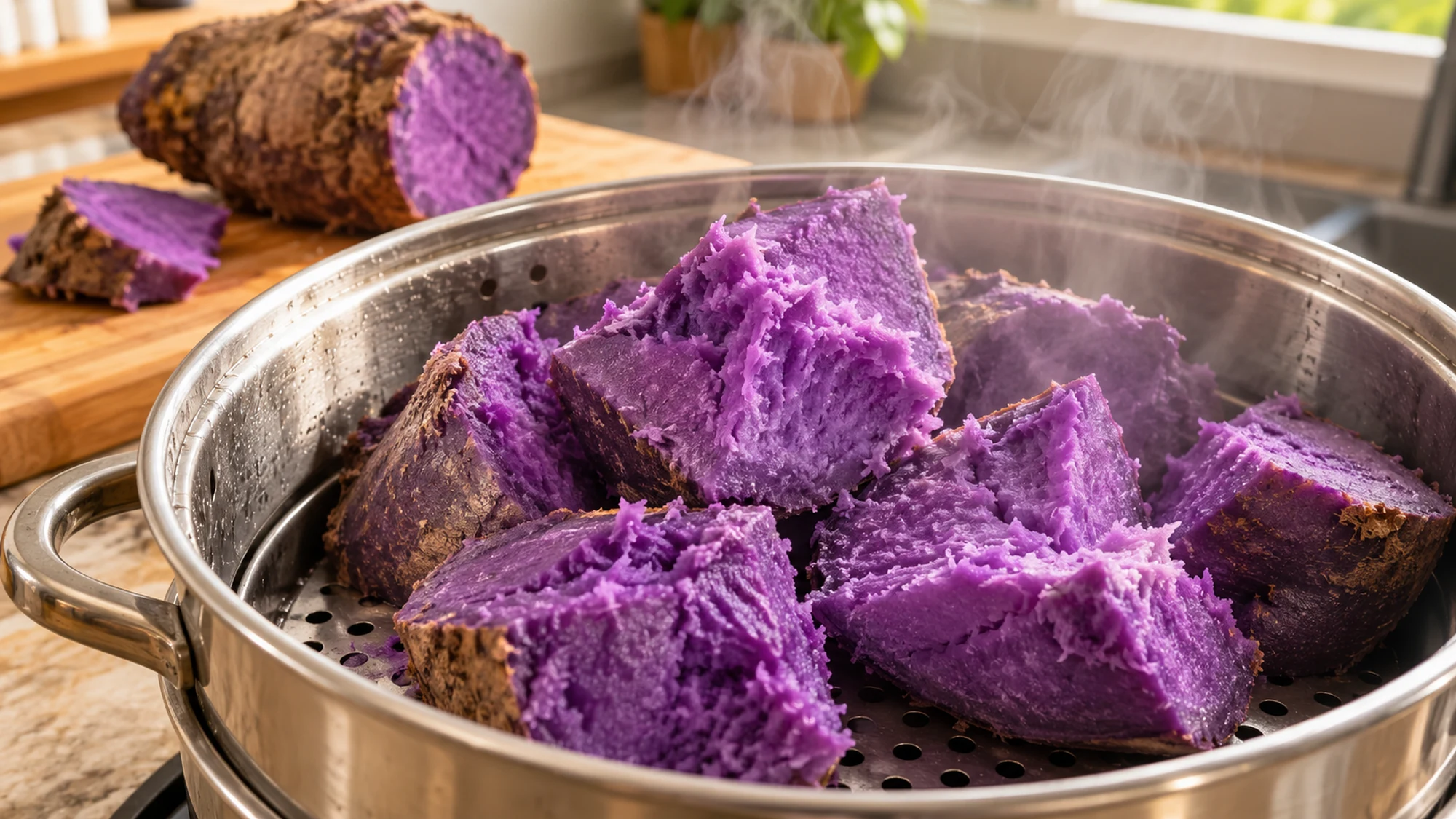
PROSEA describes the tubers as food after cooking, including boiling and baking. The Philippine Department of Agriculture’s halaya guidance starts by boiling yam until tender before further preparation. Use properly identified culinary yam and cook it thoroughly; raw pieces are not a ready-to-eat snack or garnish.
- Buy food-grade ube from a reliable seller; do not identify a wild yam from color alone.
- Wash the outside before cutting and keep your utensils and preparation surface clean.
- Follow the recipe’s peeling and cooking sequence for the actual product you bought.
- For a mash, check that the cooked center softens readily rather than forcing firm pieces through a blender.
- Follow frozen or powdered product directions, including any cooking step; thawed does not automatically mean cooked.
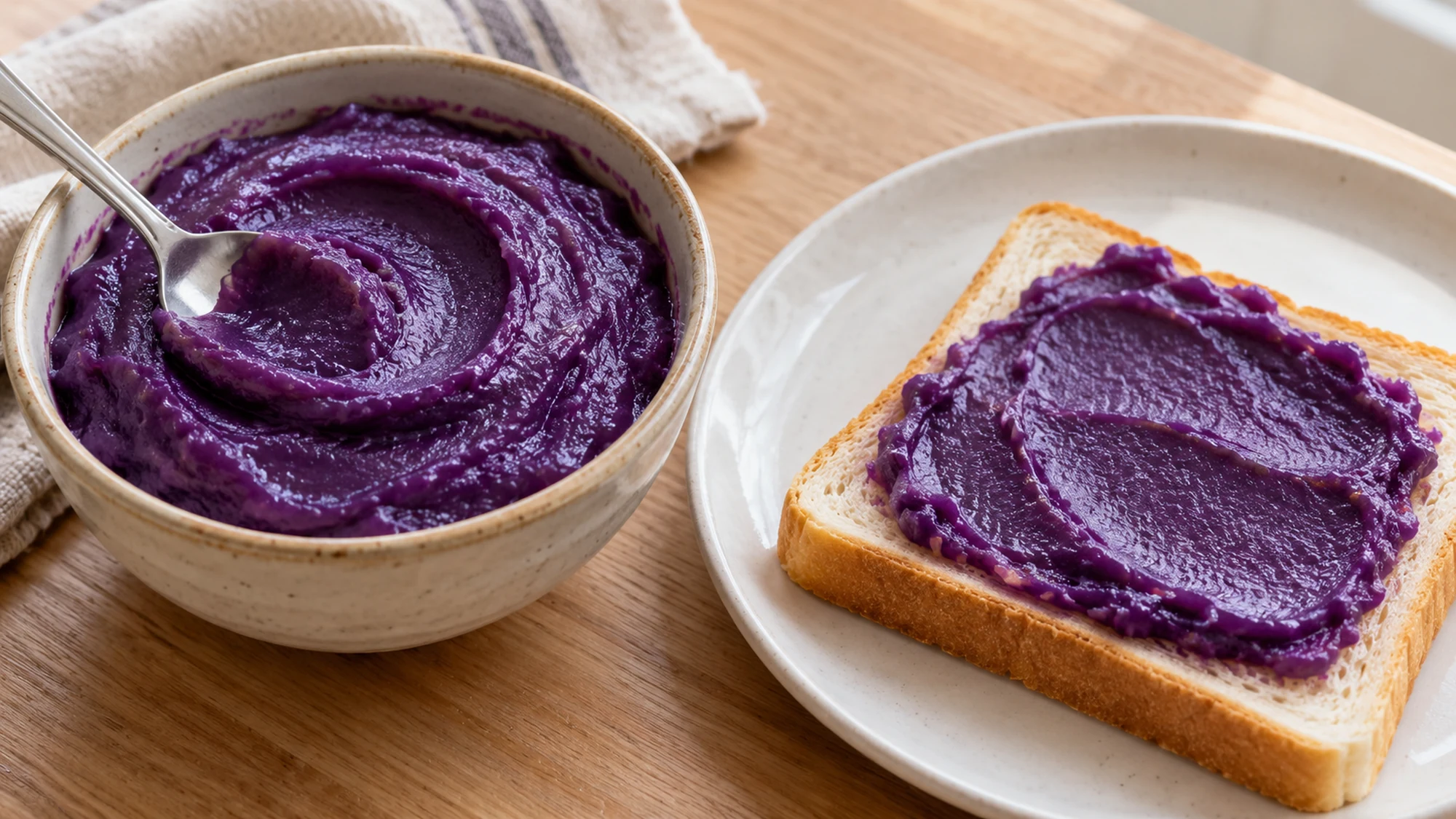
Once you have cooked yam, decide whether you want plain mash or a sweetened dessert component. Keeping that choice clear makes shopping easier next time, too. A spoonful of dense halaya and the same spoonful of plain mash may look similar, but their ingredient lists can be very different.
Read halaya and flavoring labels
Bren Raphael’s Smooth Ube Halaya listing names ube, condensed milk, evaporated milk, skimmed milk and margarine. That specific product contains milk ingredients. Ube itself being a plant does not make an ube dessert dairy-free, and a different brand may use a different formula.
- Milk allergy: check halaya, bakery fillings and finished desserts for milk, butter and other milk ingredients.
- Sweetness: account for the sweetener already present in a jam or prepared filling.
- Flavoring: use the bottle’s directions; it contributes flavor in a different way from mashed yam.
- Storage: follow each package’s directions before and after opening; do not borrow another brand’s shelf life.
McCormick’s Ube Flavor directions describe uses in baked goods, drinks and confectionery, reinforcing that it is a separate product form. For cooked leftovers, FoodSafety.gov advises prompt refrigeration within two hours (one hour above 90°F/32°C), and a refrigerator at 40°F (4°C) or below. Keep prepared yam and milk-containing desserts cold as directed, rather than treating them like an unopened pantry flavoring.
Bottom Line
Buy ube by identity and form. Cook fresh yam thoroughly, use halaya as the prepared sweet ingredient it is, and follow flavoring directions carefully. Purple color is appealing; the ingredient list is what makes the purchase useful.
Sources
- NParks: Dioscorea alata, purple yam
- NParks: Colocasia esculenta, taro
- NParks: Ipomoea batatas, sweet potato
- Philippine Department of Agriculture: ube preparation
- Bren Raphael’s: Smooth Ube Halaya ingredients
- McCormick Philippines: Ube Flavor product directions
- PROSEA: Dioscorea alata food uses
- FoodSafety.gov: safe handling and prompt chilling

Hi, I’m Emily Pocker! I share recipes and food guides here at Recipes360 to help you find everyday meal inspiration and feel more confident in the kitchen. My goal is to make cooking approachable, enjoyable, and full of flavor.