
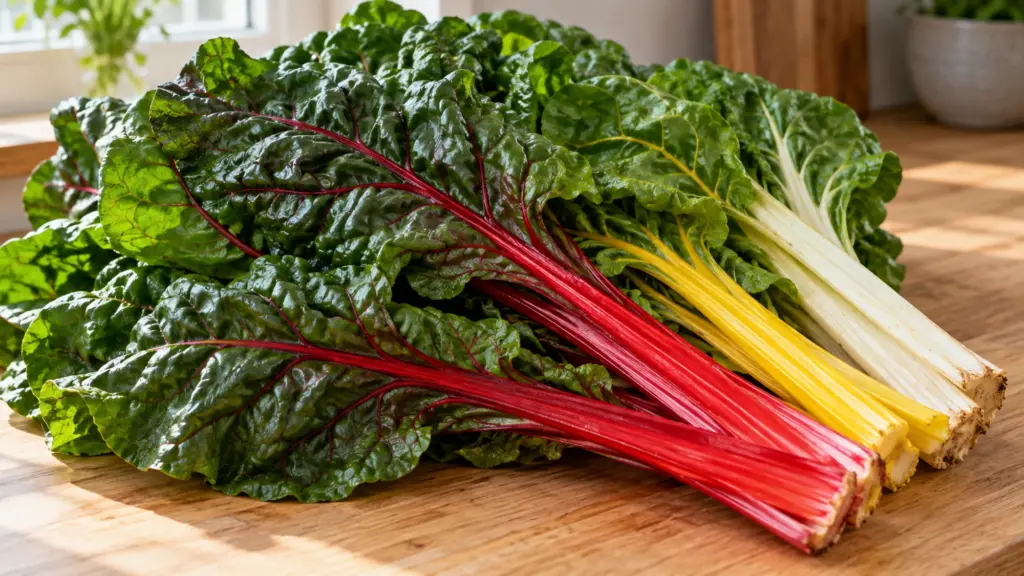
A bunch of Swiss chard can look like two vegetables tied together: broad, crinkled leaves above firm, colorful stalks. That difference matters at the stove. Give each part the attention its texture needs, and the whole bunch becomes much easier to use.
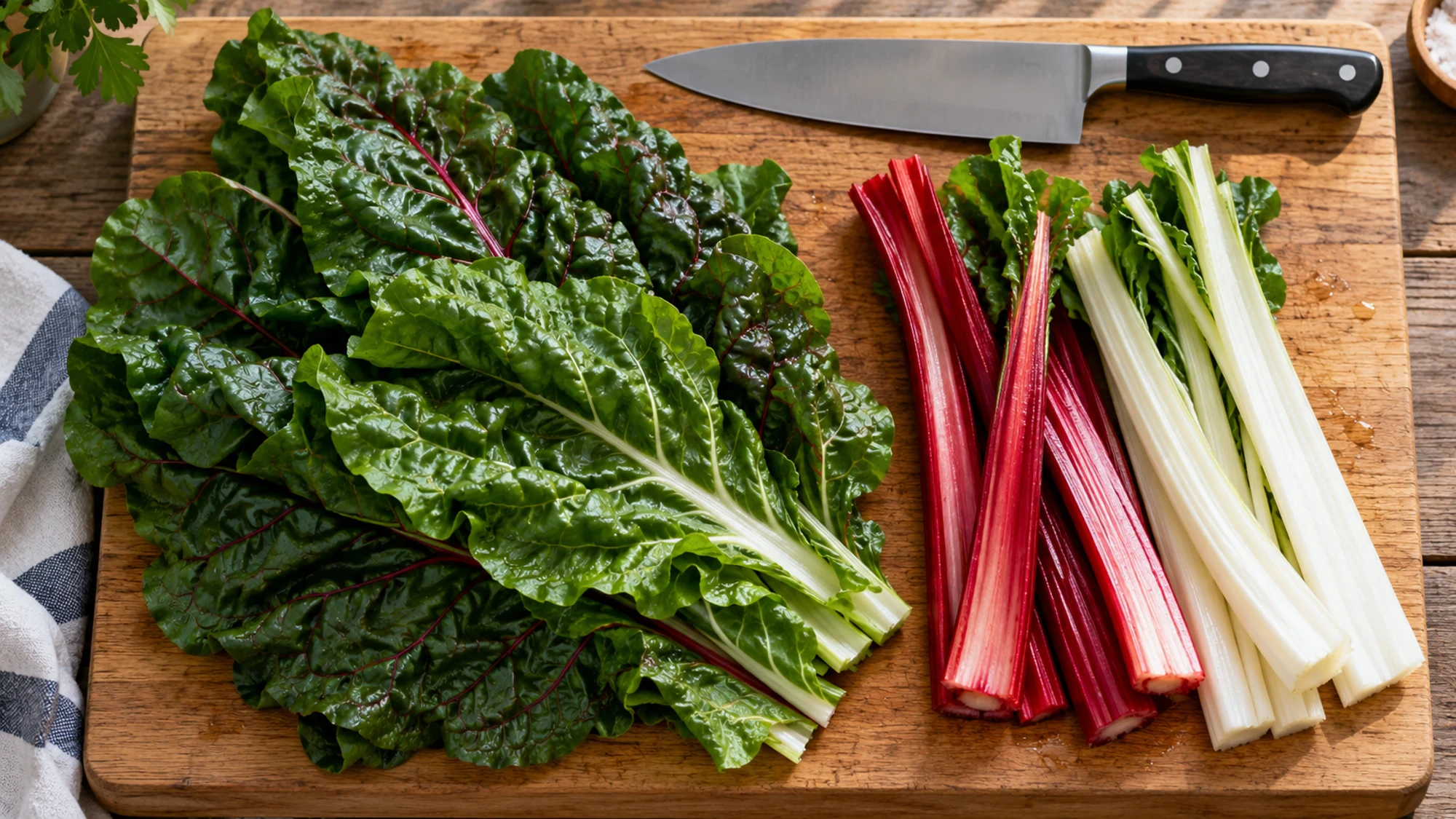
Swiss chard is a leafy vegetable with edible leaves and stalks. Small, tender leaves suit salads; larger leaves are useful cooked. Separate thick stalks from the leaves so you can soften them first.
What Swiss Chard Brings to the Kitchen
Chard is grown for its foliage rather than a beet-like root. Its leaves can be green while the stalks are white, red, pink or yellow. University of Alaska Fairbanks Extension describes these broad, flat stalks and recommends fresh, firm leaves. Color gives you a shopping clue, but it is not a separate cooking instruction.
Think about leaf size before deciding how to serve it. Iowa State Extension suggests small leaves for salads and older leaves as a cooked-spinach alternative. I’d choose smaller leaves when tenderness matters most and a substantial bunch when the plan is soup or a vegetable side.
- Leaves: broad, flexible greens that wilt as they cook.
- Stalks: firmer pieces that deserve separate chopping and a head start.
- A useful distinction: a colorful bunch can contain several stalk colors without requiring several different preparations.
Choose a Bunch You Will Actually Use
Look beyond the prettiest stems. Check that the leaves look fresh and the stalks feel firm; skip bunches with soggy, yellowing or deteriorating leaves. Buying an enormous bunch is no bargain if most of it waits forgotten behind the milk.
Use this guide to match the part of the vegetable to your next meal. These are texture choices rather than fixed cooking times; thickness and the dish still matter.
| Part or condition | Useful choice | What to watch |
|---|---|---|
| Small tender leaves | Raw salad | Wash and dry before serving |
| Large leaves | Soup, braise or sauté | Allow space for wilting |
| Thick stalks | Chop and cook first | Check tenderness before adding leaves |
| Rotten leaves | Discard | Washing cannot rescue decay |
Wash and Store Swiss Chard Safely
Keep chard unwashed in the refrigerator until you need it. For a simple household plan, use the leaves within a few days: Alaska Extension suggests two to three days in a perforated plastic bag. That is a freshness guideline, not a promise that damaged greens will stay safe until a deadline.
- Keep perishable produce refrigerated at 40°F (4°C) or below, following FDA produce guidance.
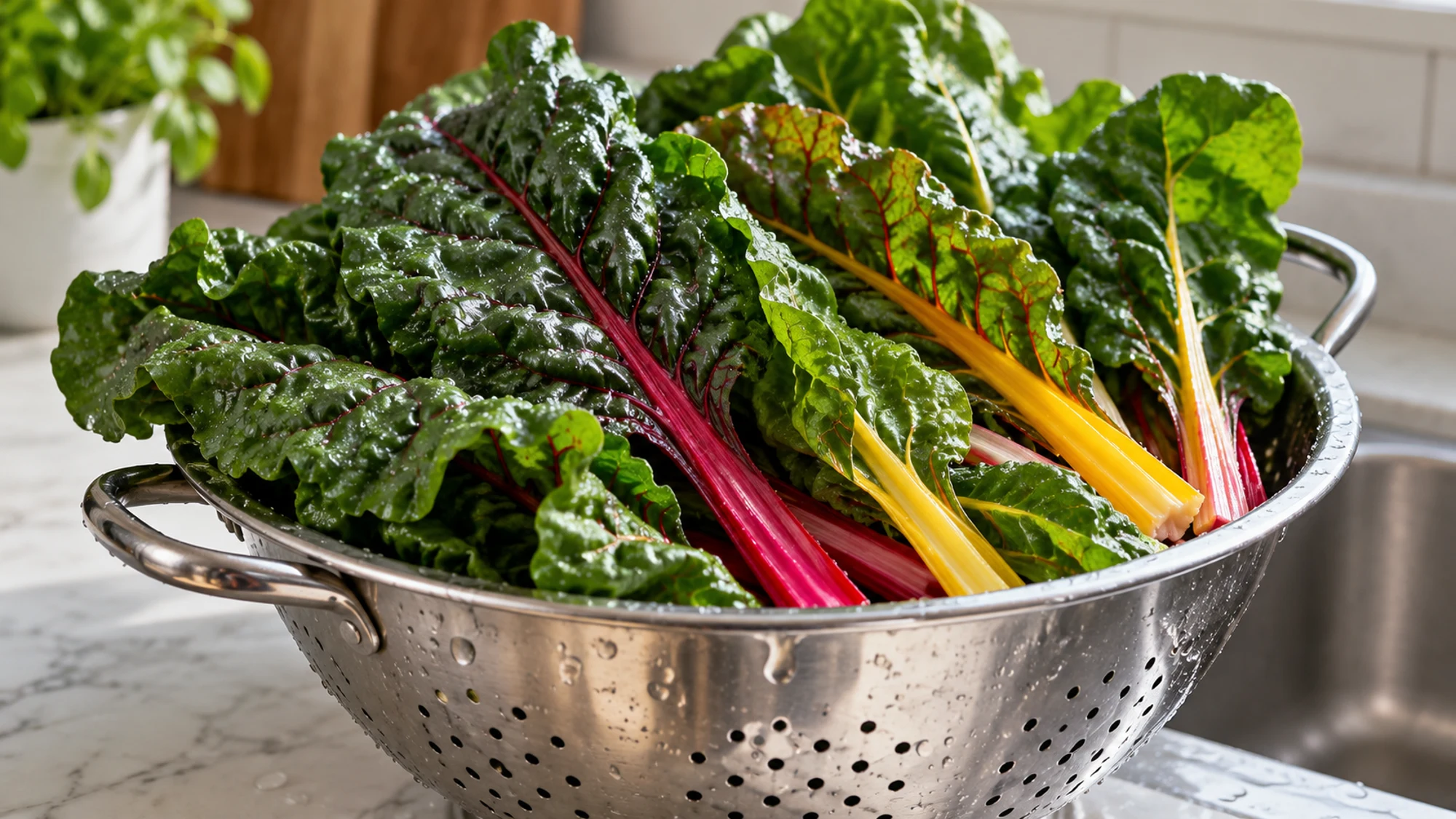
- Rinse under running water before preparation; do not use soap, detergent or bleach.
- Dry with a clean towel or salad spinner, and keep washed greens away from utensils used for raw meat.
- Cut away damaged areas and discard produce that looks rotten. Washing reduces contamination but does not eliminate every germ.
I’d keep the storage plan uncomplicated: leave the bunch cold, check it before using it, and wash only what the meal needs. A bag helps organize the drawer; it does not replace checking the condition of the leaves.
Make the Leaves and Stalks Work Together
Separate the stalks, chop them into manageable pieces, then slice or tear the leaves. UMass Extension lists sautéing, braising, steaming and adding chard to soups among its uses. Choose the method that fits the meal already underway rather than building a whole dinner around an unfamiliar bunch.
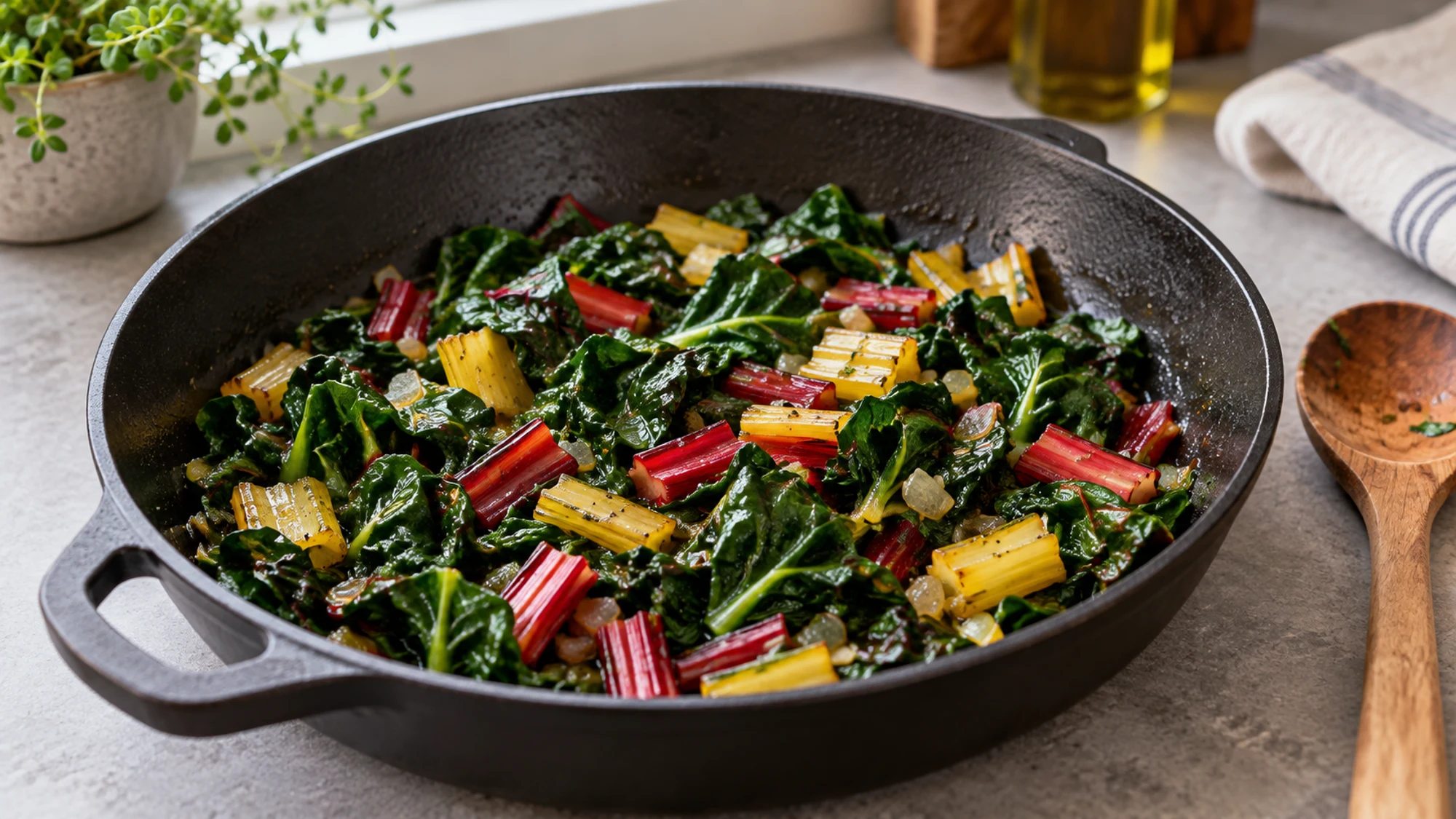
- For a skillet side: start the chopped stalks first, then add leaves as space opens up.
- For soup: give the stalks time to soften in the broth; add leaf ribbons later.
- For a spinach substitution: consider whether the dish can accommodate the stalk texture, rather than swapping an entire bunch blindly.
- For a salad: reserve tender young leaves; large mature leaves are a better candidate for cooking.
A fork is more useful than the clock for that final stalk check: you want the texture to suit the dish. Lemon, garlic or a little oil are straightforward flavor directions. For another vegetable-focused meal idea, browse the site’s cabbage and white bean skillet; chard needs its own timing rather than a promise of a direct swap.
Bottom Line
Choose fresh leaves and firm stalks, keep the bunch refrigerated, and cook the thicker pieces before the leaves. Swiss chard becomes a practical everyday green when you treat its two textures separately.
For a visual demonstration, LearnToCook’s “How to Cook Swiss Chard” shows a skillet approach. It trims away tougher stalk portions; the options above explain how to use suitable stalks separately.
Sources
- University of Alaska Fairbanks Extension: Chard
- Iowa State Extension: Swiss Chard
- UMass Extension: Swiss Chard
- FDA: Selecting and Serving Produce Safely

Hi, I’m Emily Pocker! I share recipes and food guides here at Recipes360 to help you find everyday meal inspiration and feel more confident in the kitchen. My goal is to make cooking approachable, enjoyable, and full of flavor.