
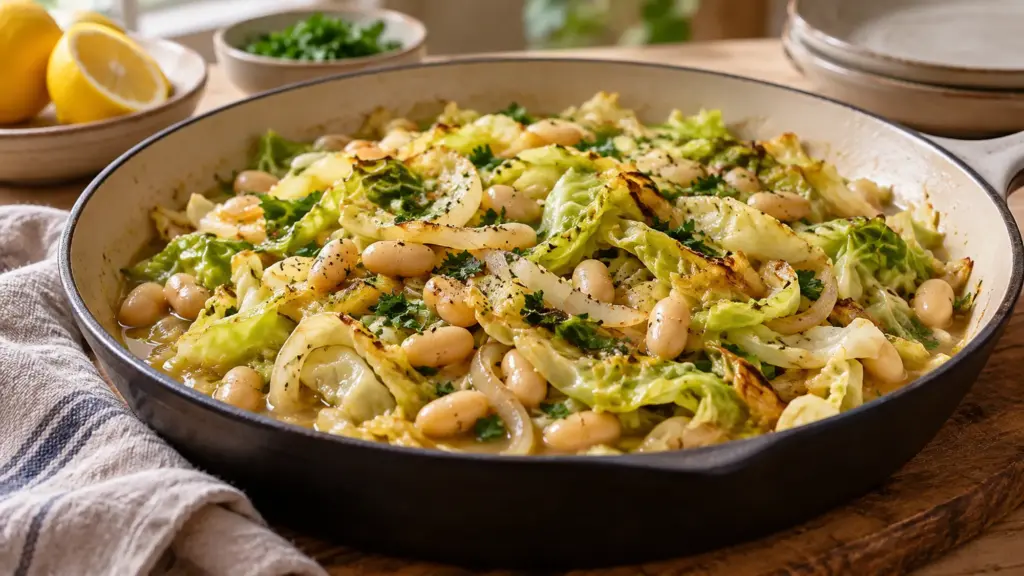
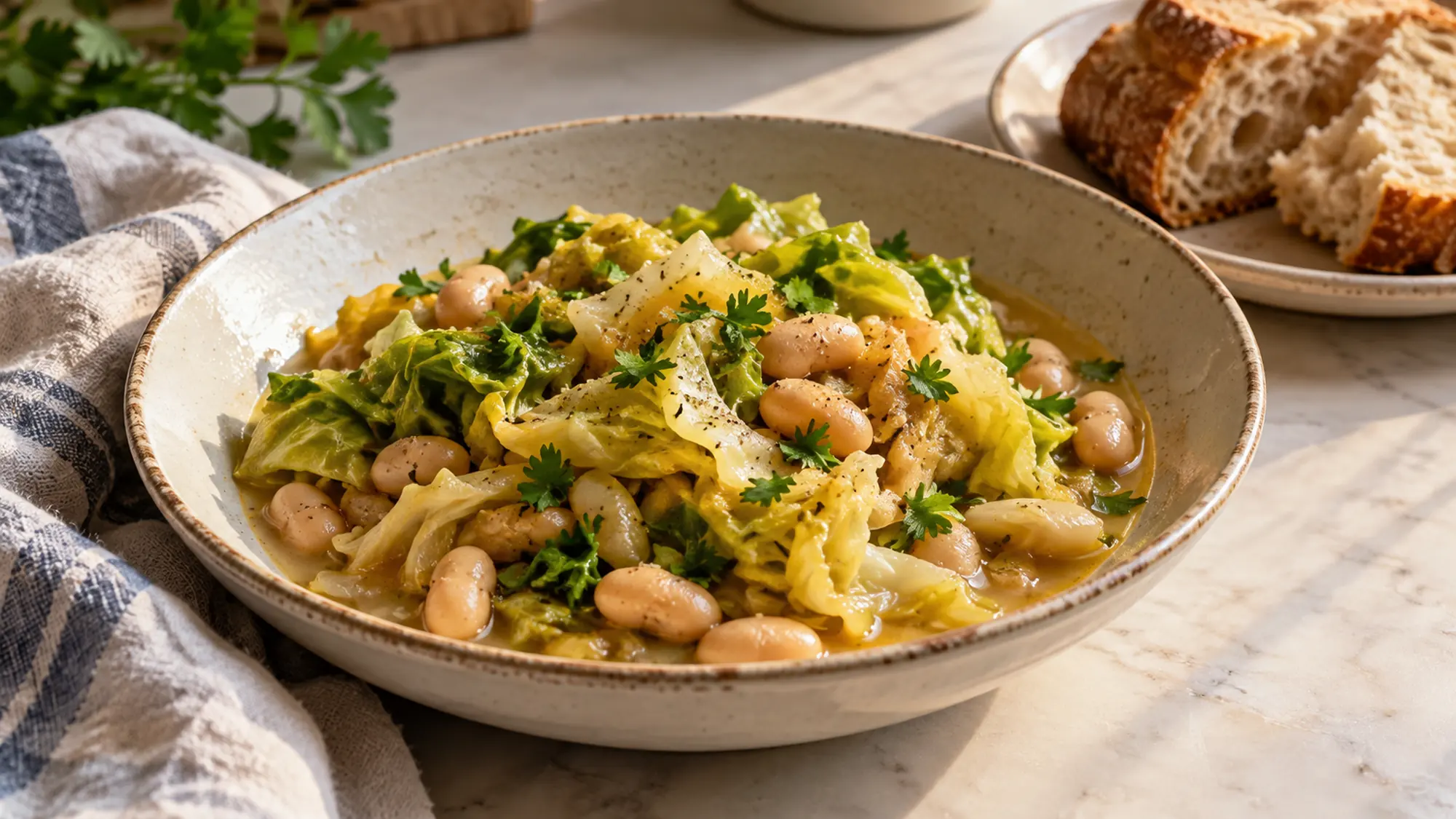
A half head of cabbage and two cans of beans can become a proper skillet dinner when you give the cabbage time to brown. This cabbage and white bean skillet combines tender ribbons, creamy cannellini beans, onion and a little lemony broth. It is deliberately simple, with parsley and thyme supplying flavor without a heavy sauce.
Brown some cabbage edges before adding broth, then fold in the beans gently. That sequence gives the vegetables depth while keeping the beans mostly intact.
I would use a wide, high-sided skillet rather than a small frying pan. Raw cabbage takes up considerable space, even though it shrinks as it cooks, so add it in two batches if needed. The finished dish should be moist enough to spoon, with a little broth in the bottom, rather than swimming like soup.
Serving suggestions
Spoon the skillet into four shallow bowls and offer crusty bread separately for the lemony juices. The site’s baguette recipe is one option when you want to bake ahead. I prefer a firm bread here, since a very soft slice quickly disappears into the broth, and a little extra parsley at the table keeps the final flavor fresh.
This can also be a substantial side for roasted fish or chicken, divided into smaller portions. If serving it as the main meal, taste a spoonful containing both cabbage and beans before adding more salt, because the broth and canned beans vary by brand. The comparison below helps you adjust texture without adding unnecessary ingredients.
| If the skillet seems… | Likely reason | Simple adjustment |
|---|---|---|
| Too watery | More moisture remained than evaporated | Simmer uncovered briefly |
| Too dry | Broth evaporated before the cabbage softened | Add a small splash of hot water |
| Bland | Mild beans and cabbage need finishing | Taste, then adjust lemon and salt |
| Mushy | Beans were stirred too vigorously | Fold gently and stop once warmed |
- Use a broad spoon to lift beans without crushing them.
- Serve lemon wedges separately for different acidity preferences.
- Keep bread outside stored portions so it stays firm.
A small amount of broth makes the dish comfortable to eat. Reduce or add liquid gradually instead of chasing a fixed appearance.
Variations for cabbage and white bean skillet
Great northern beans can replace cannellini at the same drained weight, while Savoy cabbage softens more quickly than dense green cabbage and needs checking earlier. A pinch of chili flakes adds warmth, while a little fresh dill can replace part of the parsley. Avoid adding every herb in the drawer; the cabbage should still taste like cabbage.
The Cooking with the Charles’ video in the card demonstrates a related skillet with sausage and additional vegetables. This original meat-free version omits sausage, sweet potato and beet, uses vegetable broth and finishes with lemon. The shared lesson is how cabbage and beans come together in one pan, rather than an identical ingredient list.
Change the bean variety or herbs first. Keep the gentle folding and modest broth quantity so the skillet retains its character.
Health benefits
White beans supply plant protein and fiber, and cabbage adds vegetable volume to a bowl with an estimated 270 calories, including both tablespoons of olive oil and excluding bread. Canned-bean labels differ, especially in sodium. Rinsing and draining lets you begin with a cleaner-tasting base, but does not justify claiming a precise sodium reduction for every brand.
Remove damaged outer leaves and rinse the cabbage before cutting, following the FDA’s produce preparation guidance. Use already-cooked canned beans in this recipe; dried beans need separate, thorough cooking. Refrigerate leftovers promptly in shallow containers and reheat to 165°F, because a vegetable-based dinner still needs ordinary safe handling.
Beans and vegetables make a useful everyday combination. Their practical value does not depend on a detox or weight-loss claim.
Bottom Line
Expect an estimated US $5.20 for four bowls, about $1.30 each, using a portion of a cabbage, two cans of beans and small pantry allowances. Fresh herbs and local produce prices will change that total. Bread or additional protein is optional and excluded from the cost and calorie calculations.
My priority is a little golden color on the cabbage before the broth goes in. Once the beans join the pan, the work is mostly done, so resist prolonged stirring. For another way to use cabbage on a colder evening, the site’s cabbage dumpling soup offers a different texture and broth.
Let the cabbage brown, warm the beans gently and finish with lemon. A modest skillet can deliver plenty of contrast without a long shopping list.
Cabbage and White Bean Skillet Recipe

Ingredients
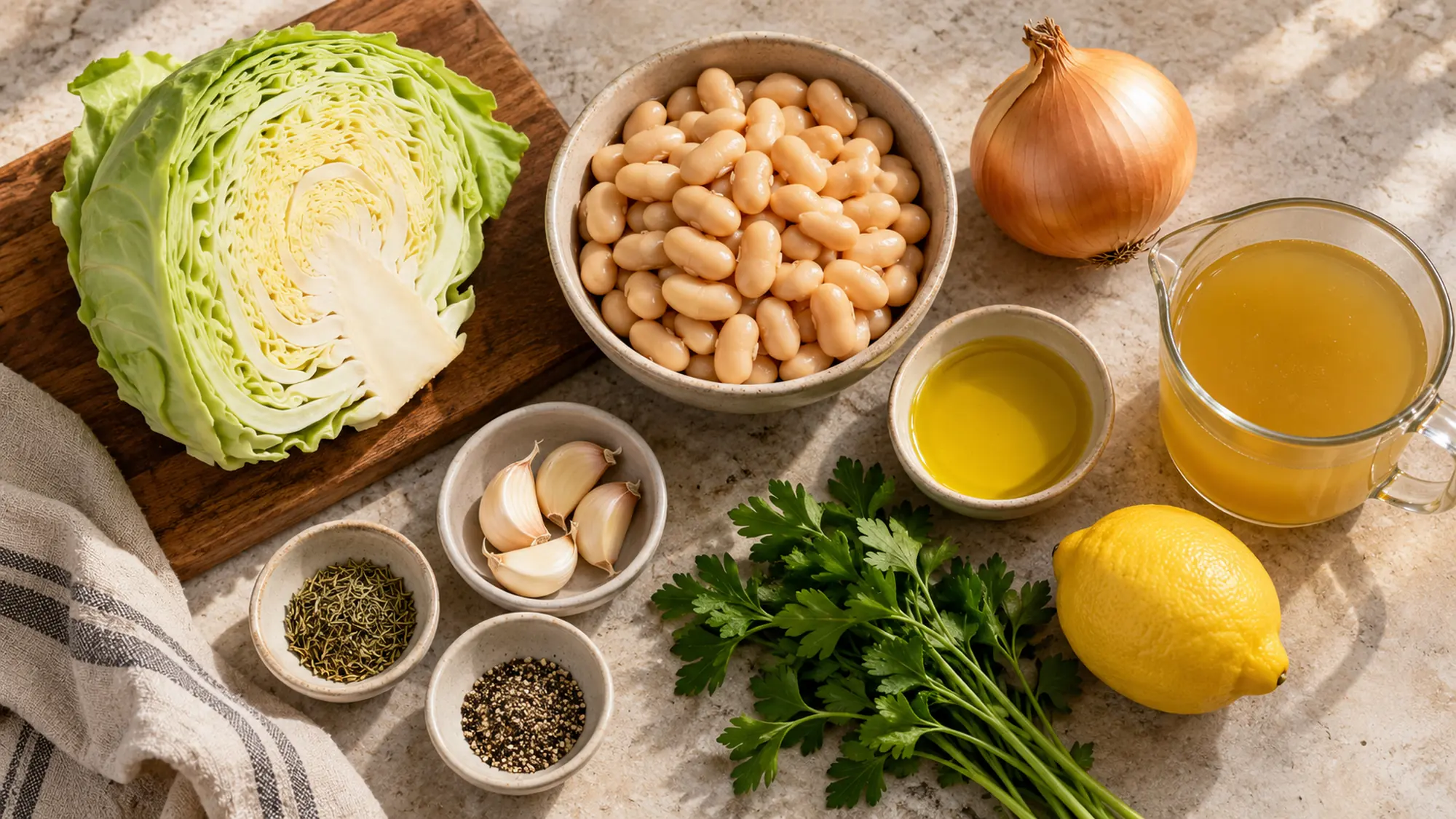
- 2 tbsp olive oil 30 ml
- 1 medium yellow onion 150 g, thinly sliced
- 700 g green cabbage cored and cut into½-inch /1-cm ribbons
- 3 cloves garlic 9 g, thinly sliced
- 1/2 tsp dried thyme
- 1/2 tsp fine salt adjust to broth
- 1/4 tsp black pepper
- 1 cup low-sodium vegetable broth 240 ml
- 2 cans cannellini beans 15.5 oz /439 g each; drained and rinsed, about 480 g total
- 2 tbsp fresh lemon juice 30 ml
- 1/4 cup chopped fresh parsley 15 g
Equipment
- 1 Wide high-sided skillet with lid
- 1 Chef’s knife
- 1 Can opener
Instructions
- Remove damaged cabbage leaves, rinse the remaining cabbage and dry. Cut away the core and slice leaves into ribbons. Drain and rinse the canned beans; this recipe requires already-cooked beans.
- Heat olive oil in a wide high-sided skillet over medium-high heat. Add onion and cook 3–4 minutes until beginning to soften.
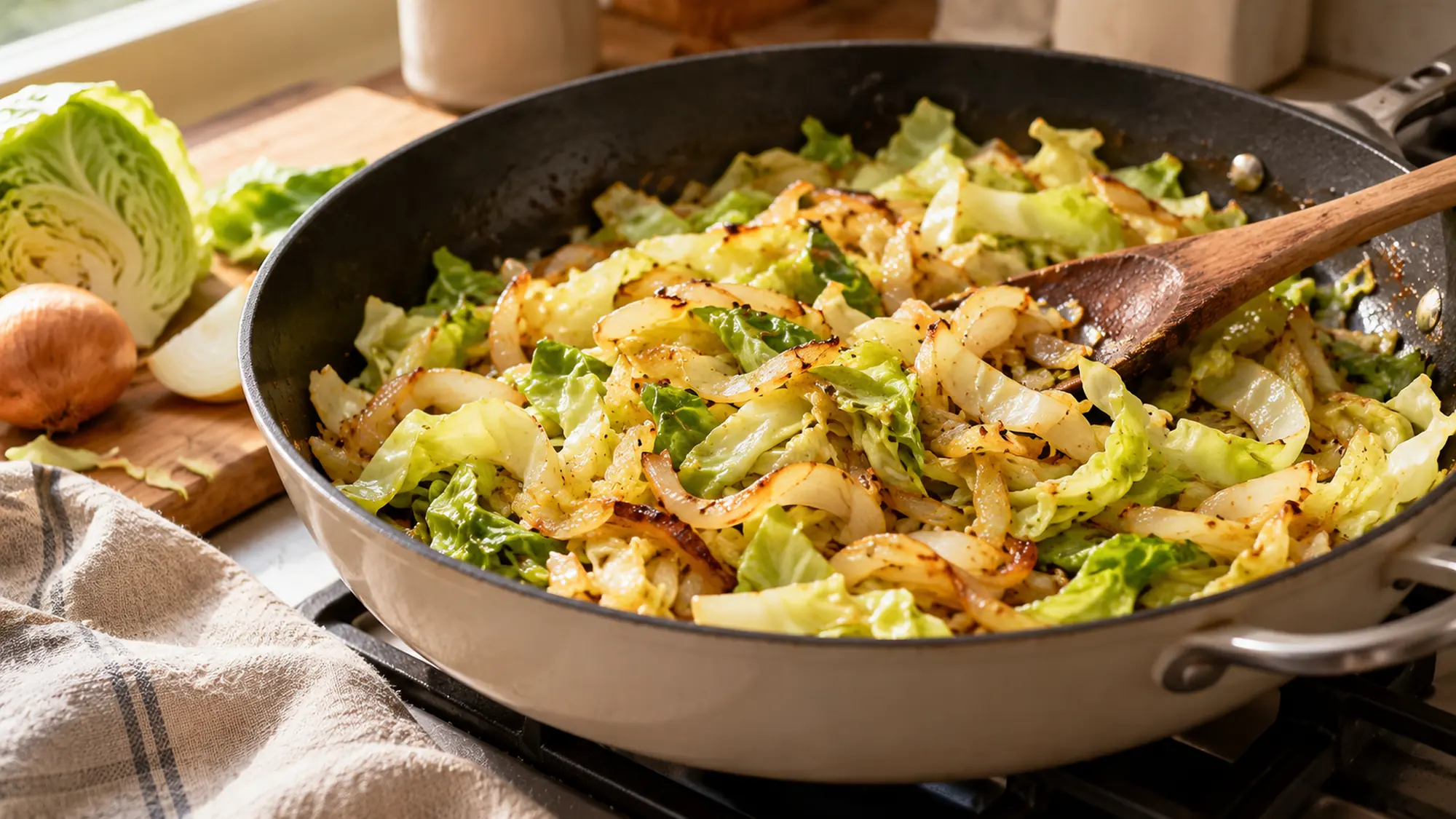
- Add cabbage in two batches if necessary. Cook 8–10 minutes, turning occasionally, until the volume reduces and some edges turn golden. Allow brief contact with the pan between turns rather than stirring continuously.
- Reduce heat to medium. Add garlic, thyme, salt and pepper and stir 30 seconds. Pour in broth, cover and simmer 5–7 minutes until the cabbage is tender with a little bite.
- Fold in drained beans gently. Simmer uncovered 3–4 minutes until hot throughout and the liquid reduces to a small amount of broth. Add a splash of water if dry, or simmer another minute if too wet.
- Remove from heat and stir in lemon juice and parsley. Taste before adding extra salt. Divide among four bowls. Optional bread is served separately and excluded from the estimates.
Nutrition
Video
Notes
Tried this recipe?
Let us know how it turned out!Hi, I’m Emily Pocker! I share recipes and food guides here at Recipes360 to help you find everyday meal inspiration and feel more confident in the kitchen. My goal is to make cooking approachable, enjoyable, and full of flavor.