
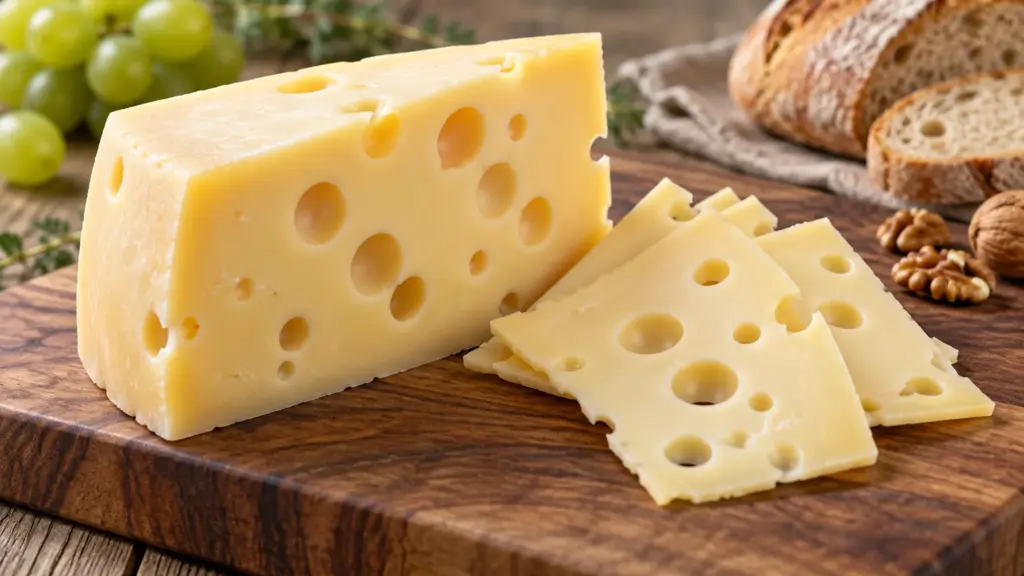
A slice with round holes is easy to recognize, but the words Swiss cheese do not tell the whole shopping story. A mild deli slice, a softer baby Swiss, and a wheel of traditional Emmentaler can bring noticeably different textures and flavors to the same sandwich. Start with the job you want the cheese to do, then read the more specific name.
Swiss cheese is a useful style name, not a guarantee of Swiss origin or identical flavor. Choose by the exact variety, milk labeling, and intended use rather than by the size of the holes.
What Swiss Cheese Means on the Label
In American stores, Swiss often refers to a cheese style inspired by Emmental rather than a promise that it was made in Switzerland. The U.S. Dairy Export Council’s Swiss cheese guide distinguishes Swiss and baby Swiss: the former is typically firmer, while baby Swiss is generally made with whole milk and has smaller, fewer eyes.
Traditional Emmentaler AOP is more specific. Its production specifications require a defined Swiss production area, fresh raw milk, and at least four months of aging. Those rules do not automatically apply to every package labeled Swiss. I would read the place of production and milk statement before paying extra for a name.
| Label | What it helps you identify | What still needs checking |
|---|---|---|
| Swiss | A familiar cheese style | Producer, milk treatment, and flavor |
| Baby Swiss | Typically a softer body and smaller eyes | The individual product’s ingredients |
| Emmentaler AOP | A defined Swiss cheese with production rules | Age, intended use, and raw-milk suitability |
A specific label is more informative than a familiar silhouette with holes.
Why Swiss Cheese Has Holes
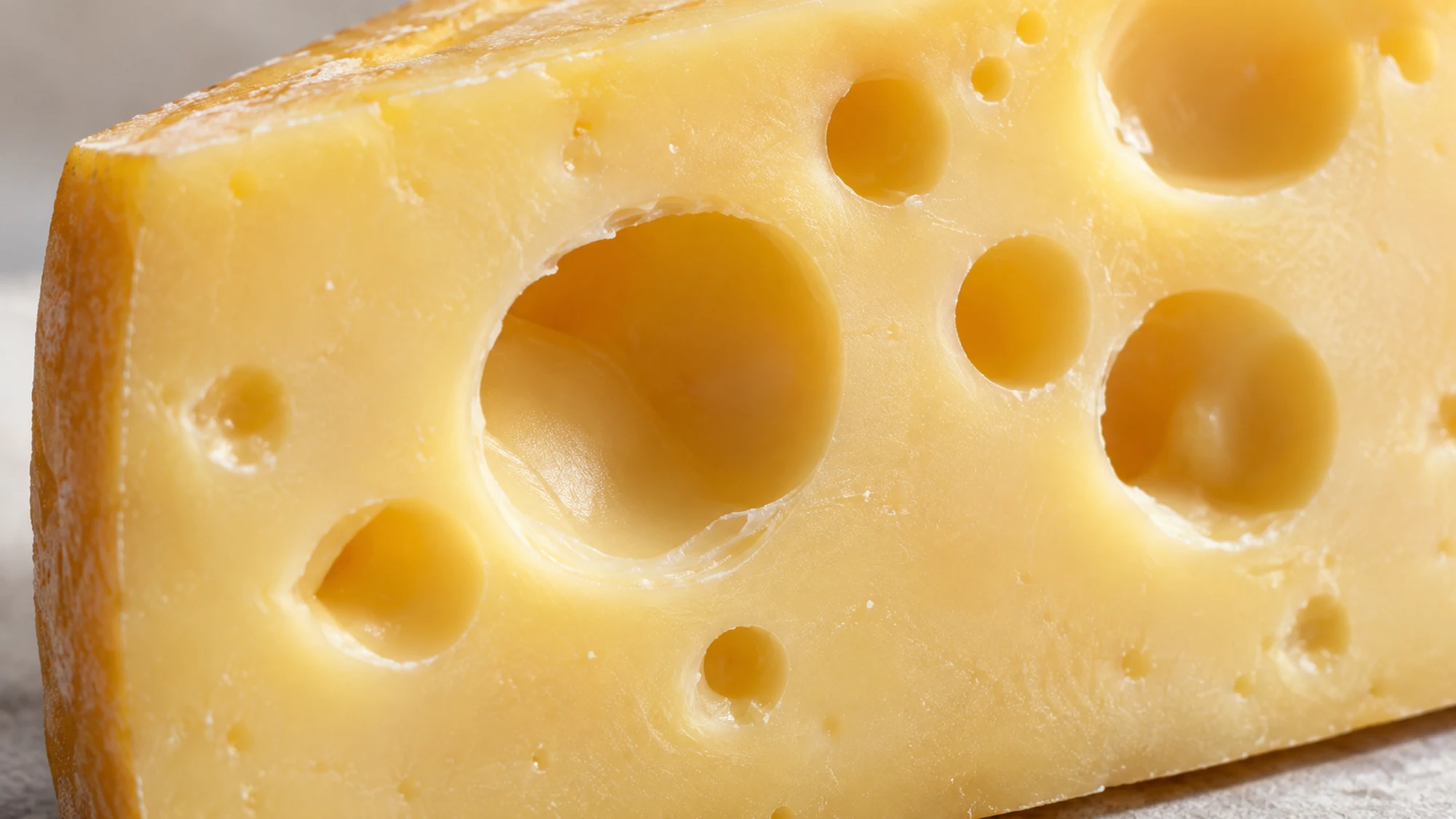
The holes, often called eyes, form during cheesemaking and maturation. Emmentaler’s explanation describes propionic fermentation producing carbon dioxide that collects inside the cheese. They are not drilled into a finished wheel, and they do not indicate that someone has removed the best bits.
- Holes are a style characteristic: they reflect the process used for this family of cheeses.
- Size is not a taste score: choose the producer and maturity you enjoy instead of counting eyes.
- Not every Swiss-made cheese is holey: geography and cheese style are different kinds of information.
The same source connects Emmentaler’s mild, nutty character with fermentation and maturation. A longer-aged piece can offer a different eating experience from a mild sandwich slice, so a small purchase or a taste at the counter is a sensible way to explore.
Choosing Swiss Cheese for Lunch or Cooking
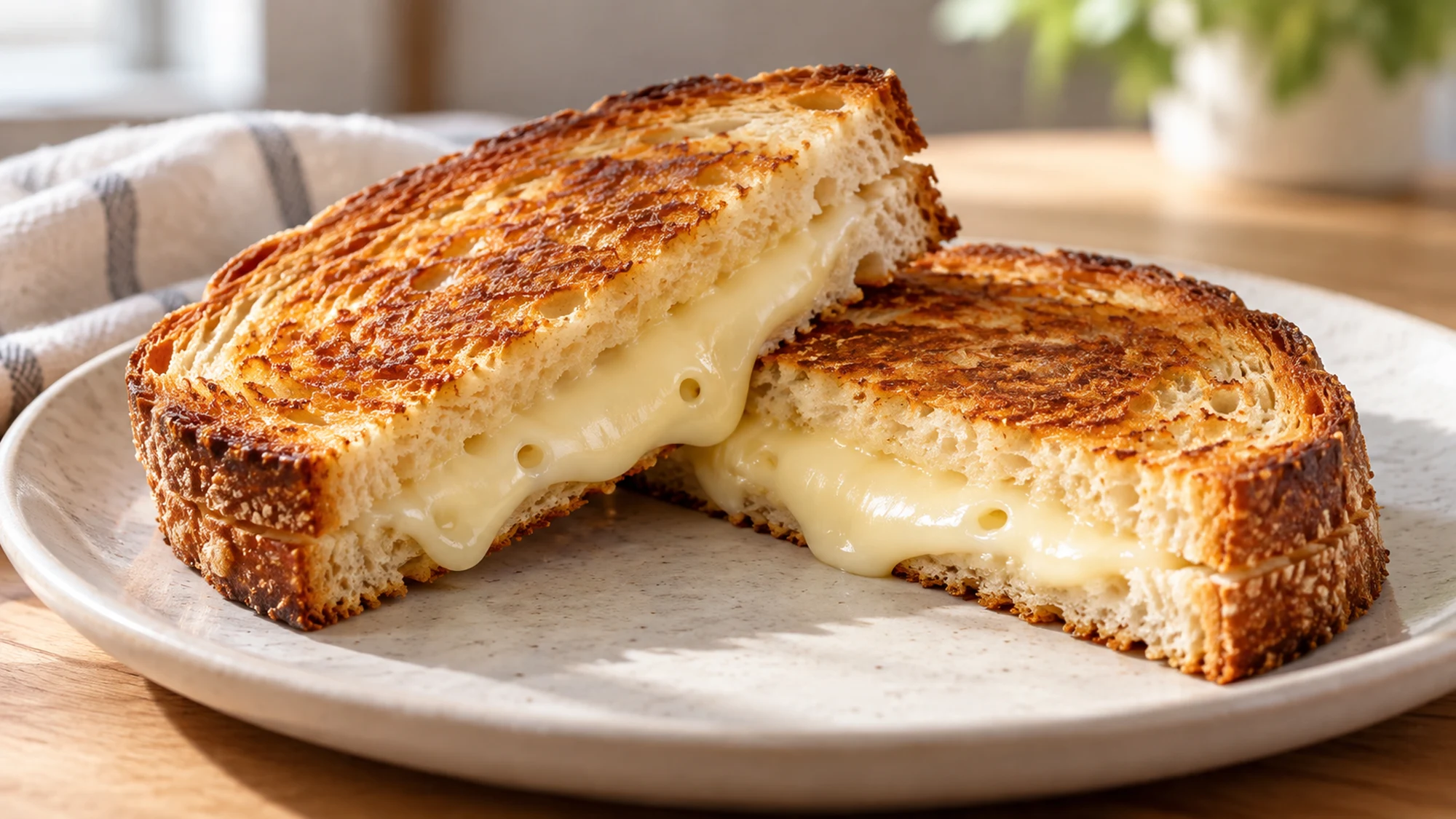
The Dairy Export Council’s cheese overview describes Swiss cheeses as useful melting cheeses for applications such as fondue, sauces, and soup toppings. That does not make every variety interchangeable: the recipe, maturity, slice thickness, and amount of heat still affect the result.
- For a cold sandwich: thin slices distribute the cheese without making one thick, chewy layer.
- For toast or a hot sandwich: use evenly cut pieces so the cheese can warm through as the bread browns.
- For a sauce: follow a recipe designed for the cheese rather than assuming a wedge will behave like a processed slice.
- For a cheese plate: pair a small portion with bread, apple, or pear and let the flavor remain recognizable.
I would choose a mild slice when the other filling is delicate and a more assertive aged piece when cheese is the main event. Either choice is more useful than automatically buying the oldest or most expensive option. A sandwich does not need a prestige upgrade to be satisfying.
Match the cheese to the meal: convenience, flavor, and melting behavior are all legitimate reasons to choose one package over another.
Milk Labels and Storage Matter
For people at higher risk of Listeria illness, including pregnant people, adults 65 and older, and people with weakened immune systems, CDC guidance lists hard cheeses made with pasteurized milk, including Swiss, among safer choices. It advises avoiding unheated raw-milk cheeses. Traditional raw-milk Emmentaler and pasteurized domestic Swiss therefore deserve different attention at the label.
- Check the actual package: do not assume the word Swiss means pasteurized, and remember that all of these dairy cheeses contain milk.
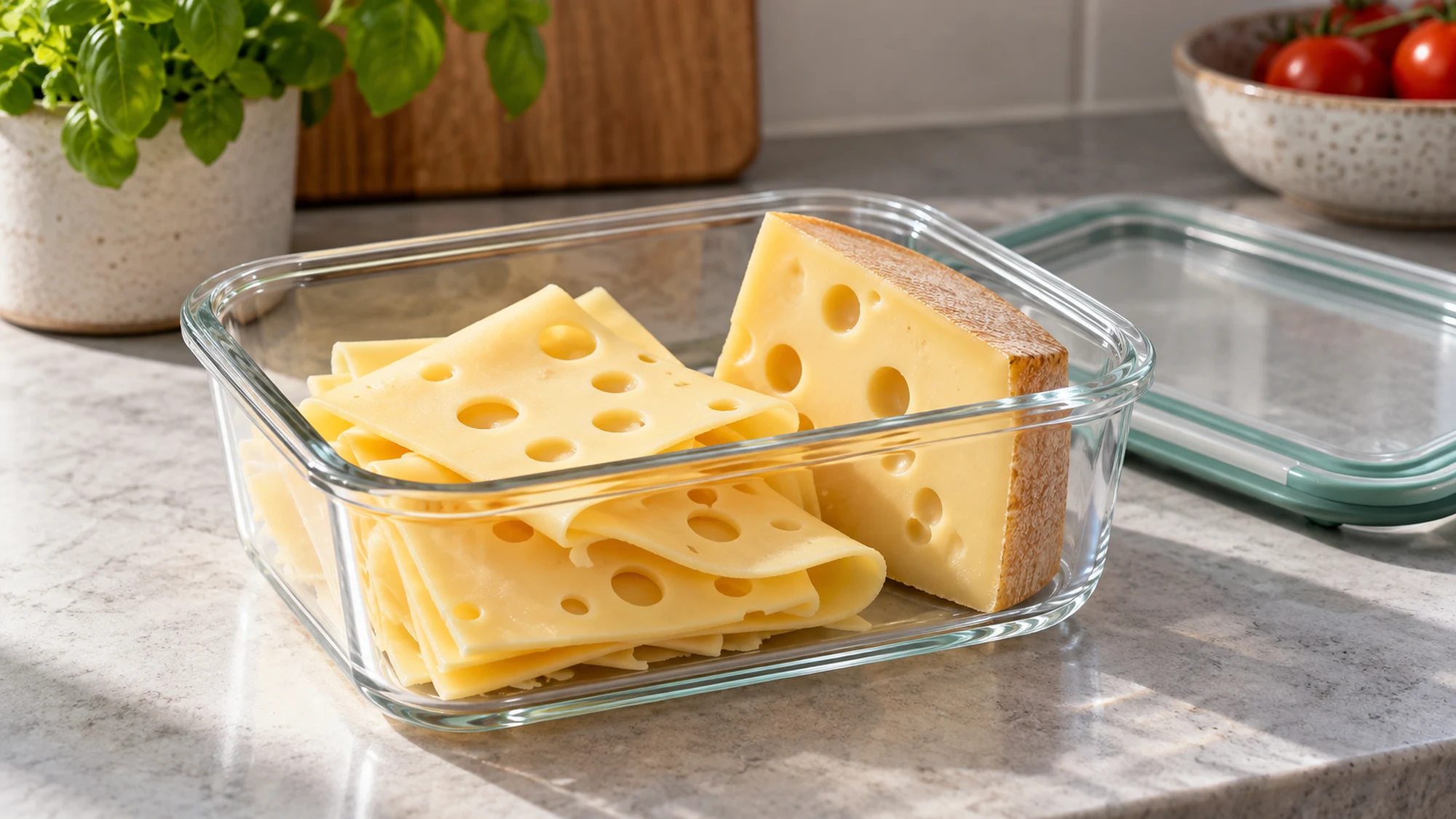
- Keep it covered and refrigerated: follow the producer’s storage instructions and use clean utensils.
- Do not rescue moldy slices: USDA’s mold guide says to discard moldy sliced, shredded, or crumbled cheese.
- Distinguish a block from slices: USDA allows trimming at least 1 inch (2.5 cm) around and below a mold spot on hard cheese, keeping the knife out of the mold; that rule is not permission to trim a thin slice.
My practical preference is buying an amount that fits the next few meals. A smaller piece that stays well wrapped is easier to use deliberately than a large block that keeps getting pushed to the back.
Bottom Line
Swiss cheese can be mild, nutty, firm, or relatively supple depending on the variety. Read beyond the holes, choose the form that suits your meal, and keep milk treatment and storage part of the decision.
In the video below, food scientist Michael Tunick explains the gas bubbles behind Swiss-style cheese eyes.
Sources
- U.S. Dairy Export Council: Swiss cheeses
- Emmentaler AOP: How the holes form
- Emmentaler AOP: Production specifications
- CDC: Preventing Listeria infection
- USDA: Molds on food

Hi, I’m Emily Pocker! I share recipes and food guides here at Recipes360 to help you find everyday meal inspiration and feel more confident in the kitchen. My goal is to make cooking approachable, enjoyable, and full of flavor.