
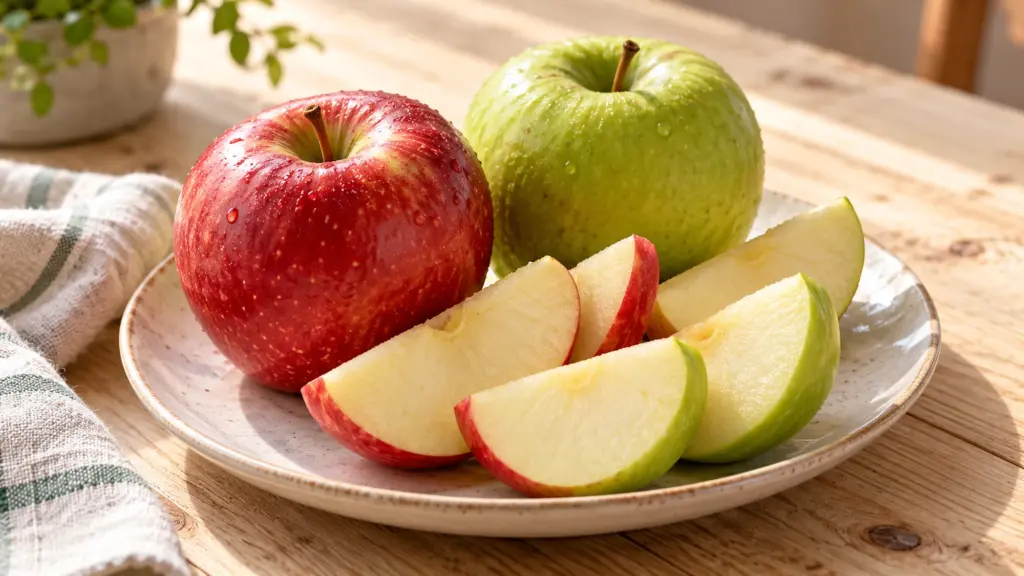
A crisp apple is an easy snack to pack, but the familiar “apple a day” saying asks one fruit to do too much. If you’re wondering, are apples good for you, the useful answer starts with the whole fruit—not a promise about preventing illness.
Yes, apples can be a nutritious everyday choice. They provide fiber and vitamin C, while the way you serve them determines whether you get a simple fruit snack or a much sweeter dessert.
You don’t need a special variety or an expensive bag of organic apples to make them useful. Choose fruit you enjoy, keep it crisp, and decide whether you want a portable snack, a soft spoonable option, or something to stir into breakfast.
Are Apples Good for You? What the Whole Fruit Offers
The USDA’s fresh-apple guide identifies fiber and vitamin C among their nutrients. Apples are naturally low in sodium and fat. That makes them a useful ingredient, but it does not make an apple a complete meal or a substitute for varied foods.
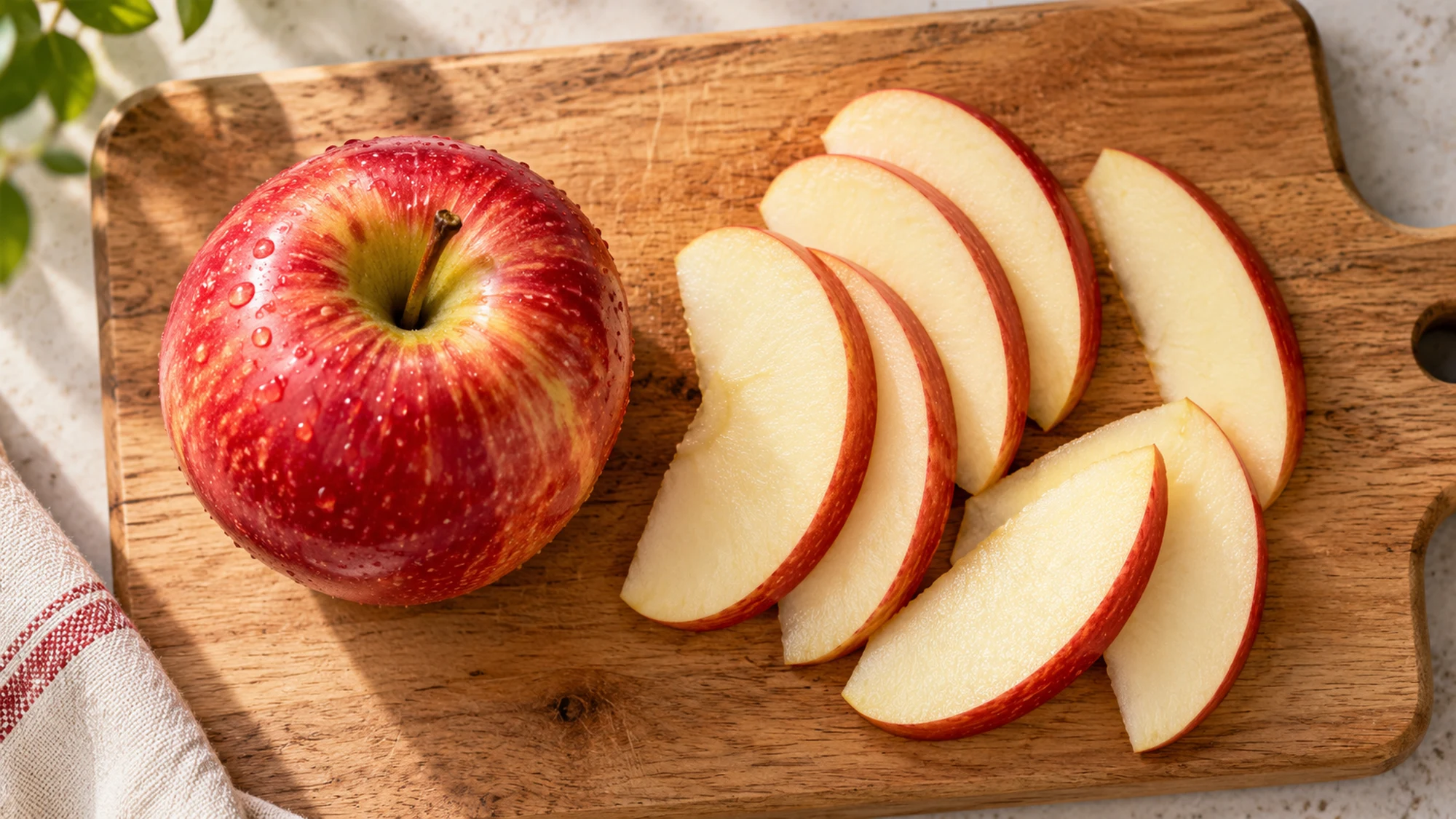
Size matters when comparing portions. USDA counts a small apple, half a large apple, or one cup of sliced or chopped apple as one cup of fruit. Those are food-group equivalents, not instructions that everyone must eat the same amount. A very large apple is simply more fruit than a small one.
Keep the peel if you like its texture; it is an edible part of the fruit. If tough skin makes apples unappealing, peeling or cooking them is also a reasonable kitchen choice. Eating fruit you enjoy matters more than treating one preparation as the only acceptable option.
Think of an apple as one helpful part of a varied plate, not a daily health requirement.
Whole apples, applesauce, dried fruit, or juice?
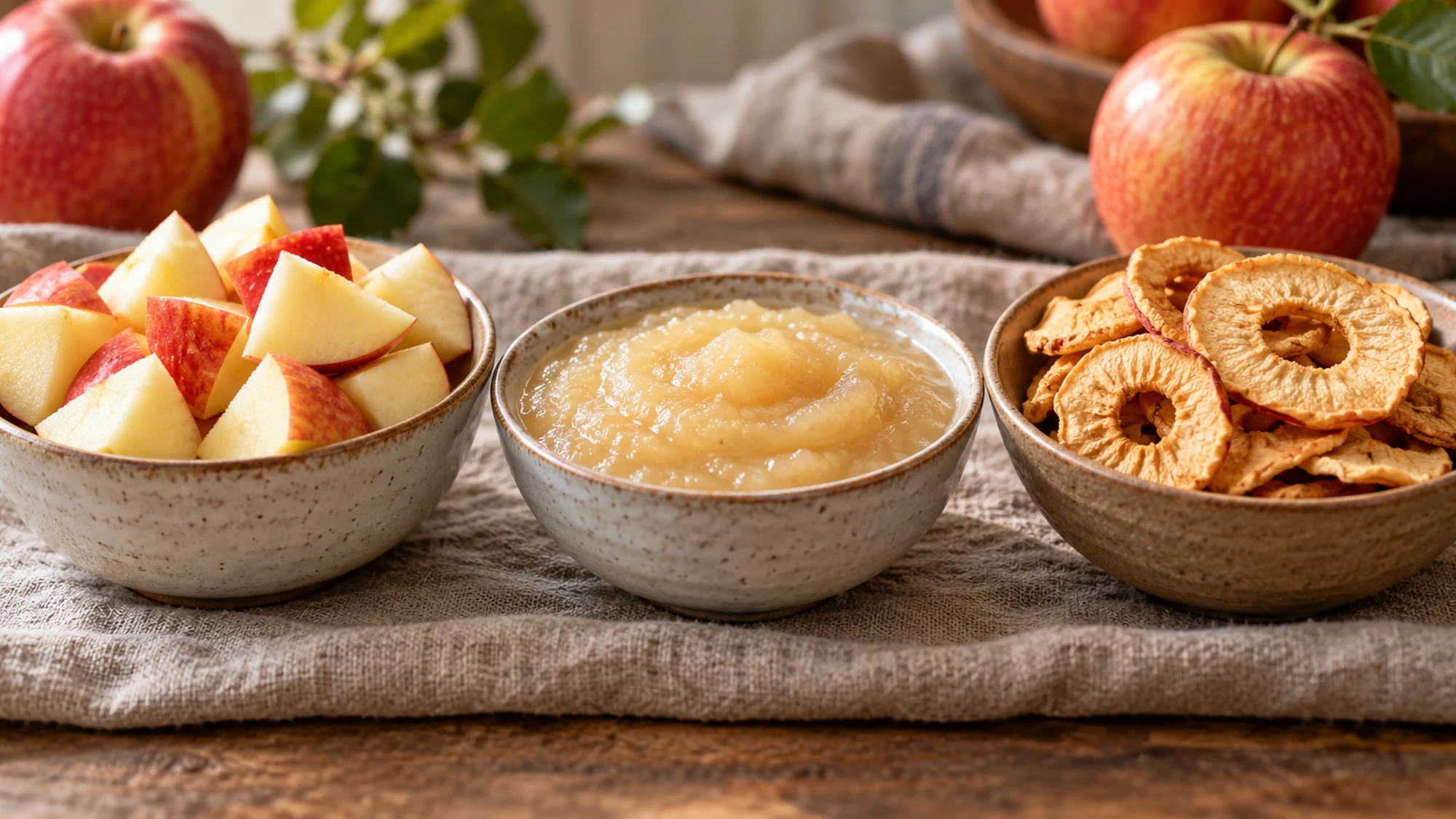
Different forms suit different jobs. A whole apple travels well; applesauce works when you want something soft. Read packaged-food labels instead of assuming every product with an apple picture has the same ingredients.
| Form | Useful for | What to check |
|---|---|---|
| Fresh apple | Crunchy snacks and salads | Firm fruit without soft or moldy areas |
| Unsweetened applesauce | Soft snacks and oatmeal | Ingredient list and added sugars |
| Dried apple rings | Portable snacks and cereal | Serving size and any added sweeteners |
| Apple juice | A drink rather than a crunchy snack | Whether it is 100% juice; juice is not the same as whole fruit |
Compare products using the same serving amount. A handful of dried rings and a handful of fresh chunks are not interchangeable measures: drying removes water. Likewise, cinnamon-flavored applesauce may be unsweetened or sweetened, so the flavor name alone does not tell you.
Choose, wash, and store apples well
Iowa State University Extension recommends firm apples with smooth skin and refrigerator storage for up to three weeks. Starting freshness and variety affect how long they stay pleasant. Buy an amount your household will actually use rather than relying on the longest possible storage window.
- Keep whole apples refrigerated, and wash them when you are ready to use them.
- Rinse under running water before slicing, even if you plan to remove the peel.
- Use a clean board and knife, and keep fruit separate from raw meat and its utensils.
- Cut away bruised areas; discard fruit that looks rotten rather than trying to rescue it for baking.
The FDA’s produce-safety guidance advises against washing fruit with soap, detergent, or commercial produce wash. Running water is the practical starting point. Washing reduces contamination but does not make food sterile.
Refrigeration helps preserve crispness; clean hands, running water, and clean utensils support safer preparation.
Make apples useful beyond the fruit bowl
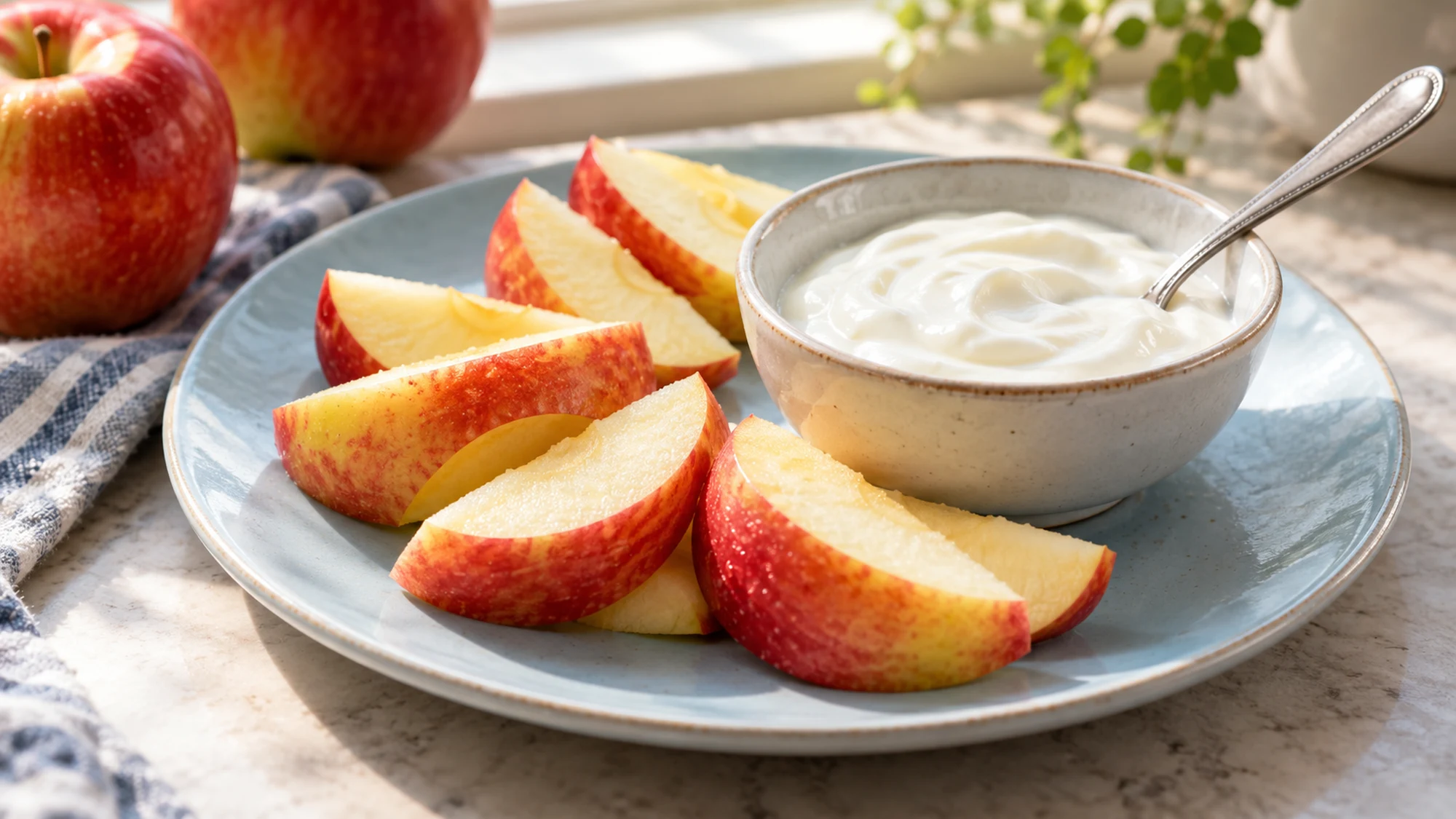
For a snack with more variety, pair wedges with plain yogurt, cheese, or a nut or seed butter that suits your household. Grated apple can disappear neatly into oats, while thin slices bring crunch to a sandwich. Use smaller pieces when you want apple in every spoonful.
If breakfast is the goal, apple cinnamon baked oatmeal offers a make-ahead direction. A softer apple can also work in cooked preparations if it is still sound; softening from age is different from rot.
Cut surfaces may brown naturally. Montana State University Extension suggests diluted lemon juice to slow that change. It is mainly an appearance trick, not a replacement for clean handling or refrigeration.
Bottom Line
Apples are a practical way to enjoy fruit: affordable varieties, simple preparation, and plenty of uses. Start with whole fruit when you want crunch, choose unsweetened products when that suits your goal, and let preference—not a miracle-food claim—guide your shopping.
The FDA video below covers fresh-produce handling, the same basic steps that apply when preparing apples.
Sources
- USDA: Apples, Fresh
- Iowa State University Extension: Apples
- FDA: Selecting and Serving Produce Safely
- Montana State University Extension: Apples

Hi, I’m Emily Pocker! I share recipes and food guides here at Recipes360 to help you find everyday meal inspiration and feel more confident in the kitchen. My goal is to make cooking approachable, enjoyable, and full of flavor.