
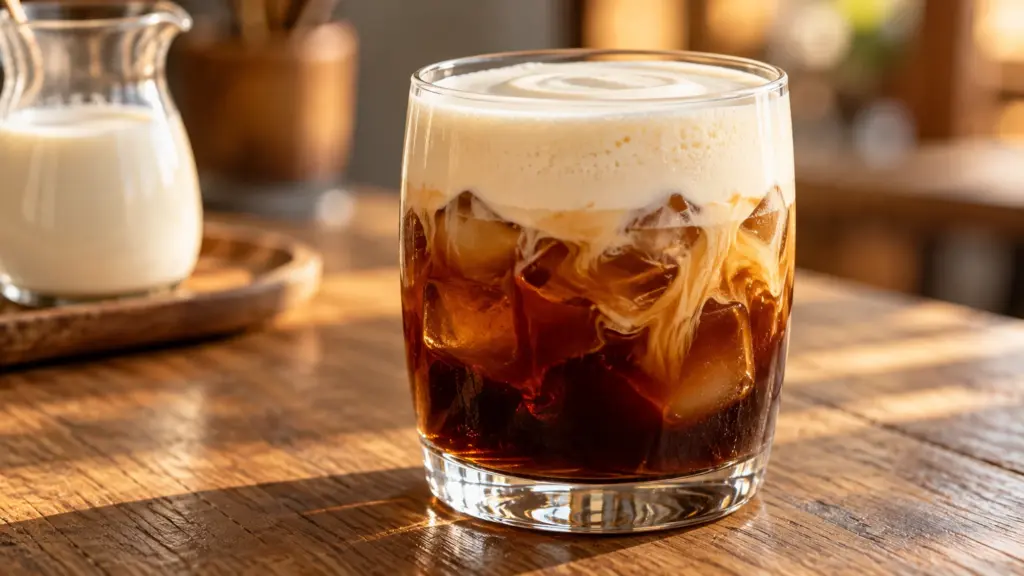
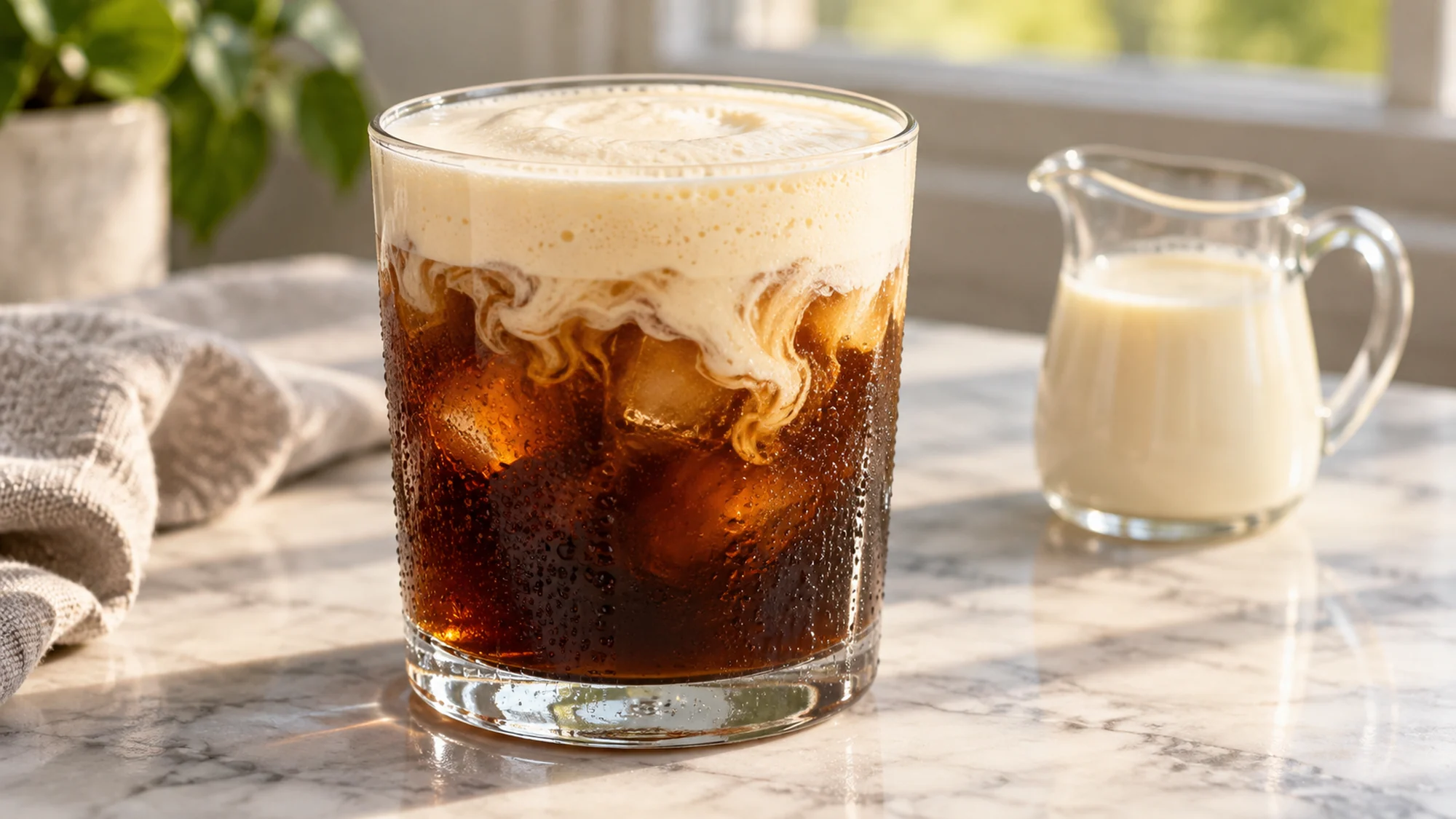
A cold foam recipe works best when the topping stays soft enough to sip with the drink underneath. This version uses cold cream, whole milk, maple syrup and vanilla for a lightly sweet cap that settles slowly into iced coffee. The goal is fine bubbles and a flowing ribbon, rather than a spoonful that holds a rigid peak.
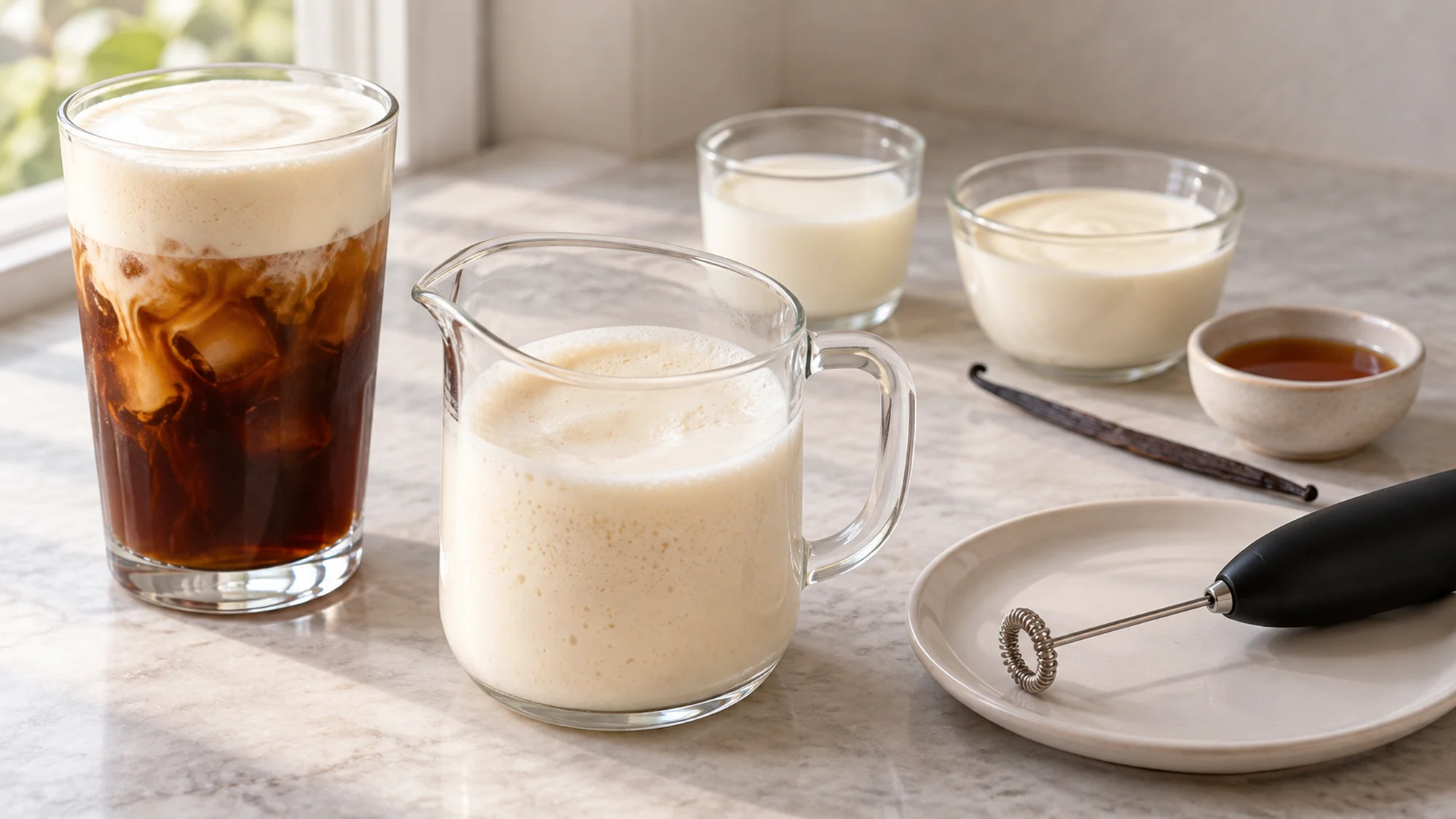
For a soft vanilla cold foam, start with thoroughly chilled dairy and stop frothing when it looks airy but still pours. The measured batch makes four modest drink toppings; coffee and ice are separate serving suggestions.
I prefer a smaller foam cap over a tall mound because the coffee still comes through. A handheld milk frother is useful here, although the bowl needs enough space for expansion. The card below gives the measured formula and clear stopping cues, so you can adjust the texture without guessing from a fixed frothing time.
Serving Suggestions for This Cold Foam Recipe
Spoon the foam onto cold brew, iced espresso diluted with water, or an unsweetened iced tea. Fill the glass with the drink before adding the topping, and leave some headroom. Pouring coffee through the foam afterward breaks up the layer and makes the glass harder to judge.
A spoon helps place the topping gently without overfilling the glass. Serve promptly: this is an airy dairy mixture, and the visible layer naturally softens as it stands. It is meant for drinking, so a little blending at the edges is welcome.
| Drink base | Useful adjustment |
|---|---|
| Unsweetened cold brew | Keep the maple in the foam |
| Already sweetened iced coffee | Reduce sweetness in the drink first |
| Chilled chicory brew | Dilute strong brew before topping |
- For a coffee-free variation, pair a small portion with chilled chicory coffee. Pure chicory brings roasted flavor without coffee, but any added coffee changes the caffeine content.
- Use a cool base rather than a hot drink when you want the foam to remain distinct.
Give the drink room for a small foam cap, then serve while the bubbles are fine and the dairy is cold.
Variations
Vanilla is the clearest starting point because it leaves the coffee recognizable. A little ground cinnamon can be added to the finished drink, although it will mark the pale surface. For a less sweet version, reduce the maple; the texture depends mainly on the dairy and aeration.
The instructional video in the card is credited to Buttered Side Up. It demonstrates several foam styles; this formula uses a different cream-to-milk ratio and less maple per portion than the video’s sweet-cream version.
- Changing the dairy changes the result. A barista-style plant drink may foam, but it will not reproduce this cream-and-milk mixture exactly.
- Starbucks’ cold-foam guidance also points to milk choice and frothing method as practical variables. Treat any substitution as a separate texture adjustment, and check its allergens.
- If the mixture looks thin, make sure both dairy ingredients are cold before frothing briefly again. If it becomes stiff or grainy, stop: more air will not restore a silky pour.
- Stir in a little cold milk to loosen a mildly overthickened batch. I would skip elaborate flavor combinations until the plain foam pours comfortably.
Use a flowing texture as your stopping point; the same frothing time will not suit every tool or dairy brand.
Health Benefits
The useful benefit here is control over the topping portion and sweetness. It remains a cream-based addition, with saturated fat and added sugar, rather than a substantial source of protein. A smaller serving can be enough to round out a bitter drink without making it taste like dessert.
Keep the base covered at 40°F/4°C or below and froth close to serving. For planning, mix only the amount needed for the next day and re-froth individual portions. Follow FDA refrigeration guidance; maple and vanilla do not make dairy safe at room temperature.
- MyPlate’s guidance on fats favors limiting saturated fat within the overall eating pattern. The nutrition estimate therefore counts the full measured topping and divides it into four portions; it excludes coffee, ice and any sweetener already in the glass.
Treat cold foam as a measured topping, with its dairy, sweetness and storage needs kept visible.
Bottom Line
Cold foam is most appealing when it stays cold, softly aerated and easy to drink. Start with the measured vanilla-maple base below, watch the texture closely, and use a modest cap so the drink underneath keeps its character.
Cold Foam Recipe

Ingredients
- 120 ml heavy cream 1/2 US cup; cold, about 36% fat
- 60 ml whole milk 1/4 US cup; cold
- 15 ml pure maple syrup 1 tablespoon, about 20 g
- 1/2 teaspoon vanilla extract
Equipment
- Handheld milk frother
- Tall 500 ml or larger jug
- Measuring jug and spoons
Instructions
- Use cream and milk straight from the refrigerator. Put them in a tall jug with the maple syrup and vanilla. Stir to combine; the jug should be less than half full so the mixture has room to expand.
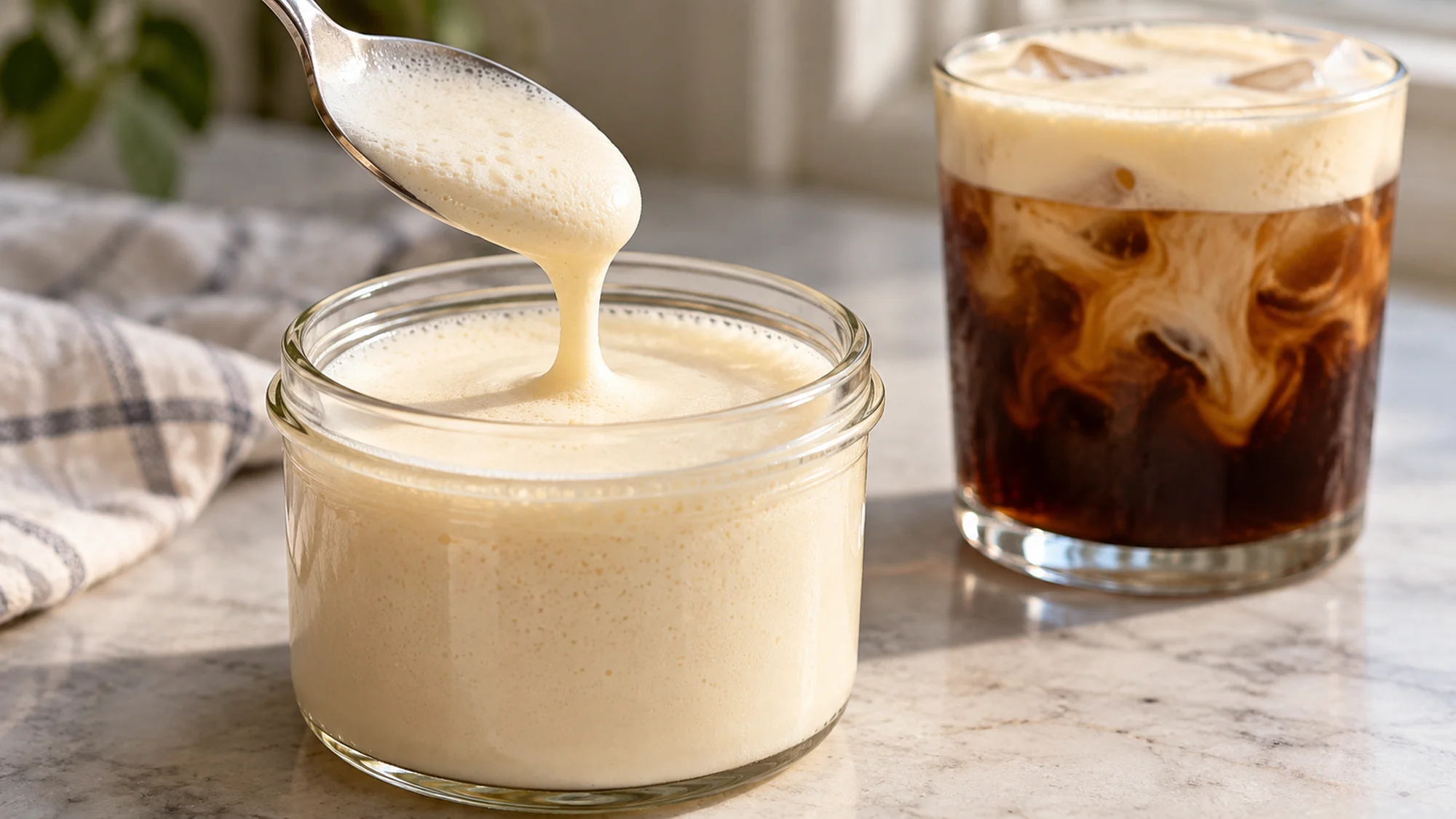
- Submerge the frother head before switching it on. Froth in short bursts for roughly 20–40 seconds, moving just below the surface, until fine bubbles form and the mixture thickens slightly. Stop while it still flows from a spoon in a soft ribbon; do not whip to stiff peaks.
- Let very large surface bubbles settle for about 15 seconds. Divide the entire batch into four equal toppings and spoon onto cold drinks. Serve immediately. Coffee, tea, ice and any additional drink sweeteners are not included in this recipe.
Nutrition
Video
Notes
Tried this recipe?
Let us know how it turned out!Hi, I’m Emily Pocker! I share recipes and food guides here at Recipes360 to help you find everyday meal inspiration and feel more confident in the kitchen. My goal is to make cooking approachable, enjoyable, and full of flavor.