

The mug looks ready for coffee, but the bag on the counter contains roasted root. Chicory coffee can be brewed entirely without coffee beans, and that is the version here: a small saucepan infusion strained into two cups. Expect an earthy, roasted flavor with a firm bitter edge, rather than espresso’s body or crema.

Use pure roasted chicory granules, simmer gently, then strain well. Taste the plain brew before adding milk or sweetener so you can adjust its strength instead of covering it up.
I’d begin with a modest concentration. Different roasts and particle sizes extract differently, and a dark-looking cup is not a reliable measure of strength. This recipe gives you a repeatable starting point, with a measured final volume after straining.
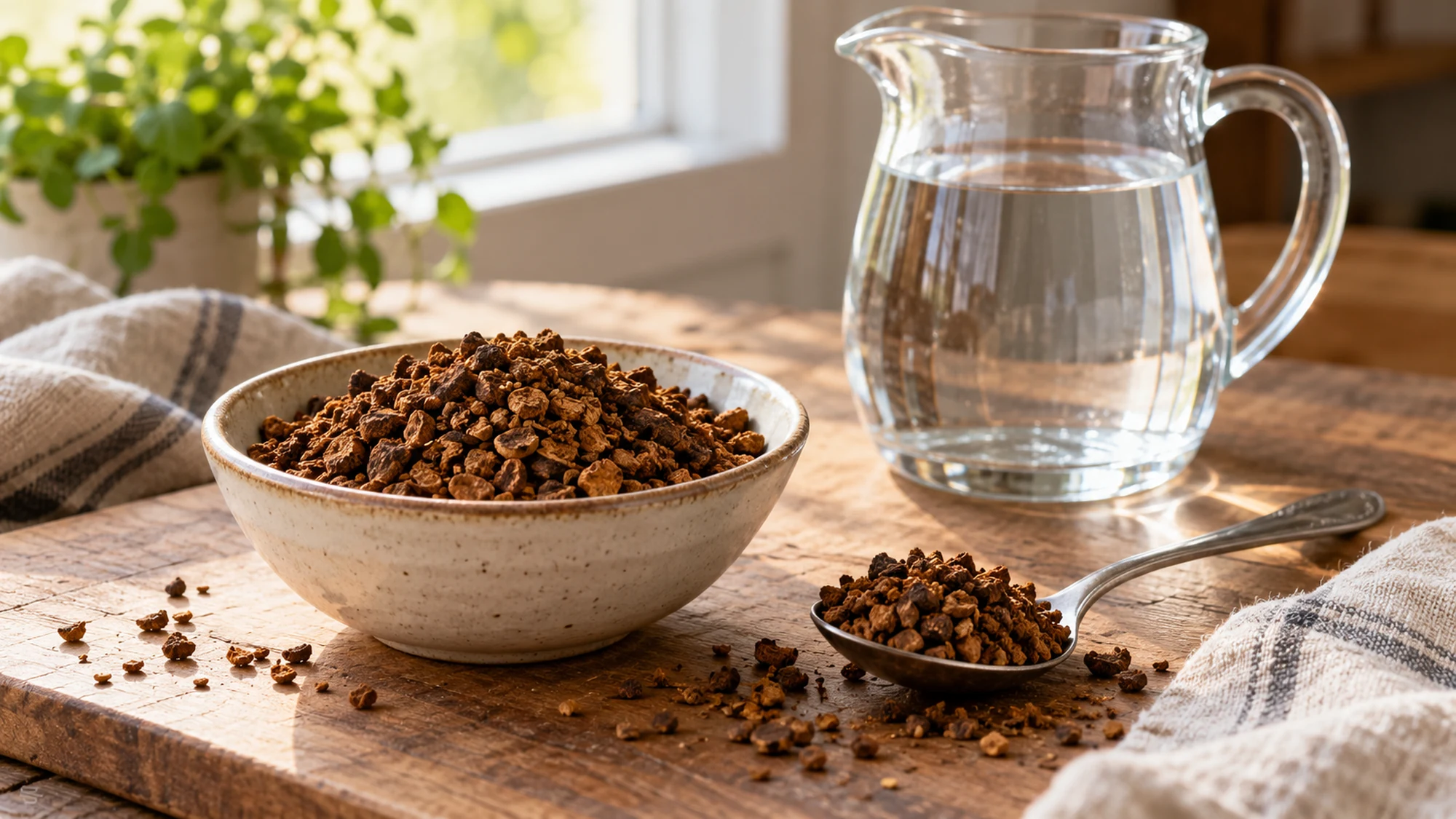
Serving Suggestions for Chicory Coffee
Pour into warmed cups and give the drink a moment to cool before tasting. The first decision is whether you enjoy its roasted bitterness on its own. Add a splash of hot water if the finish feels too assertive; that adjustment is easier than rescuing a cup already sweetened to excess.
| Choice | What to expect |
|---|---|
| S | e |
| H | o |
For a different coffee preparation that contains coffee beans, the site’s café de olla with cinnamon and piloncillo offers a spiced alternative. Keep the two drinks distinct when serving: a chicory-and-coffee blend is a different product from pure chicory.
Make just enough for the occasion when possible. If saving a batch, refrigerate it promptly in a clean covered container and add milk only when serving. Illinois Extension’s leftover guidance gives a three-to-four-day refrigerated window and recommends cooling food in smaller containers rather than leaving a large hot batch on the counter.
Let each person choose the finishing touches. Keep milk and sweetener separate, and dilute a strong cup with water before deciding it needs sugar.
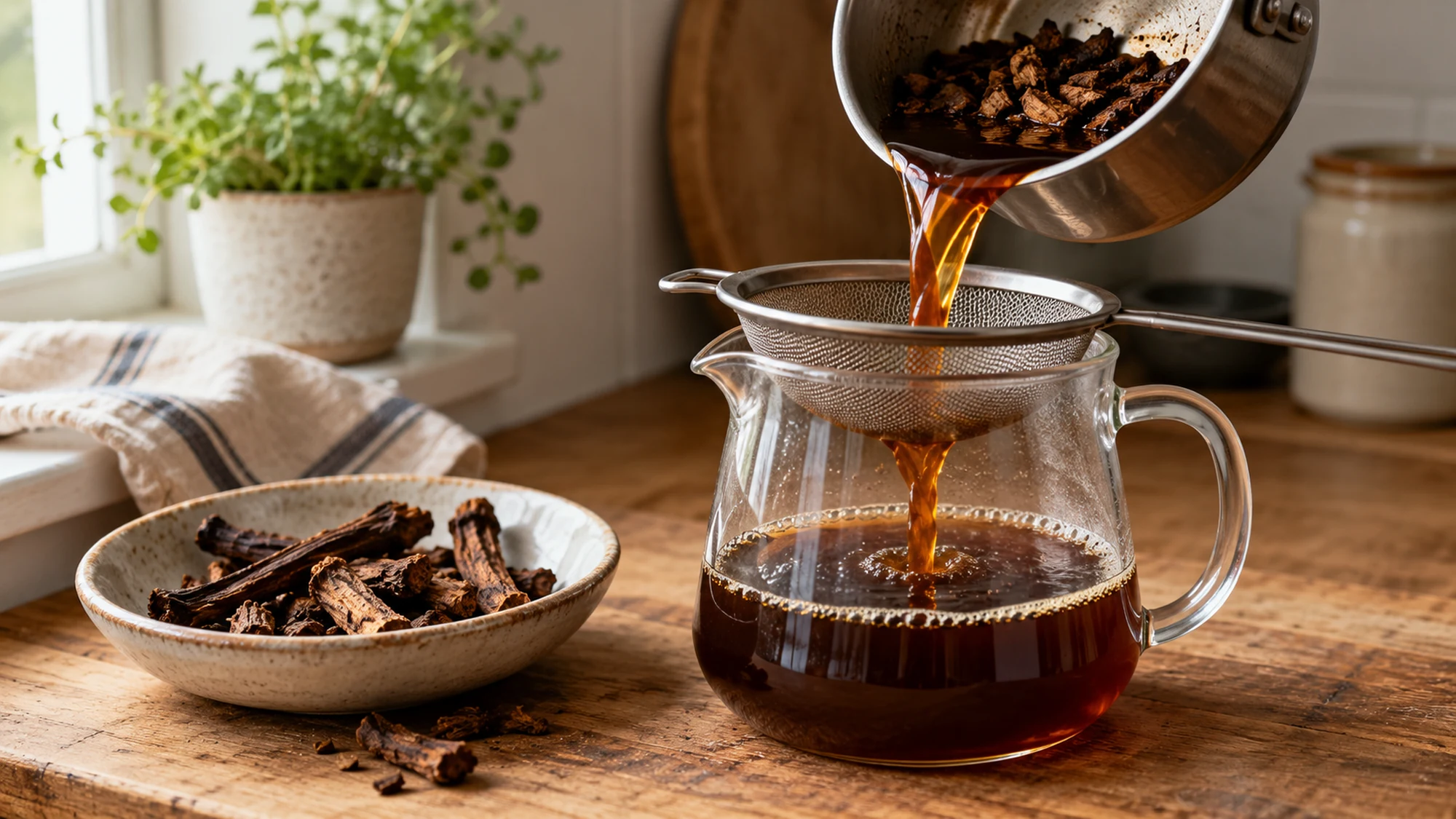
Variations and Brewing Adjustments
The bag matters as much as the pan. Look for food-grade, already roasted chicory root granules intended for brewing. Instant chicory dissolves and follows different directions; raw root, garden plants and supplements are outside this recipe. A coffee blend also changes both the flavor and caffeine content.
- For a gentler brew: use a little less chicory next time, or dilute after straining. Keep the final serving volume consistent when comparing batches.
- For less sediment: pass the drink through a rinsed paper coffee filter after the mesh strainer. Let gravity work rather than squeezing the grounds.
- For a milkier cup: warm your chosen milk separately and add gradually. Count it as an addition to the recipe’s plain-drink nutrition.
- For a coffee blend: use the blend’s own brewing instructions. Do not assume this pure-root recipe predicts its caffeine content.
I’d change one brewing variable at a time. More granules, a longer simmer and less water can all intensify the drink, but changing all three makes it hard to identify the useful adjustment. Strain when the timer ends; leaving the root in the serving pot keeps the extraction going.
A clear straining step and a measured final volume make comparisons useful. Adjust the next cup deliberately, without turning breakfast into a chemistry exam.

Health Benefits in Context
The useful distinction is straightforward: pure chicory root contains no coffee beans. Anthony’s roasted chicory product information identifies its pure granules as caffeine-free. Check your own ingredient label, because similarly named products may include coffee.
- A beverage, not a treatment: choose it for its flavor or to avoid coffee caffeine; this recipe makes no digestive or sleep-treatment claim.
- Do not count root fiber as cup fiber: straining and extraction mean the dry ingredient’s composition does not transfer intact to the drink.
- Additions change the estimate: milk, cream and sweeteners contribute their own nutrients and energy.
The card uses a generic chicory-beverage reference estimate, not a chemical analysis of this particular infusion. Extraction varies with the product and method. If chicory does not agree with you, there is no reason to force a large serving for a promised benefit.
Keep the health expectations modest and the label reading specific. A pleasant alternative beverage is enough; a mug does not need a wellness promise.
Bottom Line
Chicory coffee is a simple stovetop brew with a distinct roasted character. Start with pure roasted granules, strain thoroughly and adjust the cup with water before reaching for extras. The small batch leaves room to find the strength you actually enjoy.
Chicory Coffee Recipe


Ingredients
- 2 tablespoons pure roasted chicory root granules about 20 g; use food-grade granules for brewing, not instant powder or a coffee blend
- 2 cups water 480 mL, plus hot water to restore the strained yield
Equipment
- 1 Small saucepan with lid
- 1 Fine-mesh strainer
- 1 Heatproof measuring jug
- 1 Tablespoon measure
Instructions
- Combine chicory granules and water in a small saucepan. Bring to a gentle simmer over medium heat, then lower the heat and simmer gently for 5 minutes. Heating time varies by stove.
- Turn off the heat, cover and steep for 5 minutes. Pour through a fine-mesh strainer into a heatproof jug. For less sediment, strain again through a rinsed paper coffee filter. Discard the spent granules.
- Add enough hot water to the strained brew to make 2 cups (480 mL). Divide into two cups and let cool slightly before tasting. Dilute further to taste if desired; optional milk or sweetener may be added to each serving.
Nutrition
Video
Notes
Tried this recipe?
Let us know how it turned out!Hi, I’m Emily Pocker! I share recipes and food guides here at Recipes360 to help you find everyday meal inspiration and feel more confident in the kitchen. My goal is to make cooking approachable, enjoyable, and full of flavor.