
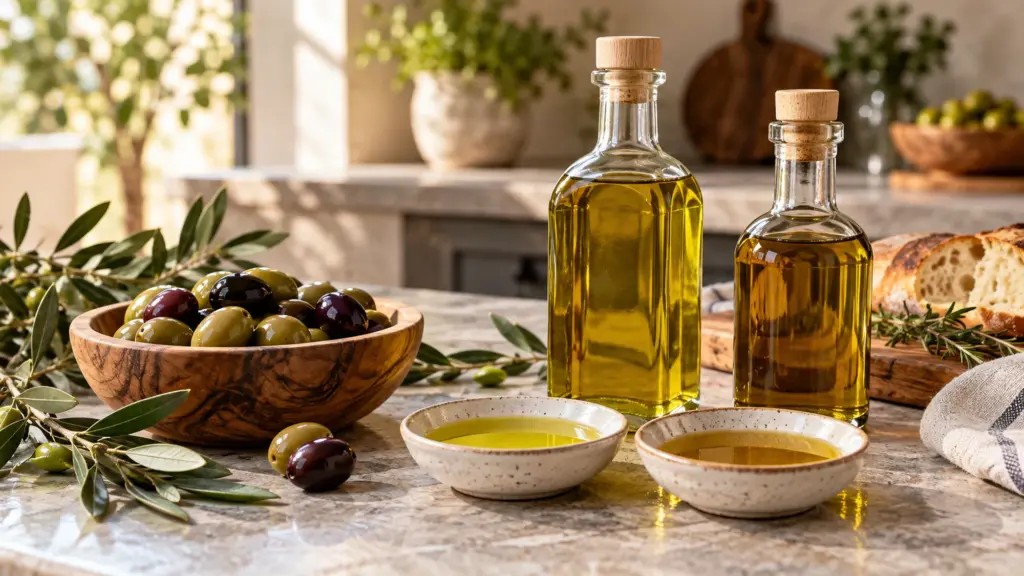
Two bottles sit beside the stove: one says olive oil, the other extra virgin. It is tempting to reserve the second for salads and give the first every hot-pan job. But the choice between olive oil and extra virgin is more about grade, flavor, and how you cook than a strict cold-versus-hot rule.
Extra virgin is a grade of olive oil, not a separate kind of fat. Choose it when you want olive flavor; a refined-and-virgin blend offers a milder option. Both can have a place in everyday cooking.
I’d start with the food rather than the fanciest label. Tomatoes may welcome a peppery finishing oil, while a delicately flavored cake might not. Knowing what is in the bottle makes that decision much less mysterious.
Olive Oil and Extra Virgin: What the Labels Actually Compare
The International Olive Council distinguishes virgin oils from refined oils and their blends. Extra virgin olive oil comes from mechanical processing and must meet chemical and sensory standards. A bottle labeled simply “olive oil” commonly contains refined olive oil blended with virgin olive oil.
| Label | What it tells you | Useful kitchen question |
|---|---|---|
| Extra virgin olive oil | A mechanically obtained grade meeting quality standards | Do I want the oil’s flavor in this dish? |
| Olive oil | Typically refined oil blended with virgin oil | Would a milder olive oil suit the food? |
| Light or extra-light olive oil | Usually refers to a milder refined blend | Am I confusing light flavor with fewer calories? |
| Color alone | Not a reliable grade or quality test | What does the label and fresh aroma tell me instead? |
The American Olive Oil Producers Association explains that “light” refers to flavor, not reduced calories. Green is not automatically better than golden, either. For the separate question of where olive oil comes from, see our guide to whether olive oil is a seed oil.
Match the Flavor to the Food
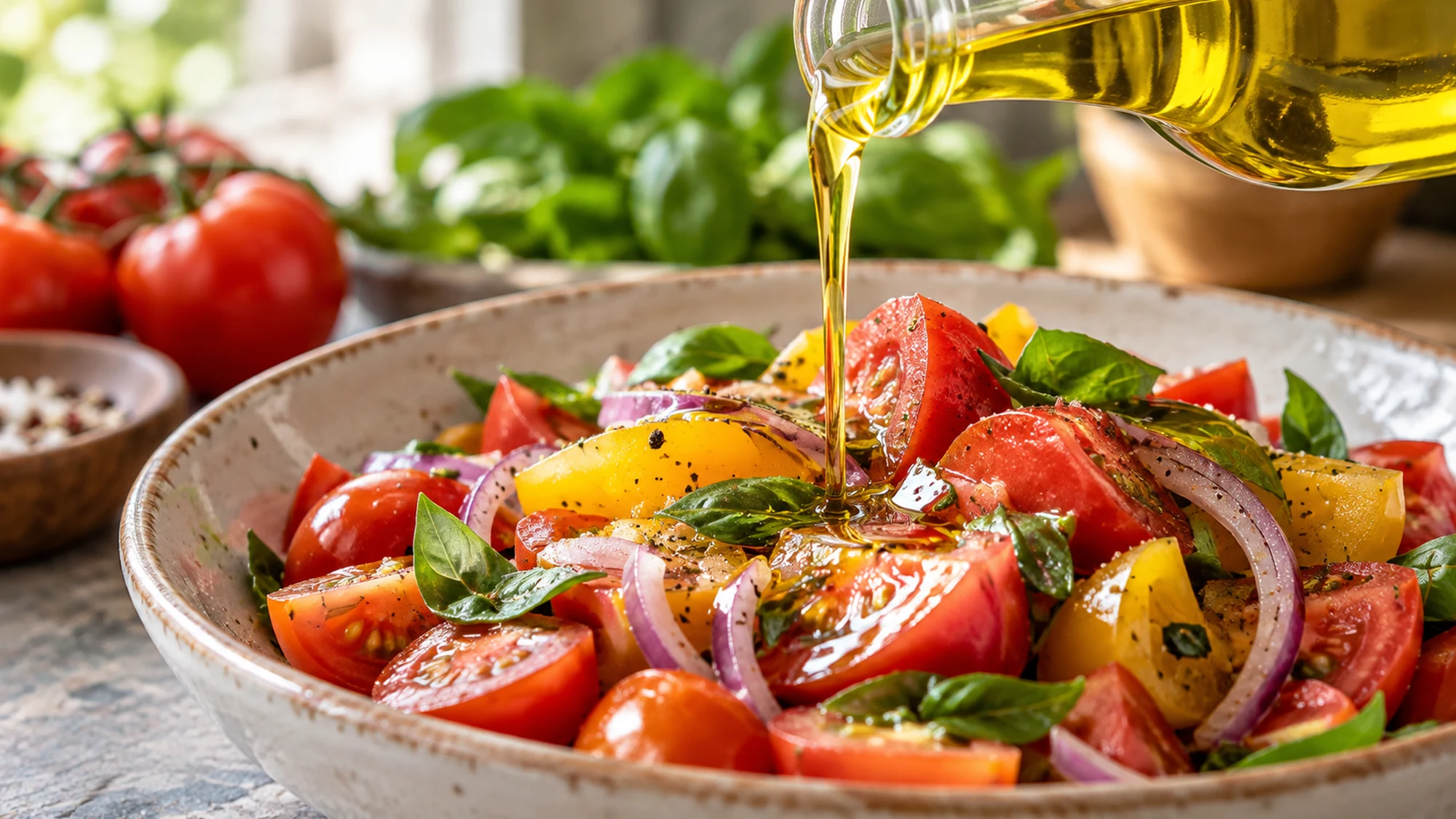
Extra virgin oils can be fruity, grassy, bitter, or peppery, with considerable variation between bottles. Those characteristics can be welcome in one dish and distracting in another. I’d choose a finishing oil for an aroma I enjoy, not simply because its price suggests it ought to be impressive.
- Salads and finished vegetables: an extra virgin oil can contribute flavor directly. Taste the dressing with a bite of the food, not only by itself.
- Beans, soups, and bread: a small finishing drizzle lets the oil remain noticeable. Add it deliberately rather than assuming more will improve every mouthful.
- Delicate baking: a mild oil can keep the focus on vanilla or other subtle flavors. A bolder extra virgin oil changes the flavor even when the recipe still works.
- Oil-for-oil substitutions: check the recipe’s intended flavor and technique. Do not assume switching from butter to olive oil is the same substitution as choosing one olive oil over another.
You Can Cook with Extra Virgin Olive Oil
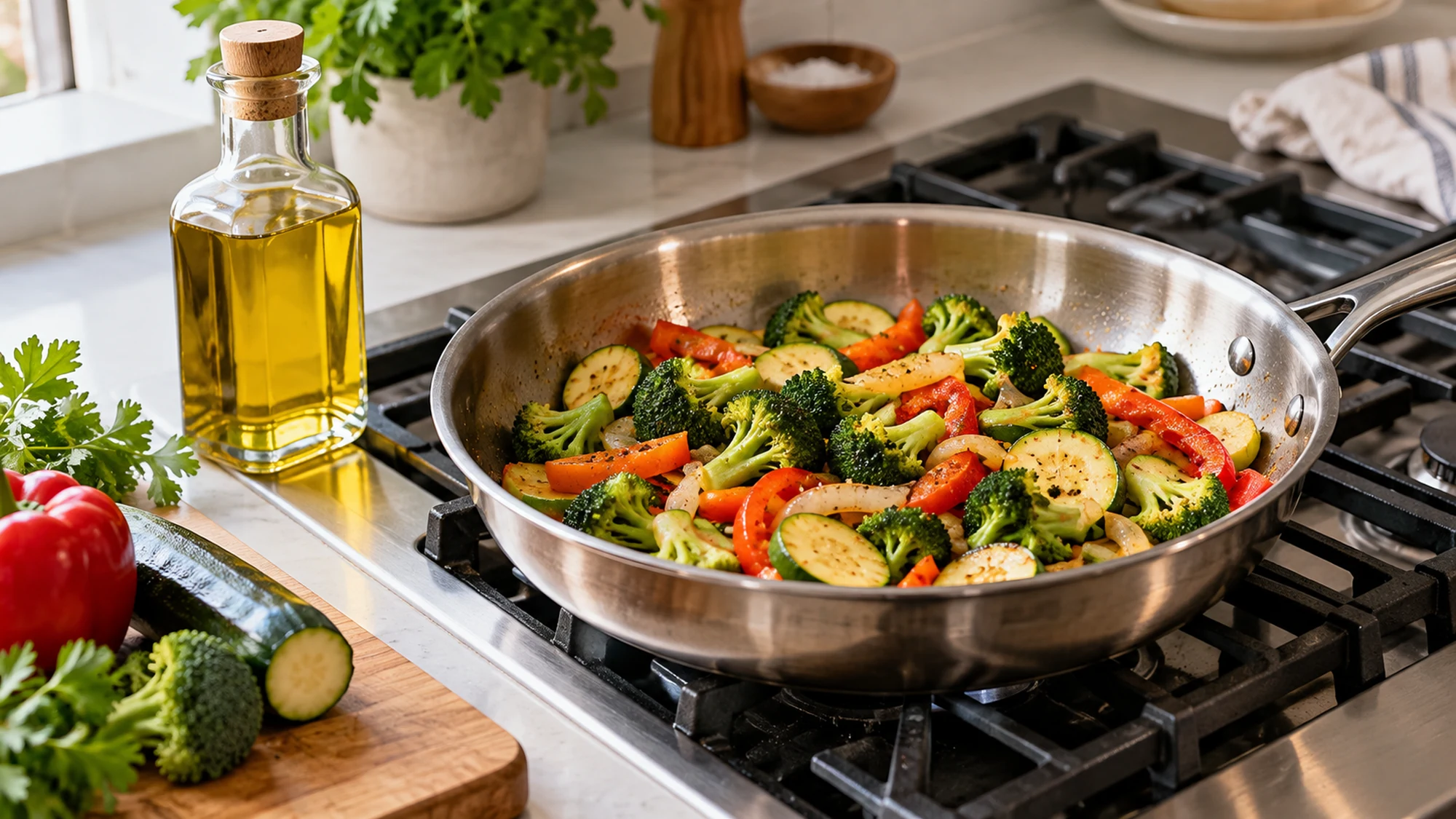
Keeping extra virgin oil away from all heat is unnecessary. UC Davis identifies it as suitable for cooking and explains that smoke point varies with factors including quality and freshness. A single smoke-point number cannot describe every bottle or every pan situation.
- For sautéing: choose an oil whose flavor suits the vegetables or protein. Watch the pan, especially before the food goes in.
- For roasting: consider the whole preparation, including the food and cooking time. An oven’s temperature is not a direct measurement of the oil coating the food.
- If the oil begins smoking: reduce or remove the heat safely. Do not use visible smoke as a signal that the pan is finally ready.
- For a large quantity: cost and flavor both matter. You do not need to use your most distinctive finishing bottle for every cooking job.
The useful distinction is not “extra virgin for cold food, ordinary olive oil for hot food.” It is whether you want that particular flavor and whether you are managing the heat sensibly. A good bottle cannot compensate for an unattended pan.
Buy a Bottle You Can Keep Fresh
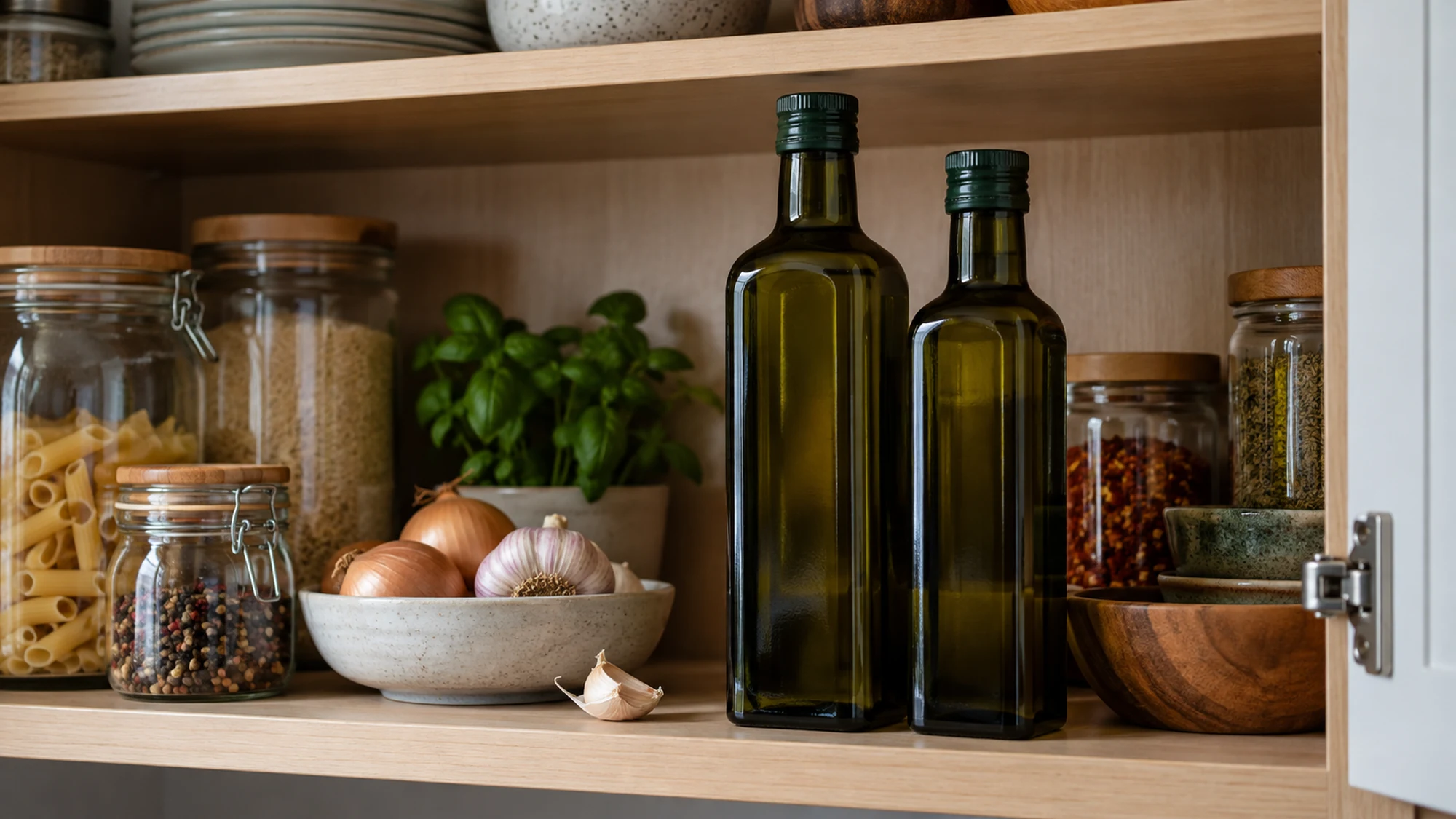
Oil that tastes appealing now is more useful than a prestigious bottle forgotten beside a hot stove. UC Davis recommends considering harvest information and protecting olive oil from heat and light. Storage and turnover deserve attention alongside the grade.
- Match size to use: buy an amount you expect to use regularly rather than the largest container by default.
- Read the package: look for grade, producer information, and available harvest or best-before details. These offer more guidance than a decorative landscape.
- Close it after pouring: store it in a cool, dark cupboard rather than on a sunny windowsill or immediately beside the hob.
- Separate flavor from nutrition claims: “light” olive oil is not a lower-calorie oil. UC Davis notes that oils provide about 120 calories per tablespoon; measuring still matters when comparing amounts.
Bottom Line
Choose extra virgin when its flavor helps the dish, and a milder olive oil when you want less olive character. Cooking is not off-limits for extra virgin; freshness, heat control, and the food in front of you matter more than a rigid bottle rule.
Sources
- International Olive Council: Olive oil grades
- UC Davis: Olive oil myths and facts
- American Olive Oil Producers Association: Olive Oil 101
- UC Davis: How to choose the best olive oil

Hi, I’m Emily Pocker! I share recipes and food guides here at Recipes360 to help you find everyday meal inspiration and feel more confident in the kitchen. My goal is to make cooking approachable, enjoyable, and full of flavor.